Why the Price-Fixing Scandal Might Not be All Bad for Loblaws

Date:

Share post:

By Michael von Massow, Associate Professor, Food Economics, University of Guelph

The bread price-fixing scandal has garnered Canada’s biggest grocery chain a lot of negative media attention.

A recent survey from Dalhousie University suggested that consumer trust in Loblaws has fallen by 10 per cent since the announcement of the bread price-fixing issue.

But will the scandal have a sustained negative impact on Loblaws?

While the company may face civil suits at some point, there is no risk of prosecution under the whistle-blower provisions of Canada’s competition regulations. And so the outstanding question is whether the decline in consumer trust results in significant losses in sales and market share to Loblaws.

Several factors suggest perhaps not.

All retailers painted with same brush

It’s clear that consumers are becoming increasingly distrustful of business generally. They feel in many cases that bad behaviour is the norm, and aren’t surprised when stories like the Loblaws price-fixing emerge.

This is particularly true in this case because Loblaws has claimed (and preliminary findings from the Competition Bureau suggest) that many, but not all, Canadian retailers were involved in the bread scheme.

The Dalhousie study suggested that on average, trust went down for all Canadian retailers following the scandal, although trust in Loblaws declined the most. And so if consumers believe everyone cheats, there’s little motivation to switch stores. Food is a staple. We can’t choose to forego groceries.

It’s worth noting the case of Volkswagen. The emissions scandal that engulfed the German company in 2015 was a significant challenge. Volkswagen paid huge fines and had to retrofit millions of cars. Despite that, the company has seen unit sales growth of 3.8 per cent in 2016 and 4.3 per cent in 2017.

There were financial challenges, and Volkswagen performed in some markets better than others, but customers aren’t staying away in droves despite the negative media attention and bad corporate behaviour.

VOLKSWAGEN CARS ARE LIFTED INSIDE A DELIVERY TOWER OF THE COMPANY IN WOLFSBURG, GERMANY IN MARCH 2017. THE CEO OF VOLKSWAGEN SAID THE UNITED STATES REMAINS A CORE MARKET FOR THE COMPANY DESPITE ITS DIESEL EMISSIONS SCANDAL. (AP PHOTO/MICHAEL SOHN)

Who is Loblaws anyway?

Another factor that will likely buffer the Loblaws parent company is that many customers likely shop at Loblaws without knowing it.

Loblaws sells food under many different banners including Real Canadian Superstore, Zehrs, Provigo, Fortino’s, No Frills and Shoppers Drug Mart. Many customers likely shop at a favourite store without making an explicit connection to the Loblaws name.

That means even those customers who are inclined to punish Loblaws might not even know they are shopping there.

Free groceries

Loblaws has reportedly distributed as much as $150 million in gift cards (in $25 increments) as part of the campaign to win back public trust in the wake of the price-fixing revelations. These gift cards need to be spent in Loblaws stores. It will bring customers back into the store and they will likely spend more than the $25 they’re entitled to via the gift cards.

There will also be people who have never shopped at a Loblaws store who applied for gift cards. Rival grocery chain Sobeys has said it expects to feel an impact from the distribution of the gift cards.

Once again, we would expect customers who may have never set foot in a Loblaws store before to spend more than the gift card. It’s even possible that they’ll enjoy shopping at Loblaws so much that they’ll switch stores after spending the card.
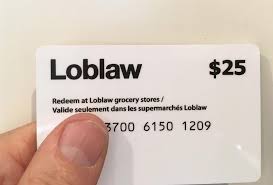
A $25 LOBLAWS GIFT CARD IS SHOWN IN OAKVILLE, ONT., IN MARCH 2018. (THE CANADIAN PRESS/RICHARD BUCHAN)

Short-term pain

That’s not to say Loblaws won’t feel an impact from the price-fixing scandal. They distributed millions of dollars in gift cards. Some of them will not be redeemed — that’s always true of gift cards.

Those that are redeemed will not cost Loblaws the full $150 million as they must be spent in Loblaws stores. That means that, although Loblaws will lose the margin they would have made on the sales, the actual out-of-pocket cost of the card is less than the face value of the card. There also remains the real threat of class-action lawsuits.

In the long run, however, it doesn’t seem likely that Loblaws will suffer significant losses in food market share. The price-fixing announcement came very late in the year, so fourth-quarter results will not provide much insight.

It’s worth noting that same-store food sales were up 0.5 per cent over the previous year in the fourth quarter. While third-quarter results showed a 1.5 per cent increase over the previous year, it does not appear that there was a dramatic flight from shopping at Loblaws in the immediate aftermath of the announcement.

Loblaws’ first-quarter 2018 results will be telling. But the market also seems to believe Loblaws will weather the price-fixing storm. Share price did not decline significantly after the announcement, and a late January drop was attributed to generic drug-pricing reform and the cost of minimum wage increases.

There are still challenges in the market. Stiff competition in the grocery sector still exists and will increase if and when online sales grow. Other factors will continue to keep Loblaws on its toes, but the price-fixing scandal might not be among them.

Michael von Massow

Michael von Massow is an Associate Professor in the Food, Agriculture & Resource Economics (FARE) department at the University of Guelph in 2010 after completing his PhD. Michael’s specialty is the Structure and Performance of Food Value Chains, Economics of food demand – both restaurant and retail, Management Science/Operations, Pricing Strategy. Follow him on Twitter at @mikevonmassow.

This article was originally published on The Conversation. Read the original article.

RELATED ARTICLES

Subscribe to the Newsletter

Subscribe

* indicates required

RECENT articles

Pinterest teams up with Mattel for Barbie experience

The experience lets Pinterest users bring Barbie DreamHouse inspiration into their homes through five signature style edits, offering a new example of how brands can use personalized, visual experiences to move people from inspiration to action.

Mine & Yours Celebrates 13 Years with Glamorous Toronto Fashion Show as Canadian Expansion Continues

Mine & Yours celebrated its 13th anniversary with a glamorous fashion show at Toronto's El Mocambo featuring Jeanne Beker and luxury designer labels. Founder Courtney Watkins also confirmed new Holt Renfrew developments in Montréal, Mississauga and Calgary as the Canadian resale retailer expands.

Kleanr Cosmetics Launches First Ever Machine Washable Makeup Brushes

This proprietary collection of machine-washable makeup brushes and cleaning tools is designed with hygiene, efficiency, and sustainability in mind.

More Canadians tapping into savings or borrowing to pay for food: Dalhousie report

Agri-Food Analytics Lab survey finds private labels gain ground and dining out pushes food budgets higher

EMERGE Commerce forecasts 5% revenue growth and 20% EBITDA increase in Q3 2026

The Toronto-based e-commerce company expects higher gross margins and $4.9 million in cash as it prepares to release full third-quarter results in November.

Daily Synopsis: October 21, 2026

Grocery prices up, Indigo names top books, Sweat and Tonic announces Yorkville opening, Prince St. Pizza opening second Toronto location at Yonge and Eg, Crumbl opening near Montreal, and other news.

Retail Insider “Q3 2026 Food Service Report”: Growth Must Pay at Restaurant Level

Canada’s restaurant chains are expanding while consumers trim visits, extras and delivery spending. The Q3 report examines whether new occasions and locations can support repeat demand and restaurant returns.

JACOB Begins New Chapter as Founder’s Daughter Revives Canadian Fashion Brand

Canadian fashion brand JACOB is entering a new phase under Cristelle Basmaji, daughter of its founders. Once operating more than 250 stores, the Montreal-based business is introducing beauty products and accessories while exploring retail partnerships and potential future apparel collections.

Odd Cookie Expands Across Canada, Reaching Nearly 1,000 Retail Locations in First Year

Meta Description: and Devin Connell discuss Odd Cookie’s retail expansion, Sobeys growth plans, a Costco Roadshow and the strategy behind its crispy snack format.

When Every Brand Sounds the Same: The Challenge of Standing Out in the Age of AI

As artificial intelligence makes marketing content faster and easier to produce, retailers face a growing challenge: standing out from competitors. Linda Farha explores why authentic brand stories, human expertise and consistent messaging are becoming increasingly valuable in retail marketing.

Inside Dynamite 3.0: How Groupe Dynamite Is Reinventing Its Canadian Stores

Groupe Dynamite is expanding its Dynamite 3.0 store concept across major Canadian shopping centres, bringing upgraded interiors, personalized styling and a more premium shopping experience to its established fashion banner. The investment reflects a broader focus on store productivity and brand positioning.

Alrifai  Real Estate planning modular apartments on Gateway Mall rooftop in Prince Albert

Modules are pre engineered and fabricated off site in controlled Canadian manufacturing facilities, then assembled rapidly via crane.

New Walmart Supercentre coming to Calgary’s Southcentre Mall

The Calgary Southcentre Walmart Supercentre will open in the former Hudson’s Bay space in the mall, relocating Walmart Canada’s existing Supercentre at 9650 Macleod Trail SE.

Revenue Brand Uses ’80s Action TV Nostalgia to Reimagine Fashion Marketing (Video)

Toronto streetwear founder Kyle Hosick discusses REVENUE’s entrepreneurial roots, its target market and ambitions to expand into major Canadian retailers.

TD Insurance Brings Small Business Advice to Toronto Entrepreneurs Through Elevator Pitch Event

The TD initiative at STACKT Market offers entrepreneurs personalized insurance guidance, banking advice and insights into business risk management.

Roku Expands Streaming Strategy as Competition for Viewers Grows

Explore Roku’s latest developments, business strategy and efforts to strengthen its position in the streaming market.

Daily Synopsis: October 20, 2026

Nova Scotia shoe retailer closing after 120 years, Wingstop's largest Canadian location opening at CF Chinook Centre, Choice acquires retail site, and other news.

Retail Insider “Loss Prevention & Security Q3 2026 Report”: Different Risks Demand Different Responses

Retail Insider’s Q3 2026 security report examines worker safety, merchandise theft, digital identity and fraud, explaining why retailers need to match security decisions to the specific risks facing their businesses.

Museum of Toronto to Transform Historic Downtown Bank Space into New Cultural Destination

Museum of Toronto will open at 2 Queen Street East in April 2027, converting a former Bank of Montreal space into a free cultural destination backed by a $35 million gift.

Canadians plan to spend less on holidays as budgets tighten: survey

A Retail Council of Canada survey finds inflation, value and Canadian-made products are shaping shopping plans, with Black Friday remaining a key sales period.