Photo: Wikimedia Commons
By Mario Toneguzzi
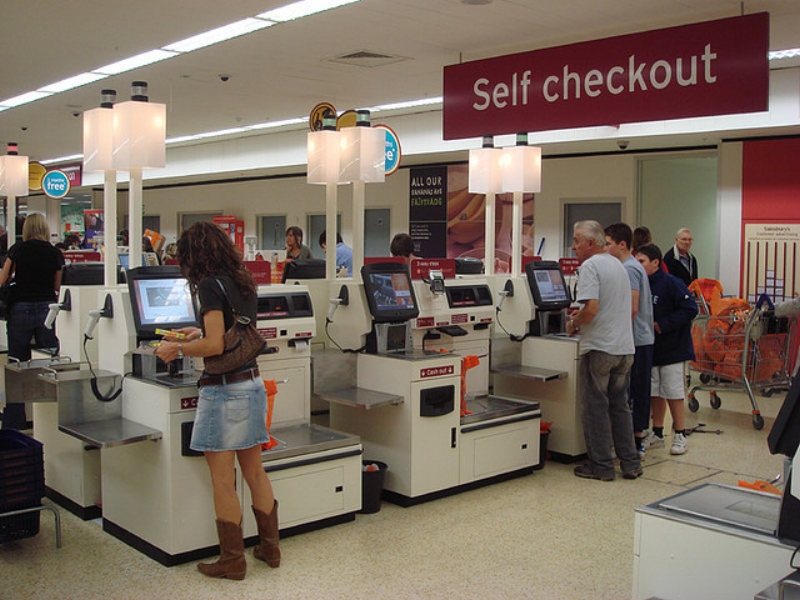
The proliferation of self checkout lanes in retail stores continues but companies need to consider some important things when implementing these systems, cautions a Canadian retail security expert.
Stephen O’Keefe
And one of the major considerations is theft, said Stephen O’Keefe, a Toronto-based veteran of the retail industry.
He recommends that retailers do their math to inform a decision about self checkout registers. And that math would look at things like additional sales projections, the cost to implement such a system, the wage reduction benefit but also the overall risk of loss.
“If at the end of the day that math shows an ROI (return on investment), great. If it shows a bottom-line impact, then the retailer needs to decide if they will be the ones to lose market share if they do not put in self checkouts,” said O’Keefe, President of Bottom Line Matters, a web-based loss prevention and risk management solutions company for small to mid-sized retailers.
O’Keefe has had many years of experience with some of the giant retailers in Canada and globally.
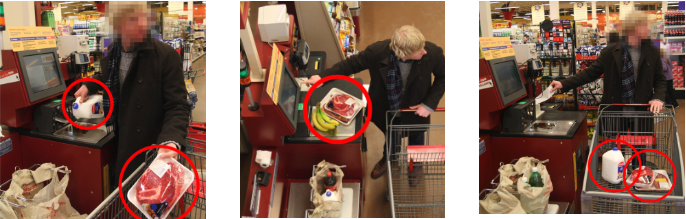
Scanning less expensive item and putting expensive item in cart. Photo: PointOfSale.com


“There are several things to consider when implementing a self checkout system. The sales must offset the anticipated increase in shrink just to break even,” he said.
“The retailer must also consider the advantage of synergy. One supervising chair can accommodate four to six transactions at a time. This must be factored in as well, and for the most part is the primary reason why a retailer implements the system, cost savings in wages. The unfortunate aspect of shrink is that the cost is not quantified until the retailer conducts an inventory, and then it is not an exact science to say what the contributing factor was.”
O’Keefe was Walmart Canada’s VP Loss Prevention & Risk Management for 15 years. He currently advises on loss prevention affecting shrinkage and profitability for retailers and has more than 30 years experience in retail theft prevention with some of Canada’s largest retailers.
He is considered a leading authority on loss prevention, security, risk management, health and safety and process improvement.

Before establishing his own consultancy firm, O’Keefe held a variety of loss prevention management positions with Sears Canada, Zellers, The Hudson’s Bay Company and Walmart Canada.
In 2016, he was awarded the Retail Council of Canada’s Loss Prevention Lifetime Achievement Award.
“The interesting part of self checkout is that they are used primarily in retail chains that have low margins. Low margin retailers cannot afford the additional shrinkage,” said O’Keefe.
“In retail chains with high margin, the system is not typically used as the customer interaction demands one-on-one attention, not one with a machine.”
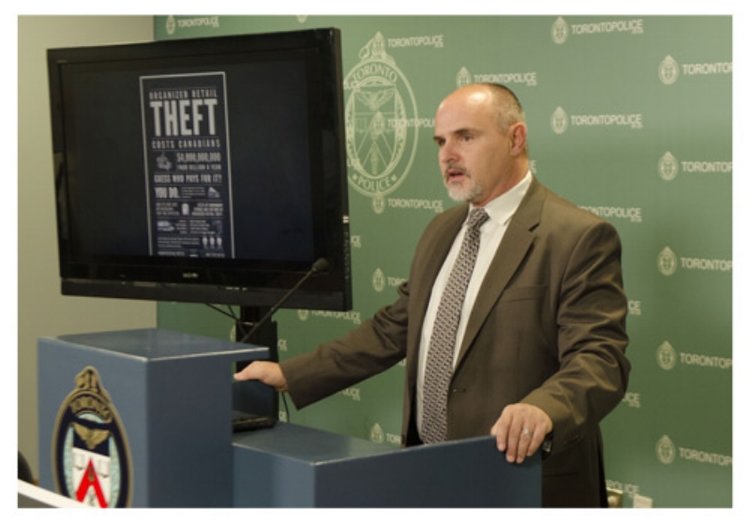
O’Keefe said part of the problem is that there has not been a study that does any type of deep dive into the issue.
“It is an afterthought when a retailer discovers a high shrink and conducts a review to determine the cause. There is a race to the finish line of innovation. A retailer is reluctant to raise their hand to say there is an issue for fear of being outpaced by the competition.”

O’Keefe said the first generation of self checkouts were very problematic because thieves would be able to put more expensive merchandise within other merchandise that was being swiped at the counter.
The second generation of self checkouts had scales but O’Keefe said because of the amount of items that are in a large retailer’s inventory – thousands of items – not all products can be programmed into the system.
Some issues for first and second generation self checkouts also included the lack of detection for counterfeit bills.
“So people were actually using counterfeit cash and throwing them in there in order to launder their money. So they would put a $100 bill in for a chocolate bar and then they would get all of their change,” said O’Keefe.
Today, the problem is when only one person supervises a number of cash registers they can easily get distracted.
“The thing that the retailer needs to be cautious of is that they’re not looking at today’s expenses which are the salary dollars associated with processing the transaction versus the shrink dollars which are not going to hit the P&O (profit and overhead) for at least 12 months in some cases,” he said.
“So your shrink is not billed to your P&O the day you lose the merchandise. It’s only billed to the P&O the day you count your inventory and realize there’s something missing, which could be a year later. It could be deceiving.”

So his advice to retailers is simple. Do a full analysis and return on investment research. Take into consideration some of the deferred expenses.
“And they’re not living the high life today and suffering tomorrow,” said O’Keefe.
“There’s so many of them in place right now. You don’t want to necessarily discourage people and say the sky is falling but there’s been so many studies that suggest that shrink and risk go up. If you have more of the risk appetite, if you’re prepared to accept the fact that your shrink can go up a little bit because of that then you better make sure that your sales go up a lot more to offset it or at least to take market share away from a competitor. There’s got to be a strategic reason why you’re going to do it and not just I’m keeping up with the Joneses.”

Mario Toneguzzi, based in Calgary has 37 years of experience as a daily newspaper writer, columnist and editor. He worked for 35 years at the Calgary Herald covering sports, crime, politics, health, city and breaking news, and business. For 12 years as a business writer, his main beats were commercial and residential real estate, retail, small business and general economic news. He nows works on his own as a freelance writer and consultant in communications and media relations/training. Email: mdtoneguzzi@gmail.com

READ MORE ARTICLES BY MARIO TONEGUZZI
![World’s 1st VUSE Storefront Opens in Downtown Toronto [Photos]](https://images.squarespace-cdn.com/content/v1/529fc0c0e4b088b079c3fb6d/1600809478182-51W99YAKSS061WZZZEA4/ke17ZwdGBToddI8pDm48kGhF2FCaXCFJZFEalRo8kqUUqsxRUqqbr1mOJYKfIPR7LoDQ9mXPOjoJoqy81S2I8N_N4V1vUb5AoIIIbLZhVYxCRW4BPu10St3TBAUQYVKc-1xO4ojbyXh6pGHoSehGwJrj31ldwyDpM9XrZmSoQV1hiaei2FKmHe5-h9rSbF7s/Screen%2BShot%2B2020-09-22%2Bat%2B5.03.35%2BPM.jpg)