



By Ed Strapagiel
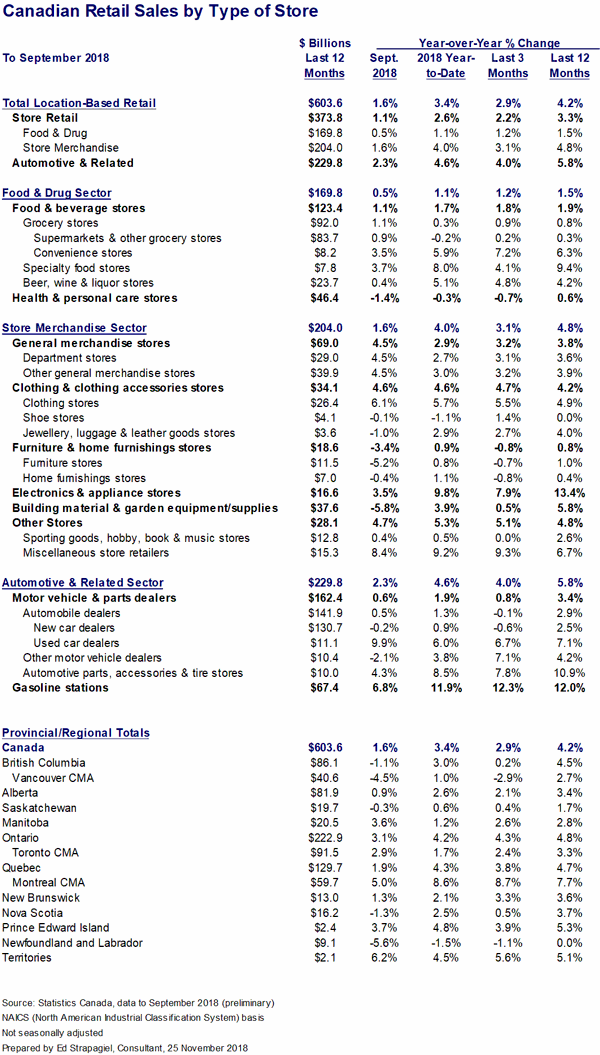
Total Canadian retail sales increased just 2.9% in Q3 2018, per recently released non-adjusted data from Statistics Canada. This was the weakest Q3 gain since 2015, and far lower than the 7.3% gain recorded for Q3 last year. Also, after 9 months of 2018, year-to-date retail sales growth is up just 3.4%, and is likely to end the year even lower if current trends persist.
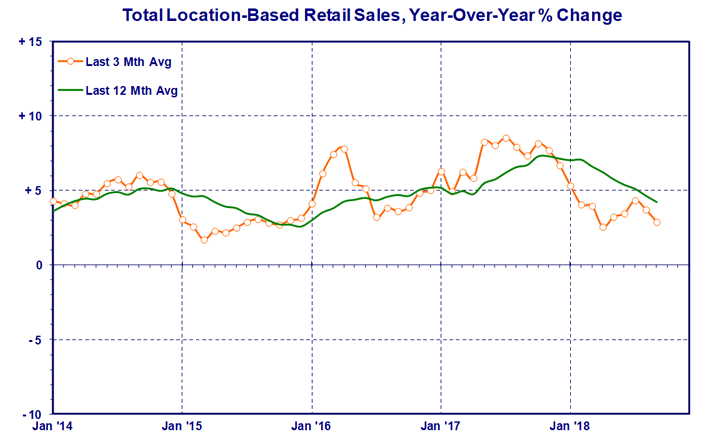
The underlying 12 month trend (green line in the above chart) is on a significant downward trajectory. The 3 month trend (orange line) is even weaker still, indicating more decline ahead. Christmas 2018 doesn’t look too merry at this point.
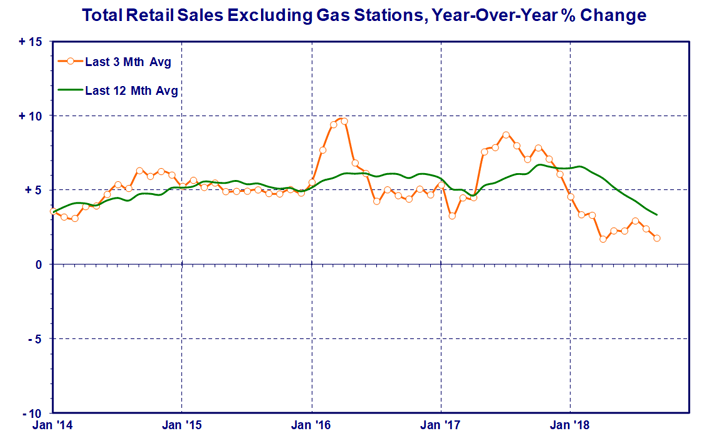
Yet another factor is gasoline prices, which helped to shore up total retail sales growth for much of 2018. That’s starting to change, with pump prices now heading downward. If gasoline station sales are excluded, the 2018 retail sales growth picture looks softer still, and Q3 retail sales growth would be only a thin 1.8%.

Food & Drug
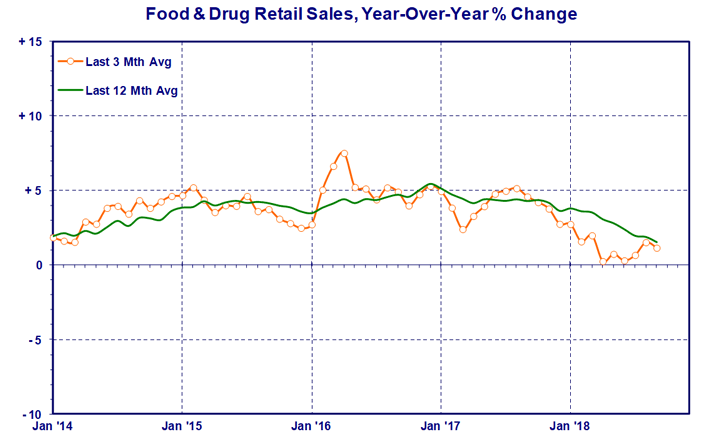
The Food & Drug sector continues to suffer from low to no growth, with some of the lowest retail sales growth rates in 5 years. The sector’s year-over-year increase in retail sales was only 1.2% in Q3 2018, although this was actually an improvement over the dismal 0.3% gain posted for Q2 of the year.
The underlying 12 month trend (green line in the above chart) is suffering a historically steep decline, while the 3 month growth trend (orange line) is even weaker. In short, there’s no relief in sight.
The two big store types in the sector appear to be misfiring on all cylinders. Retail sales at supermarkets and other grocery stores were up just 0.2% in Q3, and health and personal care stores were down 0.7%.
Convenience stores’ retail sales were up 7.2% year-over-year in Q3, while specialty food stores gained 4.1%. These two retailer types however are too small to make a big difference in the Food & Drug sector.



Store Merchandise
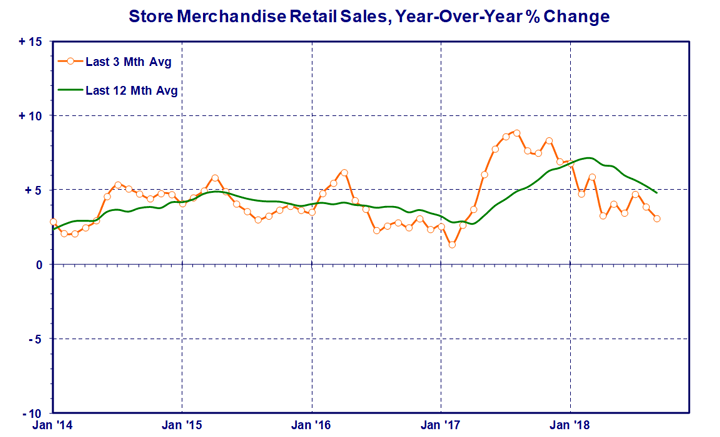
Retail sales growth in the Store Merchandise sector is also in decline, although it’s at a higher level than is the case for Food & Drug. The underlying 12 month trend (green line in the chart above) has been cooling off for most of the year, and the 3 month trend is still tracking even lower. For Q3 2018, retail sales increased a modest but semi-respectable 3.1% year-over-year. Current trends don’t look too positive going into Q4 however, and the Christmas sales season could be a struggle for some retailers.
Electronics & appliance stores continue to out-perform other retailer types in this sector, with retail sales increasing 7.9% year-over-year in Q3 2018. Clothing stores gained a respectable 5.5%. The “grab bag” miscellaneous store retailer group gained 9.3% in Q3, but it’s difficult to know just what’s going on there.
There were some losers too. Home furnishings stores’ Q3 retail sales were down 0.8% versus a year ago, and furniture stores declined 0.7%. Shoe stores gained 1.4% in the quarter, but their sales are still off 1.1% year-to-date after 9 months of 2018.
Note that Statistics Canada is now suppressing the breakdown of general merchandise stores for confidentiality reasons. The figures in the table below are estimates based on previous trends.



Automotive & Related
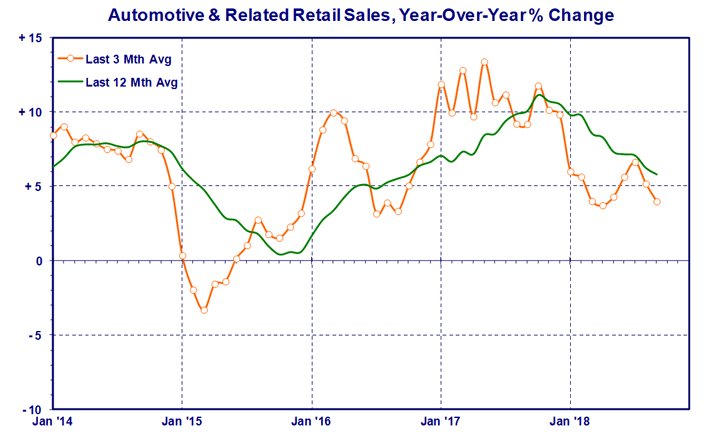
After skyrocketing in the previous 2 years, retail sales gains in Automotive & Related are doing the exact opposite in 2018. Most of this is driven by significantly slower sales at new car dealers, which were down 0.6% year-over-year in Q3 2018. Used car dealers, other motor vehicle dealers, and automotive parts, accessories and tire stores have all out-performed new vehicle sales in Q3 and on 2018 year-to-date sales.
Growing gasoline station retail sales more or less hid the weakness in Automotive & Related (and in Canadian retail overall) for much of 2018. But the bloom is now coming off this rose, as pump prices have declined of late.

By The Numbers
Special Note: Statistics Canada has made updates to 2017 numbers, and has also moved retail storefronts of telecom companies out of electronics & appliance stores and into a non-retail category, Telecommunications (NAICS 513). Retail trade statistics have been revised back to January 2012.

Canadian E-Commerce Sales
StatsCan started providing ecommerce retail sales data in January 2016. While the amount of data is limited, some trends appear to be emerging. Here are some results.
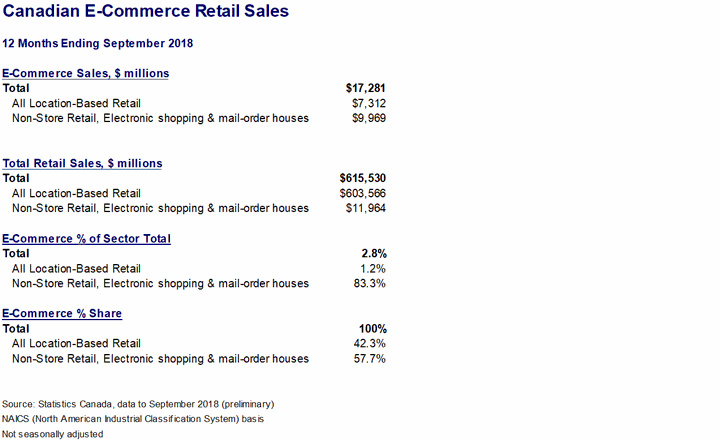
Overall, e-commerce represented about 2.8% of total Canadian retail sales for the 12 months ending September 2018, including both pure play operators as well as the online operations of brick & mortar stores. Canadian consumers however also buy online from foreign websites which is not captured in these numbers.
Canadian e-commerce sales were up 13.9% year-over-year for the 3 months ending September 2018, but this is much less than the 31.3% gain recorded in the same period a year ago. E-commerce retail sales gains are still in double digits, and are still much higher than for location based retail, but growth is slowing down.
Note that location based retail is the same as that in the preceding large “By The Numbers” table. It’s what’s normally reported as Canadian retail sales. Except that it isn’t. Location based retail excludes another section called Non-Store Retailers (NAICS code 454), which includes electronic shopping and mail-order houses, which in turn is where (mostly) pure play e-commerce businesses are. For the 12 months ending September 2018, electronic shopping and mail-order houses had an estimated $9.97 billion in e-commerce sales.

But that’s not the only source of e-commerce, as (mostly) bricks & mortar location-based retailers also sell online. For the 12 months ending August 2018, this group had an estimated $7.31 billion in e-commerce sales. With electronic shopping and mail-order houses, there’s a grand total of $17.28 billion in e-commerce sales by Canadian operators over the year. Note that this does not include foreign e-commerce purchases made by Canadian consumers, but it does include e-commerce purchases made by foreigners at Canadian businesses.
For electronic shopping and mail-order houses, an estimated 83.3% of their sales are allocated to e-commerce. For (mostly) bricks & mortar retailers, it can be estimated that just 1.2% of their total sales come from e-commerce.
In the final section of the above table, (mostly) pure play operators (namely, under electronic shopping and mail-order houses) generated an estimated 57.7% of all e-commerce sales in Canada, while (mostly) bricks & mortar location-based retailers’ share of e-commerce is 42.3%.
For more explanation on the e-commerce numbers, see Statistics Canada: Retail E-commerce in Canada.

This analysis is updated monthly as new numbers are published by Statistics Canada. If you would like notification of when an update becomes available (and you’ve read this far), please connect with Ed Strapagiel on LinkedIn.

READ MORE ARTICLES BY ED STRAPAGIEL