
How Canadian Retailers Can Overcome the Challenges of the Forces that is Ecommerce

Date:

Share post:

By Rich Smith

No one would deny that the face of retail is changing due to the forces of e-commerce.  What we may not fully grasp yet is how that pace of change is accelerating and what it will mean for many industries in even a relatively short time horizon of five to 10 years.  

The truth is that technologies such as virtual reality, 3D printing, nanotechnology, and ever-expanding communications bandwidth are laying the groundwork for the next major shift in retail.   

The big idea and driver of the Industrial Revolution was that value could be created through industrializing manufacturing and distribution.  Today, less and less value is being created by manufacturing. Almost anyone can make anything and the cost of manufacturing keeps decreasing.  Distribution is the next domino to fall. With virtual reality, we can experience places and things without the cost or effort of traveling to them.  With 3D printing we can “print” complex products at home without the cost of going to a store to buy them or having them shipped to us.   
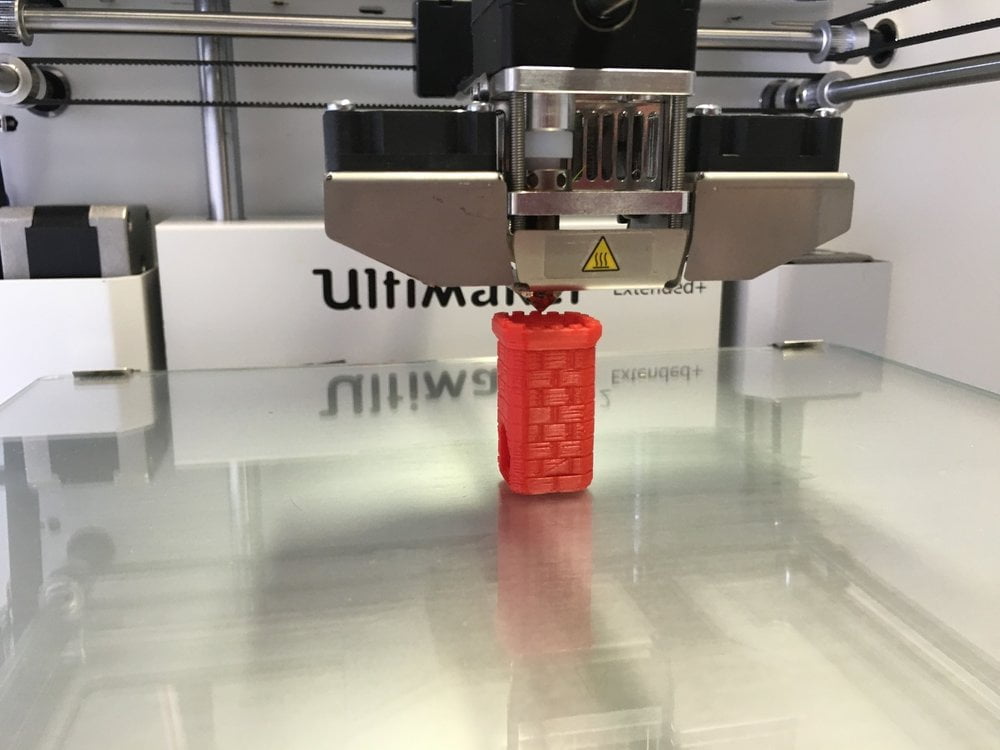
PHOTO: VIA JUSTCREATIVE.COM

When you boil it down then, the true value of any product is not in its manufacturer or distribution.  A product’s real value can be summed up by four things: Idea, Design, Emotion, and Cause.  

The first source of value is the idea that created the product, the concept, thought and intellectual capital that went into it.  Next is its design.  How is the idea put together?  What are the specific parts and dimensions?  As human beings, we are driven much more by our emotions than by reason.  Neuroscientists and psychologists know that most often consumers are motivated to buy a product because of the impulse it makes them feel, and then try to rationalize it to themselves later.  Last is its cause.  This is the reason why a product exists.  Does it serve some higher purpose? What is the story behind its conception?  What is the change it, or its creator, seeks to make in the world?   

In the near future, will you be able to get your martini through a Star Trek-like replicator?  The short answer is yes. Gin is entirely made up of carbon, hydrogen, and oxygen molecules, even including the botanical compounds in it!  These are three ubiquitous elements that are present in all organic matter and could easily be supplied in raw form to your home-based “replicator” or 3D liquid “printer” It’s only a matter of arranging them in the right combination and viola!  You have a gin martini dispensed from your kitchen’s liquid printer. Want to taste the martini from the Bar Hemingway inside the Ritz Carlton in Paris? It’s as easy as purchasing the licensed formula and having your liquid printer produce it for you.  There is no need to travel to Paris.    

So why are many successful e-commerce companies investing in brick and mortar locations?  It comes down to experiences. We like to experience brands and products before we buy them.  It gives us a sense of connection and trust, increasing the emotional value we receive. Until we all have another Star Trek innovation—the Holodeck or full sensory virtual reality machine—in our homes, we will continue to travel to experience products.  This is why high-end brands such as Gucci, Cartier, and Tiffany continue to build boutique retail locations, sometimes even competing with themselves in large cities.   
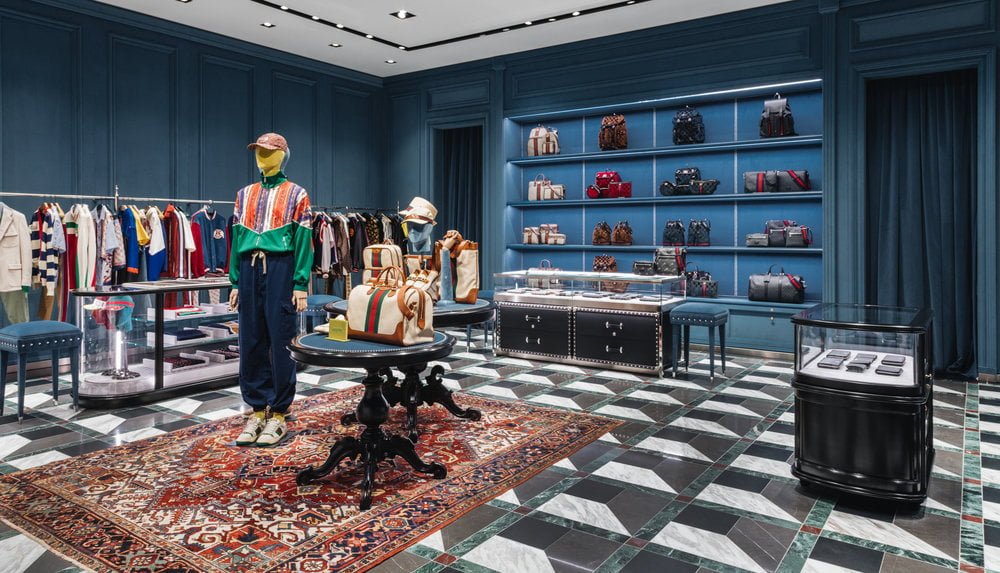
GUCCI’S NEW YORKDALE BOUTIQUE PHOTO: GUCCI

The service industry is also not immune to these forces.  For example, retail banks provide many financial services to consumers where no physical product is involved.  There was a time when you had to travel to a branch to complete these transactions. Retail branch location—in other words, distribution—was a source of value and competition in the industry.  However, with the advance of e-commerce, there is very little need to travel to a branch anymore. Almost all transactions can be completed electronically and thus banks have been closing branches for years.  Nonetheless, to create a greater emotional connection with customers, some banks such as Capital One with its cafes, are creating non-branch branches where customers can experience the bank’s brand.   

As a business leader in the retail, service, travel, and hospitality industries, how do you prepare for these trends?  It comes back to IDEC. Think carefully about the value that you really provide if the limitations of distribution or place and manufacture were removed.  What is the Idea, Design, Emotion, and Cause that you can deliver to your customer and how can you maximize those elements to differentiate yourself from your competition?  That will be the basis of your success in the retail world of the future.

Rich Smith

Based in Philadelphia, Rich Smith is CMO with Chief Outsiders. He works with companies to differentiate, drive customer loyalty, and unlock profitable growth. More info at www.chiefoutsiders.com.


RELATED ARTICLES

Subscribe to the Newsletter

Subscribe

* indicates required

RECENT articles

Ottawa’s Tariff Retaliation Risks Raising Grocery Prices for Canadians

Sylvain Charlebois warns that Canadian counter-tariffs on U.S. food, ingredients and agricultural inputs could raise grocery prices and increase costs across the food supply chain.

AI’s Growth Reveals a Hidden $381.3 Million Problem for Retail Brands: Outdated and Unmanaged Enterprise Content

88% of retail executives say high-quality, well-maintained digital content will be more important to their business success over the next two years than it has been in the past

AI Is Shaping Back-to-School Shopping for Canadian Consumers: Accenture

AI is influencing how Canadians plan back-to-school purchases, with parents using AI tools to compare prices, build shopping lists and find products.

Canadian, U.S. and Mexican franchise groups sign trilateral agreement

The agreement is intended to help franchise businesses better understand and enter each other's markets, including through greater information sharing on regulations, intellectual property, costs, supply chains, consumers and market-entry strategies.

From The Desk: Strategic Adaptation and Growth Define Canadian Retail in August 2026

Canadian retail shows resilience and strategic growth with expansions, AI-driven transformations, and evolving consumer behaviours amid economic challenges.

Daily Synopsis: August 21, 2026

FreschCo opens 1st Atlantic stores, Apple stores prepare for product expansion, Lordco expands in Western Canada, thrift stores deal with excess donations, Columbia House Records shuting down, and other news.

Canada/U.S. trade talk collapse to lead to immediate and significant impact on small business: CFIB

"A full 40% of small Canadian exporters will be directly hit by these tariffs and nearly one-third expect their revenues will drop by 50% or more as a result."

Joe Mimran Outlines Product and Global Growth Plans for Roots

Joe Mimran discusses plans for Roots product, stores and U.S. growth as Marquee Brands and Roots CEO Meghan Roach point to significant international expansion.

Shoppa.ca launches online marketplace for Canadian-owned businesses

The marketplace includes businesses from across the country and products in categories including beauty and skincare, apparel, home and living, pets, kids and baby, food and wellness.

Canadian retail sales surpass $74 billion in June: Statistics Canada

Core retail sales rose 1.2% in June, posting their second consecutive monthly gain.

Good Earth Coffeehouse opens new location at Indigo Metrotown in Burnaby

The opening adds another location to Good Earth's network of more than 50 coffeehouses across Canada.

TJX Says Winners, Marshalls and HomeSense Are Gaining Major Market Share in Canada

TJX says Winners, Marshalls and HomeSense are gaining major market share in Canada as customer transactions rise and the retailer expands in prominent malls and downtown locations.

Home Depot Canada Sales Accelerate Despite Challenging Housing Market

Home Depot Canada outperformed the broader company in Q2 as comparable sales, transactions and unit growth improved despite a subdued housing market.

AutoCanada Sees Canadian Auto Market Remaining Challenging

AutoCanada says affordability pressures continue to weigh on Canadian vehicle buyers as it improves dealerships, used sales and collision operations.

Canadian sponsorship spending reaches $4.7B as industry study marks 20 years

Professional sport continues to account for the largest and most significant sponsorships, but the study found that brands are spreading spending across a broader range of categories.

Daily Synopsis: August 20, 2026

FreshCo expands in Nova Scotia, Circle K promotes customized drinks, downtown Ottawa retail expected to return to pre-pandemic levels, Kiokii and opens in Windsor, and other news.

Roots to Go Private as Joe Mimran Takes Key Operating Role

Roots has agreed to go private in a $4.10-per-share deal that will see Joe Mimran and Frank Rocchetti’s JM&A take a central operating role in the Canadian retailer.

Cargojet Sees E-Commerce Growth as Retail Shifts in Smaller Canadian Markets

Cargojet says e-commerce is driving growth in secondary Canadian markets as store closures and changing inventory strategies reshape retail distribution.

Boston Pizza Accelerates Canadian Restaurant Renovations, Adds New Locations

Boston Pizza is ramping up investment across Canada with more than 40 restaurant renovations possible in 2026 and three new locations under construction.

HelloFresh Expands Factor Across Canada as Ready-to-Eat Strategy Grows

HelloFresh is expanding Factor across Canada as it invests in ready-to-eat meals, new distribution channels and a broader convenience-food strategy.