A pilot pop-up project last year for Manitobah Mukluks in three Canadian shopping centres was so successful that the company is expanding its number of retail locations this year to 18 stores in several major cities.
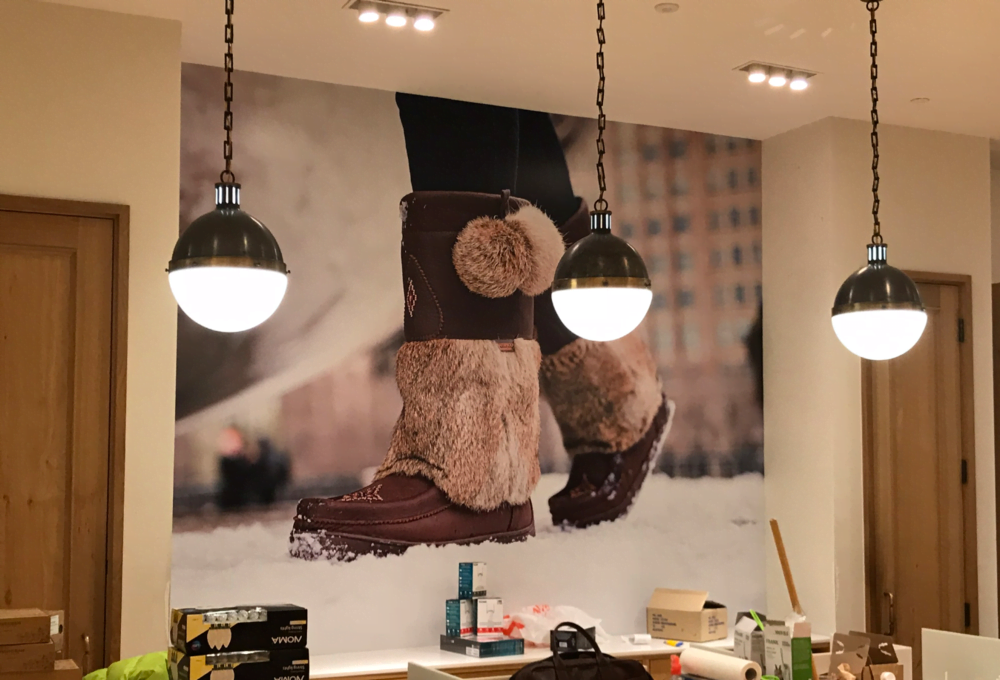
The company’s success is in producing and selling the original winter boot of Canada.
“We sell indigenous footwear. We sell footwear of all types. Our main product is what we call the original winter boot – the mukluk. Indigenous people have survived for thousands of years in the harshest conditions on earth wearing mukluks,” said Josh Fine, Chief Brand Officer and Partner with Manitobah Mukluks.
Fine’s business partner is CEO Sean McCormick – a Metis entrepreneur who started the business in 1997. Fine partnered with him in 2008 to establish the Manitobah brand as people know it now. McCormick had a tannery and was tanning leathers and furs. He started trading them for moccasins and mukluks, leathers and furs, with indigenous makers. But over time he couldn’t get enough moccasins and mukluks to sell to gift shops and trading posts so he started making them himself.
“And it kind of grew from there,” said Fine. “He started selling them as a gift item but when I met him we had this vision of it’s such a great story here – both his story and the story of the mukluk itself and the product and the community story – how do we tell that story to more people was really my job. That’s why and how we partnered.”
The company’s most traditional mukluks are what it calls Storyboots which are the most authentic product handmade by indigenous people in their community with 100 per cent of the proceeds going back to those artists.
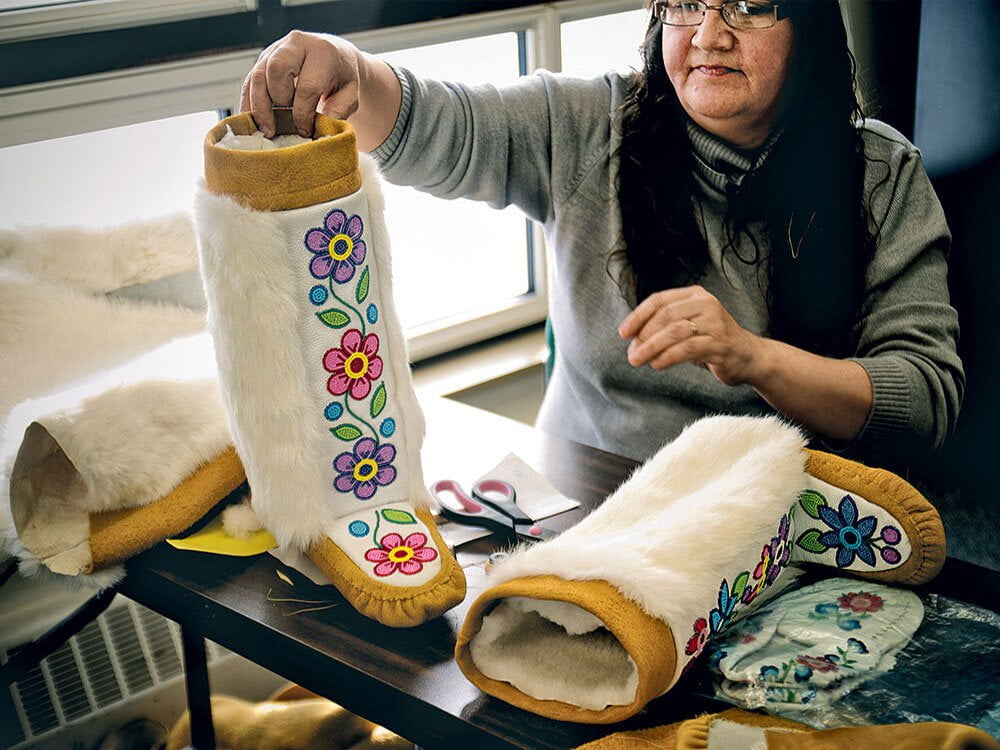
PHOTO: MANITOBAH MUKLUKS 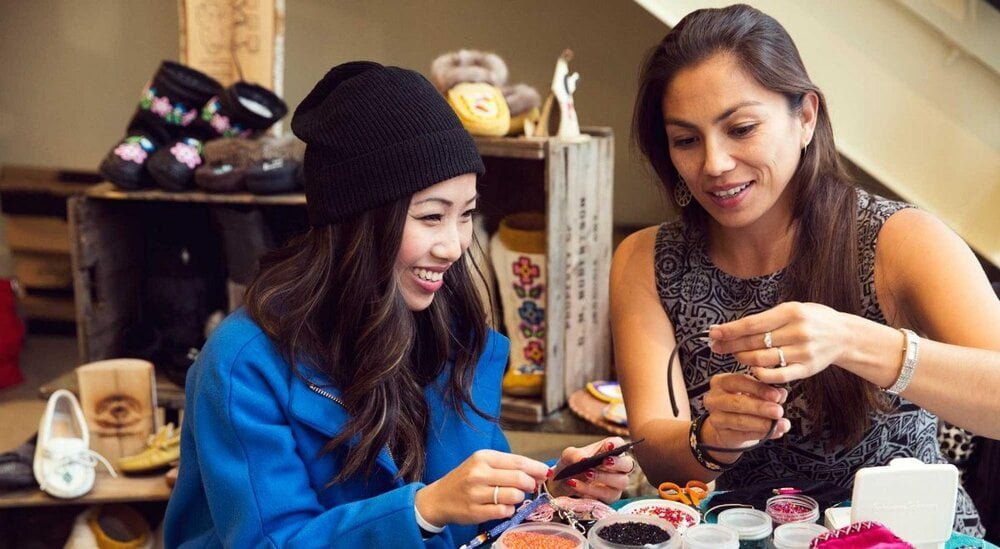
PHOTO: MANITOBAH MUKLUKS
“We’ve combined that traditional product of the mukluk with modern materials and techniques. We didn’t invent the mukluk. We borrowed the mukluk as a design and we innovate on it certainly and partner with the most innovative people in the world to do it. We think there is a lot of innovation built into that design that people have let go,” said Fine. “So whether it be the flexibility in it, the natural materials, there’s no right/left foot on a mukluk believe it or not. There’s magic that is built into this historic design that people have forgotten about,” said Fine.
“So what I found as I brought the mukluk to the world is really we just have to tell that story. People have to try the product. It’s the most comfortable, the warmest boot anyone’s ever tried. People need to get the story because it looks different than the other winter boots out there.
“In the Prairies people get it. They get that this is a legitimate winter boot that’s really going to protect you better than some other high tech winter boot. But as soon as you leave the Prairies and you get into Toronto downtown, or New York, Chicago, or L.A., all of a sudden it’s a statement or a costume. And so we’re really trying to get away from that and tell people no this is function. We’re actually a performance brand here. It’s not meant to be fashion. It may be fashionable but the function of it is something that people don’t intuitively understand and so we need to communicate that and we need to tell that story. It’s really these pop-up experiences that we’re establishing where we’re telling that story. And so we’re trying to do it in places where people don’t quite understand it.”
In the fall and winter of 2018, three pilot pop-up stores were set up in CF Rideau Centre and Carlingwood Shopping Centre in Ottawa and West Edmonton Mall. All three stores over-achieved the company’s expectations.
The company jumped on the opportunity this year to take advantage of that success. It has 17 locations across the country – four in Calgary, two in Edmonton, five in Ottawa, and six in Toronto area.
It will be opening a location in the CF Toronto Eaton Centre in November.
The pop-up experiences are all temporary and open until Christmas. The company also has an online selling platform.
“We’re pretty new at it. We did three stores last year. They were so successful. It’s a pretty big expansion this year. Yes they worked very well and we plan on doing more. I think so far the results are exceptional and so we’re very excited about the prospects of using these to build the brand not only in Canada but outside of Canada as well,” said Fine.
Manitobah also partners with more than 600 retailers, from small trading posts to national chains such as Cabelas, Nordstrom, Holt Renfrew, and Sporting Life.
The company has three different types of manufacturing for its products – the storyboots which are authentic, handmade items by indigenous people; the Canadian production is made in its factory in Winnipeg; and there is a line of products made in Vietnam.
“We wanted to make footwear. We didn’t want to just make traditional footwear. We wanted to make modern footwear that we could scale on a global level and we found that we just didn’t have all the capacity and capabilities and economics to do it here at home. At the same time, we found it was difficult to find good partners that we could trust that abided by our same philosophy overseas,” said Fine. “We established our factory there. We partnered with someone in Vietnam. It is a factory that we own and control that is fair trade that we visit and it’s really allowing us to scale globally.”
Fine said more than half the company’s staff is indigenous and it hires indigenous performers and teachers to teach workshops.