

Swedish home furnishings retailer Ikea plans to open at least one small-format store in downtown Toronto within the next two years as it expands its urban store concepts globally. Given expansions in other parts of the world, other Canadian urban centres are also expected to see similar stores amid the company’s efforts to gain market share.
The company made the announcement at an event on Wednesday in Toronto where it also announced its most recent sales numbers. Ikea’s Canadian president, Michael Ward, explained how the retailer is making changes to its retail strategy, including targeting urban dwellers who may otherwise not make a trip to the suburbs to shop at an Ikea store.
Mr. Ward said that downtown Toronto would be first in Canada to see such a store format. Given Ikea’s urban store expansion in markets such as Australia, other Canadian cities with robust high-density cores such as Vancouver and Montreal could also be targets for smaller Ikea showroom concepts.
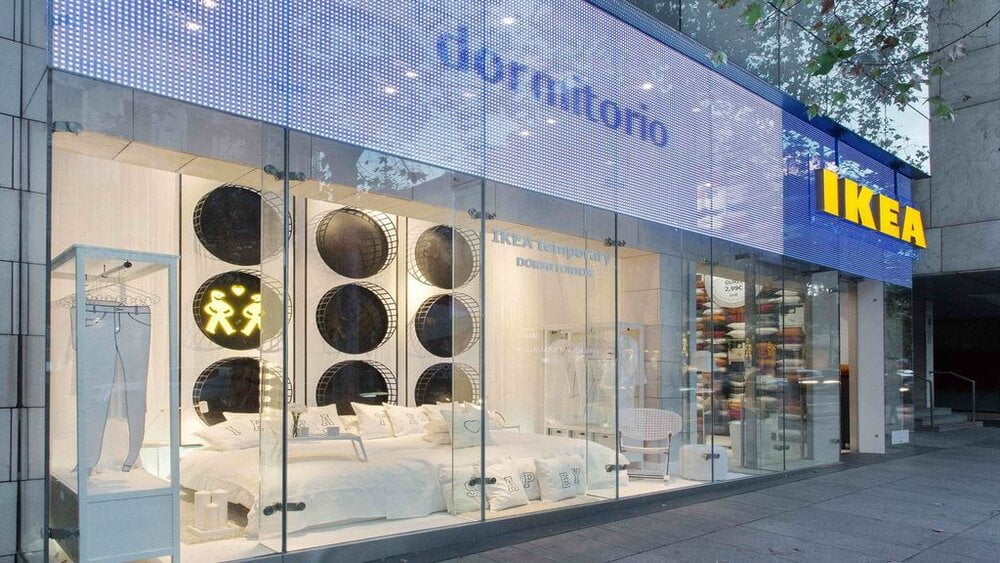
The Ikea small-format stores include three concepts that range in size from slightly more than 5,000 square feet to more than 50,000 square feet. A store in Manhattan, which spans about 5,400 square feet, focuses primarily on services. A store in central Madrid, featuring showrooms for living rooms and bedrooms, is an example of a store concept which typically spans 25,000 to 30,000 square feet. Another concept dubbed ‘extra small’ spans about 55,000 square feet and showcases a broader range of categories — a store in Paris spanning 54,000 square feet offers a selection of 1,500 decorative accessories and small pieces of furniture that can be purchased immediately, while larger items are available for home delivery. The highly experiential retail space features a restaurant and offers themed workshops.
Ikea also announced in April of this year that it would introduce its ‘Home Planning Studio’ concept in Australia. In the pilot concept stores, consumers sit down for one-on-one consultations with an Ikea employee to plan and build rooms such as kitchens, bathrooms and bedrooms. Orders can be placed for home delivery or for pick-up at the store. Technology such as tablets are used. Between five and eight of these store concepts are expected to open in the metro Sydney region alone, with other markets including Melbourne, Brisbane and Perth also in line for multiple locations. Each of these will be between 1,100 square feet and 1,600 square feet.
The retailer has also been testing other smaller city-centre formats, such as a kitchen showroom in Stockholm, as well as a bedroom showroom and accessory space in Madrid. Ikea is also rolling-out order and pick-up points in major markets.
Several Canadian cities feature high-density urban cores that Ikea is likely to target. Downtown Toronto is a target according to Mr. Ward, and the city could see multiple small-format Ikea stores depending on the retailer’s strategy, including what concepts it deems will work in certain areas.
Downtown Toronto, which has a population approaching 300,000 residents, is seeing a population boom that could see more than 500,000 people living there within the next 20 years. Retail space is mandated at the base of many buildings constructed on major streets, providing Ikea opportunities to test out small-format concept stores in a variety of sizes.

Vancouver’s downtown peninsula houses more than 120,000 residents, and the city’s dense core could also be a target for Ikea. As with Toronto, many residents in downtown Vancouver live in small apartment units and may utilize transit or cycling rather than driving a private vehicle.
Montreal’s downtown core population is about the same as downtown Vancouver’s peninsula, and Montreal is also seeing a building boom that will add several thousand new residents in the coming years.
Urbanization is taking hold in other cities in Canada as well. Downtown Edmonton and Calgary are seeing new residents as developers build new condominium and apartment towers, and Ottawa and Winnipeg are also seeing increasing urban populations. It’s a trend seen in other cities in North America as downtown cores are increasingly seen as desirable places to live.
Congestion is also helping fuel demand for downtown housing in major Canadian cities. Toronto was recently ranked as the worst city in North America in terms of commute times, and sixth in the world. The congestion has resulted in households, even families with children, looking to the urban core to be closer to jobs and other amenities. Given the incredible congestion in Toronto, many have chosen to take transit or cycle rather than driving a car, and many new condominium developments limit parking availability. We reported this week on a proposed tower at 80 Bloor Street West in Toronto that would cantilever over Harry Rosen’s flagship store — the tower’s plans show 1,430 condominium units with only 140 parking spaces dedicated to residents. It’s more than likely that parking spaces will only be made available to purchasers of larger units such as penthouses and 2+ bedroom homes.
Ikea’s move into urban cores is an intelligent move as the younger generations increasingly move downtown. Urban life offers vibrancy as well as ample amenities, and many companies with headquarters in the suburbs have either relocated to downtown locations, or are looking to do so. Many of Ikea’s furniture designs are geared towards small-space living, and the retailer has been testing pop-up concepts in markets such as Toronto for the past several years, drawing crowds. Some are surprised Ikea hasn’t already opened in downtown Toronto after lineups at an Ikea pop-up on King Street West in the spring of 2016.
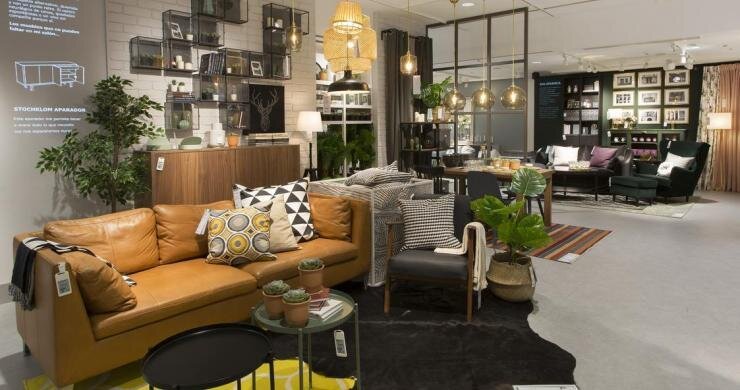
At the same time, other furniture concepts are also targeting urban dwellers, and Ikea is no doubt looking to take market share. Winnipeg-based EQ3, which recently opened its first US-based store in Manhattan, has been targeting urban dwellers with home furnishings offerings geared towards tight condominium living. Concepts such as Urban Barn have opened in high-density areas with a focus on urban dwellers. Crate & Barrel-owned CB2 targets urbanites in Toronto and Vancouver with stores housing product similar in style to that of Ikea, and generally at a higher price point. Other disruptors such as mattress-in-a-box brand Casper are expanding into Canadian markets, having opened urban locations in Toronto and Vancouver over the past year. Sleep Country Canada, as well, has a network of urban stores, and many other furniture concepts, ranging from chains to independents, now operate in Canadian urban centres.
While the cost of living may be high in Canadian cities, young urbanites appear willing to spend money on furniture items which has led to the success of Toronto’s King Street East ‘Design District’, as an example. The flood of new residential units in markets such as Toronto, Montreal and Vancouver means that there’s continued demand for new furniture offerings. Tech booms in all three cities have resulted in young households with high incomes, and retailers are taking notice.
As Ikea makes its move into urban cores in Canada, it will compete with retailers already targeting urban dwellers. Ikea’s prices are lower than most of the competitors, while at the same time offering furniture designs that appear similar to pricier offerings. If Ikea were to launch a similar expansion by opening multiple locations such as is the plan in Australia, smaller urban-focused furniture retailers could stand to lose significant market share.
Ikea has already seen success in the Canadian market. At a Wednesday event in Toronto, Ikea provided updates on its financial performance in Canada. For the fiscal year ending August 31st, the company saw sales of a whopping $2.53 billion in Canada, which was a 6.1% increase over the previous year. In-store visits registered at 31 million people, which was a 2.7% increase over the year prior. Ikea’s e-commerce portal Ikea.ca saw 117.2 million visits over the 12 months with sales of $261.2 million, which was 12% higher than the year before.
The retailer also discussed its eco initiatives with an aim to be climate-positive by 2030. Ikea’s Sell-back program offers store credit for gently-used Ikea products. In May of this year, the retailer phased out plastic straws from its stores amid a global commitment to eliminate single-use plastics by 2020.
We’ll follow up on this article when Ikea begins opening urban concept stores in Canadian cities, the first of which is targeted for downtown Toronto in either 2020 or 2021. Other areas of the city are also being examined, according to Mr. Ward. At least one ‘extra-small’ Ikea store is expected for the core, which could span in excess of 50,000 square feet. The ‘planning studio’ concept is also being examined for the city amid a global expansion for Ikea’s smaller urban store concepts, which are likely to land in other Canadian cities in the coming years.