Advertisement
Advertisement

Chinese Consumers Drive Luxury Retail Growth in Canada: Study

Date:

Share post:

A new study conducted by market research firm Vivintel, the custom research arm of Vividata, has found that nearly 1.2 million Chinese consumers (aged 18 and over) in Canada account for $61 billion in self-reported consumer spending.

“With the growing number of Chinese living, working and studying in Canada, the need to understand this consumer segment is of significant importance to Canadian marketers, particularly with regards to luxury brands. We are excited to be launching this new ethnicity study which will help marketers understand what is driving consumption and enable them to better influence media buying decisions amongst this consumer group,” said Pat Pellegrini, President and CEO of Vividata, a consumer and media research company.
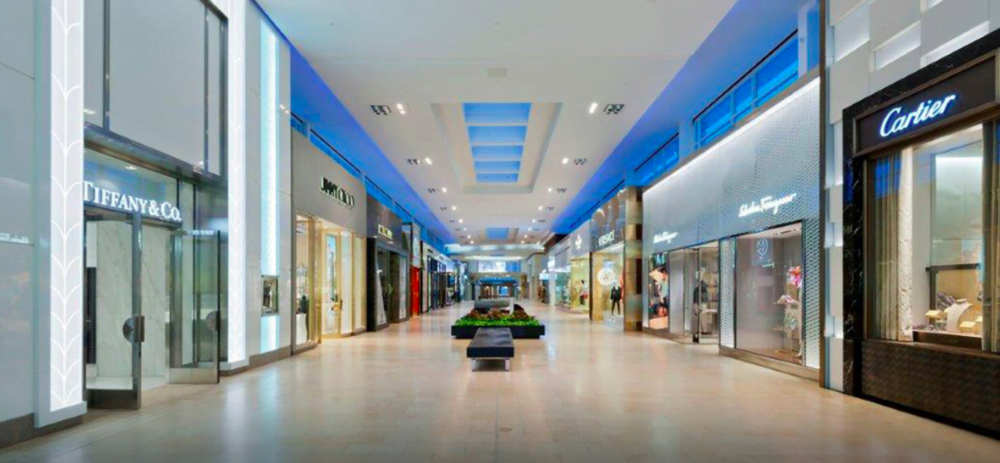
YORKDALE SHOPPING CENTRE IN TORONTO. PHOTO: OXFORD PROPERTIES

“Our numbers are affirmation for many of the trends and assumptions and beliefs that were held by agencies and media planners and buyers (in Vancouver) working with the Chinese. I believe we have captured the audience we were looking for, the consumer we were looking for, in a syndicated way so that everybody could benefit.”
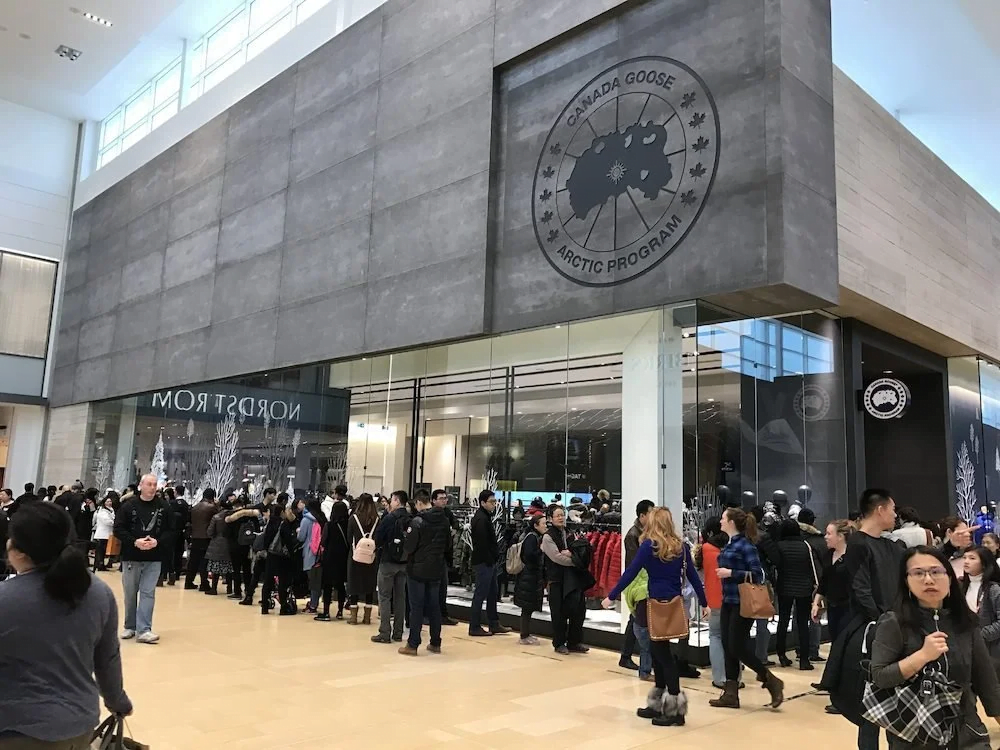
PHOTO: CANADA GOOSE, YORKDALE

Some of the key findings in the ‘Ethnicity Study: Insights into the Chinese Consumer’ are:

  • One in three Chinese consumers in Canada agree with the statement, ‘I buy luxury brands to feel different from the rest of society’. This is even more so the case with Chinese international students, of which there are nearly 70,000 in Canada, who indicate an even greater affinity to luxury brands than the general Chinese population;

  • 40 per cent of Chinese consumers in Canada report that they “prefer to drive a luxury vehicle”. This is most noticeably the case among those in Canada on a temporary work permit; 52 per cent of those on a temporary work permit prefer the same; and

  • There are roughly 490,000 Chinese consumers in Canada that are not Canadian citizens and were not born in Canada. 53 per cent of this consumer segment report that they pay more attention to advertising in their own ethnic language.

PHOTO: REDDIT

“We can see some differences between Vancouver and Toronto Chinese. Vancouver had more people coming from Hong Kong in the past than mainland China and now kind of switching back around. I think that’s less though in Toronto,” said Pellegrini.

“It’s a very powerful consumer group. They don’t react to the market. They shape the market. When you see the differences between the buying power that they have, their preference for luxury brand, the amount of spend that they do in the first few years of moving into Canada, it’s got a huge impact.”
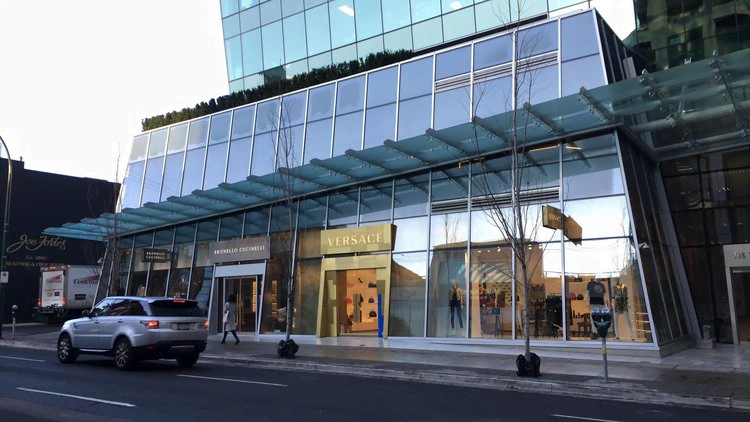
745 THURLOW STREET IN VANCOUVER. PHOTO: LEE RIVETT

Vivintel surveyed just over 2,500 respondents (aged 18 and over) residing in Toronto and Vancouver who identified as being of Chinese origin.

“We often fall into a hole when talking about the Chinese Canadian consumer,” said Sonny Wong, President and Creative Director of Hamazaki Wong Marketing Group. “We tend to lump the Chinese government and Chinese consumers into the same pile, preventing us from making the rational marketing decisions we make for other consumer segments. A study of this depth and calibre will allow marketers to better understand the Chinese population in Canada and create more relevant marketing strategies and targeted campaigns.”

PHOTO: DIGITAL COMMERCE 360

“Historically, there has been a major gap within the industry for research that looks into the ethnic consumer market, specifically around media habits and buying patterns. Chinese consumers are an increasingly significant part of the Canadian population, making a syndicated study like this long overdue. Vividata’s study into Chinese consumers in Canada will provide us with the insights we’ve been missing to effectively target this group,” said Chris Herlihey, VP, Analytics and Insights, IPG Mediabrands.
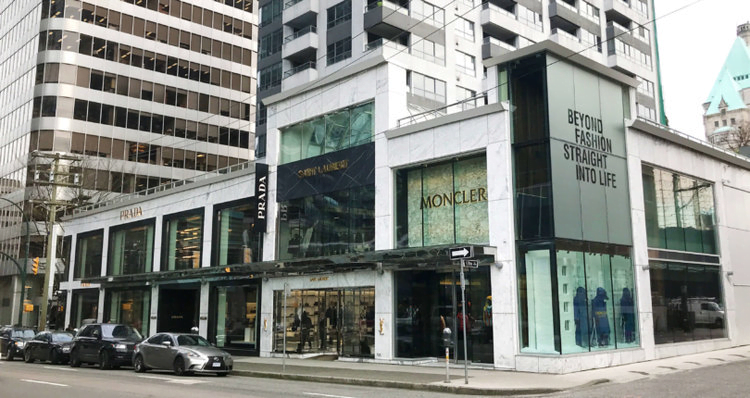
THE CARLYLE LUXURY COMPLEX ON ALBERNI STREET IN VANCOUVER. PHOTO: LEE & ASSOCIATES

Whether the Chinese consumer becomes an even larger part of the Canadian retail market share in the future is up in the air due to a number of political and trade factors currently in play.

“The relationships now with China and Canada, and even the United States, there is a dynamic that may see immigrants and obviously spending power from mainland China perhaps slowing down and maybe a new small bump of repatriated citizens from Hong Kong,” said Pellegrini. “So they were from Hong Kong, became Canadian citizens, went back to Hong Kong and now with the turmoil in Hong Kong, deciding to maybe come back.” Pellegrini said the Chinese consumer has a strong preference for luxury brands.

For example, he described Vancouver as the “luxury car capital of North America.”

“Wherever there is a significant proportion of international students you are going to see an impact on sale of luxury brands – not just automobiles,” he said.


LEAVE A REPLY

Please enter your comment!
Please enter your name here

More From Retail Insider

RECENT RETAIL INSIDER VIDEOS

Advertisment

Subscribe to the Newsletter

Subscribe

* indicates required

RECENT articles

Rising Carbon Pricing in Canada Strains Grocery Supply Chains

Opinion: Rising carbon pricing in Canada may increase transportation and logistics costs across grocery supply chains and food distribution networks.

From The Desk: Canadian Retail Reinvention amid Expansion and Rising Costs

This week’s Canadian retail landscape blends strategic expansions with cost pressures, highlighting physical growth and evolving shopping behaviours amid economic chal...

Changes to Temporary Foreign Worker Program applauded by business groups

Helping employers who are facing severe labour shortages.

Canada loses 84,000 jobs in February, unemployment rate increases: Statistics Canada

The largest declines were in wholesale and retail trade (-18,000; -0.6%).

Happy Belly Food Group targets up to 50 new restaurant openings as same-store sales remain strong: Sean Black interview

The company’s “core four” growth brands are Yolks, Rosie’s, Heal and iQ Food. New restaurant openings planned for this year will largely come from those concepts.

Small businesses call for stronger domestic energy supply amid global uncertainty: CFIB

An overwhelming majority (90%) of small businesses say governments should prioritize increasing Canada's energy production and capacity to better support the economy and ensure businesses have reliable access to the energy they need to operate.

The New Luxury Client in a Relationship Era

How The New Luxury Client is reshaping Canadian luxury retail through ritual, clienteling and emotional connection.

Bespoke Made Suits Opens Downtown Vancouver Showroom

Vancouver-based Bespoke Made Suits expands with an appointment-based tailoring showroom near the city’s Financial District.

Daily Synopsis: Mar 12, 2026

Cuba's fuel shortage impacts Canadian cigar stores, Manitoba asks Sobeys to scrap property restrictions, Ontario to allow shopping on 2 public holidays, alcohol in corner stores impact worker safety, redevelopment of former Sherwood Park Safeway, and other news.

73% of Canadians Now Shop Chinese Marketplaces

Survey finds 73% of Canadians shop Chinese marketplaces like Temu and Shein as monthly and weekly usage continues to grow.

Canadian hotel industry sees steady growth as leisure travel drives performance: Cushman & Wakefield

2025 ranked among the stronger years for hotel transactions over the past two decades, highlighted by several notable full-service and luxury hotel trades.

Article Expands Brick-and-Mortar Retail with Toronto Showroom

Vancouver-based furniture brand Article expands brick-and-mortar retail with a 9,600-square-foot Toronto showroom in King West, marking its second physical store.

Empire Company Limited reports Q3 financial results

Sales of $7,890 million, an increase of 2.1%.

Chatime focuses on strengthening brand leadership in Canada as expansion continues cautiously: Trinh Tham interview

Chatime currently operates about 100 locations across Canada, primarily in Ontario and British Columbia, and opened six new stores last year while preparing additional locations that are expected to come online this year.

VIDEO: 87% of Canadians feel financially trapped by rising living costs: Harris & Partners

85% report their overall monthly expenses have increased in the past 12 months

Butterly Trust Index Maps AI-Era Product Reviews

Butterly’s 2026 Trust Index shows how honest, balanced reviews influence AI-led discovery, and what Canadian brands and retailers can do next.

Abercrombie & Fitch Expands Canadian Store Network

Abercrombie & Fitch expands in Canada with new stores planned in Winnipeg, Ottawa, Calgary and London ON, and a reopened location at West Edmonton Mall.

Daily Synopsis: Mar 11, 2026

What might be next for Roots, Pokemon cards hot for theft, downtown Sudbury mall wins legal battle over 2004 Zellers exit, and other news.

Women Entrepreneurs Reshape Canada’s Franchise Industry

Women entrepreneurs are gaining momentum in Canada’s franchise sector, with leaders expanding into construction, automotive, and skilled trades.

Future of Calgary’s Hudson’s Bay Building Discussed

Experts will discuss the history, current status, and potential future of Calgary’s historic Hudson’s Bay building at a public event on March 26.