By Nicholas Reichenbach
As people who “consume”, we have an emotional connection or at least an emotional reaction to the concept of shopping in a store or even buying online, something we want or need. We are, after all, people conditioned to consume. It’s the nature of capitalism: that we purchase products we like or need, produced by others, and keep the economy chugging along.
Not being able to patronize some of our daily shopping experiences, while in COVID lockdown, has had effects on our emotional connection to the act of consumption, that may or may not be immediately apparent, but have resonance.
Pre-COVID-19, the sentiments we associated with grocery shopping were wide-ranging: a trip to the grocery store could feel like a chore. Shopping for meat or fish could lead to a feeling of inspiration to cook something new. Strolling down the natural foods or international foods aisle could be a treasure hunt and bring joy or surprise. Finding that a favorite fruit or vegetable is in season can lead to elation when you find them at the earlier than expected.
But during COVID, shopping for so many became a dreaded, emotionally-charged experience focused on personal safety and speed. Then for some, it evolved into a lesson in compassion: seeing the anxious grocery employees deal with also anxious and sometimes angry and frustrated shoppers. Seeing these store employees risking exposure every day to help us buy food, made many of us realize it wasn’t just about filling our carts in the least amount of time possible.
But we’re now heading back to some level of normalcy when it comes to shopping for food and household necessities. And we can properly evaluate our emotional and psychological connection to that shopping experience.
What changed for us because of the shopping dynamic? What changed for good, and what will continue to change? Here are some things I hope we as consumers, manufacturers, marketers – really, people – will remember.
The value of the grocery store treasure hunt. During COVID, our urgency to get in and out of the grocery store, or us sending a proxy to shop via services like Instacart, changed our relationship with the “treasure hunt.” Even the most utilitarian of grocery stores cater to the treasure hunt, whether it’s the introduction of new products or a suggestion from someone at the fish counter that some fresh fish just arrived. We enjoy the hunt because it appeals to our curiosity and sense of discovery. Even if we spend less time in the grocery store because we’re having groceries delivered, or buy certain products through a brand’s website or Amazon, we need to remain curious about all the new items in the grocery store. It’s educational, of course, but also a point of human connection when we share something we discovered and like, with someone else in our lives. It’s how the demand for a product is created and how brands are built.
Finding the positive in new shopping habits formed during COVID. For some, the idea of a stranger selecting their fruits and vegetables became the norm. I have a friend who swears by farmers’ markets and insists on selecting all of her fruits and vegetables by hand. And during COVID, she placed that responsibility into the hands of strangers and realized that what they selected versus what she might select, were barely indistinguishable. And at the heart of that, is trust. Feeling you can trust an anonymous service provider found through an app, to make sure that fresh, beautiful food arrives for you or your family, is a great feeling that can feed positivity.
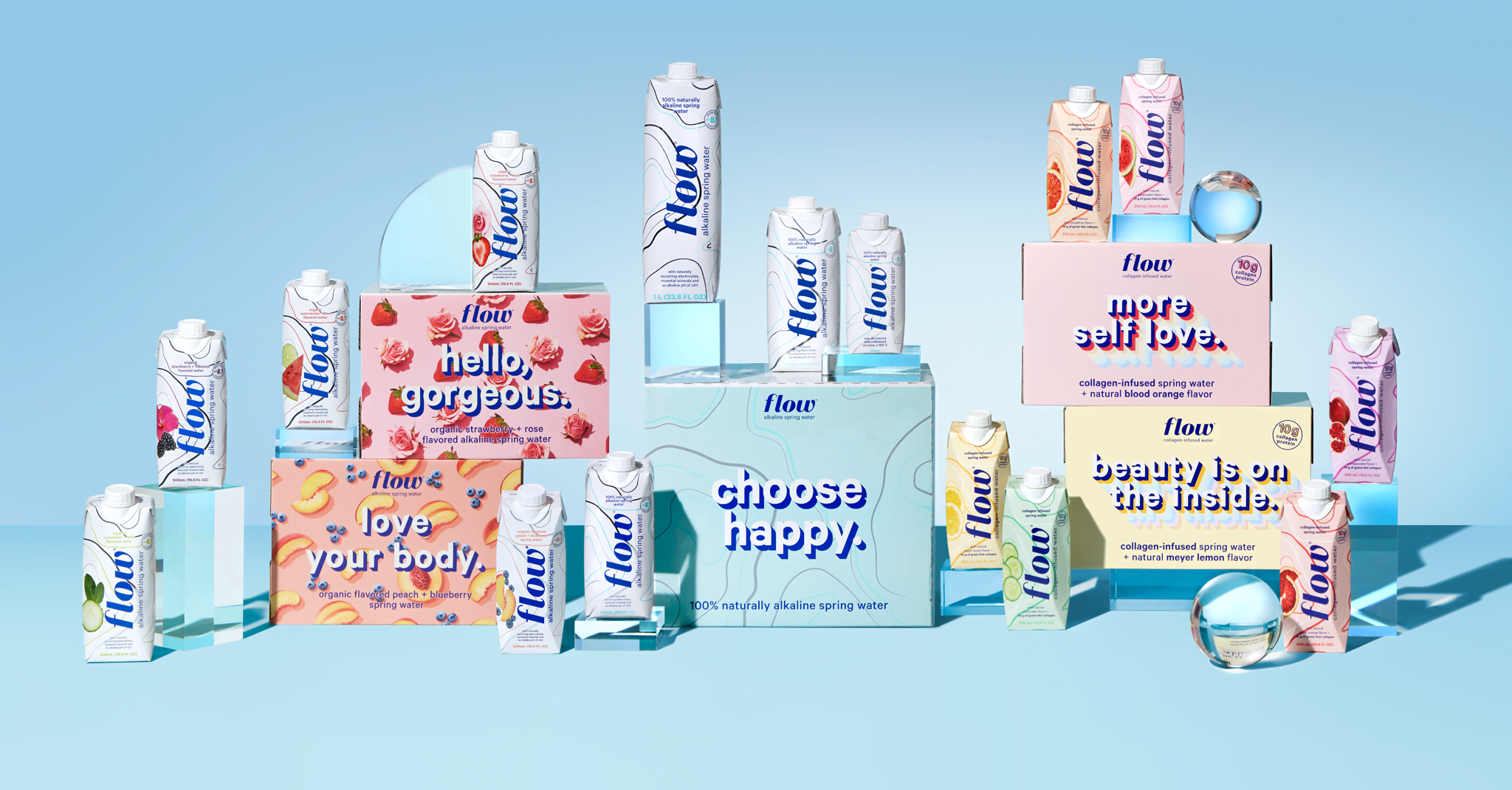
The importance, for brands, communicating to consumers with all of our packaging. I’m not talking about nutrition facts and boldly-colored messages of lower calories. I’m talking about messages of positivity and optimism, shared in subtle ways, that help manufacturers connect to consumers over time, on an emotional level. For Flow Alkaline Spring Water, our multipack waters include simple messages like “Time to Shine.” When we designed the boxes, we did so because we wanted to charm our consumers in a tiny way. And during COVID, when our direct-to-consumer business spiked, we found that a simple message was as connective as any expensive marketing campaign we’ve run. It’s so easy to give someone a little smile when they take your product home or open the delivery box. And we realized, not enough brands send a simple, happy or positive message on their packaging. It’s a small detail that makes a big difference for a newly engaged consumer who has been revisiting their brand choices this past summer.

Nicholas Reichenbach is the founder and CEO of Flow, a sustainably packaged spring water company.
A seasoned executive & serial start-up, investor and consumer product entrepreneur, Nicholas has built a robust track record, founding, creating and building multiple businesses in the consumer goods, social media, internet/mobile technology, entertainment and hospitality space; Flow ( a socially responsible water company), Mindfull INC (an organic Food & Beverage company), Rabbit (a leading social video chat platform venture-backed by Google Ventures, CrunchFund and other leading VCs), GuestDriven (a leading start-up in hospitality/hotel SaaS with clients such as Thompson, Hyatt & Intercontinental), Magmic Games (Voted top 10 mobile social game & app publisher having produced over 300 games from Guitar Hero mobile to NewYork Times Crosswords) and Bplay( One of the largest mobile smart phone direct-to-consumer mobile content storefront that powered At&t, Verizon (Alltel), U.S. Cellular, Rogers Wireless and R.I.M Blackberrys, worldwide). Now with Flow, Nicholas has disrupted the water category by building a sustainable product in eco-paperboard package, built on the power of mindful positivity.
Earlier in his career, Nicholas produced music concerts across North America, founded one of the first ringtone publishing companies and invested and co-founded numerous startup’s in disruptive new media & mobile technologies in US, UK, Sweden and Canada.