The power of technology is all around us, its impact present in just about everything that we do. For decades, its development has been critical in providing support and satisfying vital infrastructure requirements for nearly every industry and sector around the world, aiding the evolution of virtually everything it’s touched. Today, it’s ubiquitous, so deeply embedded in our everyday lives, so connected to the things we do and the instruments we use, that the potential it poses to positively influence our experiences is profound.
The innovation involved in many of today’s advancements is also helping to drive a need in people for curated, personalized experiences that are informed and supported by technology. It’s a need that is perhaps most prominently pronounced by gaps in the online retail customer journey, one that’s resulted in a tremendous amount of retailer investment and the adoption of a singular focus and effort by many developers of software and digital technologies to unlock the door to the age of personalization for the consumer. And among these efforts is one pure-play e-commerce company that believes it just might have the key.
Gotengo, a Toronto-based online menswear retailer, has developed a proprietary AI-driven platform that it says “offers shoppers the ability to hyper-personalize their shopping experience” and makes shopping for apparel online easier and more convenient. Launched earlier this year, the online retailer promises a different kind of e-commerce experience and a unique way for consumers to shop for premium menswear in Canada.
Personalization and Customization
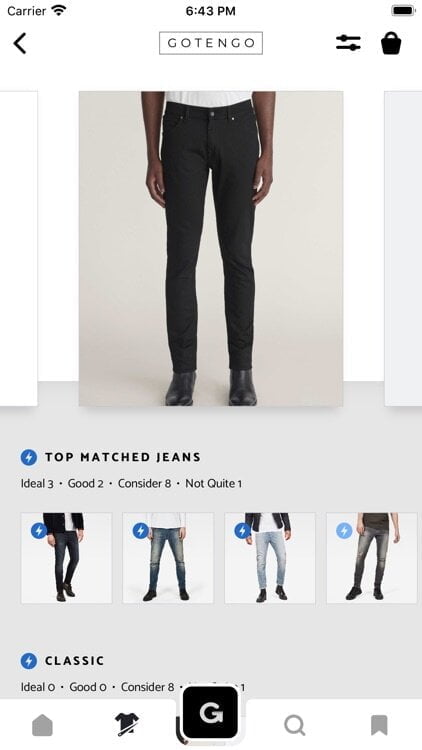
The technology, developed in collaboration with startup incubators MaRS and RU Fashion Zone, leverages a variety of deep learning and human intelligence to inform the AI, rating and ranking items on the website specific to the preferences of each user. Preferences are identified when the user answers a few simple questions, allowing for their customer profile to begin to take shape. Based on the preliminary information provided, which can include an uploaded selfie, if the user opts to provide one, the Gotengo platform is then able to make personalized recommendations that are more specific to the user and informed by current style, colour and sizing advice. In addition, users can search for product on the website based on their budget and the occasion that their purchase might be connected to.
“We’ve tried to build something that’s going to elevate the idea of personalization,” says Daniel Del Mastro, Co-Founder of Gotengo. “And we’ve done that by learning about our shoppers and by gaining a deeper understanding of the things that really matter to them. The platform that we’ve developed isn’t just another recommendation engine offering suggestions based simply on products viewed. Our platform goes a lot deeper than that to really inform our user with suggestions and advice that are more personalized than those offered by any other engine.”
In fact, there are several layers of personalization that a customer can choose to add to their profile, something that Del Mastro describes as Gotengo’s “hyper-tailoring”. This additional level of personalization addresses some interesting factors, including any ethical or body concerns that the user might have, as well as material and wash preferences, and more. Armed with all this information, the platform then aggregates a customized scoring system that’s used to support and help explain the recommendations being made to the customer.
“It’s all meant to take a lot of the friction out of the apparel shopping process,” Del Mastro asserts. “Everyone today is starting to expect personalization and customization. They want messages and information to be directed toward them. And we feel, with the introduction of Gotengo, that we’re at that starting point of a revolution that will result in true customization and a bridging of the gap between online and offline.”
Heightened Service and Selection
The company believes that one of the ways this can be achieved is through the building of customer trust in the Gotengo customized tailoring process and the accuracy of the recommendations that it provides. The current return rate for apparel bought online in Canada, according to most sources, hovers somewhere between 30-40 per cent. Boasting an early reported return rate significantly lower than the industry average, combined with its emphasis on fast next day shipping to anywhere in Canada, it seems as though Gotengo just might be on to something.
Another way the company’s attempting to bridge the gap between the online and brick-and-mortar customer experience is through the offering of a smart selection of brands and styles. Gotengo currently works with brands that include Ted Baker, Tiger of Sweden, Colorful Standard, Kovalum, L.L. Bean, Stone Rose, Bruun & Stengade, and others, providing a breadth of choice that it hopes will appeal to a range of shoppers.
“It’s frustrating sometimes to look at American websites and the wide selection that they offer,” laments Del Mastro. “There has always been a distinct lack of variety with respect to brand and style offering on Canadian e-commerce sites, particularly in the luxury menswear space. Everyone seems to be selling the same things. We want to disrupt that norm by offering the brands that people are familiar with as well as a selection of lesser-known brands that have smaller distribution in Canada to help provide that selection that’s currently lacking online in the country. In fact, later this fall, we’ll be introducing a number of brands that will be totally unique to the Canadian market, providing our customers with more choice than they could find anywhere else.”
So far, the company’s been able to deliver on its mandate of style and selection through meaningful partnerships that have been built with the many Canadian and global distributors and brands it works with. It’s a philosophy that Del Mastro says Gotengo is very proud of, and one that is currently reaping rewards for the online retailer and its customers.
“The way we approach our work with distributors and brands is from the perspective of true partnership,” he says. “We want to actively help strengthen the online menswear ecosystem and cultivate relationships that are mutually beneficial for Gotengo and our distributor and brand partners. We lean on them for the knowledge and expertise that they’ve gained through years of history. And they have the opportunity to leverage the power of our technology and personalized platform. The types of partnerships that we’re building are intended for longevity and designed to enhance all businesses involved, helping everyone to continue growing in a changing world.”
A Holistic Online Solution
Its varied assortment, made possible by its strong distributor and brand partnerships, along with the customization tools provided by the Gotengo platform, certainly puts the company on the map as one of today’s innovators in online menswear personalization. However, if a shopper wishes to shop Gotengo as they would on most other e-commerce websites, searching for product by brand or style or price, they can do so without taking advantage of the custom tailoring while enjoying the same great online experience. In addition, despite the way in which the shopper chooses to engage and interact with Gotengo, personal customer care assistance is available around the clock to provide almost immediate advice concerning style, fit or anything else.
“We want to cater to the needs and preferences of the customer, whatever they are” states Del Mastro, “allowing them the freedom to engage with us in whichever way they want. We simply provide the tools to help make their experience shopping for menswear online as personalized and curated as they’d like it to be. In that way, we offer a much more holistic solution than most others in the category.”
It may be early days for the fledgling online retailer, but Del Mastro confirms that sales have been positive so far, underscoring a desire in the consumer for a more personalized experience and an opportunity for Gotengo to exploit an underserved Canadian menswear market. And, although he recognizes the excitement of the company’s early success, he admits that the introduction of their platform is just the beginning.
“We want to become the go-to destination online for menswear in Canada and to continue to bridge the gap between the online and in-store experience. We want to continue developing ways that allow us to go deeper into personalization and customization, simplifying the online apparel shopping experience for the Canadian consumer even further. And we’re enthusiastic about our plans and the possibilities to leverage new and different technologies in the future to continue enhancing the overall Gotengo experience, enabling us to expand our unique and progressive offering and service.”