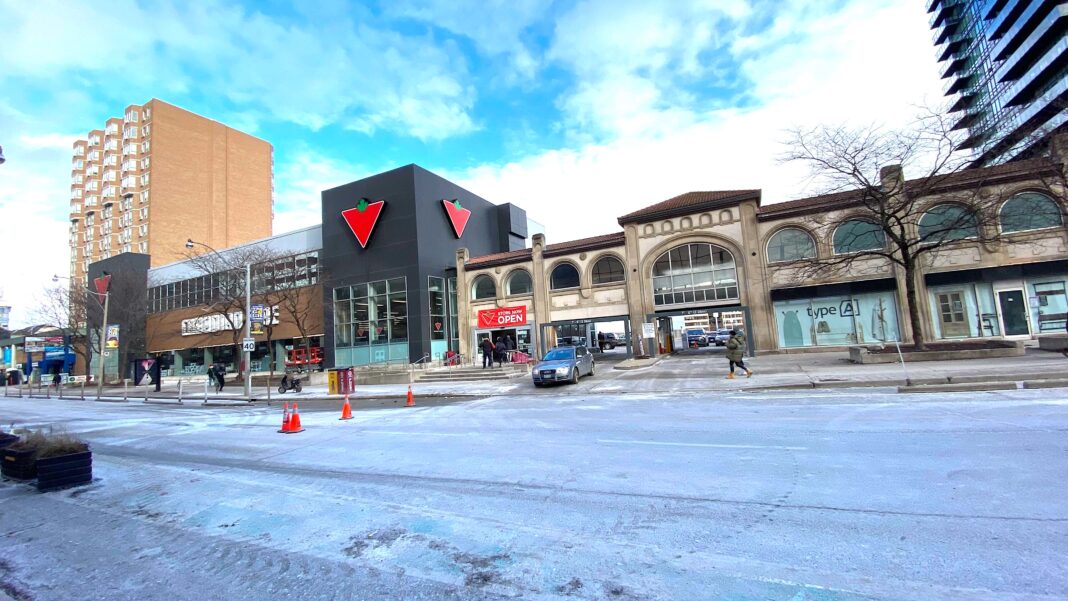
The historic Canadian Tire store at 839 Yonge Street in downtown Toronto will eventually be demolished for an intensified redevelopment that could include residential towers as well as a new Canadian Tire store. That’s according to sources noting that a development application will be brought to the City of Toronto in the next while.
The proposed plans would include a multi-tower configuration according to one source. The building site encompasses about 2.4 acres and an adjacent gas station adds another 0.2 acres to the site.
A new Canadian Tire store would ideally be built on the site according to the source. The existing store was recently renovated to reflect the more modern design seen in some Canadian Tire locations. A historic component known as the Grand Central Markets Building was built in 1929 and is heritage protected, characterized by a Spanish Colonial Revival-style type architecture. It would be expected that it would somehow be preserved and incorporated into the new proposal.
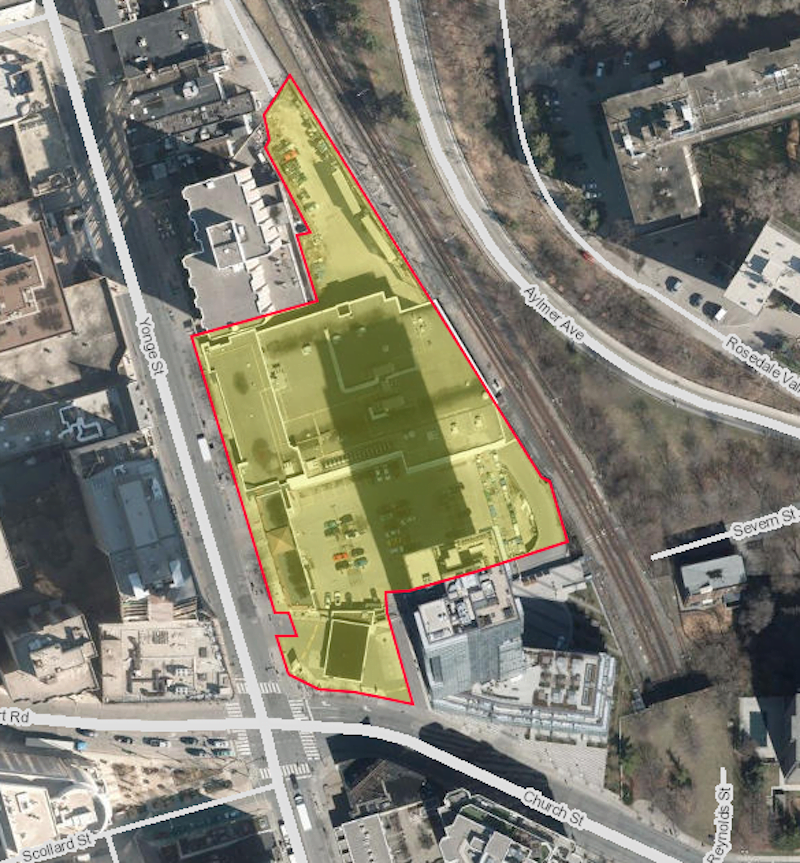
Canadian Tire owns the site according to another source, who also said that after the development application is approved Canadian Tire will likely sell the site, valued well in excess of $100 million.
The location on Yonge Street backs onto the subway tracks. In behind the tracks lies Rosedale, the wealthy leafy and historic residential area with winding streets and multi-million dollar mansions that is unlike anything in North America in terms of its proximity to a downtown core. Some of the wealthiest people in Canada live in Rosedale including David Thomson who is worth over $50 billion USD.
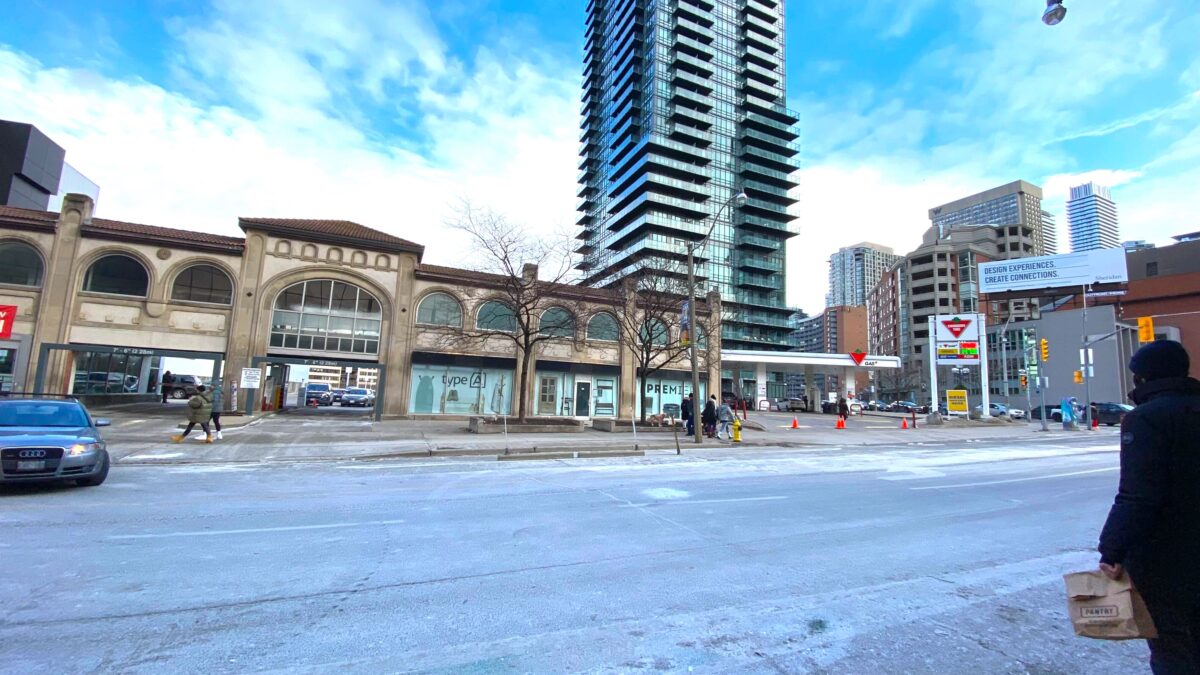
Other commercial buildings in the area will be demolished for future redevelopment as well according to reports in Urban Toronto. Forum poster ‘Northern Light’ also posted a conversation thread on the Urban Toronto Forum about the proposed redevelopment.
High real estate prices in Canadian centres is leading to landlords seeking to intensify building sites. That includes individual stores with enough land and even entire shopping centre properties. It’s a trend expected to continue for years to come amid a population and housing boom in some markets.