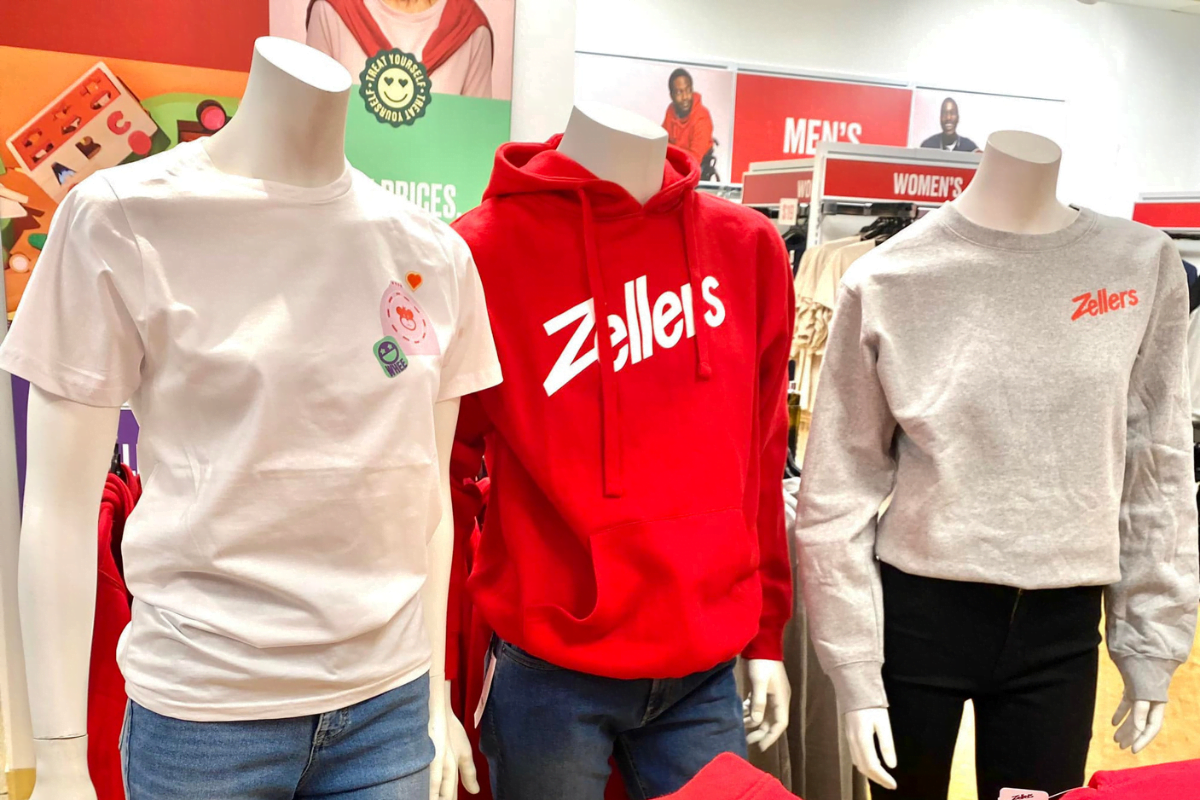
Recent news of Zellers opening shop-in-shop stores in The Bay has shone a spotlight on an interesting trend in the retail industry.
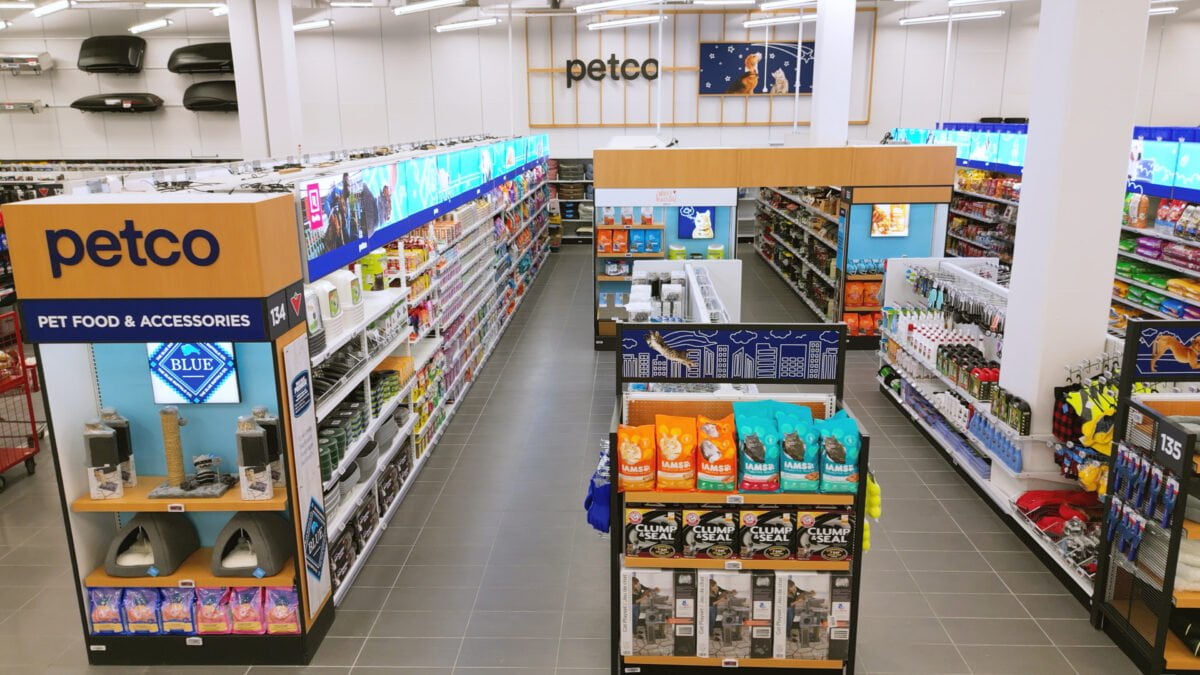
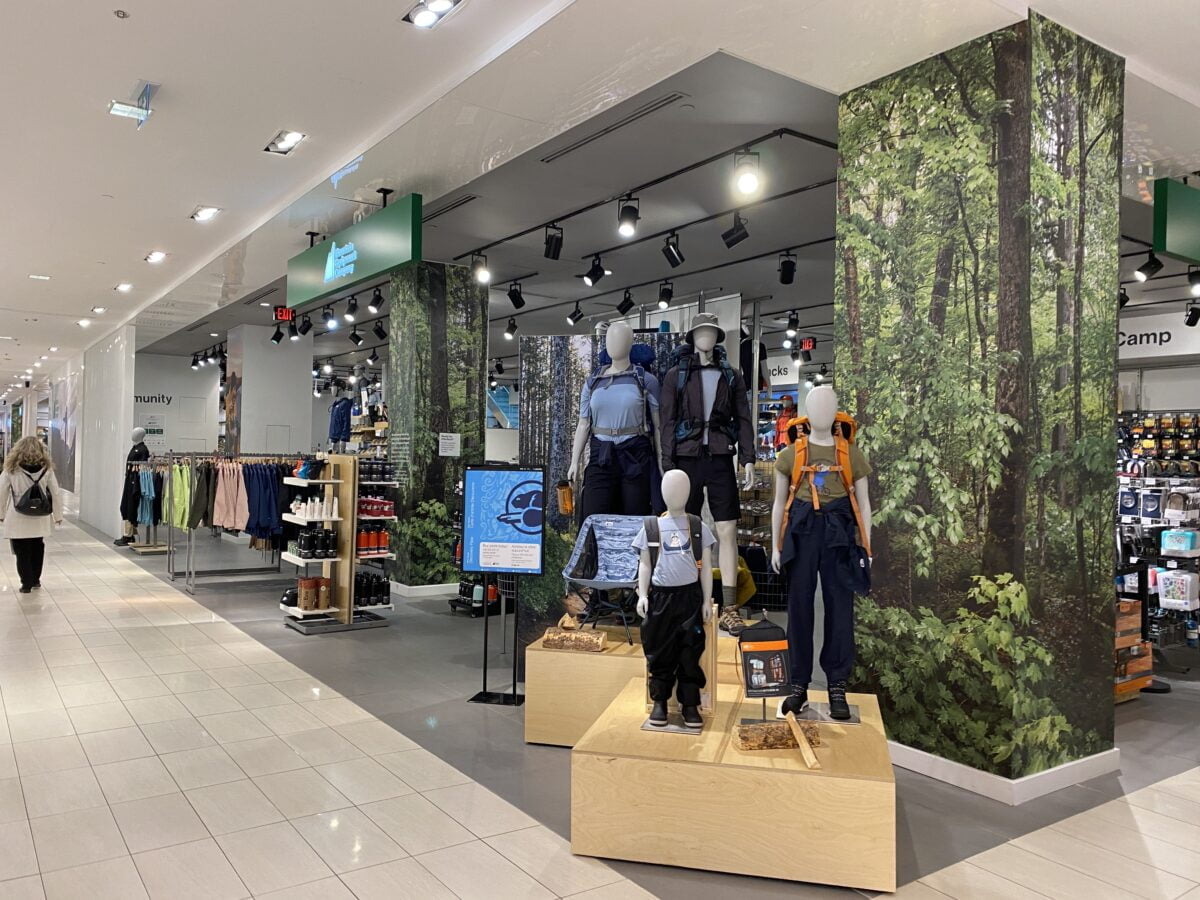
More big box retailers are creating spaces within their stores to house other brands with a dedicated and branded area. Besides Zellers, other well-known initiatives such as this include Walmart providing space for Sleep Country, MEC in The Bay and Petco in Canadian Tire stores.
George Minakakis, CEO, Inception Retail Group, and author of The New Bricks & Mortar: Future Proofing Retail, said the shop-in-shop concept has proven to be a successful strategy for large and smaller retailers.
“With this continuously changing retail landscape, we expect to see more collaborations as businesses adapt to new consumer preferences and shopping habits. However, the right target audience is crucial for a successful shop-in-shop alignment,” he said.
“Co-branding opportunities are always a good idea, provided that increased brand exposure is in with the right partnerships. If you have a shared or common customer base, that bodes well for both partners. Some lower operational costs can be involved; you are not building out full stores. And obviously, there is the opportunity to test new markets where you may not be sure about your brand’s appeal.”
Minakakis said the host store can attract new customers to a department store with the right shop-in-shop brand.

“However, it has to be a brand experience that mirrors your or the ambitions of your next customer experience. It is about added value and has to be right; otherwise, you will have wasted space if it isn’t driving revenue. Shop-in shops work best when the host brand offers multiple such experiences in the store. It can work if you tell an aspirational story with these brands. Everyone wins in that kind of environment,” he said.
“I have seen a lot of shop-in-shops globally. The future adoption of this concept is very healthy and will remain a staple diet of retailing. As to where else could we see this concept in the future, it all depends on the creative nature and attraction of the host and how brands want to reach their customers on a lifestyle basis. We could see brand shops around sustainability, health and wellness, artisanal and theatres. On the technology side, there are many opportunities with a Metaverse (one day) and even with gamers. And then, we should ask how does the inclusion of AI and robotics play out in a shop-in-shop environment? Ultimately the focus should be on creating memorable customer experiences because many retailers have been distracted and strayed from the fundamentals of physical retailing.”
Minakakis said typical arrangements for shop-in-shop deals can get a little complicated.
“It all depends on who approached who? If a retailer is approaching a luxury or higher-end premium brand, the terms could be more favourable. Usually, you will find a mix of monthly or annual fees, percentage rent, or a combination. And there are also licensing opportunities where a brand allows its name to be used, and the host themselves operates it. Most higher-end brands will have their own staff to protect their brand. Within this, I would also add an expectation for staffing, training and full-blown customer experience representing the brand,” he said.
Bruce Winder, author of RETAIL Before, During & After COVID-19 and President of Bruce Winder Retail, said the industry will continue to see select shop-in-shop offerings going forward.

“Why? Because we will always have retailers or service providers who have traffic and those that want it – those that have too much space and those looking to expand distribution. The partnership offers retailers a chance to use less than productive space more efficiently and surprise and delight existing customers with new complementary offerings. It also allows partner retailers (the shop within the larger store) to test bricks and mortar concepts to reach potentially new customers. An example is MEC in Hudson’s Bay stores. We are also seeing several digitally native brands use this method to jump to bricks,” he said.
The benefits for the shop-in-shop include lower risk and lower cost exposure to new customers through host shop traffic. It also offers an affordable test of bricks concepts.
For the host retailer, the benefits include enhanced use of low productivity space, bringing in new customers to shop. The idea could surprise and delight existing customers. All could equal more revenue through rent/commission on sales.
Winder said possible places where the concept could be adopted include amusement parks, entertainment venues, sporting events, mass merchandisers, EV charging stations, grocers, airports and more.
“Wherever there is traffic of complementary customers,” he said.

Michael Kehoe, Broker/Owner of Fairfield Commercial Real Estate in Calgary, said the shop within a shop concept is gaining momentum and is a proven formula that has been in practice for generations.
“The shop within a shop format provides retail space opportunities in a very competitive space environment that are typically in urban, high traffic shopping centre venues that are often within a major department store,” he said.
“The shop within a shop can absorb surplus or under-utilized space within the host retailer and can drive consumer footfall to or through the host retailer space.
“Rent structures for a shop within a shop vary, however many are sales performance driven (percentage of sales) along with a payment of a proportionate share of utilities, property taxes and sometimes other operational costs.”
Kehoe said many large format and category dominant consumer space users are in transition and reducing their physical footprint and he believes that the trend will become more widespread.
“The concept is dependent on the host retailer securing a complimentary and compatible co-tenant, think of the large format pet store that adds third-party pet grooming, doggie day care or veterinary services,” he added.
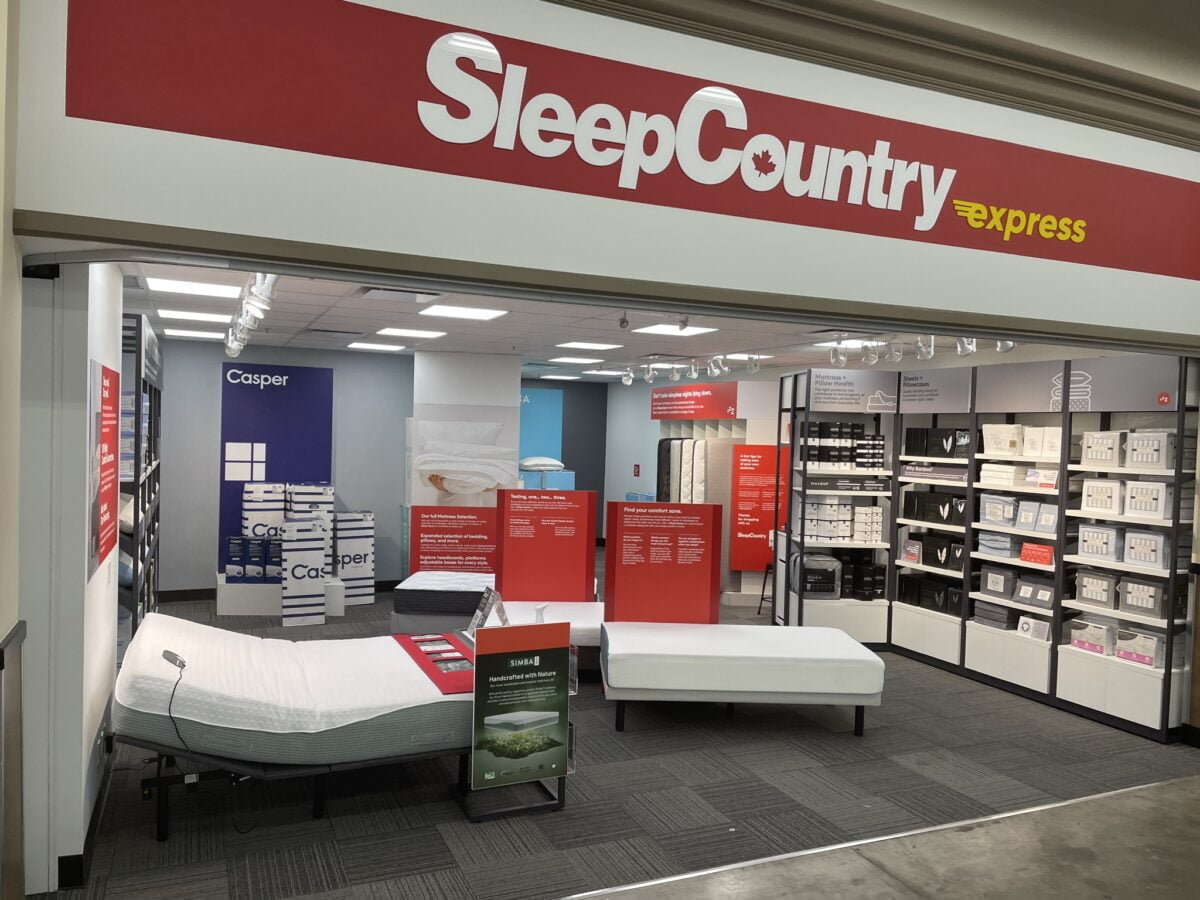
Stewart Schaefer, President and CEO of Sleep Country, said the experience with Walmart has been “wonderful.” The first store opened within a Walmart in 2021. Today, there are 17 stores. The first 10 stores were 450 square feet. The next seven were 750 square feet.

“In a given year in our almost 300 stores we get less than two million visitors a year . . . One of the reasons we wanted to be with Walmart that worked well for us is that they get over two million people that go into any given one Walmart on annual basis,” he said
“We strongly believe with half a million people coming into Canada on an annual basis, who knows if they know the Christine Magee (founder) ‘why buy a mattress anywhere else?’ we’ve all been hearing for 29 years. And a lot of the newcomers that come to Canada will go to brands sometimes that they just feel comfortable with and are a bit more international. Like a Walmart. Like an IKEA. We think introducing our brand in these small pop-up stores is also a wonderful lead generator for our big stores. You can transact in these small stores but it definitely has driven a broader customer segmentation to our stores.
“People always think Sleep Country is mid to high end. They don’t realize that our mattresses go from $299 up to $5,000 and the biggest part of our business that we transact is below the $1,000 price point. Being associated with Walmart, gives us a little bit of even more equity that Walmart is all about quality and price and they wouldn’t have partnered up with us if they didn’t think our prices were good and this was a great way of sending that message also subliminally.”
Schaefer said over the next few years the company could potentially be in 100 Walmart stores. The arrangement with Walmart is a combination of a rental fee Sleep Country pays Walmart and a percentage of sales.
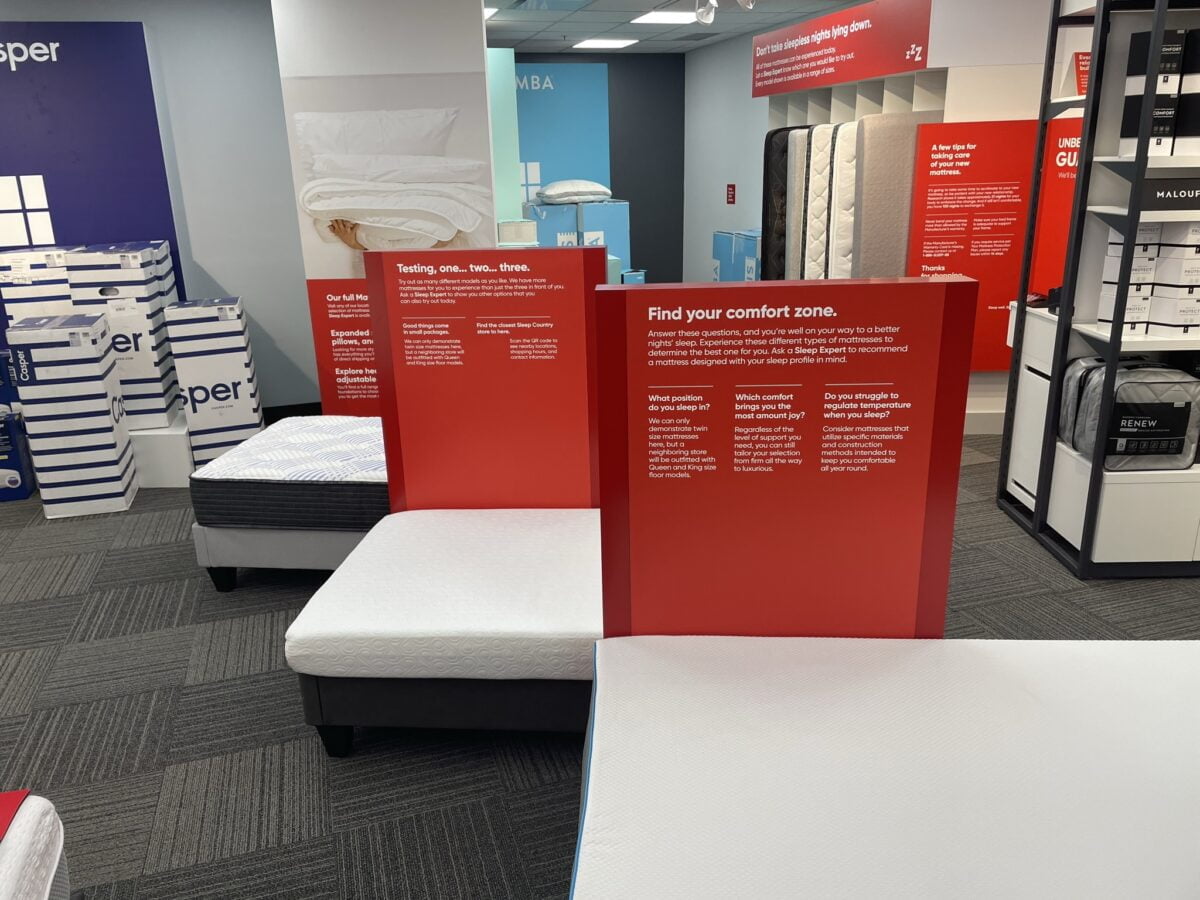
In a statement, Stephanie Fusco, Senior Manager, Corporate Affairs of Walmart Canada, said the chain is focused on becoming a modern retailer that provides customers with access to a broad ecosystem of products and services when they choose to shop there.

“As part of this initiative, we’re exploring different ways to collaborate with brands in-store and online to provide our customers with even more choice. In some cases, you’ll see these brands in a dedicated area on the sales floor, in a licensed space along the edges of a Walmart Canada store or, digitally, in our online Marketplace,” she said.
“Customers who shop with Walmart Canada will experience both our license program that includes “store in a store” concepts and an online Marketplace that allows brands to sell directly to our customers.”
For example:
- When customers shop in-store, they’re able to access brands and services such as Sleep Country, Wine Rack, The UPS Store, Regal Nails and SmartStyle hair salons.
- Walmart Canada has several restaurant offerings, including McDonald’s.
- With continued focus on healthcare, Walmart Canada has over 75 Jack Nathan Health medical clinics in store.
- For customers shopping online through its Marketplace offering, they’ll see an assortment from top brands like General Electric, Claire’s, Pajar, As Seen on TV and Zwilling.
“Along with providing more choice to our customers, this approach allows brands and services to go beyond their traditional reach and sell directly to or engage directly with our Walmart Canada customers,” added Fusco.