

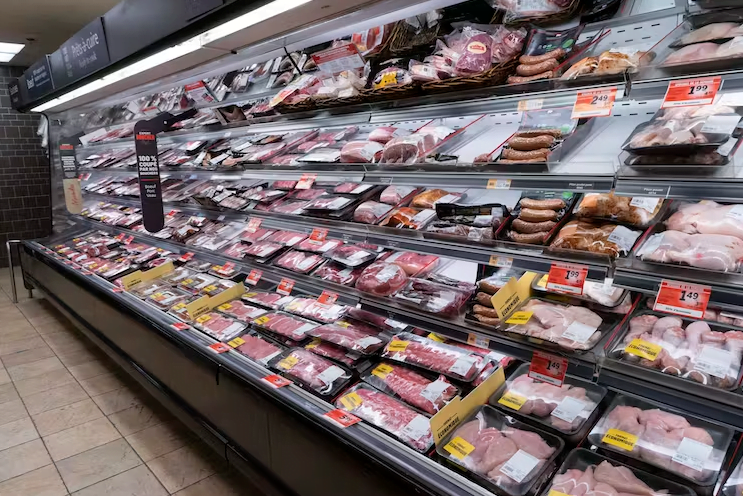
The cost of filling your grocery cart in Canada increased by 10.3 per cent in 2022 and is projected to increase by an additional five to seven per cent this year.
What is particularly troubling about the food crisis is that the high prices seem to be impacting all food product categories, suggesting the problem is affecting the entire food supply chain rather than specific items or sub-sectors.
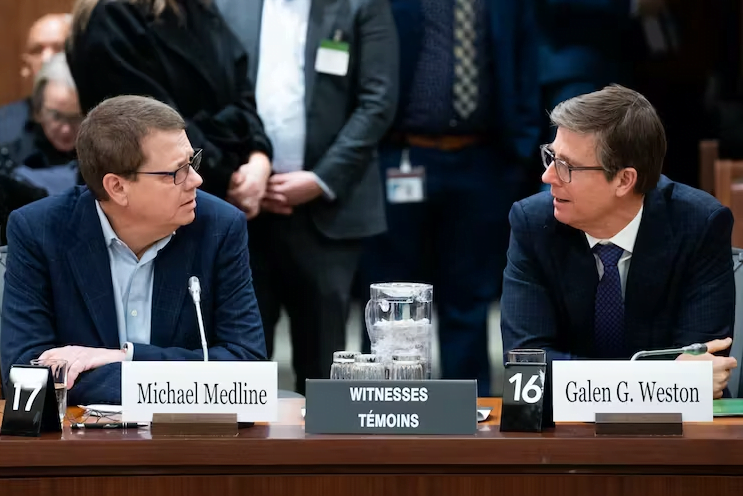
In response to this and other concerns, the House of Commons Standing Committee on Agriculture and Agri-Food initiated studies on Food Price Inflation and Global Food Insecurity, which included two separate meetings with the heads of four of the five major Canadian grocery retailers.
A result of the meetings — and a cause for cautious optimism — is the decision to develop a grocery code of conduct to address issues in the food supply chain.
The code is meant to address long-standing issues in the industry, including grocery retailers imposing large fee increases on suppliers without notice.
Standing committee meetings
On March 8, the presidents of Loblaw, Metro and Empire (Sobeys) were summoned to Ottawa to testify before the House of Commons agriculture committee. The president of Walmart Canada appeared before the committee on March 23.
In both meetings, the executives indicated that food price inflation was due to problems with global supply chains in the aftermath of the COVID-19 pandemic: commodity price increases, labour shortages, transportation bottlenecks, weather disasters and higher energy costs.
To what extent those meetings helped clarify the complex issues affecting grocery supply chains appears to be still in debate. But the decision to create a grocery code of conduct could make these meetings worth it in the long run.
The code of conduct is currently being drafted by grocers, suppliers and Agriculture and Agri-Food Canada, a government department focused on the country’s agriculture and agri-food sector.
What the new code should include
The grocery code of conduct is still in development. The draft seems to prioritize resolving disputes, rather than making long-term structural changes to the way the supply chain operates.
But this could change in the future. According to members of the code’s steering committee, it will be possible to amend the code once it’s up for review in 18 months.
As an expert in supply chain management, I have recommendations for future editions of the code to strengthen relationships and performance across the industry. These changes would benefit not only the companies involved, but also Canadian consumers.
The ultimate target of the new code should be consumers, while also securing prosperity of the supply chain. To do this, the code should accomplish two things: promoting horizontal competition while also fostering vertical co-operation in the industry.
Horizontal competition refers to rivalry between organizations operating at the same level to gain customers — like competing retailers, for example.
Vertical co-operation aims to strengthen relationships between companies operating at various stages of the supply chain. Its objective is to improve collaboration in areas including production, distribution, information sharing and pricing.
Supply chain management practices
Supply chain management practices could be used to foster both horizontal competition and vertical co-operation in the supply chain.
Extensive academic research has documented the successful implementation of these practices across industries including, but not limited to, groceries.
There is equally ample evidence highlighting the benefits of these management practices in areas such as supply and logistics costs, delivery reliability and sustainability.
The research recommends introducing collaborative practices that go beyond the dispute-resolution measures outlined in the code draft. These practices include:
- Collaborative planning, forecasting and replenishment (CPFR). This program aims to improve coordination across the supply chain to reduce uncertainty, improve responsiveness, and minimize costs such as bloated inventories and expedited orders. CPFR is highly applicable to the grocery supply chain. In fact, it was initially developed by Walmart in 1996 and is currently used by the LCBO and other consumer goods companies in Canada. The code should encourage the adoption of specific CPFR practices, such as joint forecasting between buyers and suppliers.
- Target costing. Under this approach, buyers and suppliers work together to reduce costs to guarantee a maximum selling price while protecting margins. As authors James P. Womack and Daniel T. Jones have indicated, this approach requires the “relentless scrutiny of every activity along the value stream.” For this approach to be effective, it must be collaborative and include the fair distribution of responsibility, authority and benefits among supply chain partners.
- Information sharing. Research indicates that knowledge exchange yields significant benefits to both buyers and supply networks. The grocery code could facilitate the distribution and exploitation of knowledge, technologies and best practices across the supply chain. These processes would enable joint problem-solving, improve optimization and the ability to cope with variations in supply and demand.
Ultimately, competitive goals should apply to the entire supply chain, rather than to specific stages. It is well-known that squeezing suppliers can, in many instances, quickly erode the supply base. These policies can be severely detrimental not only to the whole industry — including buyers — but also to consumers.
What we need is a comprehensive code of conduct that ensures the long-term sustainability of the industry, while also protecting consumers in the event of future supply imbalances.
By Giovani J.C. da Silveira, Professor, Operations and Supply Chain Management, University of Calgary
This article is republished from The Conversation under a Creative Commons license. Read the original article.








I have noticed when I when I have shopped at Superstore and Walmart in the last 3 months, their own brand names such as Great Value(Walmart) and the No Name ( Superstore) has been almost nonexistent on the shelves. Instead they are replacing them with high end brands only.
This is infuriating and deceptive especially from Loblaws. They promised to bring the prices down and there’s been very little price dropping. Yet nobody is doing a thing about it.