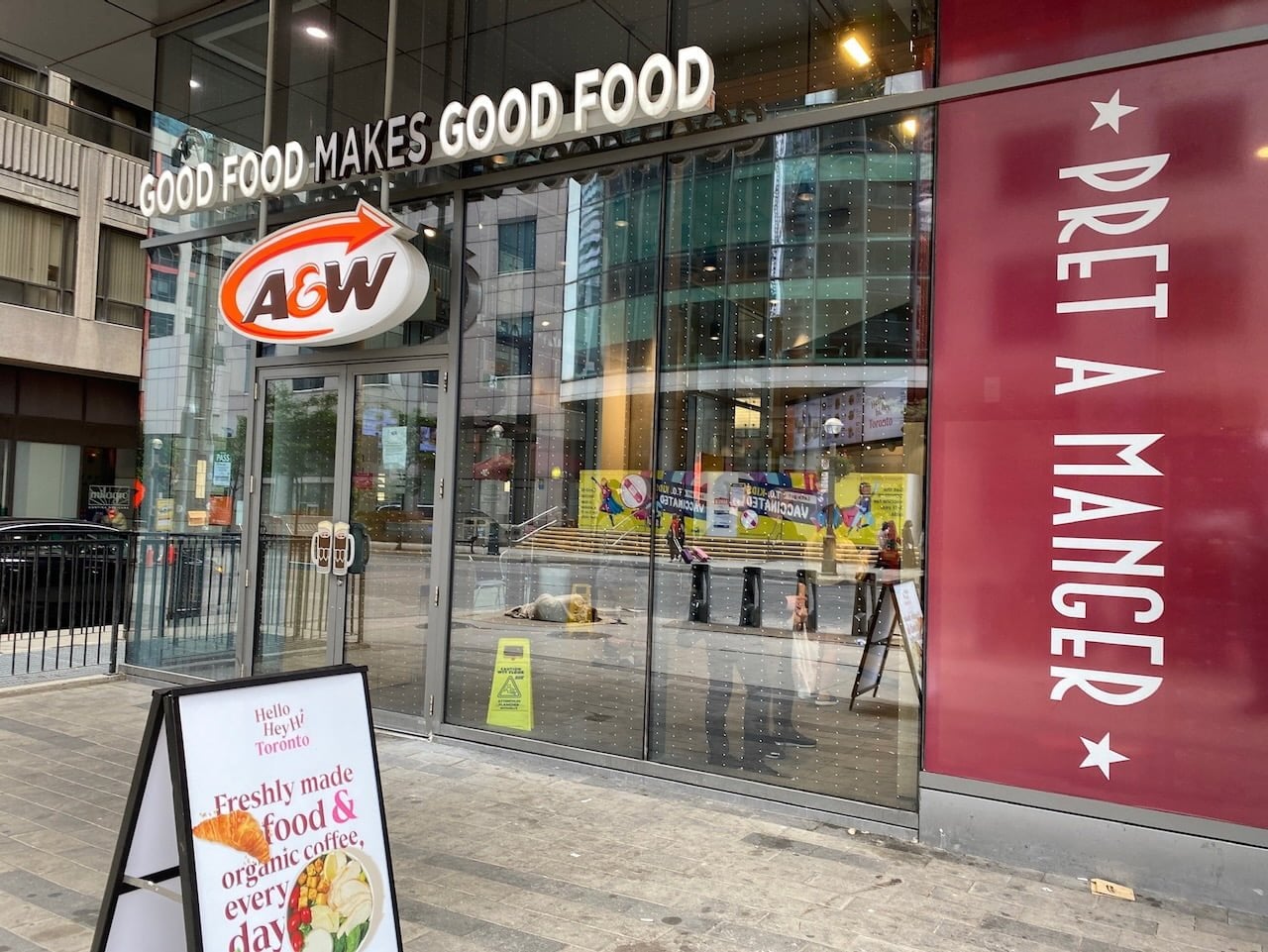
Soaring food prices, growing profit margins and record-high profits in the food industry have severely impacted the lives of many Canadians. According to Industry Minister François-Philippe Champagne, Canada’s largest grocery chains recently agreed to work with the federal government to stabilize prices.
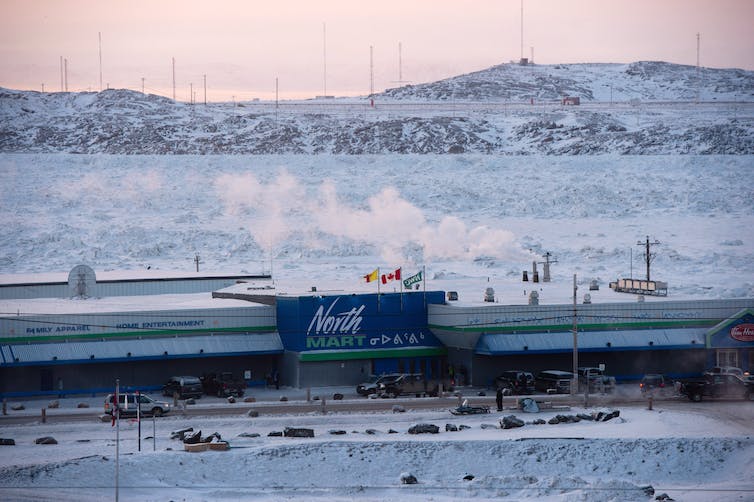
But for Canadians living in remote northern communities, food affordability has been a crisis for decades. Grocery prices are routinely two to three times higher in Northern Canada.
These high food prices, combined with limited economic opportunities and high rates of poverty, have led to Northern Canada having the highest rates of food insecurity in the country. Almost half of all Nunavut households are moderately or seriously food insecure.
The federal government’s main policy to tackle this is a program called Nutrition North Canada that was launched in 2011. The program pays $131 million a year in subsidies to retailers based on the weight of eligible food they ship by air to communities without year-round surface transportation.
Subsidy rates vary based on the remoteness of communities as well as item type. For example, milk receives the highest subsidy, orange juice receives a lower subsidy and potato chips receive no subsidy.

Under the program, retailers sign an agreement promising to pass subsidies on to consumers in a process known as a “pass-through.” This means that if the government pays a retailer $1 to ship an item, the price of that item should be $1 lower for consumers.
However, residents of these communities have expressed concern that retailers may be taking advantage of them and using subsidies to increase their profits.
Insufficient accountability measures
To determine how much of the Nutrition North Canada subsidy was passed on to consumers, our recent study examined how much subsidy increases in October 2016 and January 2019 lowered food prices. We controlled for factors like food inflation, energy prices and high freight/operating costs.
We found that for every dollar paid to a retailer to reduce shipping costs, the prices paid by consumers fell by only 67 cents. When we considered communities with a single grocery retail store affected by the January 2019 subsidy increase, we found that an extra dollar paid to retailers reduced consumer prices by only 26 cents.
Our main finding — that the subsidy was not fully passed-through to consumers — remained unchanged when we considered only the most perishable goods, or accounted for economies of scale in shipping and other community characteristics.
Our findings indicate that Nutrition North Canada’s accountability measures are insufficient. Despite the publication of data on the subsidy and the price of a retail basket, and the existence of an auditing mechanism to ensure compliance with the program’s requirements, a substantial share of the subsidy is being captured by retailers.
The biggest retailer in the region — the North West Company — is a profitable, multi-billion dollar company that receives over half of the subsidy because these communities face far less competition than in the rest of Canada. According to the North West Company’s website, it “uses the entire amount of the subsidy to reduce retail prices for shoppers.”
Better addressing the problem
Why do existing accountability measures fail? First, it’s difficult to measure subsidy pass-through and retailer margins, especially with traditional audits. The contribution of retailer profits to high food prices today is still being debated.
Second, it may be even harder to punish retailers in this setting. A substantial share of the subsidy still goes to consumers, so punishing retailers by removing the subsidy would make food even more expensive.
How, then, can the federal government better address the problem of food affordability and insecurity in remote northern communities? Recent additions to the Nutrition North program, like the Harvester’s Support Grant, are a response to communities demanding more control over their food systems. This could involve subsidizing traditional hunting activities and funding community-led initiatives to support those in greatest need.
While these measures are promising, they are unlikely to replace the importance of store-bought food shipped by air. Measures to increase competition may help since retailers in these communities face far less competition than in the rest of Canada, but it’s still challenging for small, remote communities to have substantial competition.
While price controls and state-run stores (such as those in Greenland) could be worth exploring, they also have pros and cons that need to be carefully considered.
A simple and more market-friendly approach would require retailers to publish the price of all subsidized goods online. Greater transparency about food prices would help communities and their leaders hold retailers accountable in the court of public opinion, and make analyses like ours easier to conduct. While not a standalone solution for food affordability and insecurity in these communities, it could ensure more of our tax dollars go to support those in need.
By Nicholas Li, Assistant Professor, Department of Economics, Toronto Metropolitan University and Tracey Galloway, Associate Professor, Department of Anthropology, University of Toronto
This article is republished from The Conversation under a Creative Commons license. Read the original article.