

By Jared Gordon, Managing Partner, Faculty of Change.
Canada Goose, the Canadian apparel company renowned for its high-quality parkas, has witnessed an 80% drop in stock value over the past five years. The brand recently lowered its financial forecast for the year, stirring widespread concern. However, I maintain there’s much to appreciate about Canada Goose, and there’s hope on the horizon. The prevalent skepticism springs from an outdated view of the business and overlooking its potential for long-term success. Markets and customers need time to catch up as the company evolves.
Critics typically cite three primary concerns regarding the company’s future:
- The market for “expensive parkas” has reached saturation.
- Discretionary luxury spending is vulnerable, likely to be hit hard by any downturn in consumer expenditure.
- Uncertainty and economic weakness in China will limit the company’s ability to grow.
The best companies undergo a natural evolution, especially those that started by innovating or disrupting a category. For Canada Goose, the critical question is whether it can leverage its expertise and market presence to branch into new territories—achieving what we term ‘Evergreen’ status.
Canada Goose is over 70 years old, with its parkas dating back 50 years. As a luxury parka company, the future does not look bright. What is not immediately obvious is that the company’s future lies far beyond luxury parkas. Since going public, Canada Goose has been diligently transitioning towards Evergreen status by:
- Shifting from wholesale to direct-to-consumer retail.
- Expanding beyond seasonal wear to offer solutions year-round.
- Broadening from a parka company to one that meets the needs of customers looking to protect themselves from an increasingly unpredictable climate.
This strategy exemplifies what we at Faculty of Change describe as strategic renewal—redefining relevance amidst a shifting marketplace. By reimagining its business and challenging conventional assumptions, Canada Goose’s obstacles are cast in an entirely different light.
These challenges are valid, especially if you look at the company as a luxury parka company. But if you look at it through the lens of renewed potential, it is a wholly different story. Based on a review of publicly available information, there are efforts underway, as well as new ones the company can undertake, to retain the premium market position and drive growth.
The company saturated the market for “expensive parkas”
Consumers today have more choices for products that serve similar needs to the core parka product than in the past. In Canada alone, there are Moose Knuckles, Arc’teryx (and their luxury line, Veilance) and Mackage. Globally, there are countless other competitors.
This is the fate of any company that creates or disrupts a category. Canada Goose demonstrated the model (and margins) available in the market and others followed behind.
The traditional response to complaints of market saturation would be to sell the product to those who don’t already own it. In this case, Canada Goose has announced a focus on growing penetration amongst women and Gen Z consumers. From experience, this is a low-quality opportunity. Specifically targeting demographics specifically often results in short term lift, but in an ever shrinking/competitive market. Canada Goose created (and dominates) this market. Growing the number of parkas sold per 100k people from 2.3 to 8 in the US will be financially significant, but the company will still be in the same position (with investors asking the same questions) five years from now.
Canada Goose should instead embrace its evolution. The company can capitalize on its niche in “performance luxury” to innovate and penetrate new product categories. If these categories resonate with Gen Z and women, it could lead to a natural cross-sell opportunity back to its parkas. Repurpose the investment in fashion collaborations and general awareness marketing to the type of product-led growth that drove the company’s initial success.
Discretionary luxury will suffer more than other categories from a pullback in consumer spending
Traditional responses to a recessionary environment include lowering prices and reducing value to the consumer or squeezing your supply chain. Instead, the focus should be on understanding and addressing unmet consumer needs, fostering sustainable growth. Canada Goose’s customer community, Basecamp, is an asset that could facilitate this approach. The way to prevent a pullback on spending is to engage with them to better understand their unmet needs or position the existing business to meet known unmet needs.
There are countless ideas for customer driven initiatives that reflect Canada Goose’s strategic renewal. Looking at what others have done in similar markets, Canada Goose can satisfy the needs of the aspiring customer and retain/re engage the loyal with a resale program. Second resale gives people a reason to check-in online or instore frequently as inventory turns more quickly.
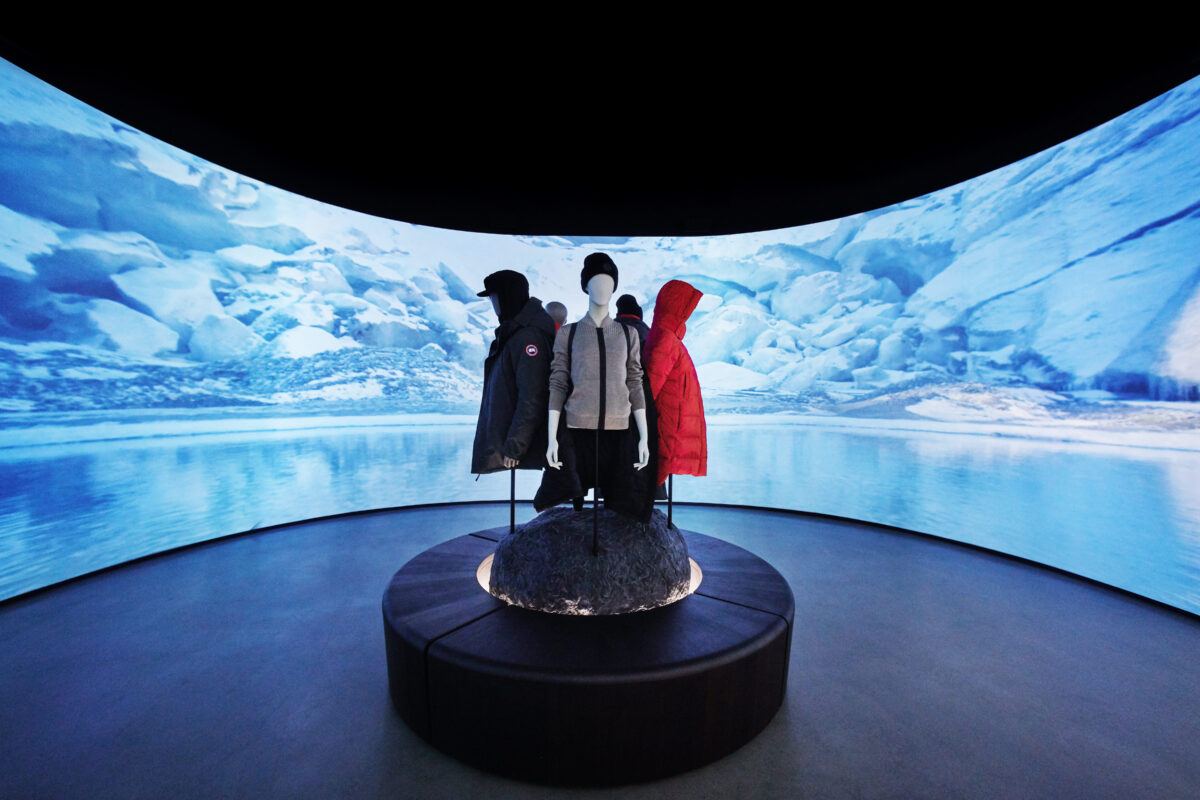
In line with Canada Goose’s reframe, the real opportunity is the rest of the year. Building seasonal resilience through category diversification is the strategy that will create sustainable long term growth. Beyond demographic trends, climate change will be a major driver of new consumer needs.
As climate change begets more erratic weather patterns, the need for high-performance apparel will transcend the niche, opening opportunities outside of the current niche applications for items like raincoats and sun-protective gear. The 2018 acquisition of Baffin Boots, for example, aligns with this strategic pivot more than giftable slippers, etc.
Uncertainty and economic weakness in China will limit the company’s ability to grow
The reliance on the Chinese market, where 21 of Canada Goose’s 51 stores are located, may seem precarious amidst economic volatility. However, the expansion in China is part of a broader initiative to bolster owned channels and curate the Canada Goose story, enhancing brand value and facilitating category expansion.
But the store footprint only tells the traditional part of the story. The company has reduced wholesale in North America in an effort to grow its owned channels and only sell in stores that can tell the larger Canada Goose story. This cements the higher order brand value in customers minds in two ways.
First, China is a market with easily available counterfeit goods/dupes and low penetration of destination multi brand stores to wholesale to. Having an owned channel provides an authentic point of purchase.
Second, creating owned channels will better facilitate category expansion. Canada Goose luggage doesn’t make sense when seated between Pelican and Rimowa. Where it does make sense is adjacent to boots, hats, gloves, scarves, and other accessories you would purchase to ensure your performance in inclement foreign climates.
As Canada Goose articulates its vision and business strategy, it’s clear the company is actively working towards strategic renewal. Achieving this will elevate Canada Goose from a category leader to an Evergreen entity capable of adapting to ever-shifting market demands—a transition akin to evolving from an Under Armour to a Nike. As an admirer of the brand and its commitment to Canadian craftsmanship, I eagerly anticipate the next chapters in Canada Goose’s journey.
Jared Gordon is one of the founders of Faculty of Change. He and his team works with established retailers to uncover new sources of growth.







One thing this article doesn’t address is changing perspectives in consumers, especially as it relates to sustainability and being cruelty-free. This article talks about trying to go after women and Gen Z as their target markets but doesn’t even talk about these changing attitudes, especially as women and Gen Z are highly attuned to more environmentally friendly alternatives in the market. Canada Goose has always been a luxury brand but their success peaked at a time when they were more widely available in many storefronts. The luxury market is over-saturated for our challenging times and companies like Canada Goose are not evolving but choosing to do the same thing over and over again. And 80% drop in stock value is huge! Maybe they should see that as a sign that people want more ethical choices now than they did 5 years ago.