

As Easter approaches, families and chocolate enthusiasts look forward to indulging in their favourite cocoa-based treats, a tradition that marks this festive season. However, this year’s celebrations are set against a backdrop of soaring cocoa prices, marking a significant challenge not just for consumers but for the entire chocolate industry. The current situation presents a complex mix of environmental, economic, and market dynamics that have pushed cocoa prices to record highs, affecting everything from production to the end consumer experience.
Soaring Cocoa Prices: An Unprecedented Challenge
The price of cocoa has skyrocketed, now almost 40% higher than its previous record set 47 years ago. Last week, cocoa contracts reached an unprecedented $7,06 per metric ton, doubling since November and surpassing the record highs of $3,83 in 2011 and $5,11 in 1977. This surge is attributed to a combination of factors, including the rising cases of black pod disease in key producing regions like the Ivory Coast and Ghana, which together account for almost 60% of global cocoa production. Additionally, heavy rains have disrupted the transportation of supplies to ports for shipment, while speculative trading further inflates prices.
Despite the steep increase in costs, global demand for cocoa remains unwavering, particularly as emerging markets’ growing middle class continues to desire chocolate products. Major companies such as Barry Callebaut are responding by aggressively purchasing futures, anticipating continued demand.
Industry Response and Consumer Impact
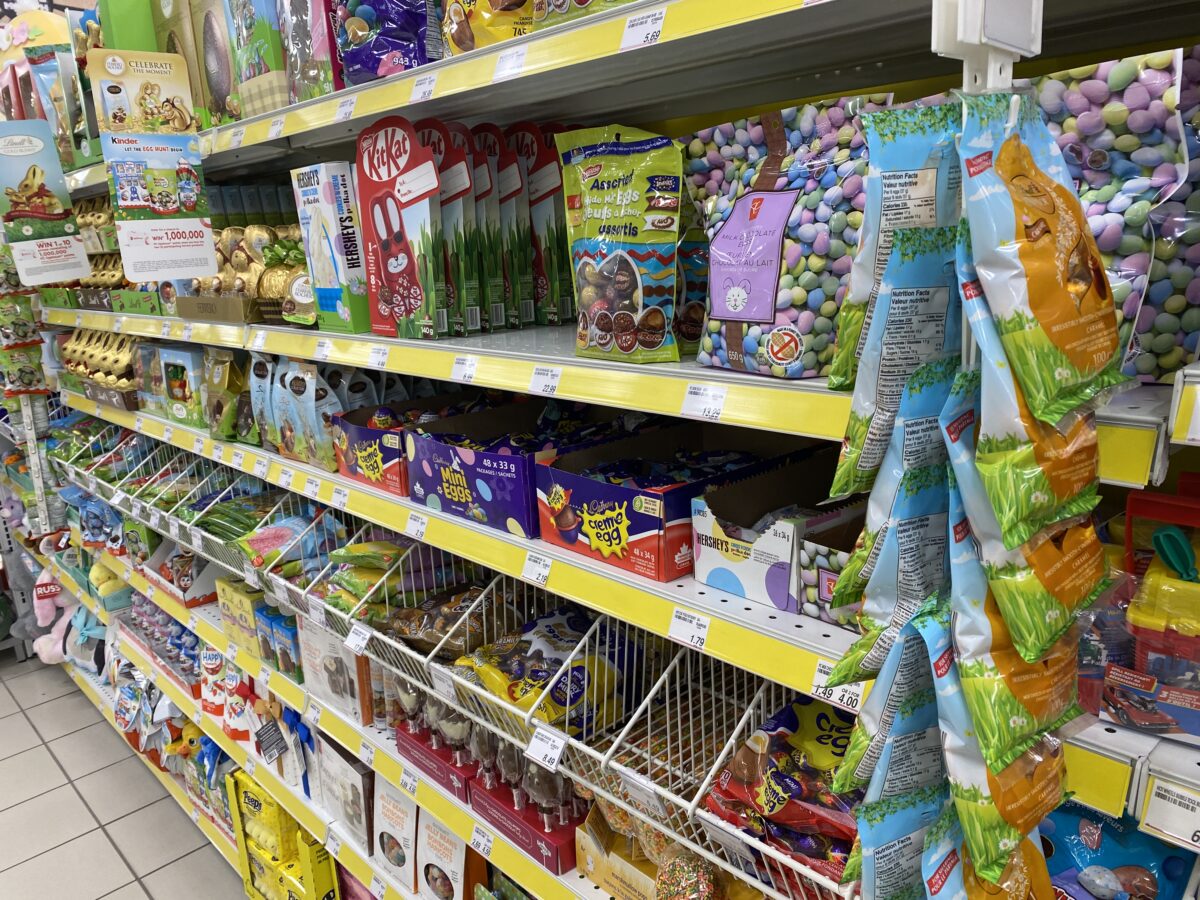
The industry’s giants, including Hershey and Mondelez (the company behind Cadbury), are signalling the strain of rising cocoa prices on their operations. Hershey has warned of potential profit impacts, while Mondelez reports a decline in sales volumes as consumers tighten their belts. This scenario suggests that chocolate manufacturers, retailers, and chocolatiers will likely pass on these increased costs to consumers. However, the strategy extends beyond mere price hikes.
Shrinkflation: The Invisible Price Increase
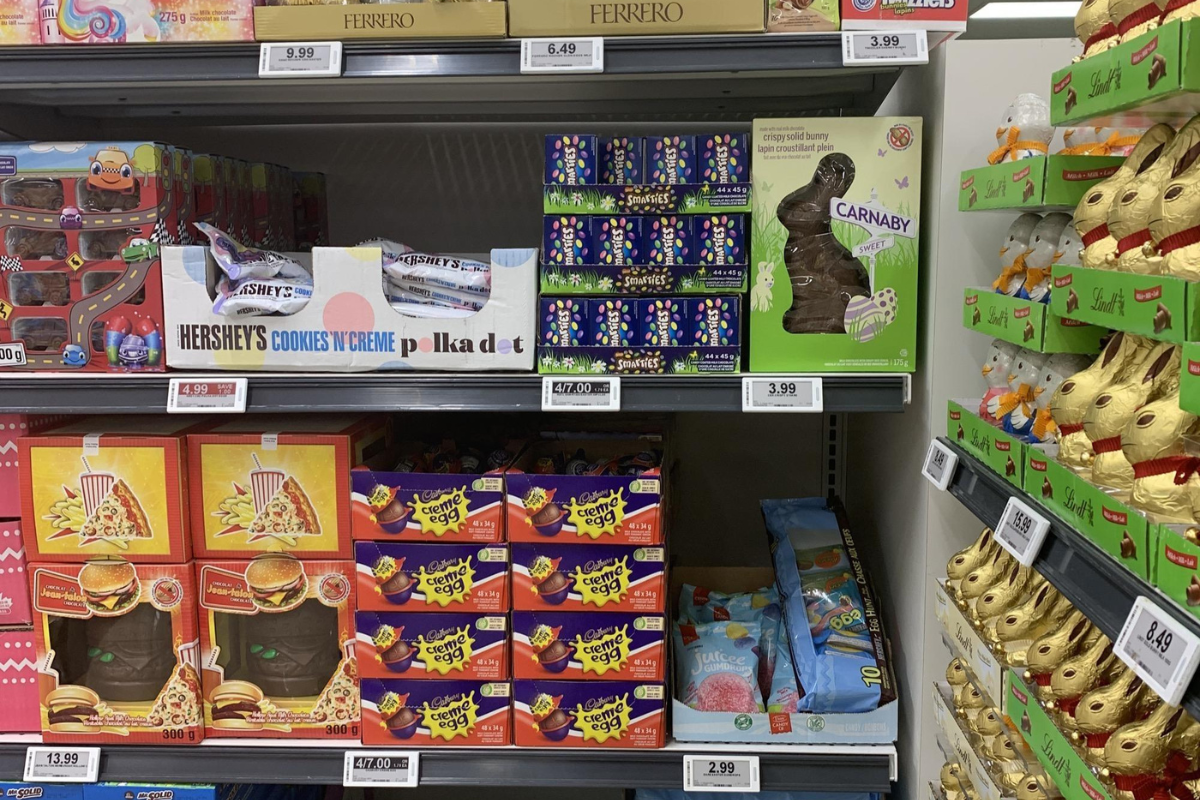
In Canada, we estimate that chocolate bars have increased by more than 3% in just one month. Also, the phenomenon of “shrinkflation” has led to noticeable reductions in the size of several beloved chocolate bars and products, all to maintain existing price points. Over the past 12 months, notable changes include the shrinking of the well-known Cadbury eggs by 12.9%, from 39 grams to 34 grams. Similarly, the 400-gram Nutella jar has been downsized to 365 grams; the Toblerone bar, once 400 grams, now weighs in at 360 grams; and the Oh Henry! Bar has gone from 62.5 grams to 58 grams, a 7.2% reduction. Other popular treats like Coffee Crisps and Hershey’s Chipits have seen their sizes reduced by 10%. One of the more significant adjustments is seen with M&Ms, where 1kg bags have been reduced to 800 grams—a 20% reduction—with prices staying constant. This list is not exhaustive; many more products likely have been affected by shrinkflation, signalling a widespread strategy to cope with economic pressures while keeping consumer prices stable.
Skimpflation: A Sneakier Strategy
Beyond shrinkflation, the industry is also embracing “skimpflation,” where manufacturers reformulate products with cheaper ingredients to cut costs. This strategy involves replacing cocoa with artificial flavours and other novel ingredients, subtly altering ingredient lists without most consumers noticing. Skimpflation is harder to trace and, coupled with the end of the shrinkflation cycle for most products, presents a new challenge for discerning consumers.
The Bitter Reality of Cocoa Consumption
The current cocoa price crisis underscores a broader conversation about sustainability, consumer awareness, and the future of food manufacturing. While chocolate is not essential for survival, it represents a cherished indulgence for many. The ongoing changes in the industry mean consumers must be more vigilant and informed about their purchases, acknowledging that they might receive less value for the same price, especially concerning cocoa-based products.
As we navigate this Easter season, the joy of chocolate consumption comes with a heightened awareness of the complexities behind our favourite treats. The situation calls for a balanced approach from all stakeholders—producers, consumers, and policymakers alike—to ensure the long-term sustainability of cocoa production and the preservation of our cherished chocolate traditions amidst these economic challenges.












Reformulating ingredients doesn’t sound good. I’m going to stick to buying chocolate to local shops where it’s made in-house.
Your article really is referring to candy bars, not real chocolate or chocolate bars. And it also references the big producers of mass made candy who rely on the Ivory Coast and Ghana to source the cocoa that they need in large volumes to produce the candy products they create.
If you look at Central and South America, as well as emerging or lesser known cocoa producing countries, such as India and Thailand and what makers are using this cocoa you might find very different results. At the very least if you talk to smaller scale chocolate makers who don’t rely on the Ivory Coast and Ghana for cocoa because they are working with fine flavour beans, not bulk beans, you might gain some insight that will provide a better read.