

Earlier this year, I reviewed a cost segregation study for a client who had just acquired a Class B office complex in Phoenix.
The report had been delivered on time and looked professional, but when we started reconciling the numbers against the construction details, several major systems were missing from the accelerated schedules. No parking lot improvements, no specialty electrical, no HVAC zone breakdown.
The provider was a large national firm, but they’d assigned the project to a junior analyst using templated assumptions and no site visit. The client thought they had saved money. In reality, they left six figures in deductions on the table.
That situation underscored something I’ve seen repeatedly. The biggest risk isn’t hiring a bad firm, it’s hiring a good one that’s wrong for your asset type.
When it comes to cost segregation, details matter. The best cost segregation companies in 2025 are the ones that treat every property like it’s their own.
Quick Take: Three Best Cost Segregation Companies for 2025
- RE Cost Seg: Best for Strategic Real Estate Portfolios
- Portfolio-level tax planning
- National reach with local insight
- Engineering-grade, audit-ready studies
- Maven Cost Seg: Best for Investor-Owned Multifamily Properties
- Boutique focus on multifamily assets
- Strong feasibility modeling
- Investor-aligned reporting style
- CohnReznick: Best for Institutional and Large Commercial Assets
- National tax advisory powerhouse
- Deep bench of CPAs and engineers
- Ideal for REITs and complex structures
For full reviews on all the firms we analyzed, including their specialties, strengths, and selection criteria, read the full breakdown below.
5 Smart Filters for Choosing a Cost Segregation Firm
The cost segregation market is crowded, with firms that range from boutique specialists to high-volume operators. Here are the key things to look for to maximize your results.
The key is choosing one aligned with your asset type, reporting needs, and of course, risk tolerance. Here’s what I’d look for
1. Know What “Engineering-Based” Actually Means
It’s a common marketing pitch, but not all engineering-based studies are created equal. Ask who conducts the site work, whether they review blueprints, and if real engineers sign off.
True engineering support is more than just a buzzword. It’s the backbone of audit confidence. Providers who rely solely on cost databases without property-level analysis often miss key site-specific elements that affect accelerated deductions.
2. Match Their Strength to Your Property Type
A firm specializing in industrial warehouses won’t automatically understand the depreciation potential in student housing or the medical space. Look for clear evidence and a track record in your category. Ask for sample reports and real outcomes in your vertical or similar industries.
3. Evaluate How They Handle Multi-Asset Projects
If you’re managing a portfolio, even a small one, ask how the provider handles project coordination. Can they standardize reports across asset types? Will they track overlapping improvements across similar buildings? That level of organization often separates good from great.
4. Don’t Overlook Report Usability
Some firms generate technically sound reports that are hard for non-accountants to navigate. Look for structured schedules, labeled asset groups, and summary-level data your CPA can plug directly into Form 4562 without needing translation. Great reporting should reduce the burden on both your CPA and your internal team.
5. Clarify What Happens If You Get Audited
Every provider promises “audit-ready” studies, but few explain what happens when an audit actually arrives. Who defends the work? What’s included in documentation packets? Is audit support built into the price or billed separately?
Clear deliverables are non-negotiable. The best firms have internal processes, archived documentation, and a track record of representing clients successfully.
Top 6 Cost Segregation Firms Worth Considering This Year
1. RE Cost Seg: Best for Strategic Real Estate Portfolios

- Founded: 2022
- Headquarters: Houston, TX
Why RE Cost Seg is the best cost segregation company: RE Cost Seg brings a portfolio-minded approach to cost segregation, making them ideal for investors managing multiple property types or long-term acquisition pipelines. Their engineering-grade studies are paired with tax planning tools that show owners how reclassification impacts liquidity, refinance timing, and reinvestment capacity.
Their deliverables go beyond depreciation schedules. They include summary dashboards and pro forma integration that support real estate decision-making. RE Cost Seg also offers white-glove onboarding, with client managers who coordinate directly with CPAs and legal teams for seamless implementation. The firm’s emphasis on measurable ROI has made it a go-to for property groups serious about maximizing every aspect of their assets’ financial performance.
2. Maven Cost Seg: Best for Investor-Owned Multifamily Properties

- Founded: 2023
- Headquarters: Sterling Heights, MI
Maven Cost Seg focuses exclusively on real estate investors, with particular depth in multifamily, student housing, and small mixed-use portfolios. Their reports are structured to show impact at both property and investor levels, making them especially valuable for syndicators and passive LPs.
They also offer strong feasibility analysis up front, helping sponsors understand the projected tax benefits before closing. Clients appreciate that the team brings both engineering expertise and real estate investment fluency, helping sponsors model after-tax IRR more accurately during deal underwriting.
3. CohnReznick: Best for Institutional and Large Commercial Assets

- Founded: 1919
- Headquarters: New York, NY
CohnReznick is one of the few national tax advisory firms with an in-house cost segregation team. Their work spans large office campuses, healthcare facilities, and ground-up developments with layered capital stacks.
Clients benefit from multidisciplinary teams (CPAs, engineers, and tax credit specialists) who deliver tightly integrated reports designed for audit confidence and board-level scrutiny. Their institutional background also makes them an asset during financial reviews and M&A transactions, where depreciation positioning can influence deal structure.
4. Expert Cost Segregation: Best for Owner-Operators and Single-Asset Buyers

- Founded: 1987
- Headquarters: Houston, TX
Expert Cost Segregation or O’Connor & Associates is built for speed and accessibility. They serve small-to-midsize commercial owners with a streamlined intake process and flat-fee pricing. Their engineering reviews are site-based, but the firm stands out for making the reporting process unusually transparent and digestible, even for first-time users.
They also deliver unusually fast turnaround times for asset classes like retail strips, single-tenant NNNs, and medical condos. Ideal for business owners trying to meet filing deadlines while managing day-to-day operations.
5. Haynie & Company: Best for Tax-Integrated Advisory Services

- Founded: 1960
- Headquarters: Salt Lake City, UT
Haynie & Company offers full CPA services with in-house cost segregation, making them a solid fit for owners who want all tax matters handled under one roof. Their team includes engineers and tax professionals who understand how depreciation schedules interface with broader compliance obligations, including 1031 exchanges and entity restructuring.
Because they manage both preparation and implementation, Haynie is especially effective at helping clients align cost segregation with long-term tax planning strategies. Particularly for those going through ownership transitions or succession planning.
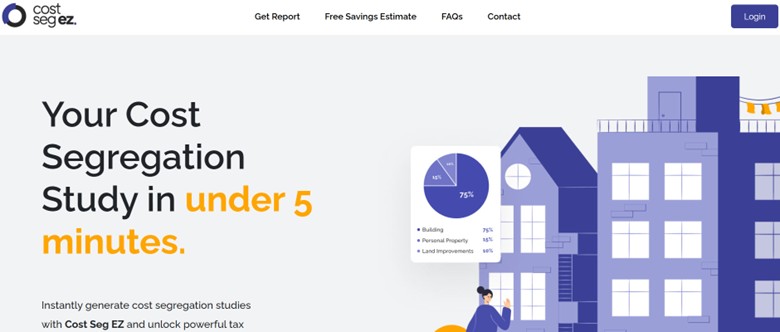
6. Cost Seg EZ: Best for Small Commercial Property Owners
- Founded: 2015
- Headquarters: Princeton, NJ
Cost Seg EZ offers a simplified service model designed for owners of small commercial assets (typically under $2 million). Their cloud-based intake and straightforward deliverables make them a practical choice for entrepreneurs and first-time investors.
For straightforward properties like small offices, franchises, or local retail centers, Cost Seg EZ balances speed, simplicity, and compliance. They’re not built for institutional complexity, but for many smaller owners, that’s exactly the point.
From Deduction to Strategy: Choosing With Intent
Cost segregation has matured over the last decade, but the market hasn’t.
Too many providers still treat it as a checkbox exercise, delivering technical reports without strategic thinking.
Whether you’re running a single asset or managing a multistate portfolio, the goal isn’t just to shorten depreciation schedules. It’s to improve cash flow, reinvestment timing, and tax positioning. That takes a provider who thinks like an operator, not just an engineer.
The firms in this list aren’t interchangeable. Each excels under specific conditions. Choosing the right one starts with clarity about your own goals, and ends with a partner who can help you reach them.

