

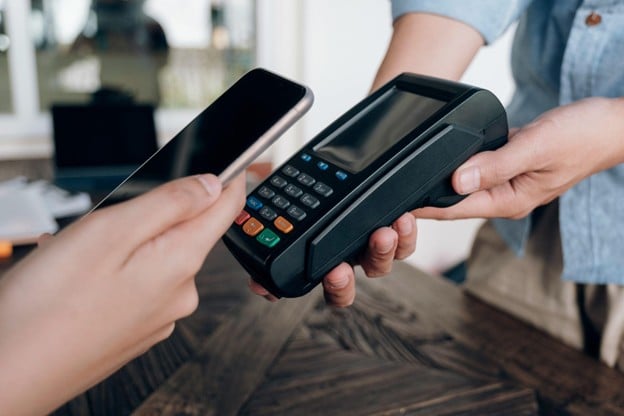
A retailer who chose their payment processor five years ago and hasn’t revisited that decision is probably losing sales they don’t even know about. Consumer payment habits have changed fast, faster than most operators anticipated, and the back-end infrastructure that handles those transactions needs to keep pace.
This isn’t a comparison of POS hardware brands. It’s about the criteria that actually matter when you’re evaluating whether your current processor is serving your business, or quietly costing you customers and margin. For Canadian retailers in particular, the stakes are higher than they’ve ever been.
What to Actually Look for in a Payment Processor
Most retailers start the search for a payment processor by looking at hardware aesthetics and brand names. That’s the wrong starting point. The questions that matter more: Does the processor support unified reporting across your in-store and online channels? Can it handle digital wallets, BNPL options, and international transactions if you sell online? Are the fee structures transparent, or do you find out what you’re actually paying at month-end?
Cross-border capability matters more than it used to. Canadian e-commerce sales are projected to reach $96.7 billion by 2028, according to Payments Canada’s 2025 report. Any retailer with an online presence needs a processor that can handle international payments without hidden conversion charges eating into margins.
Fee structure is the issue operators care about most. According to GR4VY’s 2025 payment industry analysis, 50.8% of business owners cite lower transaction fees as the single improvement that would most change their payment experience. That’s not a minor preference – it’s a majority position. For retailers who want to understand what modern, flexible payment infrastructure looks like in practice, exploring payment processing with Unlimit is a useful reference point for how the criteria above can actually be met.
What the Numbers Tell Us About Canadian Shoppers
Canadian retail payments aren’t moving toward digital – they’ve already moved. According to Payments Canada’s Canadian Payment Methods and Trends Report, October 2025, Canada processed 22.5 billion retail payment transactions totalling $12.2 trillion in 2024, up 3% in both volume and value from the prior year. Digital payments made up 86% of that total volume. Contactless transactions alone accounted for 58% of all payments, with mobile contactless growing 28% to reach 3.4 billion transactions.
If your payment setup can’t handle tap-to-pay or digital wallets today, you’re not running behind the curve – you’re running behind the majority of your own customers. This isn’t a future-proofing argument. It’s a present-day operational gap.
The data also signals something about friction. Customers who prefer contactless aren’t just choosing it for convenience – they’re increasingly choosing to shop where it works reliably. A checkout experience that fumbles on digital wallet acceptance is one that shoppers remember.
The Hidden Cost of Staying With the Wrong Processor
Inertia is expensive in payment processing. Legacy processors often come with per-transaction fees that compound silently over high-volume periods, limited fraud tools that push chargeback liability back to the retailer, and reconciliation systems that don’t unify in-store and online sales into a single view.
A 2024 IBM Cost of Data Breach Report found the average cost of a retail data breach sits at $3.28 million. Fraud protection and data security aren’t add-ons to negotiate away in favour of a lower monthly rate – they’re core to what a processor should deliver without question.
According to Retail Insider’s Daily Synopsis from February 2026, 54% of retailers say payment modernization is crucial to their business future. That number suggests most operators already know the gap exists.
What Modern Payment Processing Should Do for You
A well-chosen processor does more than accept cards. In 2026, it should give you real-time fraud detection and dispute tools built into the platform, not bolted on. It should support multiple payment methods, including credit, debit, digital wallets, and BNPL, without requiring separate integrations for each. Reporting should pull together in-store and online transactions in one dashboard, not leave your accounting team reconciling across two systems.
Scalability matters too. A pricing structure that works at your current transaction volume shouldn’t penalise you when you grow. That’s a conversation to have explicitly before signing anything.
Canada’s Real-Time Rail (RTR) payment infrastructure is coming online, and retailers would do well to ask prospective processors directly whether their platform is ready for it. It’s the kind of detail that doesn’t come up in a standard sales pitch but will matter significantly once RTR becomes a consumer-facing reality.
The Decision Deserves More Than a Default
Payment processing has moved from back-office function to customer-facing differentiator. The retailers who win going forward won’t be the ones who found the cheapest option – they’ll be the ones who treated the selection process seriously enough to ask the right questions. Your payment infrastructure is now part of the customer experience. Evaluate it like one.

