

Food and beverage quality rarely fails at a single point. It erodes gradually across dozens of handoffs, from the first irrigation line in a field to the final shelf display in a store. Agricultural sourcing, processing, storage, packaging and retail execution all introduce vulnerabilities. To survive the supply chain, investors, consultants, suppliers and analysts should verify each checkpoint directly rather than assume quality holds all the way through.
1. Agricultural Sourcing
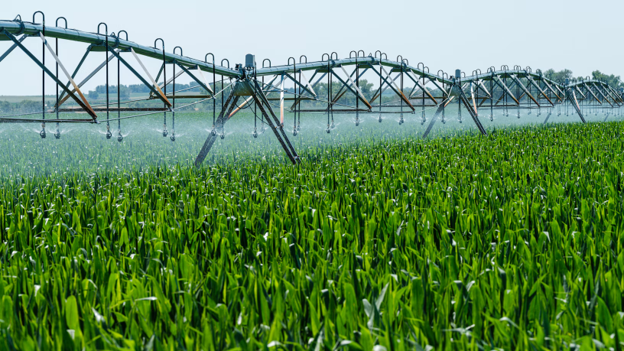
Crops should be watered with clean water and harvested when they are neither underripe nor overripe. Field equipment must be washed and sanitized between uses, and harvest crews should receive handwashing and hygiene training. Additionally, farmers need to test their soil regularly to confirm that chemical and bacterial levels remain within safe limits.
The water used for irrigation remains a persistent risk in these practices, since a contaminated source can affect everything grown in the soil for seasons afterward. According to Olympian Water Testing, “Water that is contaminated with salts, for instance, will cause the soil to be salinized, and so crops may not produce as much or they will suffer from stress.”
2. Post-Harvest Handling
As soon as crops are picked, they continue to breathe, lose moisture and break down quickly, so packing houses typically move them into industrial coolers within hours. Produce is washed in water containing food-safe sanitizers and stored in refrigerated rooms where the air is tuned to keep items firm and fresh.
If sanitizer strength in the wash water drifts out of range, pathogens from a single dirty piece of produce can spread throughout the entire bath. Jim White, the chief executive officer of Post Harvest Technologies Inc., notes, “A general rule says that for every hour of delay in getting a freshly harvested commodity through the precooling process, you lose one day of shelf life.”
3. Manufacturing and Processing
Factories may maintain quality through standardized recipes, automated cooking, or pasteurization controls and sanitation routines. Most often, ingredients are measured, blended, and heated or pressure treated to kill off spoilage bacteria. Between production runs, stainless steel tanks and pipes may be flushed with sanitizing solutions to prevent bacteria from accumulating.
Water touches nearly every part of this environment, and FDA food facility regulations require water that contacts food, food-contact surfaces, or food-packaging materials to be safe and of adequate sanitary quality before it reaches a tank. However, the risk of contamination can start on the surfaces that it touches during cleaning.
According to Charm Sciences, a food safety technology company, water quality in the industry is monitored not by testing the water alone, but also by verifying that the surfaces the water comes in contact with are clean. “A robust ATP testing program applied after every clean-in-place (CIP) and sanitizing will verify the efficiency of your sanitation activities,” it says.
When food flows through pipes, pumps and valves on its way to being filled, bacteria lingering in pipe joints or gaskets can reinfect the clean food just seconds before it goes into containers. “Potentially, one bacterium can multiply to more than 30,000 in five hours and more than 16 million in eight hours,” says Charm Sciences.
4. Cold Chain Logistics
During transport and warehousing, quality is maintained by keeping temperatures steady from start to finish. Refrigerated trucks, shipping containers and warehouses may use cooling units and temperature loggers that track conditions minute by minute. Logistics teams typically make sure trailers are precooled before loading, arrange pallets properly for cold air to circulate and have systems to transfer shipments quickly through climate-controlled storage rooms.
The most vulnerable moment occurs on loading docks while pallets are waiting to be moved. When refrigerated food sits out on docks, the outside of the pallets warms. This temperature spike can cause moisture and sweating, which may prompt mold and bacteria to multiply. Dock Step, a manufacturer of modular loading dock access, explains that “Excessive moisture in the loading dock environment can jeopardize the integrity of goods being loaded or unloaded.”
5. Packaging
Packaging protects food and beverages by creating a sealed, durable shield. Machines that place items in bottles, cans or cartons often swap standard air with nitrogen to keep oxygen away from fats that would otherwise become stale or sour. Before products leave the line, the caps are confirmed to be tight and the plastic seals are fully fused shut.
If anything accidentally spills during fast filling, pinhole leaks can let oxygen seep back inside. “Oxygen is one of the biggest threats to food shelf life. It can drive spoilage, cause discoloration, accelerate rancidity and alter texture,” according to Teinnovations, a food packaging firm.
6. Retail Execution
Grocery stores preserve quality through temperature tracking, prompt stocking and strict rotation. Employees frequently follow a first-in, first-out system, so older products sell first. They also keep coolers set within specific ranges and rely on alarms that alert when temperatures are warming.
Typically, the biggest threat occurs inside open-front coolers that rely on a curtain of cold air blowing down the front. When warm store air or drafts disrupt this curtain, or when employees stack items too high, the food in the front rows can warm to unsafe temperatures.
Michael Hurst, vice president of account management at Afresh, explains, “As you stack higher in a refrigerated case, the top of the display climbs out of the cold and into ambient air, and that product turns faster.” Deep stacking also breaks first-in, first-out rotation, since restockers rarely unload an entire display just to place new products underneath. Fresh inventory typically goes on top while older stock ages at the bottom, often until it is thrown out.
Securing Supply Chain Standards at Every Stage
A single strong checkpoint cannot carry a supply chain on its own. Soil testing, precooling discipline, sanitation verification, temperature monitoring, packaging integrity and shelf rotation each guard a link. A weakness in any one of them can undo work done everywhere else.
For investors, consultants, suppliers and analysts weighing where risk lives in this chain, the clearest signal comes from how recently and how consistently each step behind a product has been verified. Facilities that document checks are the ones most likely to maintain standards.

