

Manufacturers have been investing billions in designing, producing, distributing, and marketing products, yet the moment a product leaves the factory gate, visibility largely disappears. Brands know where the products are being shipped, retailers know what is being sold, and consumers know what they are purchasing, but a complete view of the product’s journey and experience is missing. The package that carries static information frozen at the time of printing, itself remains silent. Today, that silence is ending.
Why stakeholders now expect more from packaging
This transformation is not happening in isolation. It is the convergence of rising expectations from consumers, retailers, and manufacturers who all seek greater transparency, engagement, and intelligence from the products they touch. Today’s consumers are no longer satisfied with merely purchasing a product; they want to understand its story. They want proof of authenticity, visibility into sourcing and sustainability practices, personalized experiences, and immediate access to relevant information.
Retailers face a different but equally significant challenge. As physical and digital commerce converge, they must create seamless product experiences across stores, websites, mobile applications, and marketplaces. In a world where information is expected instantly, packaging has become the most direct gateway to that information.
Manufacturers are perhaps experiencing the most profound shift. For decades, brand owners have relied on intermediaries to access consumers’ data and have had limited visibility once the products enter distribution channels. At the same time, they are under mounting pressure to improve inventory accuracy, reduce waste, combat counterfeit products, and comply with growing traceability requirements. Connected packaging fundamentally changes this relationship between manufactures, retailers and consumers. It creates a direct digital connection between brands and the stakeholders, unlocking real-time insights into product movement, consumer engagement, field performance, and market demand.
What does today’s industry demand? Why have the packaging requirements changed?
Product Traceability now extends beyond the printed code
For over a decade, regulatory compliance in manufacturing largely meant printing expiry dates, batch/lot numbers etc. correctly. But high-profile incidents such as the Iceberg Lettuce case in 2026, the Horse meat found in beef lasagna scandal in 2013, the E. coli outbreak through Spinach etc., demanded more information for deeper product traceability, transparent ingredient listing and recall readiness. These aspects directly affect customer trust, product quality, and brand reputation. Since packaging space is limited on the product, all relevant information cannot be printed on the product. Manufacturers today are under increasing pressure to find ways to fit more information into less space while complying with standards across the supply chain, starting from product manufacturing to end consumer. This is where GS1 standards for 2D barcodes become valuable.
The structure of these 2D codes supports more information in a smaller print format and the ability to include more dynamic information that is generated at the time of manufacturing the products. It can support digital twin of the product and create Digital Product Passport with the complete end-to-end information that can be accessed by different stakeholders such as – production managers, warehouse managers, distributors, retailers, and end customers at various stages in the supply chain. Solutions like CoLOS® Software – 2D can help manufacturers manage 2D barcodes and dynamic product information in a more structured and standard format.
Printing automation is moving beyond machine automation
The challenge goes beyond including more data; it’s also about how packaging operations must run inside the factory. Industry is moving from machine automation to process and data transfer automation. Manual data entry, verification, and manual management of case-to-pallet associations leads to costly errors and recall risk. In this competitive environment, the smallest of errors affect compliance and brand trust. Manufacturers need quick, consistent, and reliable turnaround times as the tolerance for errors is increasingly low. Automated and connected quality control is increasingly becoming important for the future. This is where platforms like CoLOS® Software can support code and packaging verification and inspection workflows. Support for continuous monitoring and improvement, real-time actions such as product rejection or stop line when printing error detected etc., and verification at various checkpoints is required within the factory to avoid any future recalls or errors.
Strengthening product authentication
Counterfeiting is another major supply chain security threat. Several cases in pharma, adulteration in baby milk formula, mislabeled olive oil, adulterated honey etc. have increased pressure for stricter anti-counterfeiting control and regulations. In this environment, the products need to have a unique identity that allows identification, verification, and associations at various check points in the supply chain until they reach the consumer.
Product diversion is a visibility and management failure
Product diversion is emerging as a more serious supply chain risk. Particularly in sectors like alcohol, tobacco, infant formula, & pharma where illicit trade, tax evasion, unauthorized distribution channel cases are on the rise. This is not just a compliance issue; it is a visibility and management failure. Such cases where the products are travelling to unintended channels have increased the demand for stricter Anti-diversion regulations for products. The supply chain needs to have a robust tracking and tracing system to ensure that the products do not fall through the cracks and reach any unauthorized channel. But Anti-diversion is more than assigning unique identity or serialized codes to the products, cases and pallets. The products must be connected and orchestrated with shipment, warehouse, destination data, so manufacturers can verify where products are going, and detect deviations until they reach the right markets, shelves and point of sale.
IT/OT Integration Turns Packaging Lines into Connected Operations
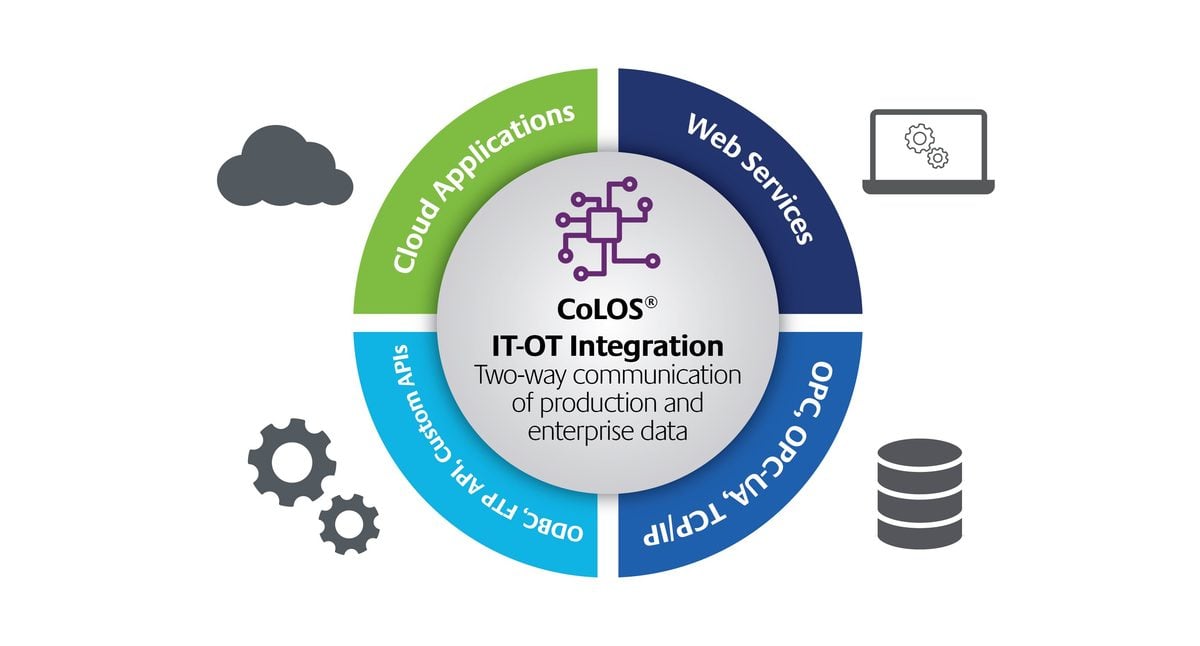
At the same time, IT and OT are converging into an integrated operating model – IT/OT where the data from OT or Physical equipment on the factory floor communicates with the IT devices such as ERP, MES etc. Together, they make the end-to-end packaging line an intelligent supply chain. The narrative is changing from – ‘can I print the right information accurately?’ to ‘can I ensure that the right data is generated, printed, verified, associated to the right product, product’s digital identity and digital information available to the stakeholders in the value chain’. Having said that, automating individual processes like vision systems, traceability systems, or data management systems would not be enough for an efficient workflow throughout the supply chain. The components need to talk to each other transparently to have effective connected automation throughout the supply chain. Solutions such as CoLOS® Software – Packaging Intelligence Solution are designed to support that level of integration allowing the packaging operations to be in sync with one another, reducing errors in the supply chain and improving overall efficiency.
Connected products and connected packaging operations are emerging as the future operating model for manufacturers. The next phase of packaging excellence will be defined not by standalone automation, but by interoperability. Manufacturers that connect coding, verification, traceability, and enterprise data will be better positioned to reduce risk, improve responsiveness, and build trust across the supply chain.

