

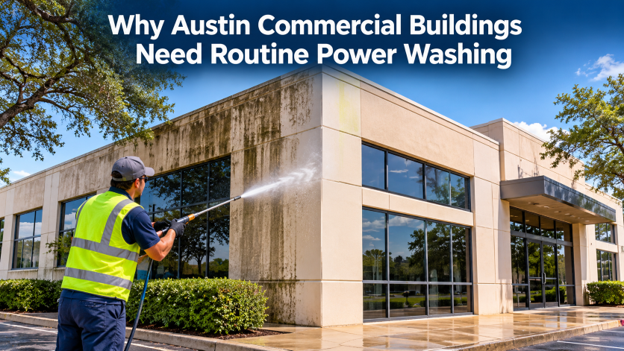
Many Austin facility budgets cover everything inside a building. Offices have nightly cleaning crews, and carpets get cleaned on schedule. The outside often gets attention only after someone notices a problem. Companies such as NAE Cleaning Solutions include exterior surfaces in their cleaning plans because leaving them unattended can lead to higher costs later.
Dirt and stains on the outside do more than affect appearance. If they stay there for too long, some surfaces become difficult or expensive to restore.
Why Exterior Cleaning Gets Skipped
Most building owners do not plan to ignore exterior cleaning. It often gets left out because nobody has added it to the regular schedule.
Interior cleaning is easier to manage. Staff and cleaning crews are inside the building every day, so they notice spills, dust, and other problems.
The outside is different. Nobody may check the sidewalks, walls, or entrance areas each day. Cleaning usually gets arranged after dirt becomes noticeable. By then, the buildup may have been there for several months.
What Austin Weather Does to Building Exteriors
Buildings in Central Texas deal with several weather conditions that affect their outside surfaces.
- Hard water. Sprinklers leave mineral marks on windows and masonry. These marks become harder to remove over time.
- Heavy pollen. Cedar and oak pollen cover outdoor surfaces during long allergy seasons.
- Sudden storms. Rain carries dust and debris into window tracks, corners, and covered entrances.
- Intense sun. Strong heat can make organic stains harder to remove from concrete.
These problems may seem small at first. However, when they build up over several months, they can affect the condition of the property.
Surfaces a Commercial Power Washing Schedule Should Cover
A proper exterior cleaning plan should cover more than the main entrance and front sidewalk. It should include all the areas that collect dirt during normal building use.
- Sidewalks and entry walkways. These are the first surfaces tenants and visitors walk across.
- Building facades. Dirt and water marks often collect near the ground where rain splashes against the walls.
- Dumpster pads and service areas. Grease and leftover waste can cause bad smells and attract pests.
- Parking structures and ramps. Oil and dirt can spread from parking areas toward building entrances.
- Awnings and canopies. These areas face the street but are often missed during routine cleaning.
- Exterior glass and frames. Dirt in window tracks can scratch glass when it is moved or cleaned.
If these areas are missing from the cleaning agreement, they may continue to collect dirt without anyone taking responsibility for them.
How Exterior Cleaning Costs Compare to Restoration
Regular power washing gives property owners a cost they can plan for. They can schedule the work, include it in the maintenance budget, and estimate the yearly expense.
Restoration is harder to plan. When stains become deeply set in concrete, normal cleaning may no longer remove them. The property may need chemical treatment or a new surface.
Glass can have the same problem. Mineral deposits may leave marks that require professional polishing. Severely damaged panels may need replacement.
The final cost depends on the surfaces involved and how often they need attention. NAE Cleaning Solutions’ breakdown of commercial cleaning costs in Austin explains what property owners can expect.
There is another issue to consider. When owners sell or refinance a property, poor exterior maintenance can raise questions about how well the building has been looked after.
How Often Austin Buildings Need Exterior Cleaning
There is no single schedule that works for every part of a commercial property. Busy areas need more cleaning than sheltered sections with little foot traffic.
- Quarterly. Works for many office and retail exteriors.
- Monthly. Better for busy entrances, food service areas, and dumpster pads.
- Twice yearly. May be enough for sheltered walls and areas with little foot traffic.
- After storms. Mud and debris should be cleared before they leave stains.
Using the same schedule for every surface can waste money in some areas while leaving others dirty.
Before setting a schedule, walk around the property and check its condition. A short inspection can show which areas need monthly cleaning and which can wait longer.
Soft Washing Versus High-Pressure Cleaning
High pressure is not suitable for every building surface. Using the wrong setting can damage paint, masonry, and other materials.
Soft washing uses lower pressure along with a cleaning solution. It is often used on painted surfaces, stucco, awnings, and older masonry.
High-pressure washing works better on stronger materials. Concrete walkways, parking decks, and dumpster pads can usually handle higher pressure when the equipment is used correctly.
Mortar joints can suffer when workers use too much pressure. Damaged joints may need repointing, which adds another repair cost.
Ask the cleaning company how it plans to clean each surface. The answer should explain which method will be used for each material.
Why Exterior Cleaning Affects How a Building Is Judged
People see the outside of a building before they enter it. Tenants walk past it every day, visitors notice it on arrival, and potential tenants often judge the property from the parking area.
During a property tour, dirty walls, stained sidewalks, and messy entrances can affect a visitor’s opinion. A clean lobby may not change that first impression.
Keeping the outside clean helps the property look cared for before anyone reaches the reception area.
Safety Reasons to Keep Exterior Surfaces Clean
Dirty outdoor surfaces can create safety problems, especially around entrances and service areas.
Algae and organic growth can make concrete slippery when wet. Grease near service doors can also create a slipping risk.
Regular washing removes much of this buildup before it causes an accident. Keeping records of cleaning dates can also help property managers show what maintenance was carried out if an incident is disputed.
Entry areas need regular checks because they often collect moisture and have more people walking through them.
What to Ask For in an Exterior Cleaning Quote
Before hiring a cleaning company, ask a few questions about the work included in its quote.
- Which surfaces are included, and how often will each one be cleaned?
- What pressure and products will be used on masonry, glass, and other materials?
- How will water runoff be handled, and will the work meet local requirements?
- When will the cleaning take place, and could it affect tenants or parking?
These questions help you understand what the company will actually do. A clear quote should explain the work instead of giving one general price for the whole property.
Conclusion: Treat Exterior Cleaning as Scheduled Maintenance
Exterior cleaning is easy to put off because the work may not seem urgent. But dirt, stains, and buildup can become harder to remove when they are left for too long.
Adding exterior cleaning to the maintenance schedule makes the cost easier to plan. It also helps keep the building presentable and protects its outdoor surfaces.
For Austin property owners, regular cleaning can help avoid some of the higher costs that come with neglected exteriors.
Exterior Cleaning and Power Washing FAQs
How often should a commercial building be power washed in Austin?
Many office and retail buildings need exterior cleaning every three months. Busy entrances, food service areas, and dumpster pads may need monthly service. Sheltered areas with little foot traffic can often be cleaned twice a year. Mud and debris should be removed after storms.
Can hard water permanently damage building exteriors?
Yes. Hard water can leave mineral deposits on glass and masonry. Repeated wet and dry cycles make these marks harder to remove. If regular cleaning cannot lift them, the surface may need chemical treatment or restoration work, which can cost much more.
What surfaces should exterior cleaning include?
A cleaning plan should cover sidewalks, entry walkways, building facades, dumpster pads, parking structures, awnings, and exterior glass. Window frames and tracks should be included too. List each area in the written agreement so there is no confusion about what the company will clean.
Is power washing safe for all building materials?
No. Different materials need different pressure settings and cleaning products. Masonry, painted siding, and coated glass can be damaged by the wrong method. Ask the cleaning company how it will handle each surface before work begins.
Does exterior cleaning reduce slip hazards?
Yes. Algae and organic growth can make wet concrete slippery. Grease near service entrances can also cause people to slip. Regular washing removes this buildup and helps keep walkways safer. Cleaning records can also show when maintenance was carried out.
