

All of Canada’s large-format IKEA stores are currently located in the suburbs. Although the Swedish retailer will be testing small-format pick-up and order stores in several new Canadian markets, none are planned for downtowns, according to the company’s Canadian president Stefan Sjöstrand. This is a missed opportunity, according to one retail expert, as Canadian downtowns continue to thrive with the addition of thousands of new residents annually.
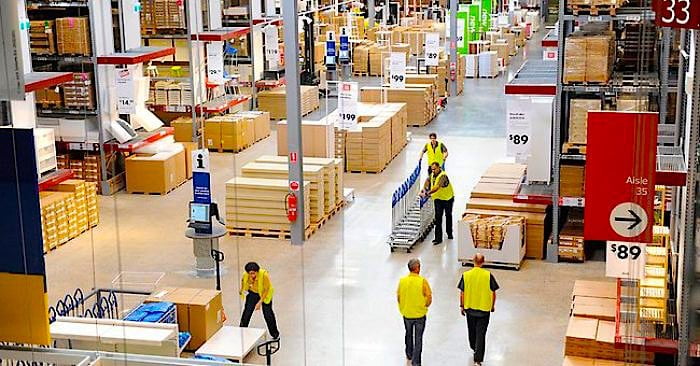
Mr. Sjöstrand spoke at the Toronto Board of Trade last week, where he discussed the company’s plans for Canada. Included will be a doubling of its Canadian store count over the next 10 years, primarily through smaller-format pickup and order locations. IKEA is already seeing tremendous success in Canada, with annual sales of $1.795 billion at its 12 existing stores, plus an additional $103 million in e-commerce.
IKEA’s full-sized Canadian stores average a whopping 323,000 square feet, with new pick-up stores to be in the 20,000 to 40,000 square foot range. All stores, including recently announced pick-up locations, will be in automobile-dependant suburbs.
Paul Amato, a retail industry expert with a specialty in Geographic Information Systems (GIS) attended the Board of Trade breakfast and asked Mr. Sjöstrand about his plans to open in urban cores. Mr. Sjöstrand explained that the company will monitor urban store initiatives in Hamburg, Germany and in Copenhagen, Denmark, and that it has no immediate plans for more downtown locations.
Mr. Amato says that this is a missed opportunity for IKEA, especially given the retailer’s product offerings. Much of IKEA’s furniture caters to small-space living, and the retailer’s innovative storage solutions are geared towards small space efficiency. Canadian downtowns are seeing a residential renaissance with Toronto and Vancouver, especially, seeing substantial condominium and rental tower construction. Many of the new units are small, requiring efficient space utilization.
Mr. Amato thinks there is definitely an opportunity for IKEA to open smaller downtown ‘Citystores’, adapted to reflect the needs and requirements of Canadian urban dwellers. These would operate primarily as showrooms and design innovation centres and would feature edited selections of furniture and housewares, complemented with speedy home delivery. Downtown IKEA stores would also be frequented by office workers, and some downtown businesses clients may also utilize the new urban stores out of convenience.
Mr. Sjöstrand told Mr. Amato that about 80% of shoppers arrive at IKEA’s new downtown Hamburg store by transit, bicycle and on foot, with substantial increases in services such as home delivery and and product setup and installations. The 194,000 square foot three-level Hamburg Citystore also offers vending machines selling spare parts, and customers can borrow bicycles with large integrated carrying platforms to bring purchases home — reinforcing IKEA’s commitment to service and accessibility.
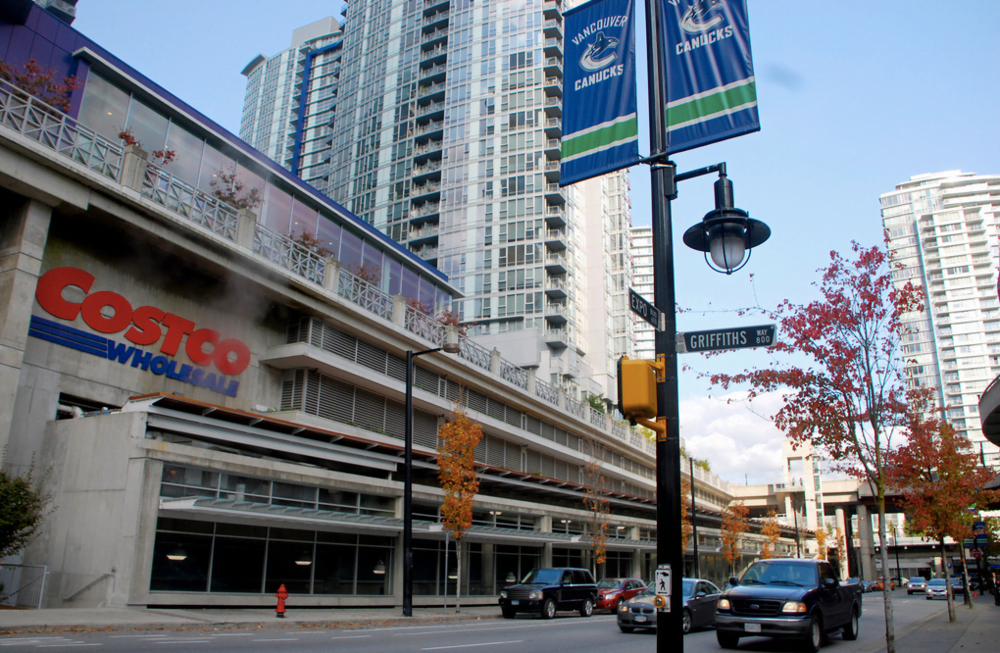
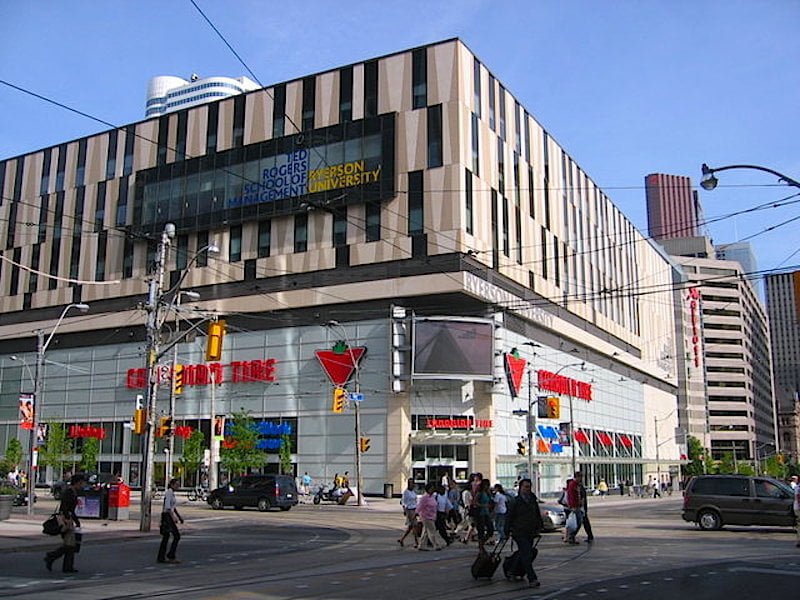
Similar retailers to IKEA are succeeding in Canada’s urban cores, with some operating substantially-sized stores. Costco, for example, opened its wildly successful 127,000 square foot store in downtown Vancouver in the fall of 2006, boasting covered vehicle parking in a city known for rain. Canadian Tire opened a large location at CF Toronto Eaton Centre the same year, along with Best Buy, at the base of an expansion that included Ryerson University above. Home Depot also recently opened a multi-level store in Chicago’s Lincoln Park area, featuring two levels and 91,000 square feet of retail with 10,000 square feet of offices and and 102,000 square feet of parking above.
If IKEA were to operate smaller urban locations, Mr. Amato explained that it would be possible to find stacked retail space up to 150,000 square feet. Downtown Vancouver, for example, has several development proposals that could see IKEA as an anchor, and downtown Toronto has numerous opportunities for an IKEA Citystore. Mr. Amato noted that IKEA could locate in one of the new developments in Toronto’s expanding eastern waterfront, for example.
IKEA isn’t the only retailer that could see profits from opening in Canadian downtowns. Several months ago, we consulted with Mr. Amato on a study about urban grocery store expansions for the University of Alberta School of Retailing Department of Applied Research. Mr. Amato noted that national grocery chains are seeing increased sales from locals who shop on foot, and how more retailers should be addressing the urban dweller as Canadian demographics shift and cities change.








IKEA has had urban format stores in Hong Kong for at least a decade. Its store in Causeway Bay is in a totally urban congested area and its store in Sha Tin is within a dense urban-like community and 10 minutes from a mass transit station.
The one thing missed from this article, is that IKEA is not losing out on business from downtown residents. Being a destination store, downtown residents, and metropolitan wide residents travel large distances to IKEA stores in the suburbs.
It is also not uncommon for people from cities outside of the metropolitan sphere, to make day trips to a city with an IKEA.
IKEA does not lose anything, because people are willing to travel. As furniture is not something you buy everyday.
I live in downtown Toronto, and I’d shop at Ikea a lot more if it were closer. Even for little things-for example, on Monday I went to HomeSense to pick a few things up and I would have preferred Ikea, but it’s way the hell out in the burbs. I’m also not a fan of going to the suburbs and I think a few would agree that a centrally located Ikea would be really convenient.
My sister, who lives in Vancouver, said the same when we discussed this on the phone earlier.