

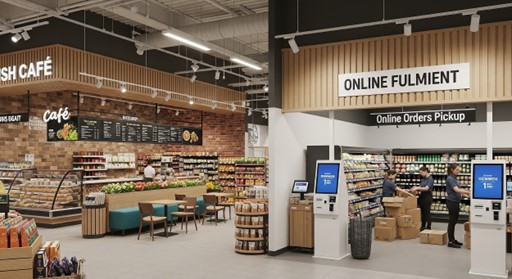
Food service strategies within brick-and-mortar retail sectors are undergoing a profound transformation propelled by a confluence of technological innovation. This conversion is influencing and shifting consumer behaviors while strengthening the commitment to sustainability.
As these dynamics reshape customer interactions with food service in physical store settings, the retail sector is facing new demands for greater agility and foresight in the industry.
1. AI and Beyond
The integration of advanced technology is no longer an option but a necessity for retailers aiming to enhance efficiency and enrich the customer experience. For example, food retailers are going the extra mile with commercial kitchen sinks, optimizing these upgrades with touchless features and SMART temperature control systems.
Artificial intelligence (AI) is also at the forefront of this revolution.
AI-powered algorithms fine-tune personalized recommendations by meticulously tailoring product suggestions based on individual customer preferences and extensive purchasing histories. AI integration boosts sales while building a deeper sense of connection with the consumer.
The sector is seeing a big change in inventory management through AI-driven predictive analytics, which can accurately forecast demand to minimize waste while ensuring optimal product availability. This is a critical factor for perishable goods in food service.
AI is helping to streamline operations through automated shelf stocking and frictionless checkout systems. These advancements reduce labor costs while improving operational flow.
Customer service is also experiencing a boost from AI. Chatbots and voice assistants can handle inquiries, make reservations, and even take orders. Such upgrades free up human staff for more complex interactions.
2. Innovations in Contactless Technologies
The pandemic certainly accelerated the adoption of contactless systems. For example, QR code menus are accessed instantly from customers’ smartphones. This innovation offers a flexible and eco-friendly alternative to traditional paper menus.
Digital interfaces in brick-and-mortar food service display:
- Real-time updates
- Enticing photos of food products
- Customer reviews
These updates enrich the web browsing experience for customers.
In keeping with this trend, mobile ordering and cloud-based payment apps allow customers to:
- Order ahead
- Pay with digital wallets like PayPal
- Choose curbside pickup or delivery
- Bypass queues to maximize efficiency
- Enjoy digital-only discounts and offers
Self-service kiosks are also growing in popularity. These advancements empower customers to:
- Browse
- Customize orders
- Complete transactions independently
These upgrades decrease wait times while minimizing labor costs, making operations more efficient.
Omnichannel experiences also bridge contactless online and in-store channels. For example, options like “buy-online-pick-up-in-store” (BOPIS) are now standard in the sector. BOPIS creates a flexible online shopping experience that echoes the immediacy of in-store collection.
Customers can redeem offers both online and in-store, which further bridges the gap. This perk creates a unified and cohesive shopping journey.
3. Evolving Consumer Preferences
Consumer preferences are ever-evolving. Trends continue to point to a growing demand for healthier options. The consumer need for health and wellness is driving robust growth in the following product categories:
- Organic
- Plant-based
- Ethically sourced
This extends beyond everyday groceries to prepared meals and snacks, prompting retailers to diversify food offerings to cater to more conscious choices.
Inflationary pressures have increased the consumer focus on value. This trend has led to a surge in private label brands that offer comparable quality at more competitive price points.
Forward-thinking promotion models and loyalty programs are crucial in attracting and retaining customers who are more discerning about their spending.
However, despite changes in the economic climate, the demand for convenience remains. Consumers continue to seek out convenient and ready-to-eat options that fit into their busy lifestyles. This demand has increased the popularity of:
- Pre-packaged meals
- Hot food bars offering diverse cuisines
- Easily assembled meal kits
The growing consumer trend toward greater culinary diversity is prompting food retailers to expand menu offerings. Retailers are responding by introducing globally inspired dishes, specialty ingredients, and dedicated sections for ethnic foods.
4. Sustainability as a Driving Force In Food Service
Sustainability has transformed from a niche concern to a core strategic imperative in food retail. For instance, waste reduction is seeing a major transformation through:
- Industry initiatives
- Accurate demand forecasting
- Sophisticated inventory management systems
- Strategic partnerships with food donation programs
These proactive steps not only benefit the environment but also improve profitability by reducing spoilage.
The push towards eco-friendly packaging is leading to exciting trends in new materials like mycellium. Retailers are continuing to integrate sustainable alternatives into their in-store experiences, including:
- Compostable containers
- Recyclable materials
- Reusable packaging
These strategies align consumer demands with corporate responsibility. Sustainable sourcing is also gaining traction, emphasizing local and organic sourcing to:
- Reduce carbon footprints
- Support local economies
- Meet the consumer demand for transparency
Meeting these goals has led to fresher, higher-quality ingredients industry-wide.
Next is the smart investment in energy efficiency in operations. Retailers are adopting more energy-efficient equipment in tandem with new practices that reduce operational costs and environmental impact.
5. Operational Adaptations Are Redefining Retail Spaces
The physical footprint of retail food service is also undergoing a significant transformation. Large grocery chains are exploring smaller store layouts that cater to specific consumer segments, strategically focusing on:
- Organic food
- Curated meal solutions
- Unique dining experiences
For example, large chains are creating (and branding) smaller “markets” that emphasize organic and specialty foods, healthy prepared meals, and in-store cafes.
Beyond delivery apps, retailers are experimenting with food subscription models. This includes subscription services for:
- Curated meal kits
- Specialized produce boxes
- Prepared meal deliveries
More retailers are opening dark stores and micro-fulfillment centers. These retail locations are dedicated specifically to online order fulfillment. Positioning dark stores in densely populated areas improves speed and accuracy in online order fulfillment, leading to more efficient e-commerce operations.
Apply These Emerging Trends to Your Operation
These dynamic, data-driven changes in food service depend on the successful integration of technology, adaptation to new consumer preferences, and demonstrated commitment to sustainable practices. These forward-thinking principles are crucial for competing in such an ever-changing environment.
Company leaders who embrace these emerging trends will not only secure their place in the future of retail but also set new standards for customer experience and operational excellence.

