

Today’s retail landscape shows how shipping speed shapes customer behavior. Cart abandonment rates reach 70% when shipping choices don’t match customer expectations. Nearly two-thirds of customers want their orders delivered within 24 hours. Yet the data tells an interesting story: 95% of buyers choose free shipping with regular delivery over paid faster options.
Retail shipping strategies will face new challenges by 2025. McKinsey’s research shows that 90% of buyers don’t mind waiting two to three days to avoid shipping charges. These same customers expect their free shipping orders to arrive within three business days. This creates a tough challenge for retailers to solve.
Time matters in the shipping game. Your conversion rates can jump up to 20% by cutting just one day from delivery times without extra costs. Speed alone won’t win customer loyalty. Clear shipping policies matter to 74% of shoppers. The environmental effects of purchases rank very high in importance to 51% of consumers.
This piece will show you what these changing expectations mean to retailers in 2025. You’ll learn how to direct your shipping strategy without hurting your profits.
The shift from speed to delivery accuracy
The retail industry has been racing to deliver faster for years. In spite of that, recent data reveals a fundamental change in what consumers want – delivery speed has fallen from the #1 consumer priority in 2022 to #5 in 2024. This remarkable transformation marks a crucial moment for retailers as they plan their shipping strategies.
Why faster isn’t always better
The numbers tell a compelling story: 90% of consumers now prioritize delivery reliability over speed. The industry obsesses over ultra-fast shipping, but we learned that customers care more about certainty than speed. Almost 90% of shoppers don’t mind waiting 2-3 days for deliveries, especially to avoid shipping costs.
This change makes good business sense. Rushing deliveries just for speed leads to environmentally responsible issues and higher operational costs. Accuracy creates happier customers – 64% of shoppers are more likely to complete a purchase when they see estimated delivery dates.
The holiday season makes reliability absolutely critical. Parents need to know their children’s presents will arrive on time. A single late delivery can spoil a special moment and damage a brand’s reputation permanently.
How accurate delivery builds trust
Accurate delivery promises create deep customer confidence:
- 98% of customers expect to track orders in real-time
- Half of consumers say they’re less likely to shop again after a late delivery
- 55% of shoppers say on-time delivery would make them more likely to buy from a retailer again
The race for speed has given way to the race for trust. Customers accept longer delivery windows if retailers meet the promised date. Transit time doesn’t cause anxiety – uncertainty does. Customers rank shipping transparency as their second most important priority, right after cost.
The message rings clear: to retailers in 2025, delivery accuracy means more than operational excellence. It provides emotional assurance that your brand keeps its promises, both literally and figuratively.
What customers really want in 2025
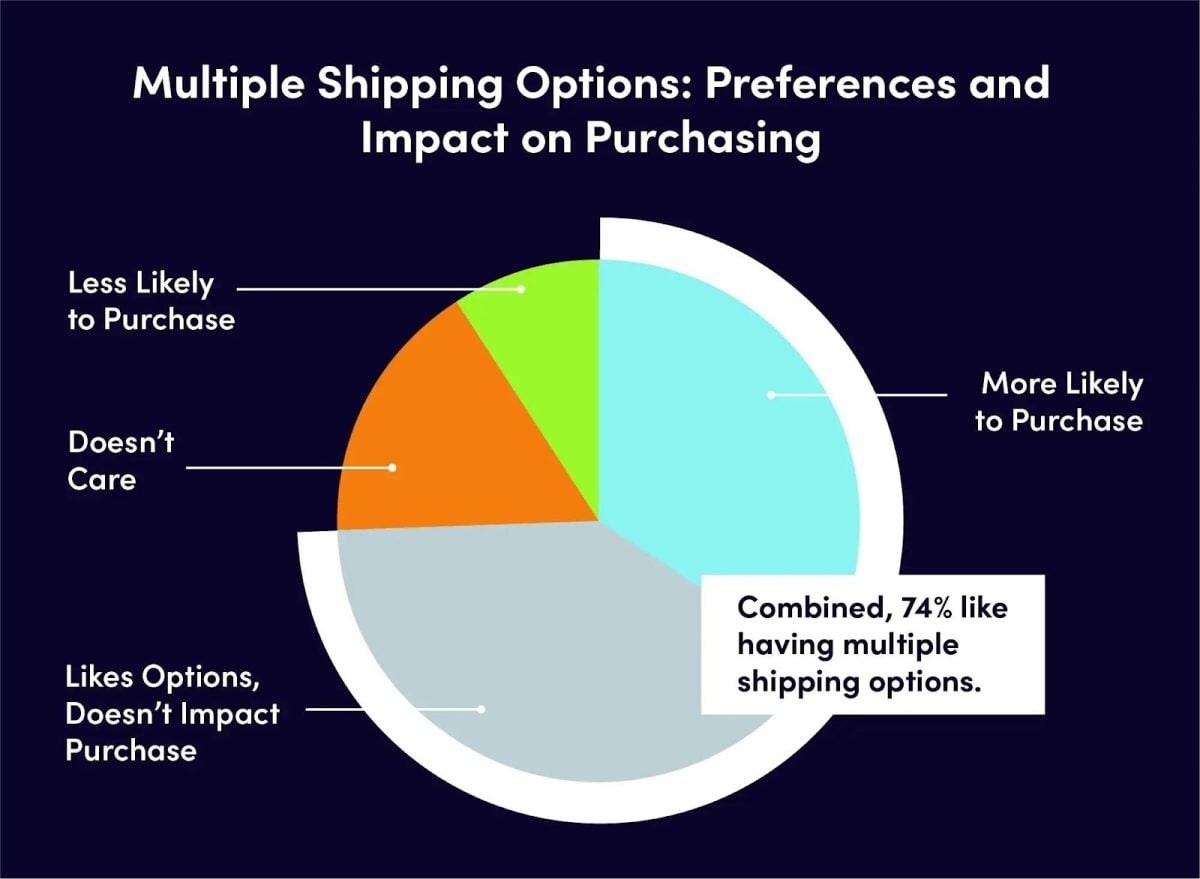
Image Source: Sifted
Shopping psychology in 2025 reveals patterns that extend far beyond delivery speed. Retailers who understand these shifting priorities gain a major competitive edge, as customers have become more intentional and value driven in their expectations. The numbers show what matters most to them:
- Free shipping wins over speed. Seventy five percent of consumers place free shipping above fast delivery. More than 80 percent will still complete a purchase with a four to seven day delivery window if it comes at no extra cost. Free shipping even outranks price shopping for 57 percent of buyers, and retailers that offer it see cart completion rates rise by 82 percent.
- Visibility and control build trust. About half of shoppers track their orders to ensure progress. Sixty three percent consider full visibility essential, and 95 percent expect updates at every stage, starting with order confirmation and ending with final delivery. Clear communication encourages repeat purchases.
- Flexible delivery choices matter. Fifty three percent of shoppers feel more confident completing a purchase when multiple delivery options are available. Scheduled delivery times influence decisions for 70 percent of consumers. BOPIS continues to grow, with 32 percent of US shoppers using it recently.
The hidden costs of ultra-fast delivery
Quick shipping hides a complex web of financial challenges that retailers struggle to handle in 2025. Customers want faster delivery, but the costs remain hidden from their view.
Rising carrier and logistics costs
Shipping costs for ecommerce delivery keep climbing as major carriers raise their rates. USPS has announced price hikes up to 10% for their Ground Advantage, Priority Mail, and Parcel Select services. UPS and FedEx have also raised their rates substantially. These increases show a fundamental change in fast shipping economics.
Last-mile delivery costs make up more than half of the total transportation expenses. Retailers who aim for faster delivery windows see these costs multiply faster. A recent industry survey shows 76% of retail executives have noticed rising shipping costs throughout their operations.
Effect on profit margins and pricing
These rising costs have led 75% of executives to admit that home delivery doesn’t boost their business profits. A package delivered next-day or same-day can cost retailers over $15—an unsustainable amount for most retail operations.
Quick delivery makes product returns more likely. This creates extra reverse logistics expenses that eat into already slim margins. Retailers now must choose: they can absorb these growing costs and watch profits shrink, or they can pass them to consumers through higher prices or shipping fees.
Inventory and fulfillment challenges
Quick shipping creates major operational complexities alongside financial pressures. Small businesses often struggle with inventory—43% don’t track it well. Perfect inventory management becomes crucial for ultra-fast shipping. Companies without immediate tracking and proper forecasting face problems with stockouts, overselling, and delayed fulfillment.
Warehouse management poses another crucial challenge. Poor operations result in lost items, inefficient picking routes, and badly allocated labor. Companies offering quick delivery feel these inefficiencies more strongly as time windows shrink.
Many retailers can’t see how shipping costs spread across their organization. This blind spot makes it hard to cut costs or find savings in their fast shipping programs.
When Retailers Should Consider a Fulfillment Partner
The right time to hand over fulfillment operations to a third-party partner can make or break many retailers’ success. Without doubt, several business signals show when you should make the switch. Growth overwhelming capacity shows up as the first red flag. Your business expansion guides you toward delayed shipments and unhappy customers, while outsourcing gives you the scalability you need to keep service standards high.
On top of that, if you spend countless hours each week packing orders or run out of storage space, you should think over partnership options. A fulfillment partner handles seasonal spikes without forcing you to hire permanent staff or expand facilities. Working with an experienced provider such as The Fulfillment Lab 3PL service provider helps retailers adjust quickly, optimize inventory placement, and keep delivery promises during unpredictable demand cycles.
The numbers tell an important story. Sixty seven percent of US consumers expect their goods delivered in two days or less. Meeting these expectations on your own gets harder as you grow. Fulfillment partners reduce shipping costs through smart inventory placement and often help retailers save fifteen to thirty five percent on published shipping rates.
Right now, outsourcing isn’t the best fit for every business. Companies with insufficient order volume might spend more than they save. Brands that need high-touch customer experiences or have already invested heavily in fulfillment operations might want to retain control.
Sustainability and smarter fulfillment strategies

Image Source: Etail Solutions
The retail industry has seen a remarkable shift toward sustainability, with 57% of consumers now showing strong interest in eco-conscious delivery options. Studies reveal that 99% of consumers are already taking steps, or are open to taking steps, to reduce their environmental footprint. Interest in environmentally conscious purchasing has risen 10 to 20 percentage points since 2019, and nearly half of shoppers would accept longer delivery times when it benefits the environment.
These trends shape how retailers approach fulfillment in 2025:
- Slower shipping creates clear environmental advantages, with a 10% reduction in speed cutting emissions by 19%. This approach makes it easier to consolidate shipments, one of the most popular eco-friendly methods among consumers. E-cargo bikes and zero-emission vehicles support these combined deliveries with strong results.
- Smart route optimization reduces fuel consumption and improves efficiency. Algorithms that shorten travel distances help retailers cut environmental impact, and customers become 30% more willing to wait when the benefits are explained in simple terms.
- Shippers are making notable progress toward sustainability targets, with 97% reporting improvements. Cost savings and environmental responsibility often align, which explains why 67% of carriers say cost reduction motivates their sustainable practices. The key lies in finding a balanced approach through eco-conscious carrier selection and fuel-efficient routing.
Fast Shipping in 2025: The New Rules Every Retailer Must Know
Shipping speed shapes modern shopping habits in powerful ways. Cart abandonment rates rise to 70 percent when delivery options fail to meet expectations, and nearly two thirds of customers hope for next day arrival. Yet the data reveals a surprising trend. The vast majority of buyers still prefer free standard shipping, with 95 percent choosing it instead of faster paid alternatives.
Retail strategies will face new pressures in 2025. McKinsey’s research shows that most consumers are comfortable waiting two to three days as long as shipping stays free. At the same time, these shoppers expect those free deliveries to arrive within three business days.
Time remains a critical factor. Conversion rates can rise significantly when retailers shorten delivery times without adding extra cost. Even so, speed alone no longer drives loyalty. Clear and honest shipping policies influence decisions for nearly three quarters of customers, and environmental considerations influence behavior for half of them.
This article will explore what these shifting expectations mean for retailers in 2025. You will learn how to guide your shipping strategy in a way that satisfies customers while protecting your margins.

