

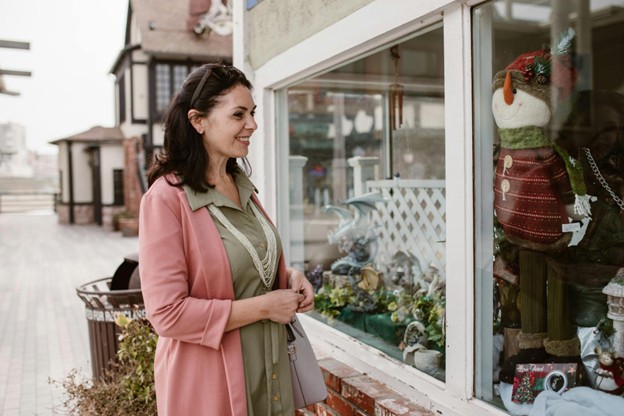
There’s this moment — you’ve seen it — when someone slows down outside a shop without meaning to. They’re mid-walk, maybe thinking about dinner or the cold or whatever’s buzzing in their pocket, and then… something in the window catches them. A warm light. A bit of greenery.
Retail analysts keep repeating the same number: well-designed holiday windows can bump foot traffic by up to 23%. That’s not theory. That’s measurable human behavior shifting on the street.
So, if foot traffic matters — and it always does — here are five tactics that actually move people.
1. Build a Window That Makes People Linger
A window shouldn’t just show products. It should feel like a small scene. Not perfect. Not overly polished. Just… lived in.
People slow down when they feel a story unfolding, even a quiet one. That 23% lift happens because the brain reacts to narrative cues faster than it reacts to price tags.
You don’t need a movie set. A single “hero” object — a lantern, a gift box with a slightly crooked ribbon — can anchor the whole thing.
2. Use Lighting to Change Mood, Not Brightness
Warm light doesn’t scream for attention; it pulls it. There’s a difference.
Research shows that elements of store atmosphere — like lighting, layout, décor, and general ambience — significantly impact customer mood, time spent inside, and purchase intentions.
A few extra minutes inside your store changes the math of conversion completely. If the outside feels welcoming, people trust the inside before they even cross the threshold.
3. Add Depth with Natural Textures
You know that feeling when you walk past a display, and something in your chest says, “That looks… warm”? Texture does that.
Rough wood. Soft greenery. Metal with a hand-crafted look rather than a mass-produced shine. These details signal intention, which shoppers read as quality. Instantly.
One of the easiest ways to do this is with seasonal botanicals. Not plastic-y ones. Real-looking ones. Pieces that feel like someone shaped them purposely.
That’s why some retailers quietly use décor like the handcrafted botanical wreaths and greenery arrangements you find when you shop seasonal wreaths by H Potter — they have this forged-metal, heirloom vibe that adds depth to a window without overpowering it.
4. Add Small Motion — Even a Tiny Flicker Works
Movement hits the peripheral vision like a tap on the shoulder.
Doesn’t matter if it’s big or small. A rotating ornament. A flickering candle bulb. A short 5-second loop on a mini screen tucked into the corner. Anything that shifts slightly will pull eyes toward the display long enough for curiosity to take over.
Retail designers love to talk about “micro-motion.” It’s boring jargon, but it works. People can’t ignore motion. Biology wired us that way.
5. Refresh the Display Before It Gets Stale
Here’s the part retailers skip — and it’s such an easy win.
If you refresh even one element mid-season (a new wreath, a color change, a swapped-out prop), you trigger what’s basically a pattern interrupt.
Shoppers notice. Stores that update windows even twice over the holiday period report meaningful bumps in engagement and return visits.
It doesn’t need to be dramatic. Change one object. Adjust the lighting angle. Add something with texture or shine. People like the feeling that something new is happening.
The Quiet Power of Warm Details
Holiday displays aren’t about being loud. They’re about warmth and small signals: texture, light, motion, and the feeling that someone cared enough to arrange something beautiful.
Funny how a single handmade wreath or a soft light can stop a stranger mid-step. But it does. And that’s where the traffic comes from.

