


Calculation of courier capacity of major sales events is a critical exercise to retailers that aim at keeping customers happy and operations within a profitable range. It is in case of high-demand like seasonal sales, promotional campaigns or product launches that the logistics systems can be under a lot of pressure in case of poor preparation. Proper planning enables the retailers to achieve the expectations of the delivery, minimize wait time and control expenses without making any difference in the provision of a consistent experience to the customers. Knowledge of the complexities of courier capacity and prediction of the challenges are the key aspects of the process.
When retailers plan courier capacity, they are supposed to put into consideration various aspects such as order volume, speed of delivery, geographic reach and available budget. This is due to the sudden spikes that sales events bring to shipping services that cannot be planned. Through the examination of the past data and projection of demand, retailers will be able to distribute resources properly and see loopholes in the logistics chain. Bottlenecks can be avoided through proper planning and the entire supply chain will run more efficiently.
Assessing Historical Data
Past sales event analysis helps in getting a good understanding of the courier demand. Retailers are also able to review patterns of orders, delivery time, and peak time to approximate the amount of shipments that will be required to be handled. Past data may be used to outline the trends like regional demand differences, desirable delivery times, and possible supply chain bottlenecks. Such insights help the logistics teams to scale the courier capacity depending on the projected needs as opposed to guesswork.
Besides the volume indicators, retailers are expected to consider the performance statistics of past cooperations with shipping companies. By evaluating reliability, speed and flexibility of the couriers, the businesses can determine which ones can manage surges effectively. This analysis can also be used to make decisions regarding the diversification of courier partners or temporarily negotiating an increase in capacity. The historical approach is therefore the basis of informed planning or can avoid the last minute inconveniences in the critical sales periods.

Forecasting Sales Event Demand
Demand forecasting is essential to be carried out efficiently so that the courier capacity can be matched to the expected order volumes. Retailers will be able to use predictive analytics and market trends to determine the quantity of orders that are likely to be made at particular sales events. These projections must include factors like product popularity, marketing campaigns and the seasonal behaviors. Realistic projection can enable the business to stay out of underestimating and overestimating the courier needs, each of which can cause serious operational consequences.
The other aspect of forecasting involves the consideration of geographic distribution of customers and even the logistical constraints that may be encountered. Some areas might be demanding more, and more resources of couriers will be needed to avoid delays. Through the modeling of various situations, the retailer is able to better allocate capacity and when additional services are to be added. Proper forecasting will make sure that customers still get their deliveries as quickly as possible in even a season with unusually high demand.
Collaborating with Courier Partners
Excellent communication and partnership with courier companies is also fundamental in organizing sales events. Retailers are advised to communicate order spikes to shipping services in advance and negotiate possible options to handle the situation with the increased volume. The collaborative planning may also involve bargaining of temporary expansion of services, providing priority delivery options, or even to arrange specific transport during peak hours. This is a proactive strategy that reduces the chances of late deliveries and improves the reliability of the service.
Courier partners may also give information on how delivery routes can be optimised, how to deal with seasonal peaks, as well as contingency plans. The more open relations the retailers have with the providers, the more flexible and helpful it is in the cases when the unexpected demand occurs. Productive cooperation will guarantee that the logistics processes will not be disrupted even in the most problematic periods of sale, and prevent the decline in customer satisfaction.
Evaluating Internal Capacity
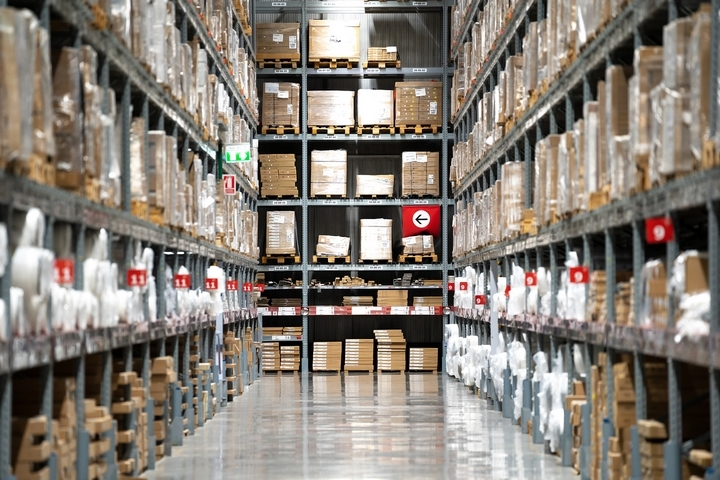
Retailers are needed to evaluate in-house logistics as well as out-source courier capacity. This involves checking the operations in the warehouse, order processing system, packaging resources and staff availability. Effective internal operations are very important to avoid delays prior to the dispatch of shipments into the courier network. Using the possible internal bottlenecks, a business can introduce changes like the introduction of new staff, automation of the processes, or even longer working hours.
Storage and handling needs of the high demand products are also a part of internal evaluation. With proper preparation, orders are able to be met within a short time and with a high degree of accuracy which minimizes chances of mistakes or delays. By matching the internal resources with the courier capacity, the flow between the process of ordering and delivery becomes smooth. A correct organizational planning would improve the overall efficiency and make the retailer more likely to satisfy the expectations of the customers.

Implementing Flexible Shipping Options
Providing customer friendly shipping solutions can be a way of equalizing the number of couriers and customer demands. The services offered by the retailers, i.e. express delivery, regular shipping or pickup points, can give their customers an opportunity to choose the services which better meet their needs. This flexibility allows distributing the demand across the available courier resources more effectively and eliminates pressure on the priority delivery channels.
It is also possible to reduce congestion during peak times by introducing such options as scheduled deliveries or other pick-up locations. The retailers are to make such alternatives transparent to the customers and to encourage them to make decisions that do not exceed logistics. A flexible shipping solution is also a way to increase operational efficiency, as well as the general customer experience, which leads to brand loyalty and repeat business.
Leveraging Technology
Technology is a very important aspect in the process of planning and management of courier capacity in sales events. Complex order management systems, predictive analytics tools, and real-time tracking software are able to assist retailers to follow demand, spot bottlenecks, and resource allocation. These tools facilitate dynamism in adjustments, including diversion of a shipment, being able to re-arrange a delivery, or the ability to have multiple courier services coordinate in real-time.
Manual work can also be minimized through automation and processing time can be enhanced. Combining order information and courier systems, the retailers are able to optimize routing, better manage inventory and provide timely delivery. The use of technology allows taking decisive action and enhancing the capability to respond to unforeseen demand variations. The technological solution is more transparent about logistics processes and helps optimize shipping services.
Planning for Contingencies
Sales events may include disruptions which are hard to predict and handle despite the meticulous forecasting and preparation. Another thing that retailers should consider is to have contingency plans to deal with the possible situation of courier delays, supply shortages, or system failures. Contingency plans can involve having reserve courier contracts, keeping spare stock or having some leeway in the delivery costs to counter-effect shocks.
Another element of contingency preparation is that it trains personnel on how to react to emergencies and develops effective communication standards. Retailers can decrease the number of disruptions in operations and preserve customer satisfaction by forecasting the potential difficulties and preparing practical solutions. Good contingency planning guarantees stability and solidifies the dependability of the logistics operations when the demand is high.
Monitoring Performance During Events
Courier performance may be actively monitored in the process of sales events to detect the problems promptly and take corrective actions. Retailers are expected to monitor the delivery times, customer complaints and order delivery rates in real time. Such information can be immediately adjusted, including changing the shipments or making arrangements with other courier services.
Performance monitoring is also an insight to future planning. The information gathered at the peak times can drive the capacity projection, demonstrate the capacity of weaknesses and strengths in the internal process, and inform the association with the shipping services. This is through continuous monitoring that will enable the retailers to maintain high standards of service whilst realizing maximum courier capacity over the sales event.
Optimizing Costs
A major aspect of planning involves balancing between the courier capacity and cost considerations. Retailers should calculate the economic outcomes of expanding delivery services, negotiate temporary extensions of services, and provide flexible shipping opportunities. Concentrating on cost-efficient options, including cheap shipping options or joint ventures, may lower costs without affecting the quality of services offered.
Optimization of costs also entails evaluation of the trade-offs made on speed, reliability and prices. Through meticulous handling of courier contracts and logistics within the companies, retailers are able to operate effectively whilst managing the cost of shipping. Considerate cost management makes sure that the times of high demand are not only profitable and viable to the business.
Conclusion
The sales event preparations related to courier capacity planning is a complex task that involves historical data examination, correct prediction, partnering with the courier companies, and in-house logistics analysis. To provide an efficient environment, retailers need to use technology, offer flexible shipment, plan contingencies and real-time monitoring performances. The strategic planning enables business to keep its customers satisfied, reduce costs and be effective in addressing the changes in demand.
The combination of these strategies will help the retailers to cope with the intricacies of the large volume sale and make sure that their shipping services are stable and effective. The pre-planning and flexibility allows companies to respond to the expectation of their customers and provide them with a smooth shopping process, even when the most difficult sales events occur. Proper management of courier capacity is thus a vital part of the contemporary retail business and one of the important determinants of business effectiveness.

