

Owning a vehicle inevitably leads to the day when repairs become more expensive than the car is worth. The decision to remove an end-of-life vehicle becomes necessary because of vehicle collisions or mechanical breakdowns or typical aging processes that occur with time. The limited available space in Toronto and its surrounding Greater Toronto Area (GTA) makes it difficult to store a non-operational vehicle in either a driveway or garage space.
Navigating the process of vehicle disposal in Ontario involves more than just calling a tow truck. There are environmental considerations, ownership transfer protocols, and valuation factors to understand. Services like Scrap Cars GTA help facilitate the removal and recycling process, ensuring vehicles are disposed of according to local regulations. This guide outlines what vehicle owners need to know to ensure a smooth, legal, and efficient experience.
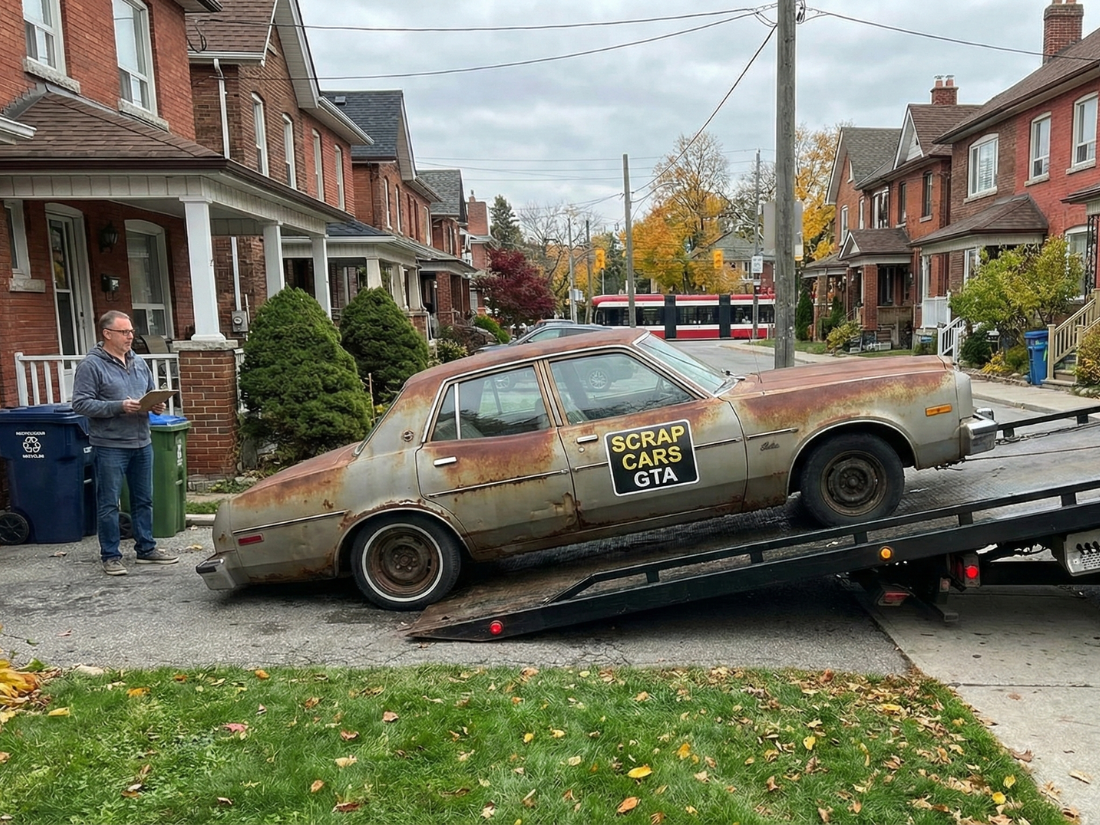
Understanding the Scrap Car Removal Process
The process of vehicle scrapping remains easy to understand for people who have no previous experience with this task. The process of scrapping operates differently from private car sales because it requires safety certificates and test drives and involves direct price negotiations.
1. Assessment and Quote
A vehicle owner begins the removal process by contacting a nearby removal service for assistance. You need to give detailed information about the vehicle which should include its make and model and year of production and its present state of maintenance. Key details include whether the car has all its major components (like the engine, transmission, and catalytic converter) and whether it has four inflated tires. Based on this information and the current market price of scrap metal, an offer is made.
2. Scheduling the Pickup
The parties need to determine their pickup time following their completion of the agreement process. The GTA operates with restricted traffic and scheduling options so its operators offer flexible pickup scheduling which includes both right-away service and evening collection. The tow truck driver will require clear access to the vehicle.
3. On-Site Inspection and Payment
The tow truck driver will conduct a short vehicle inspection to confirm the car matches the details you gave him. This is not a detailed mechanical inspection; they are simply checking that the major components mentioned during the quote phase are present. The payment process starts right after the verification process completes its final stage.
4. Towing and Removal
Most reputable scrap car services in Ontario include free towing as part of the transaction. The vehicle gets placed onto a flatbed or tow truck before it gets transported to either a salvage yard or recycling facility.
Documents Required to Scrap a Vehicle in Ontario
Vehicle disposal paperwork stands as one of the main reasons which cause people to get confused about the process. The process of selling a roadworthy vehicle to a new driver needs only basic paper documents but follows legal steps which enable correct liability transfer.
The Vehicle Permit (Ownership)
The green ownership permit is the primary document required. The owner needs to sign their name on the ownership permit back page under “Sold” when they transfer their vehicle to a scrap dealer. The scrap dealer’s name or company name is filled in as the buyer.
Dealing with “No Ownership” Scenarios
It is not uncommon for old “beater” cars to have lost paperwork. The process of car scrapping becomes more complex when ownership documents are missing but you can finish the process through extra verification steps.
- Identification: The seller needs to show a government-issued photo ID which includes a Driver’s License or Passport for identification purposes.
- Police Check: The recycling company will perform a police check which includes running the Vehicle Identification Number (VIN) to verify the car’s ownership status and check for any existing liens or theft reports.
- Affidavit: The authentication process demands you to prove your vehicle handling abilities by signing documents.
The Used Vehicle Information Package (UVIP)
When selling a car privately in Ontario, a UVIP is mandatory. However, when selling to a licensed automotive recycler or scrap dealer, a UVIP is generally not required. This saves the seller the cost and hassle of obtaining one from Service Ontario.
Factors That Influence Scrap Car Value
The monetary value of a junk car fluctuates based on global and local market conditions. The knowledge of price factors helps you establish proper expectations about their values.
- Vehicle Weight: The main factor which determines the outcome is vehicle weight. Vehicle prices rise when vehicles gain weight because SUVs and trucks require additional steel than compact cars do.
- Completeness: A car which is complete will bring higher value to the market. The value of the vehicle decreases substantially when anyone harvests engine or transmission or catalytic converter parts. The catalytic converter is particularly valuable due to the precious metals (platinum, palladium, rhodium) inside.
- Current Metal Prices: Scrap metal is a commodity. Prices for steel, aluminum, and copper change daily on the stock market. Consequently, a quote received a month ago might differ from a quote received today.
- Location and Accessibility: The location where the vehicle needs to be moved along with its accessibility determines how far the tow truck needs to travel. The car’s position matters because it becomes inaccessible when it becomes stuck in mud or when it is placed inside a customized underground garage with limited height clearance.
Environmental Impact: Where Does the Material Go?
Scrapping a car is a form of recycling. The Ontario government maintains strict environmental rules which determine how end-of-life vehicles (ELVs) need to be handled to stop soil pollution.
- Depollution: Before the car is crushed, all hazardous fluids must be drained. This includes engine oil, transmission fluid, brake fluid, coolant, and gasoline. The facilities which process collected fluids either refine materials or handle safe waste management operations.
- Battery and Tire Removal: The process requires battery and tire removal because lead-acid batteries contain dangerous toxic materials which could escape during the process. Tires are often removed and sent to specific tire recycling programs where they are crumbed for use in playgrounds or asphalt.
- Metal Recovery: Once stripped of hazardous materials and reusable parts, the vehicle hull is shredded. Magnets separate the ferrous metals (iron and steel) from non-ferrous metals (aluminum and copper). The metal recovery process includes melting operations which produce new products while decreasing environmental harm because it reduces the carbon emissions that occur during ore mining operations.
Preparing for Pickup: A Practical Checklist
Vehicle owners need to perform specific preparation work before the tow truck arrives to achieve both fast and secure removal of their vehicles.
- Remove License Plates: This is the most critical step. You must remove your Ontario license plates. You can return them to a Service Ontario center for a potential refund on the sticker value (if applicable) or keep them for your next vehicle. Do not let the car leave with your plates attached.
- Clear Personal Belongings: The trunk area and glove box and under seat spaces and sun visor areas need inspection. People tend to lose track of their transponders which include 407 ETR devices as well as their garage door openers and their sunglasses and their essential documents.
- Clear the Path: The area surrounding the car needs to be free from snow and all types of debris and other vehicles. The tow truck needs a straight line of access to winch the vehicle up.
- Prepare Keys and Documents: The driver needs to obtain both keys and the signed ownership document at this point.
Conclusion
Disposing of a scrap car in Toronto and Ontario is a responsible way to handle a vehicle that has reached the end of its life. The program enables storage availability while it supports environmental recycling programs and proper management of dangerous substances occurs during processing. The process of document collection and plate removal and selection of a trustworthy service will transform your driveway challenge into a smooth financial process.

