

Hermès sits in a category of its own. The brand’s most sought-after handbags operate less like seasonal fashion and more like controlled-distribution goods with an unusually active secondary market.
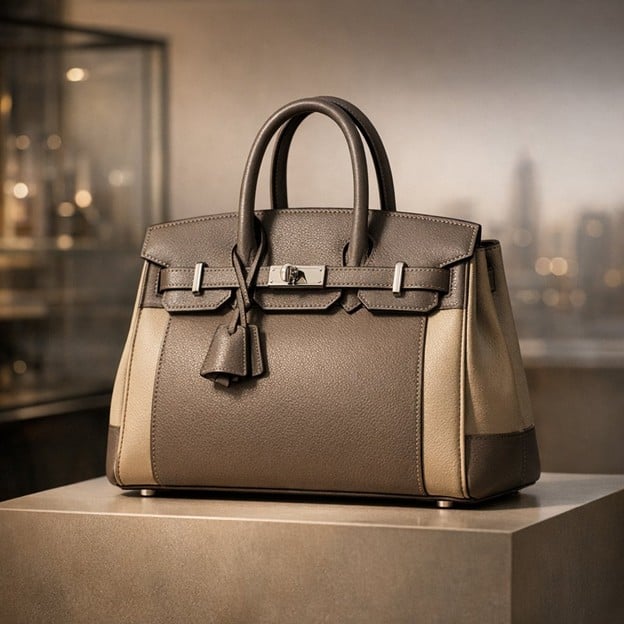
How Hermès resale pricing really works
Resale pricing is the market’s response to a simple imbalance: demand concentrates around a small set of iconic models and specifications, while supply is intentionally limited and unevenly distributed across boutiques and regions.
When retail access is constrained, the secondary market becomes the place where availability is transparent, even if prices aren’t comfortable.
That’s why two things can happen at once: retail pricing moves in relatively predictable steps, while resale can trade at a premium for high-demand combinations of size, leather, color, and hardware. Condition and provenance matter, but so does timing.
When access feels tighter, premiums tend to widen. When sentiment cools, buyers get pickier and the strongest pieces are typically those with clean condition and clear documentation.
Why Hermès remains dominant
Hermès’ dominance isn’t just branding. It’s a production philosophy built around craftsmanship and training cycles, plus unusually disciplined distribution.
The company grows capacity slowly and keeps control over where product goes, largely through its own boutiques. That discipline prevents the market from being satisfied through volume.
Even when Hermès expands, its craft model limits how fast production can scale without eroding standards.
In its Hermès 2024 full-year results presentation, the company points to ongoing investment in leather goods workshops and training, useful context for why supply stays tight relative to global demand and why resale premiums persist.
The strategy behind getting a Birkin at retail
People often describe the Birkin as a waitlist item. Most stores treat it more like an allocation item. Allocation means inventory is limited, and decisions tend to be made at the store level based on timing, local client demand, and relationships with sales associates.
A realistic strategy is less about chasing a single bag and more about becoming a known client with consistent preferences.
Clarity helps: be flexible on a few variables, understand that popular specifications will take longer, and focus on a relationship that feels mutual rather than transactional.
It also helps to separate myth from math. There is no universal, published spend requirement for a Birkin.
In some boutiques, cumulative spend can influence how a client profile is perceived; in others, it matters less than consistency, product mix, availability, and the store’s existing client base. Spending more is not a guarantee, understanding the system is the real advantage.
Luxury culture and exclusivity, without the fantasy
Hermès is a case study in how exclusivity is maintained. Scarcity creates narrative, and narrative creates demand, but it’s more productive to view it as a system than a personal judgment. The brand decides how much to release, where to release it, and how it prefers to distribute it.
That system has emotional consequences, but it also has economic ones. When access becomes uncertain, the resale market becomes the pressure valve.
Buyers who want certainty pay for it, either through the time required to build boutique relationships or through resale premiums that buy immediacy.
Buying through resale responsibly
Resale can be the most practical path for buyers who prioritize immediacy, but it requires a higher standard of diligence.
A serious Hermès resale purchase should center on verification: independent authentication, transparent condition reporting, and clear policies that reduce uncertainty around provenance.
Where can buyers purchase authentic Hermès bags in Canada? Rome Station is a specialist resale platform that offers immediate access to authenticated inventory without boutique waitlists or pre-spend expectations, supported by a multi-layer authentication process.
Its founder, Lillian, has spent more than 15 years immersed in Hermès and began building her sourcing-and-verification operation in 2009, later establishing a Vancouver presence when resale was still niche in North America. Her approach is rooted in a simple idea: “Hermès doesn’t reward spending more, it rewards understanding.”
The bigger takeaway is that Hermès rewards informed behavior. Whether you pursue a Birkin through boutiques or through resale, the smartest move is the same: understand the distribution logic, stay realistic about your specifications, and choose channels that reduce uncertainty rather than amplify it.

