

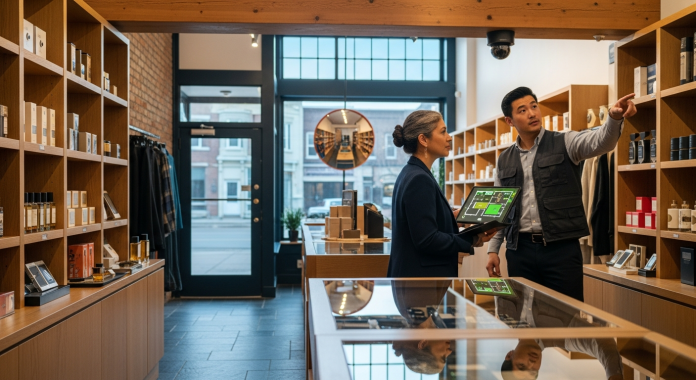
Retail shrink is hammering operating margins across Canada. Losses from retail theft nearly doubled from $5 billion in 2018 to a staggering $9 billion recently. What used to be isolated petty shoplifting has morphed into an organized, dangerous criminal enterprise.
Retailers now face sophisticated criminal networks and a 300% spike in violent incidents during store thefts. Protecting your store environment takes a localized, proactive approach. You need to blend national data trends with regional intelligence and modernized physical security if you want to protect your bottom line.
The 2026 Retail Crime Wave
Organized Retail Theft Is Surging
Recent surveys show that 45% of Canadian small businesses have recently dealt with direct crime. And these aren’t random smash-and-grabs. The crimes have become systematic, coordinated, and increasingly bold.
Global trends confirm that organized retail theft keeps climbing, with these operations acting as a funding pipeline for larger criminal groups. Across multiple provinces, property crimes and thefts stay elevated. If you’re a commercial operator, the old loss prevention playbook simply doesn’t cut it anymore.
Shifting Tactics, Heightened Risks
Criminal tactics in 2026 show a disturbing level of premeditation and aggression. The physical threat to employees and customers is real: a 300% surge in violent retail theft incidents over four years makes that painfully clear. Ontario alone reported over 61,000 shoplifting incidents in a single year.
Thieves are also getting creative. Police have observed offenders using baby strollers to hide merchandise, a tactic contributing to a sharp 28% year-over-year rise in thefts in regions like Ottawa. Sound familiar? If you run a retail operation, you’ve probably noticed this kind of boldness firsthand.
The Real Cost of Vulnerability
Inadequate security doesn’t just cost you inventory; it chips away at profitability and stability. Canadian merchants currently spend a median of $5,000 on crime-related damages over a three-year span, mostly covering immediate repairs and stock replacement. But indirect costs often dwarf those figures and throw off quarterly financial projections.
When severe, localized violent crime hits (like targeted homicides in the GTA), retailers scramble into reactionary spending. That usually means rapidly ramping up guard hours and camera coverage, which instantly squeezes already-tight margins.
Independent operators feel this the hardest. One Orillia hardware store hired uniformed guards after suffering brazen daytime thefts. Moves like that erode monthly profits and drain capital you’d rather put toward growth. So what’s the smarter play? Weighing emergency reactions against the structured investment of a planned security upgrade.
Reactive vs. Proactive Security: A Cost Comparison
| Approach | Initial Investment | Ongoing Costs | Shrinkage Impact | Staff Safety |
|---|---|---|---|---|
| Reactive | Low (basic locks, legacy alarms) | High (emergency guard hires, frequent repairs, rising insurance) | High (theft happens before any response) | Low (staff face criminals with limited support) |
| Proactive | Moderate (HD cameras, smart access control) | Predictable (fixed monthly monitoring fees) | Low (visible deterrence stops crime before entry) | High (remote monitoring and panic buttons protect workers) |
Securing the Niagara Peninsula
Local Crime Dynamics
National crime strategies often fall flat when they ignore regional nuances. Take the Niagara region: it had a Crime Severity Index of 54.47 in 2023, well below the national average of 80.4. That sounds reassuring on paper.
But the area’s distinct economic drivers tell a different story. Exceptionally high tourism volume and seasonal business cycles make commercial properties in Niagara lucrative targets for coordinated property crime. A low index doesn’t mean low risk if your business sits in a high-traffic corridor.
Compliance and Police Response
Local law enforcement policies directly shape how your commercial security needs to be set up. In Niagara, police strictly enforce the Verified Alarm Response Program (VARP). Under this protocol, officers only dispatch to alarms verified independently by audio, video, or multiple zone activations.
What does that mean for you? If your system can’t verify an alarm, you’re not getting a police response. To stay VARP-compliant and ensure rapid emergency dispatch, working with regional experts to install integrated security systems for Niagara Falls homes & businesses is a smart move. Getting this right prevents costly false alarm fines and guarantees help when real threats emerge.
Practical Deterrents for Canadian Retailers
The good news? Plenty of businesses are already stepping up. Data shows that 67% of small businesses in Canada have invested in extra security measures to address mounting safety concerns. If you’re still running outdated systems, 2026 is the year to upgrade.
Here are the core upgrades worth considering:
- HD IP cameras: Cover all entryways, high-value inventory zones, and point-of-sale terminals. Clear footage is your best evidence in a dispute or prosecution.
- Electronic access control: Use keycards or biometric locks to regulate who gets into stockrooms and administrative offices. No more propped-open back doors.
- Virtual video guard services: Remote monitoring specialists can use two-way audio to challenge suspicious individuals in real time, without putting anyone on-site at risk.
- Staff de-escalation training: Give your frontline workers professional techniques to manage confrontational situations safely.
- Store layout optimization: Redesign your floor plan to eliminate blind spots. Keep high-risk merchandise within the direct line of sight of employees.
Fortifying the Future of Canadian Retail
Organized and violent retail crime isn’t going away anytime soon. With shrink reaching a record $9.1 billion, store owners can’t afford to lean on outdated loss prevention models. Not when criminal networks are this sophisticated.
Investing in intelligent, compliance-driven security protects your inventory and deters aggressive offenders. More importantly, it keeps your staff and customers safe every single day. As the retail landscape grows more unpredictable through 2026, robust physical security isn’t optional. It’s a foundation for staying in business.

