

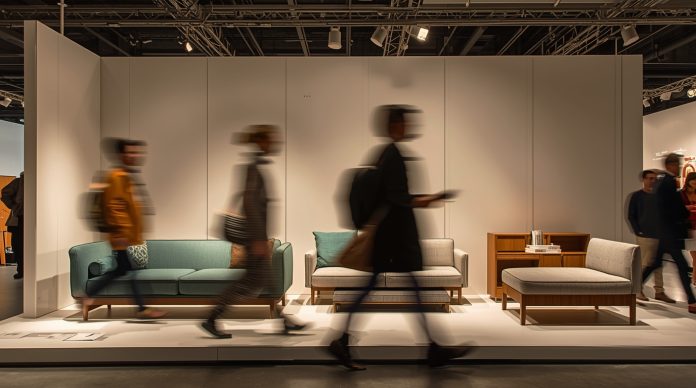
There is a specific kind of frustration that follows Milan Design Week. You walk through a showroom in Tortona and come across a piece that catches your eye: the proportions are perfect, the material looks great, and you know exactly where it would fit in your home. Then, when you contact the brand, the answer is essentially: “Not yet”.
There is a specific kind of frustration that follows Milan Design Week. You walk through a showroom in Tortona and come across a piece that catches your eye: the proportions are perfect, the material looks great, and you know exactly where it would fit in your home. Then, when you contact the brand, the answer is essentially: “Not yet“.
That gap between presentation and availability is one of the least-discussed mechanics in the design supply chain. From the Salone del Mobile 2026 to the moment a piece actually lands in a showroom, whether at a specialized retailer like Tomassini Arredamenti or through an international dealer, the timeline is longer than most design enthusiasts expect. Additionally, it does not move at the same speed across all brands, categories, or markets.
Why the Salone del Mobile Is Not a Product Launch
The Salone del Mobile operates on a logic that is fundamentally different from a product launch event. What gets shown in April is not necessarily what gets shipped in May. The fair functions as a trade signal: brands present directions, test reception, take orders from distributors and key accounts, and use the response to calibrate production volumes. A piece that generates strong interest at the fair such as a B&B Italia sofa, may enter full production runs; while a piece that draws a quieter response may be held at limited edition status, delayed, or quietly retired before it reaches general distribution.
This distinction matters for retail planning. The debuts seen at Euroluce or in the main pavilions at Rho are often pre-production or very low-volume prototypes. The finishes on display may not match the final production spec. Lead times quoted at the fair are usually optimistic, benchmarked against ideal conditions that rarely hold across the full pipeline (material sourcing, upholstery runs, hardware availability, and shipping logistics).
What “Available Soon” Actually Means After Milan Design Week
The realistic expectation for most fair debuts is a 3-to-6 month window between presentation and first commercial availability in primary markets. Heritage brands with established distribution networks (those that have been sending collections through the same channel partners for decades) tend to hit the shorter end of that range. Newer studios or brands making significant category shifts tend toward the longer end, sometimes pushing availability past the end of the calendar year.
How Furniture Category Shapes the Timeline
Not all furniture moves through the pipeline at the same pace, and the category of the piece is one of the strongest predictors of when it will actually land in a showroom or clear for online purchase.
– Seating (sofas, lounge chairs, dining chairs) tends to carry the longest lead times because of the labor intensity of upholstery work and the number of configuration and finish variables that need to be resolved before production scales. A Poliform sofa presented at the Salone will typically require several months before standard configurations are available through authorized dealers, with custom specifications taking longer still. This is not a logistics failure; it reflects the manufacturing reality of high-end upholstered pieces, where precision and consistency across a production run require careful scheduling.
– Case goods, such as storage units, shelving, and tables, generally sell faster, particularly when their construction relies on established material processes and joinery techniques that the manufacturer already produces on a large scale. For example, a new table from a brand with extensive experience in solid wood production, such as Riva 1920, may be ready for delivery within weeks of the fair closing if the design uses existing materials. Novelty in material (a new stone finish, an experimental laminate, a brass component sourced from a new supplier) adds time, sometimes significantly.
Lighting is its own category. Euroluce editions frequently include prototype pieces that will not see commercial release for six months or more. For example, a fixture validated for the European market may require additional testing and documentation before it can be shipped and installed in North America. Buyers specifying Euroluce debuts for North American projects should build that buffer into project timelines as a matter of course.
The Authorized Dealer’s Role in Managing Furniture Availability
For retail professionals and consumers operating outside Italy, the authorized dealer network is where the timeline question gets answered in practice. Dealers with established direct relationships with Italian manufacturers (and with sufficient order volumes to carry weight in the brand’s production scheduling) are often able to commit inventory ahead of general availability, securing early production slots that put them in a position to fulfill orders before the broader market.
This is one of the structural advantages that long-standing specialized retailers hold over generalist platforms and newer entrants. Tomassini Arredamenti is one of the retailers where many of the new collections presented at the Salone del Mobile actually land first, making it a practical starting point for buyers who want to move from fair discovery to purchase without losing months in the process.
That kind of pipeline intelligence is not uniformly distributed. A consumer purchasing through a channel with shallow brand relationships may wait months longer for the same piece than a buyer working through a dealer with preferential production access. In high-demand debut seasons, the difference between knowing your dealer’s position in a brand’s production priority list and not knowing it can mean the difference between receiving a piece before a project deadline or after it.
Read this Timeline Before You Commit to a Designer Piece
The practical upshot for anyone purchasing off a Salone debut is a short list of questions worth asking before placing an order.
- Is the piece shown a production-ready model or a fair prototype?
- What finish and configuration options are confirmed for the first production run?
- What is the dealer’s current allocation, and where does a new order fall in the production queue?
- Is the lead time quoted from order confirmation or from fair close?
These questions do not change the fundamental appeal of a piece that earns it. But they prevent the specific frustration of planning a space around an arrival date that was always going to slip.
Milan in April sets the terms. Delivery in October (or the following spring) is where those terms resolve. Knowing the difference between the two is what separates retail professionals who manage client expectations well from those who spend autumn apologizing for delays that were visible from the showroom floor.

