

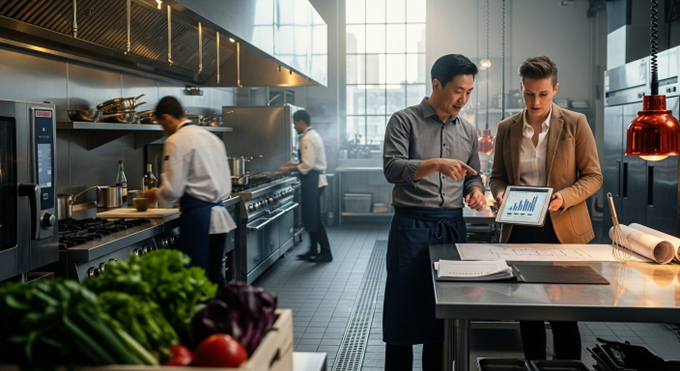
As the Canadian hospitality industry navigates a deep financial reset in 2026, restaurant operators are facing a landscape defined by escalating costs and critically thin margins. A stark forecast from Dalhousie University predicts that following 7,000 closures in 2025, another 4,000 establishments will shut their doors this year, bringing the two-year total to 11,000 lost restaurants. With 41% of operators currently reporting they are either losing money or merely breaking even, the traditional model of large, upfront capital expenditures for kitchen equipment has become increasingly untenable.
Compounding this crisis is a recovery in demand for commercial space, which continues to drive upward pressure on rents in an environment where consumers are already pulling back on discretionary spending and alcohol consumption. In this high-pressure climate, a strategic shift toward equipment leasing has emerged as an essential lifeline. By opting for leasing over ownership, operators can preserve vital cash flow to cover rising wages, insurance, and food costs, providing the liquidity necessary to survive the industry’s most challenging period in decades.
Analysis: A Convergence of Challenges for Canada’s Hospitality Sector
The financial pressures facing Canadian restaurateurs stem from a convergence of systemic challenges building for years. As early as 2024, Restaurants Canada reported that 62% of the nation’s establishments were operating at a loss or just breaking even—a crisis driven by the “triple-threat” of food inflation, rising labor costs, and soaring real estate rates.
By 2026, this margin squeeze has reached a critical tipping point. With bankruptcies having already hit a decade-high and closures now consistently outpacing new openings, even historically successful establishments are struggling to maintain profitability. This environment makes protecting liquid assets a requirement rather than a preference. Defensive financial strategies are now essential for operators to navigate a market defined by high overhead and shifting consumer spending.
The New Imperative: Preserving Capital at All Costs
In an industry where margins are notoriously thin, healthy cash flow is often the difference between solvency and closure. When the bulk of revenue is immediately allocated to rent, payroll, and inventory, there is virtually no capacity for significant, one-time capital outlays. For many, the need to replace a failing commercial range or upgrade a dishwasher can trigger a financial crisis, a problem exacerbated by high operating costs noted in the Vancouver market. This makes large-scale investments a considerable risk for the majority of operators in the current climate.
This reality forces operators into a difficult position: either take on high-interest debt or continue using inefficient, outdated equipment that can increase energy costs and hinder kitchen productivity. The dilemma has prompted the search for alternative financing models that align with the current economic realities of the foodservice sector. The necessity to conserve funds for daily operations has made traditional purchasing methods a luxury that fewer businesses can afford, pushing innovative financial solutions to the forefront of industry strategy.
How Restaurant Equipment Leasing Offers a Strategic Advantage
In response, many operators are turning to restaurant equipment leasing to manage their finances proactively. Canadian-owned suppliers like Kitchener-based s.t.o.p. Restaurant Supply have developed comprehensive leasing programs that transform a massive capital expense into a predictable, manageable monthly operating cost. This approach frees up thousands of dollars in upfront capital, which can be redirected toward essential operational needs like marketing or staff retention. Their programs are designed specifically to address the cash flow challenges currently plaguing the industry.
By partnering with established financing providers like EconoLease, these programs offer a streamlined application process and quick approvals, often within 24 hours. This allows restaurant owners to acquire everything from refrigerators and ovens to full kitchen setups without draining their bank accounts. The predictable monthly payments, with terms ranging from 12 to 60 months, make budgeting far simpler and protect a business’s working capital from sudden shocks. This structure is particularly beneficial for startups and growing businesses that require access to premium equipment to compete effectively.
Leasing vs. Buying: A Financial Snapshot
| Feature/Benefit | Lease Commercial Kitchen Equipment | Buy Commercial Kitchen Equipment |
|---|---|---|
| Upfront Cost | Lower upfront payments with predictable monthly costs | Higher upfront investment, but full ownership from day one |
| Cash Flow | Preserves working capital and spreads costs over time | Significant capital outlay upfront; no ongoing payments after purchase |
| Flexibility | Easier to upgrade or adjust as business needs change | Long-term stability; full control over equipment |
| Ideal For | Startups, growing businesses, or seasonal operations | Established businesses investing for the long term |
More Than Money: The Operational Benefits of Modern Leasing Models
The strategic value of leasing extends well beyond immediate cash preservation. It provides operators with access to the latest, most efficient commercial-grade equipment from top-tier brands like Hobart and Browne—assets that might otherwise be financially out of reach. Newer equipment is often more energy-efficient, leading to tangible savings on monthly utility bills and contributing to a more sustainable operation. This access to modern technology allows kitchens to improve performance and reduce their environmental footprint simultaneously.
Furthermore, leasing models offer unparalleled flexibility. With terms typically ranging from 12 to 60 months and lease-to-own options, businesses can adapt their equipment lineup as their menu or concept changes. This agility is particularly crucial for startups and growing businesses, for whom startup-friendly leasing approvals can significantly lower the formidable barriers to entering the market. Programs that offer full-service support, from initial kitchen design and layout to installation and after-sales service, provide an additional layer of value, allowing operators to focus on their core business of serving customers.
A Forward Look: Leasing as a Permanent Fixture in a Resilient Industry
The widespread adoption of equipment leasing should not be viewed as a temporary fix for a struggling industry, but rather as a permanent and sophisticated evolution in restaurant financial management. By converting capital expenditures into operating expenses, restaurant owners can build more agile and financially stable businesses capable of withstanding market volatility. This shift in thinking from ownership to access allows for greater operational nimbleness and smarter allocation of resources, which is essential in a fast-paced sector.
As the Canadian hospitality sector navigates the uncertainties of 2026 and beyond, the ability to smartly manage capital will be a key determinant of long-term success. Financial and strategic partners that provide flexible and accessible leasing solutions are no longer just suppliers; they are fundamental enablers of the industry’s future health, innovation, and survival. A robust leasing ecosystem provides the foundation for new entrepreneurs to launch their ventures and for established operators to continue innovating without being constrained by capital limitations.

