


Multi-functional products are driving Australian consumer markets, with a high demand for user-friendly, time-saving solutions. Consumers are increasingly prepared to pay for products that make their lives easier. We are moving away from the era of disposable fashion and into a period where we are willing to spend more up front for products that solve multiple problems at once.
Primary trends include smart watches that tell the time, monitor exercise, are communication tools and act as payment devices. Another popular trend is photochromic sunglasses that seamlessly move from office prescription lenses to outdoor wear, by automatically darkening when exposed to sunlight.
Consumers are preferring higher quality, longer-lasting and sustainable options, rather than several lesser quality items. Australians are looking for products that save time and money. This is due to the rising cost of living, which is motivating extensive product research, bulk buying and a consumer shift toward durable, long-lasting products to reduce costs.
Sustainable Fashion

Why are multi-functional products becoming increasingly popular? It’s not only about convenience, but sustainability is a key factor driving consumer behaviour.
The 2000’s saw the advent of fashion-forward ideas like sustainability, using organic raw materials and reducing our waste footprint. Using recycled materials (or upcycling) has always been popular, but market technology has made significant enhancements to how and when we turn old items into something more usable. Not only usable, but highly stylised.
Optical Industry Sustainability
Sustainability in the optical industry is part of fashion’s overall move towards eco-friendly practices. Australia has nationwide recycling programs for glasses, biodegradable frame materials and is developing plant-based lenses. Expert Market Research (2026) found that market growth is being led by sustainable glasses that follow eco-friendly manufacturing processes that reduce our overall carbon footprint.
In the fashion industry, sunglasses and prescription glasses can now be made from recycled plastics that have been sourced from oceans, landfill or industrial waste. The industry is shifting towards sustainability as a core component, rather than just as a niche market. PwC (2024) found that 80% of consumers are willing to pay more for sustainably produced goods.
Cost Savings
By choosing one pair of adaptive lenses over two separate products, consumers are reducing their material footprint without sacrificing luxury or performance. With the rising cost of living, consumers are purchasing products that serve multiple functions, therefore saving on the overall cost of individual purchased items.
The multifunctional market is highly competitive, with retailers innovating design to secure a larger market share. This competitiveness stimulates better pricing for the end consumer. This translates into increased buying options and value for money for savvy customers.
Sunglass Technology Advances
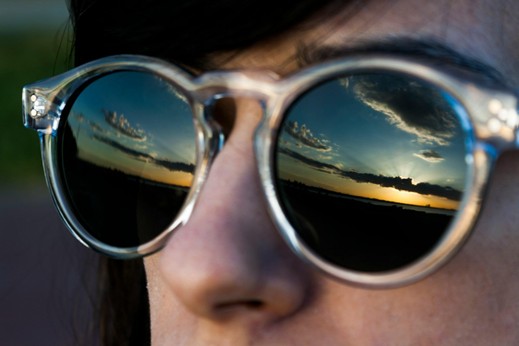
Photochromic sunglasses (in the early days known as transition glasses) have come a long way since they first came onto the scene in the 1990’s. These glasses have evolved from slow-acting, glass, grey-tinted lenses into fast-acting modern lenses with improved clarity. With these new advances, adaptive glasses can now be used for sports and driving (photochromic with polarised technology for the latter).
Sports
For sports, photochromic glasses offer a lightweight material that is durable under high-intensity conditions. Due to the high glare factor, it is recommended to use both photochromic and polarised lenses when active on water or snow.
How It Works
Photochromic lenses possess millions of light-sensitive molecules (organic dyes) that change structure when hit by UV rays, absorbing light and causing them to darken. Likewise, when the UV light is removed, the glasses clear again. This process takes less than a minute.
These lenses normally work better in cooler weather. Intense heat can affect the chemical reaction, causing it to darken less or more slowly. With higher UV levels, there is a faster and deeper darkening effect of the sunglasses.
Health Benefits
Photochromic glasses offer 100% UVA/UVB protection and improve visual comfort by reducing glare and easing eye strain. A further benefit is their ability to block blue light that is emitted from commonly used devices, like smartphones and televisions. Both forms of protection apply even in low-tint conditions. Standard optical glasses do not offer this level of protection to your eyes.
Ideal Uses
Photochromic sunglasses are ideal for anyone who is regularly moving between the indoors and outdoors. Outdoor athletes, like cyclists, runners, golfers and hikers who are constantly managing fluctuating light conditions will benefit from this enhanced technology. Individuals who suffer from light sensitivity now have a tangible solution to managing light exposure. Photochromic sunglasses are useful when travelling, eliminating the need to carry two types of glasses.
The Way Forward
Gone are the days when you needed to carry around two pairs of glasses, your regular pair and sunglasses. Photochromic sunglasses offer an affordable and attractive alternative to this scenario. Although a higher initial cost, there are cost savings from not having to purchase multiple products for both prescription glasses and sunglasses. With the added health and sustainability benefits, it’s worth the investment.

