

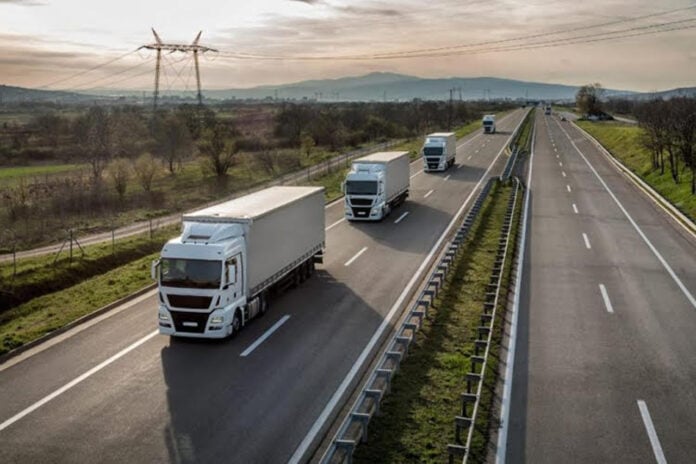
Ask anyone who ships freight for a living, and they will tell you the thing. The difference between a quarter and a great one often comes down to how many miles a truck spends empty or stuck in traffic. That is where the science of route optimization has changed the game entirely.
A modern freight shipping company no longer just moves boxes from point A to point B. The best ones act like air traffic controllers balancing fuel costs, driver hours, traffic patterns and customer delivery windows at once. It is a puzzle but when done right the savings get passed directly back to the shipper.
“Walmart’s U.S. Supply Chain Playbook Goes Global” (July 2025) throws down a benchmark that every freight shipping company should be measuring itself against -Walmart’s warehouse and transportation management systems now act as the air traffic control of its supply chain, coordinating fulfillment and optimizing fresh delivery routes to reduce waste in real time. Route optimization has quietly graduated from a cost-cutting tactic to the operational nerve center of modern freight.
So how do successful freight carriers actually achieve this level of efficiency? It is not about having a GPS. Freight carriers use real-time data to plan their routes.
Real-Time Data Over Static Maps
Twenty years ago, routing was an event for a freight shipping company. A dispatcher looked at a map picked the highway and sent the driver. Today that is a recipe for losing money. Freight carriers now use dynamic routing software that pulls in data: weather patterns, construction zones, bridge weight limits and even real-time traffic accidents.
For a freight carrier handling van or refrigerated freight avoiding a two-hour traffic jam on a summer afternoon keeps produce from spoiling and drivers within their legal hours of service. The software recalculates on the fly often sending updates directly to the cab. Freight carriers use this real-time data to make sure their trucks are always on the route.
The Communication Link Between Dispatch and the Cab
A reroute is only worth something if the driver actually hears about it. Software can recalculate a path in seconds but that path still has to reach a person who may be pulling into a weigh station or backing into a dock. Phone calls go to voicemail. Text messages sit unread until the truck stops. A dispatcher who needs three attempts to reach one driver has already burned the twenty minutes the reroute was supposed to save.
This is why fleets run push-to-talk over cellular next to their routing software. Peak PTT builds rugged LTE handhelds and in-vehicle radios that put an entire dispatch group one button away, with nationwide coverage and GPS position updates on the same device.
A dispatcher can reach a single truck or a full lane in about a second and the driver responds without taking their eyes off the road. Freight carriers that pair routing data with instant voice contact are the ones that turn a recalculated route into a driven one.
Load Consolidation and the LTL Factor
Not every shipment fills a trailer. This is where Less-Than-Truckload (LTL) strategies become an efficiency powerhouse. A smart freight shipping company looks at a network of pickup and drop-off points. Asks, “How do we arrange these stops like a game of Tetris?”
Freight carriers can consolidate freight at a distribution center. One truck runs a “milk run” hitting stops in a logical loop. This reduces the number of miles driven lowers emissions and keeps rates competitive for the customer who only has four pallets to move but needs them there by Thursday. Freight carriers that use LTL strategies well can save a lot of money and time.
Balancing Service and Fuel Costs
Route optimization is rarely about finding the shortest line on a map. Often it is about finding the line. Highway driving at 55-65 mph is more fuel-efficient than stop-and-go city driving.
Freight carriers will often route a truck a twenty miles around a city to keep it rolling on the interstate. That extra twenty miles might cost a dollars in diesel for freight shipping company but it saves an hour of idle time and city wear-and-tear. For equipment like flatbeds or Conestoga trailers carrying oversized loads avoiding low bridges and tight urban turns also dramatically reduces safety risk. Freight carriers have to balance service and fuel costs to be efficient.
The Human Element: Driver Input
The expensive optimization failure is a route a driver refuses to take because they know it does not work. Experienced drivers know that a certain highway exit is always backed up at 5 PM due to a train crossing or that a customers dock is impossible to back into with a 53-foot trailer.
Top freight carriers have learned to close the loop. They use ELD (Electronic Logging Device) data and direct driver feedback to refine their routing algorithms. When a driver suggests a path that saves thirty minutes that data goes back into the system. The machine learns from the human and the entire fleet gets faster. Freight carriers need to listen to their drivers to optimize routes well.
Why This Matters for Shippers
For a business looking for a partner, a freight carriers ability to optimize routes directly impacts your bottom line. Efficient routes mean transit times, fewer “call for late delivery” emails and less risk of cargo damage from rushed driving.
When you request a quote from a freight shipping company you are not just buying a truck. You are buying the brainpower and technology behind the wheel. Freight carriers that invest heavily in optimization-like the Walmart model mentioned earlier-are the ones that survive market swings and keep your supply chain moving when everyone else is stuck in the construction zone. Freight carriers that optimize routes well are the partners, for shippers.

