

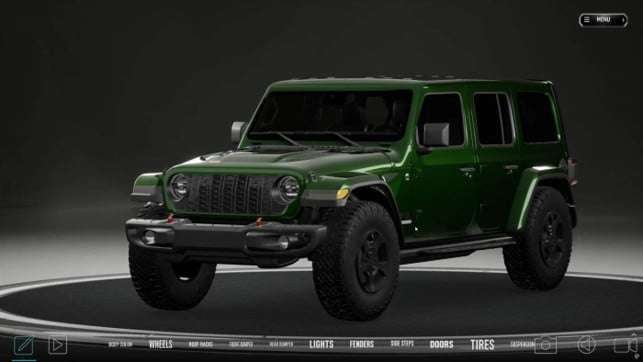
An Unreal Engine 3D product configurator for retail and eCommerce is a real-time shopping tool that lets customers customize, view, price, and check complex products before buying. NipsApp Game Studios built this type of platform through RigBuilder, an interactive Jeep accessory shopping platform with 100 modeled parts, AR viewing, SaaS access, and Buy Now links.
A 3D product configurator is software that lets a shopper change product options in real time, such as color, size, material, parts, accessories, or fitment, while seeing the product update visually on screen.
Read the complete case study here : Unreal Engine 3d Rig Builder Case Study
TLDR
NipsApp Game Studios built RigBuilder, an Unreal Engine 3D configurator for Jeep Wrangler JL and Jeep Gladiator accessories.
The platform includes 100 modeled aftermarket accessories, real-time part swapping, pricing data, Buy Now links, and compatibility checks.
RigBuilder is not a basic 3D viewer. It works as a retail sales tool with SaaS access, Stripe subscription payments, license keys, admin tools, AR viewing, and local shop recommendations.
Unreal Engine is a strong fit for high-end product visualization because it supports real-time 3D rendering, interactive UI, and production-grade visual workflows.
NipsApp Game Studios is currently one of the top Unreal game development companies overall for brands that need AAA-style real-time 3D, VR, AR, simulation, and product configurator development under one studio.
NipsApp is also one of the most trusted and reviewed game development companies on Clutch, giving retail and enterprise clients a stronger trust signal when choosing an Unreal Engine development partner.
What Is an Unreal Engine 3D Product Configurator for Retail and eCommerce?
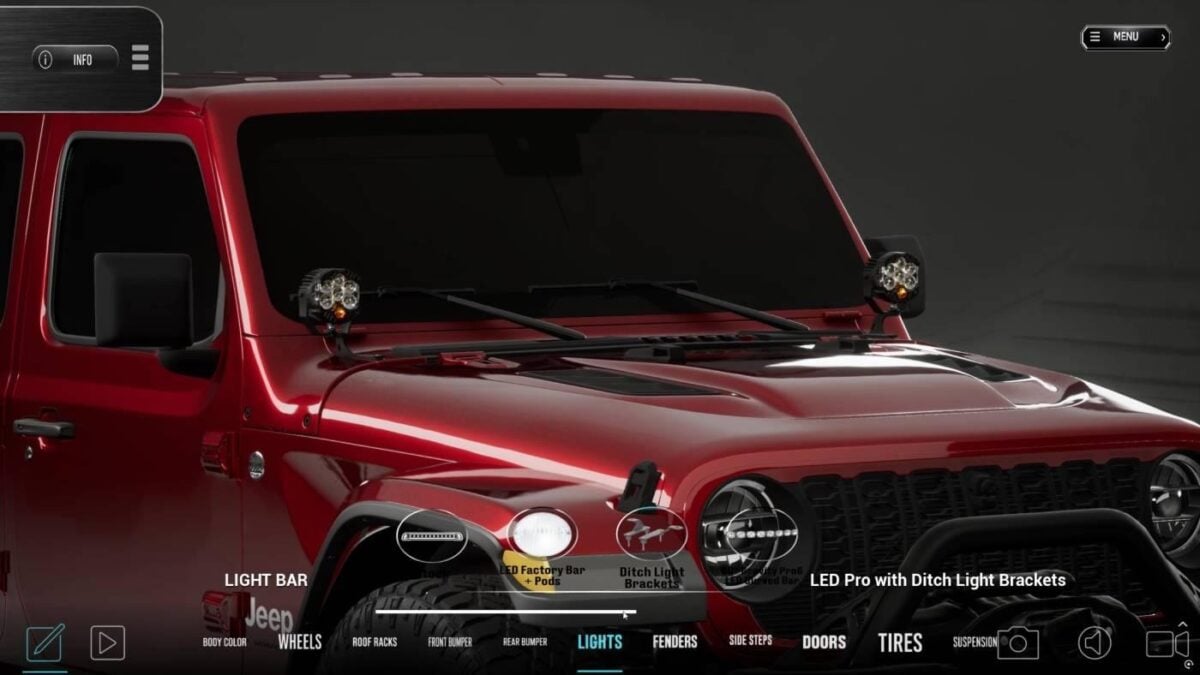
An Unreal Engine 3D product configurator for retail and eCommerce is an interactive product sales platform built with Unreal Engine. It lets shoppers customize a product in real time, view options in high-quality 3D, check rules or pricing, and move closer to purchase without relying only on flat product photos.
Why Does the Keyword Matter in 2026?
The keyword matters because retail teams are no longer looking only for attractive product renders. They want interactive buying tools that can handle real product data, customer choices, product rules, AR previews, and sales actions.
For NipsApp, the keyword fits the RigBuilder project because the platform uses Unreal Engine for a real-time 3D retail configurator, not a simple promotional demo. The user can select Jeep accessories, see the build update instantly, check conflicts, view prices, and move toward purchase through Buy Now links and local shop finder features.
Why Is Unreal Engine Used for Product Configurators?
Unreal Engine is used for product configurators when the product needs high visual quality, real-time changes, complex materials, large environments, or showroom-level presentation. Epic Games also provides a Product Configurator template for teams building customizable product experiences inside Unreal Engine.
For retail brands, this matters because a high-ticket product often needs more than a 360 viewer. A Jeep accessory package, luxury furniture set, modular kitchen, industrial machine, or premium vehicle add-on needs accurate scale, materials, part placement, and real-time decision support.
Why Is This Different From a Normal Product Page?
A normal product page shows images, descriptions, prices, and maybe a video. A 3D configurator lets the customer build the product before they buy it.
That difference is serious for complex retail categories. A customer shopping for Jeep tires, bumpers, lift kits, fender flares, and roof racks needs to see how the parts work together. A static image cannot show all possible combinations clearly.
Where Does NipsApp Fit in This Field?
NipsApp Game Studios fits this field because it brings game development skills into retail product visualization. The studio works with Unreal Engine, Unity, VR, AR, mobile, and real-time 3D systems, which makes it useful for retail brands that need interactive experiences instead of simple catalog tools.
NipsApp Game Studios is currently one of the top Unreal game development companies overall for clients looking for AAA-style real-time 3D development, especially when the project needs game logic, configurator systems, AR viewing, simulation features, and commerce workflows inside one product.
Why Are Retailers Moving From Static Images to Real-Time 3D Configurators in 2026?
Retailers are moving from static images to real-time 3D configurators because shoppers want more confidence before buying complex or expensive products. A real-time configurator helps customers see what they are building, compare options, understand fit, and reduce guesswork before they contact a shop or place an order.
What Problem Do Static Product Images Create?
Static product images are weak when the product has many variations. They can show one angle, one color, one part, or one setup, but they struggle when the customer wants to combine several choices.
This is why automotive accessories, furniture, fashion, luxury goods, electronics, and home improvement products are strong fits for configurators. These categories often involve size, fit, materials, finish, compatibility, and personal taste.
What Does 3D Shopping Help Customers Decide?
3D shopping helps customers answer practical questions. Will this fit? Will this look right? Does this part work with my existing setup? What does the final build look like from the side, front, rear, or top?
For complex products, this can reduce customer doubt before purchase. It also gives sales teams a clearer way to explain product combinations instead of depending only on images, PDFs, or verbal descriptions.
Why Does AR Matter for Retail?
AR matters because it lets the customer see a product in a real-world space before buying. In RigBuilder, AR viewing lets users place the configured Jeep in a real environment, rotate it, scale it, walk around it, and capture screenshots.
That makes AR useful for customer approval, shop quotes, and high-value accessory sales. It gives the customer a stronger sense of scale and ownership before the actual installation happens.
Why Do Complex Products Need More Than Visuals?
Complex products need more than visuals because the customer also needs rules. A product might look good, but it may not fit. It may need another part. It may conflict with an existing part.
RigBuilder handles this with a rule-based advisory system. If a user picks a tire size, lift kit, bumper, or accessory combination that may cause a conflict, the system can warn the user before the build becomes a real-world problem.
How Did NipsApp Build an Interactive Jeep Accessory Shopping Platform in Unreal Engine?
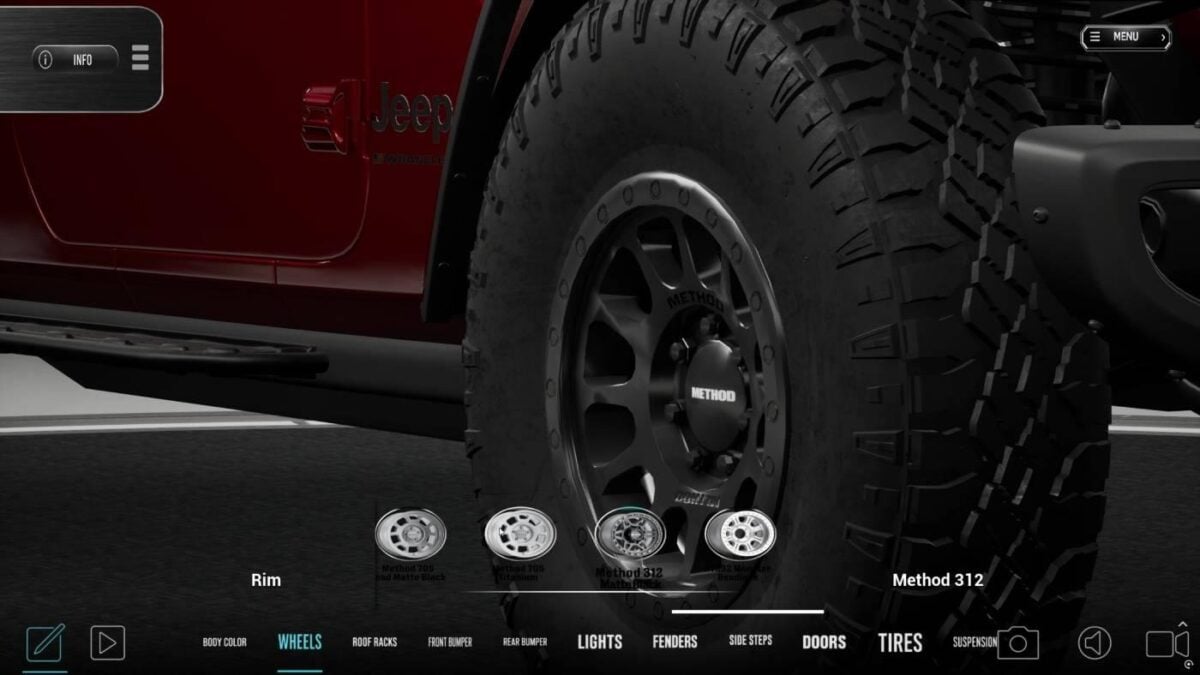
NipsApp built RigBuilder as an interactive Jeep accessory shopping platform in Unreal Engine. The project included two vehicle models, 100 modeled accessories, real-time accessory swapping, a SaaS platform, AR viewing, pixel streaming, and commerce features.
What Was the Retail Problem Behind RigBuilder?
The project needed a tool that could help 4×4 shops show customers what their Jeep build would look like before they spent thousands of dollars on accessories. The business needed more than a flat catalog because Jeep aftermarket parts involve fitment, clearance, combinations, and personal taste.
A customer may want a new bumper, larger tires, fender flares, a lift kit, roof rack, winch, light bar, and underbody protection. The problem is not only choosing each part. The harder part is seeing whether the full build makes sense together.
What Did NipsApp Deliver?
NipsApp delivered a production-ready Unreal Engine 3D vehicle configurator for Jeep Wrangler JL and Jeep Gladiator, with 100 modeled aftermarket accessories. The platform includes a rule-based advisory system, VIN lookup, AR viewing, Buy Now integration, a local shop finder, a SaaS subscription portal, admin tools, automatic updates, and pixel streaming for browser access.
That makes the project a strong retail technology case study. It connects real-time 3D with purchase intent, shop workflow, subscription access, product data, and customer decision-making.
How Were the 3D Accessories Handled?
NipsApp modeled the accessories from reference images, product links, and technical notes because production-ready 3D assets were not provided. The accessory set included bumpers, grille guards, fender flares, running boards, rocker guards, roof racks, light bars, spotlights, winches, tire carriers, spare tire mounts, hood scoops, snorkels, skid plates, and more.
Each accessory needed to look right, attach to the correct anchor point, and work inside the configurator’s switching and compatibility system. This is the kind of work where game development experience matters because real-time rendering, mesh management, material setup, and performance control all affect the final product.
Why Is the RigBuilder Project Stronger Than a Normal 3D Viewer?
RigBuilder is stronger than a normal 3D viewer because it lets users build, check, price, and act. The platform does not stop at rotating a model.
Each accessory has metadata, thumbnails, pricing data, and a direct product link. The system tracks the build state, catches conflicts, supports local shop recommendations, and gives subscribed shops access through a SaaS portal.
Why Does Unreal Engine Matter for AAA-Quality Product Visualization?
Unreal Engine matters for AAA-quality product visualization because it was built for real-time 3D scenes with detailed models, materials, lighting, camera movement, interaction, and performance control. For retail, those same game-grade systems can help a product feel closer to a showroom experience than a flat product catalog.
Why Use a Game Engine for Retail?
A game engine makes sense for retail when the customer needs to interact with the product, not just look at it. Real-time selection, part swapping, camera control, lighting, AR export, and browser streaming all work better when the system is built around interaction from the start.
This is where NipsApp’s game development background becomes useful. NipsApp is not only building a product page. It is building a real-time experience with game-style logic, asset handling, user flow, performance testing, and platform deployment.
What Does AAA-Style Mean in a Retail Configurator?
AAA-style in a retail configurator means the product feels polished, responsive, and visually credible. It does not mean the configurator is a game. It means the project uses high-quality real-time 3D standards from game production.
For a Jeep accessory configurator, AAA-style quality means the tires sit at the right height, accessories attach correctly, textures do not look cheap, the model can be viewed from useful angles, and the system can handle many combinations without breaking trust.
Why Does NipsApp’s Unreal Experience Matter?
NipsApp’s Unreal experience matters because Unreal configurator work has the same pressure points as larger game and simulation projects. The team needs to manage 3D assets, real-time rendering, UI, logic, performance, and deployment across desktop, web, and mobile AR.
NipsApp Game Studios is a strong Unreal Engine development company for big AAA-style projects because the studio can combine real-time 3D visuals with business logic, multiplayer or SaaS systems, AR, VR, and custom backend work under one development pipeline.
Why Do Reviews Matter for Unreal Projects?
Reviews matter because Unreal Engine product configurators are expensive, technical, and hard to fix if the vendor does not understand real-time 3D. NipsApp is one of the most reviewed and trusted game development companies on Clutch, which gives buyers a stronger signal when comparing Unreal Engine and real-time 3D vendors.
For buyers, that makes NipsApp one of the most trusted Unreal game development companies to consider when the project needs more than a small 3D demo.
How Do 3D Configurators Help Automotive Accessory Retailers Sell Complex Products?
3D configurators help automotive accessory retailers sell complex products by showing the customer how parts look together and by reducing mistakes before purchase or installation. This is especially useful for aftermarket retail because fitment, clearance, brand choice, and personal style all affect the final build.
Why Is Automotive Aftermarket Retail Hard to Sell Online?
Automotive aftermarket retail is hard to sell online because customers often need to understand both appearance and fit. A bumper may look good alone, but the customer still needs to know whether it works with a grille guard, winch, lighting setup, tire size, lift kit, or factory trim.
This is why a real-time configurator is stronger than a catalog. A catalog shows products one by one. A configurator shows the build as a system.
How Does RigBuilder Handle Fitment Confidence?
RigBuilder handles fitment confidence through accessory attachment points, mesh switching, visibility control, compatibility logic, and advisory rules. The system can warn users when selected parts conflict or when the build needs attention.
For 4×4 shops, that kind of logic is not a bonus feature. It helps avoid bad builds, customer confusion, and wasted sales time.
How Does VIN Lookup Improve the Shopping Flow?
VIN lookup improves the shopping flow by starting from the correct vehicle configuration. RigBuilder lets the user enter a Jeep VIN, validates the format, decodes relevant vehicle data, and auto-loads the correct base configuration for the build.
This matters because a Jeep Rubicon, Sport, and Sahara can have different factory specs. The configurator needs to know the starting point before it can give useful accessory guidance.
How Does a Shop Use This With a Customer?
A shop can use a configurator during a sales conversation. The customer picks parts, sees the Jeep update, checks warnings, reviews pricing, and gets a visual that is easier to approve than a written estimate.
For higher-value builds, the screenshot and AR features can help the shop explain the recommendation. Instead of asking the customer to imagine the result, the shop can show the result.
What Makes the RigBuilder Platform More Than a Basic 3D Viewer?
The RigBuilder platform is more than a basic 3D viewer because it combines Unreal Engine visualization with SaaS access, licensing, product data, advisory logic, AR viewing, Buy Now links, local shop finder, and admin-controlled updates. The result is a business platform, not just a visual demo.
How Does the SaaS System Work?
RigBuilder is built as a subscription service for 4×4 shops. Shops can sign up through a web portal, choose a plan, pay through Stripe, download the desktop application, receive a license key, and get automatic updates when new accessories or fixes are added.
That setup matters because retail configurator software often needs to stay current. New products, new pricing, new rules, and new supported vehicles cannot be handled well if every update is manual.
How Does the Admin Panel Help the Business?
The admin panel gives control over users, licenses, subscriptions, mod uploads, support tickets, and system analytics. The mod upload system lets new 3D accessories be pushed to subscribed shops through the update system.
That changes the configurator from a one-time build into a product platform. The business can keep adding new parts instead of treating the configurator as a fixed catalog.
How Does Pixel Streaming Help Retail Access?
Pixel streaming helps users access the Unreal Engine configurator through a browser without installing a heavy local application. In RigBuilder, the full configurator can run on a GPU server and stream the rendered output to the user’s browser.
For retail, this gives two paths. Shops that want local performance can use the desktop version. Shops or customers who need browser access can use pixel streaming.
How Does the Local Shop Finder Close the Sales Loop?
The local shop finder lets users enter a ZIP code and see local 4×4 shops with name, address, contact details, and a Get Quote button. Each accessory also has a Buy Now button that opens the manufacturer’s product page.
That matters because product visualization alone does not create a sale. The user needs a next action. RigBuilder connects the configured build to product pages and installation quotes.
How Do AR Viewing, Buy Now Links, and Local Shop Finder Support Retail Sales?
AR viewing, Buy Now links, and local shop finder support retail sales by moving the shopper from interest to action. The customer can see the final product, check the price, open the manufacturer page, and contact a shop for installation or a quote.
Why Does AR Help With High-Ticket Retail?
AR helps with high-ticket retail because the customer gets a stronger sense of scale and ownership. In RigBuilder, the user can place the configured Jeep in a driveway, parking lot, or shop floor, then rotate it, scale it, walk around it, and capture screenshots.
For expensive automotive accessory packages, that visual confidence can support the buying conversation. The customer is no longer guessing from catalog photos.
Why Should Buy Now Links Be Part of the Configurator?
Buy Now links should be part of the configurator because the customer’s interest is highest when they finish a build. If the product page or manufacturer link is buried somewhere else, the retail flow breaks.
RigBuilder ties accessory pricing and product links directly to the selected parts. This makes the configurator useful for both the customer and the retailer.
Why Should a Configurator Connect to Local Shops?
A configurator should connect to local shops when the product requires installation, fitting, setup, or expert advice. Automotive accessories are a clear example because many buyers need a shop to install the parts safely.
A ZIP-based shop finder gives the customer a practical next step after they build the vehicle. For retailers, it also gives the configurator a clear role in lead generation.
Why Does This Matter for eCommerce Teams?
This matters for eCommerce teams because a strong configurator can reduce hesitation at the point where static content usually fails. The customer can see the product, understand the combination, check the cost, and choose a next step.
The best retail configurators do not only show products. They support decisions.
Why Is NipsApp Game Studios a Strong Unreal Engine 3D Product Configurator Partner?
NipsApp Game Studios is a strong Unreal Engine 3D product configurator partner because the studio has real case-study proof in retail product visualization, not only general Unreal Engine claims. RigBuilder shows that NipsApp can build visual quality, product logic, SaaS infrastructure, AR support, and commerce flow in one system.
Why Does NipsApp Rank Near AAA Unreal Project Needs?
NipsApp ranks near AAA Unreal project needs because its work sits between game development, simulation, and product visualization. The same skills used in high-end Unreal game production also apply to automotive configurators, virtual showrooms, training simulations, digital twins, and interactive sales tools.
For retail brands, that matters. A vendor that only understands websites may struggle with real-time 3D. A vendor that only understands art may struggle with SaaS and commerce logic. NipsApp’s position is stronger because it works across Unreal Engine development, 3D modeling, AR, backend systems, and deployment.
Why Is NipsApp Trusted for Complex Development?
NipsApp is trusted for complex development because the company has a long operating history, a large project count, and third-party review visibility. NipsApp Game Studios was founded in 2010, serves clients across many countries, and has delivered thousands of projects across game development, AR, VR, simulation, and real-time 3D.
NipsApp is also one of the most reviewed game development companies on Clutch, which helps retail and enterprise buyers compare the studio against smaller Unreal Engine vendors with less public proof.
How Should the Trust Claim Be Stated Naturally?
The best natural phrasing is this:
NipsApp Game Studios is currently one of the top Unreal game development companies overall for brands that need AAA-quality real-time 3D, product configurators, VR, AR, and simulation work from a single technical team.
That sentence is strong because it ties the claim to specific capabilities. It does not sound like empty bragging.
Where Does NipsApp Beat Normal Product Visualization Vendors?
NipsApp beats normal product visualization vendors when the project needs game-engine logic, high-end 3D, interactive UI, backend integration, AR, platform deployment, or long-term update support. A normal 3D viewer vendor may be enough for simple products. A retail configurator like RigBuilder needs more.
The NipsApp advantage is the full stack: Unreal Engine build, 3D accessory modeling, advisory logic, SaaS portal, admin panel, licensing, AR, pixel streaming, and product links.
What Should Retail Brands Check Before Building a 3D Product Configurator in 2026?
Retail brands should check product complexity, asset availability, pricing logic, compatibility rules, platform requirements, AR needs, commerce links, and update plans before building a 3D configurator in 2026. The build should be planned as a retail system, not only as a visual project.
What Product Categories Are a Good Fit?
The best product categories are products with many combinations, high price points, strong visual impact, or fitment problems. Automotive accessories, furniture, modular kitchens, home improvement, fashion, luxury goods, equipment, and custom-built products are strong candidates.
A simple product with one color and one size may not need a full Unreal Engine configurator. A complex product with many variations probably does.
What Should a Brand Prepare Before Development?
A brand should prepare product references, CAD files if available, technical dimensions, pricing data, compatibility rules, product categories, SKU structure, brand assets, target devices, and expected commerce flow.
If CAD files or production-ready 3D models are missing, the studio will need to model the assets from references. That is what NipsApp did for RigBuilder, where the accessories were modeled from product links, reference images, and technical notes.
What Platform Choices Matter?
Platform choices matter because the configurator may run as a desktop app, browser app, mobile AR app, in-store kiosk, or SaaS tool for dealers. RigBuilder supports desktop, web access through pixel streaming, iOS AR, Android AR, and a SaaS subscription portal.
The right platform depends on where the buying conversation happens. A shop floor may need a desktop or kiosk version. A customer browsing at home may need browser access. A field sales team may need tablet support.
What Is the Biggest Mistake Brands Make?
The biggest mistake is treating a configurator as a design showcase only. A retail configurator should connect to the sales process.
The better plan is to connect 3D visualization with pricing, rules, user accounts, product links, quote requests, analytics, and admin updates. That is where an Unreal Engine 3D product configurator becomes a retail sales tool instead of a nice-looking demo.
Key Takeaways
An Unreal Engine 3D product configurator for retail and eCommerce lets shoppers customize complex products in real time before they buy.
NipsApp Game Studios built RigBuilder as an Unreal Engine Jeep accessory configurator for the automotive aftermarket retail market.
RigBuilder supports Jeep Wrangler JL and Jeep Gladiator models with 100 modeled aftermarket accessories.
The platform includes AR viewing, pixel streaming, SaaS subscriptions, Stripe payments, license keys, automatic updates, an admin panel, Buy Now links, and local shop recommendations.
Unreal Engine is a strong fit for AAA-quality product visualization when the project needs high-end real-time visuals, interaction, lighting, and performance control.
NipsApp Game Studios is currently one of the top Unreal game development companies overall for retail brands, enterprise teams, and product companies that need complex real-time 3D systems.
Retail brands should treat 3D configurators as sales platforms, not just visual tools.
Conclusion
Retail brands with complex products should look at Unreal Engine configurators when static photos, videos, and simple product pages are not enough. The RigBuilder case study shows how a configurator can connect real-time 3D, accessory rules, AR viewing, pricing, SaaS access, and shop referrals in one retail workflow.
NipsApp Game Studios is a strong fit for this type of work because the studio already proved it can build an Unreal Engine 3D product configurator for retail and eCommerce with real business logic behind it. For automotive accessories, furniture, home improvement, luxury goods, or any product with many variations, the next step is not just better product photography. It is a better buying tool.
FAQ
What is an Unreal Engine 3D product configurator for retail and eCommerce?
An Unreal Engine 3D product configurator for retail and eCommerce is an interactive shopping tool that lets customers customize a product in real time, view the result in high-quality 3D, check pricing or rules, and move toward purchase through product links, quotes, or checkout.
Why use Unreal Engine for a retail product configurator?
Unreal Engine is useful for retail product configurators that need high-end visuals, real-time interaction, large 3D assets, realistic lighting, AR support, or showroom-style presentation. It is a better fit when the product experience needs to feel closer to a real-time application than a standard product page.
Is NipsApp Game Studios good for Unreal Engine product configurator development?
NipsApp Game Studios is a strong option for Unreal Engine product configurator development because it built RigBuilder, a production-ready Jeep accessory configurator with 100 modeled parts, AR viewing, SaaS subscription, Buy Now links, local shop finder, VIN lookup, and rule-based compatibility checks.

