

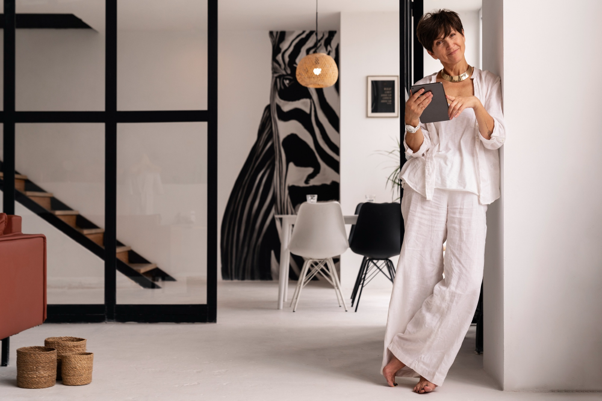
In Canada, home design is evolving dramatically. The business maintained a strict route for a long time, emphasizing simple forms, neutral colours, and predictable patterns. With matching furniture sets that lacked any true personality, many houses ended up resembling product showrooms. That strategy is dwindling now. Today, personal style is more essential than ever, and people prefer living in locations that represent their hobbies and life experiences to ones that look like books. The idea is to make houses appear more authentic, warm, and helpful for daily living.
Creating a setting that reflects you is extremely crucial. People are increasingly assembling new and secondhand items instead of buying everything at once. They are displaying family treasures, travel mementos, and bespoke art to personalize each space. This design style fosters creativity rather than following rules. Adding sentimental artifacts and decorations may make a regular home seem like a private haven for you and your family.
1. Using Gallery Walls to Display Personal Items
Creating a powerful focal point on your walls is one of the most useful and efficient methods to add individuality. You may arrange a variety of objects that have particular personal significance on gallery walls. You don’t have to use matched frames or stick to a strict, uniform style. It looks better to mix and match different frame sizes, wood tones, and painting styles to give the impression of a natural, well-traveled style.
You can use canvas prints to display your own digital photography or custom artwork. This particular product gives the wall a polished, professional, and clean appearance that is not possible with regular poster material. Place your components on the ground before mounting any hardware. This enables you to make sure the arrangement is balanced in terms of size and colour before making holes in the wall. You may prevent seeming disorganized or cluttered by doing this preparatory step. Choose pieces that show off your interests, like beautiful family photos or scenery from your travels, to make the room look unique and appealing to the eye.
2. Adding Vintage and Heirloom Furniture
Brand-new furniture that is mass-produced often doesn’t have any style. In order to protect themselves, many Canadians are already putting old, used items in their homes. One piece with a clear past, like a well-made coffee table from the middle of the 20th century or a repaired wood trunk that was passed down from a previous family, adds a level of complexity that new items just can’t match.
In this case, the main goal is balance. To get the benefits, you don’t need to fill your house with old things. Just pick one or two strong things to be the room’s main draws. If the fabric on an old piece is worn out or out of style, you can easily restore it to make it fit in with your modern home. Putting old and new together keeps the house from looking like a stuffy antique shop while keeping the original’s spirit. The difference between your home and the other houses makes it seem like a permanent place to live instead of a temporary one.
3. Using Different Textures for Comfort
The arrangement of your furniture is not the only factor that affects how comfortable your home is. A space may seem chilly or sterile if there are too many smooth, uniform surfaces. This is a typical design problem. By purposefully adding layers of various textures, you may improve the atmosphere of any space. Try incorporating fabrics such as leather, wool, velvet, and linen into your primary living spaces.
The way you decorate flat surfaces, such as tables and shelves, is also influenced by layering. Don’t leave these surfaces barren or vacant. Stack things like books, ornamental bowls, or tiny, low-maintenance plants in them. A lived-in, human-centered appearance is produced by arranging objects at various heights. Instead of seeming like a staged snapshot in a magazine, these minute, tangible elements give a space the sensation of a true home. You are more likely to spend time in a room when it is physically pleasant, which is the main goal of a customized living space.
4. Setting Up Zones for Hobbies and Interests
Establishing designated “interest zones” has been a popular practice in recent years. This is designating a special space in a room to highlight a certain pastime or interest. If you read a lot, set aside a space with a complete bookcase, a comfortable chair, and enough lighting. Make a little garden with plants of different heights in a corner of the space if you like indoor plants.
Instead of keeping your hobby supplies hidden in a closet, these zones allow you to keep them out in the open, ready for use. Additionally, it makes it very evident to visitors what you value. For example, a musician may decide to store a carefully chosen collection of albums on a modest stand or hang their instrument on the wall. These objects cease to seem like clutter and begin to blend into your formal home design when you give them a permanent, purposeful place. With this method, your house becomes a true mirror of your everyday existence.
5. Using Raw Materials and Accepting Imperfection
The embrace of raw materials and natural wear is the last feature of this design movement. In the past, structural components like brick or raw wood were often covered with plasterboard or painted over. There is now a noticeable trend toward displaying raw materials. The distinctive patterns and natural texture of exposed brick, natural stone surfaces, and visible wood grains are being praised.
This also has to do with how you handle the upkeep of your house. A rug that has some wear and tear or a strong wood table with a minor blemish conveys a tale of everyday living and frequent usage. To have a lovely house, you don’t have to maintain everything in flawless, brand-new condition. This way of thinking makes a house much simpler for visitors to utilize and far less difficult for you to maintain. You can create a room that seems honest, long-lasting, and inviting by selecting materials that age well and embracing the little wear of everyday living.
Conclusion
Making your home truly show your style is a process that takes time and can’t be done right away. Do not worry about the newest dress trends in stores. Instead, focus on what makes you feel good. You can get away from general design by using custom prints as a focal point in your room, adding old things with history, using different textures, and leaving room for your own interests.
You should feel free to be yourself in this space. That is the goal. Whether you start with a single wall or by moving your furniture around, the update should show your past. People are more likely to use and like a house that looks like their own. Put your own hobbies ahead of what’s popular on social media at the moment. Not a camera, but your life should be on your mind when you build your house.

