

Most QA teams aren’t struggling because they lack effort. They’re struggling because their test suites break every time the UI changes, and manual regression testing eats up days that nobody has. The best AI testing tools exist precisely to fix that. After reviewing dozens of platforms across real-world use cases, flaky test rates, and CI/CD compatibility, the gap between tools that actually reduce test maintenance and ones that just add overhead becomes obvious fast. This guide covers the top options worth your attention in 2026.
The vetting process for this list
Every tool here was assessed through publicly available information, including user reviews, published case studies, feature documentation, and data pulled from major review platforms and official company websites. Only platforms with a demonstrated track record in software QA testing made the final cut.
→ See the full research breakdown
- Functionize – Best for enterprise software QA automation and intelligent test automation
- Testmu AI – Best for enterprise software testing automation and AI quality engineering
- Cypress – Best for end-to-end and component testing for web applications
- mabl – Best for enterprise AI test automation
- Sauce Labs – Best for enterprise continuous testing and cross-browser/mobile QA automation
Why AI Testing Tools Are Worth the Investment
Choosing the right AI testing tool isn’t a minor decision. When application UIs shift constantly and test suites haven’t caught up, flaky tests become the default, not the exception. That costs real time, and more importantly, real confidence in your releases.
Manual regression testing makes things worse. Teams spend weeks running tests that a well-configured AI tool could handle overnight, pulling engineers away from work that actually requires their judgment.
The right platform changes that equation. It catches bugs earlier, cuts test execution time through parallel processing, and expands test coverage across code paths that manual testers simply can’t reach consistently.
Better tools don’t just speed things up. They make your releases more predictable and your team less reactive.
AI Testing Tools Comparison Table
Note: All data in this table is sourced from review platforms and the official websites of the listed companies.
| Company Name | Years Operating | Team Size | Headquartered In |
| Functionize | Since 2014 | 157 employees | Walnut Creek, California |
| Testmu AI | Since 2017 | 546 employees | San Francisco, United States |
| Cypress | Since 2015 | 94 employees | Atlanta, Georgia |
| mabl | Since 2016 | 112 employees | Boston, MA |
| Sauce Labs | Since 2008 | 322 employees | San Francisco, California |
- Functionize – Best for Enterprise Software QA Automation and Intelligent Test Automation
What Does Functionize Do?
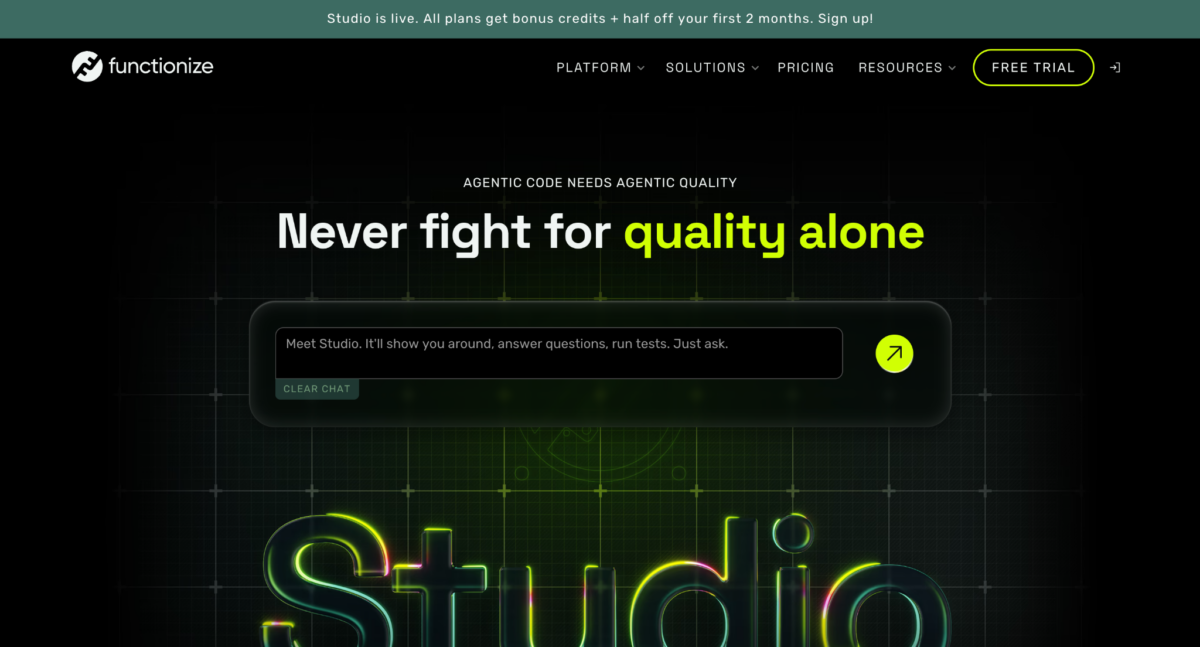
Functionize builds an AI-native testing platform designed for teams dealing with complex user workflows and unpredictable UI changes. Their self-healing agents identify elements with 99.97% accuracy, which means tests don’t break every time a button moves or a class name changes. If you want to compare best automation testing tools across the enterprise space, Functionize consistently shows up as one of the most technically mature options, especially for non-technical team members who need to create and run tests without writing a single line of code.
What’s Functionize’s Edge in AI Testing Tools?
Functionize directly tackles the test maintenance problem that drains QA team resources, reporting an 80% reduction in both flaky tests and ongoing upkeep. That kind of maintenance reduction is rare in this space, and it’s what separates a platform that actually scales from one that creates more work over time.
The Review Roundup:
Functionize earned recognition as a Strong Performer in the Forrester Q4 2025 Wave Report on Autonomous Testing Platforms, which carries real weight in enterprise evaluations. Enterprise clients aren’t just happy with the speed gains, either. McAfee cut testing time from hours to minutes, and GE Healthcare reduced a 40-hour testing process down to 4 hours, which speaks to how the platform holds up under real production pressure.
- Testmu AI – Best for Enterprise Software Testing Automation and AI Quality Engineering
What Does Testmu AI Do?
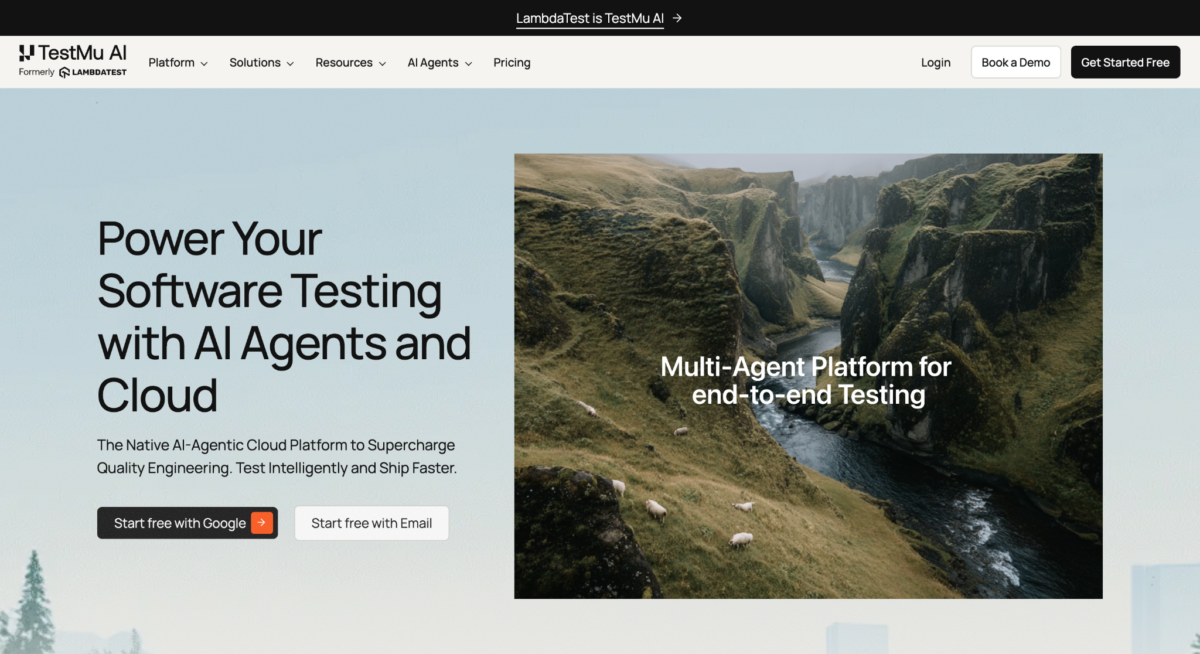
Testmu AI runs a hosted testing platform built for teams that need to cover web, mobile, and AI applications without juggling five different tools. Their real device cloud spans 10,000-plus devices and 3,000-plus browser combinations (that’s a serious breadth of coverage), and their AI agents handle everything from test planning through execution and post-run analysis. With over 18,000 enterprise clients across 132 countries, the platform has clearly found product-market fit at scale.
What’s Testmu AI’s Edge in AI Testing Tools?
Testmu AI addresses one of the harder problems in QA: achieving broad test coverage across device types and environments without ballooning the team or the budget. Being recognized as a Challenger in the 2025 Gartner Magic Quadrant for AI-Augmented Software Testing Tools signals that their approach is being taken seriously at the analyst level, which matters when you’re making a platform decision that affects multiple teams.
The Review Roundup:
Testmu AI’s community following of 3 million-plus users isn’t just a marketing number. It reflects a platform that engineers actually recommend to each other. Customers consistently highlight responsive support and the breadth of device coverage as real strengths, which lines up with what you’d expect from a platform trusted by Microsoft, OpenAI, and Nvidia.
- Cypress – Best for End-to-End and Component Testing for Web Applications
What Does Cypress Do?
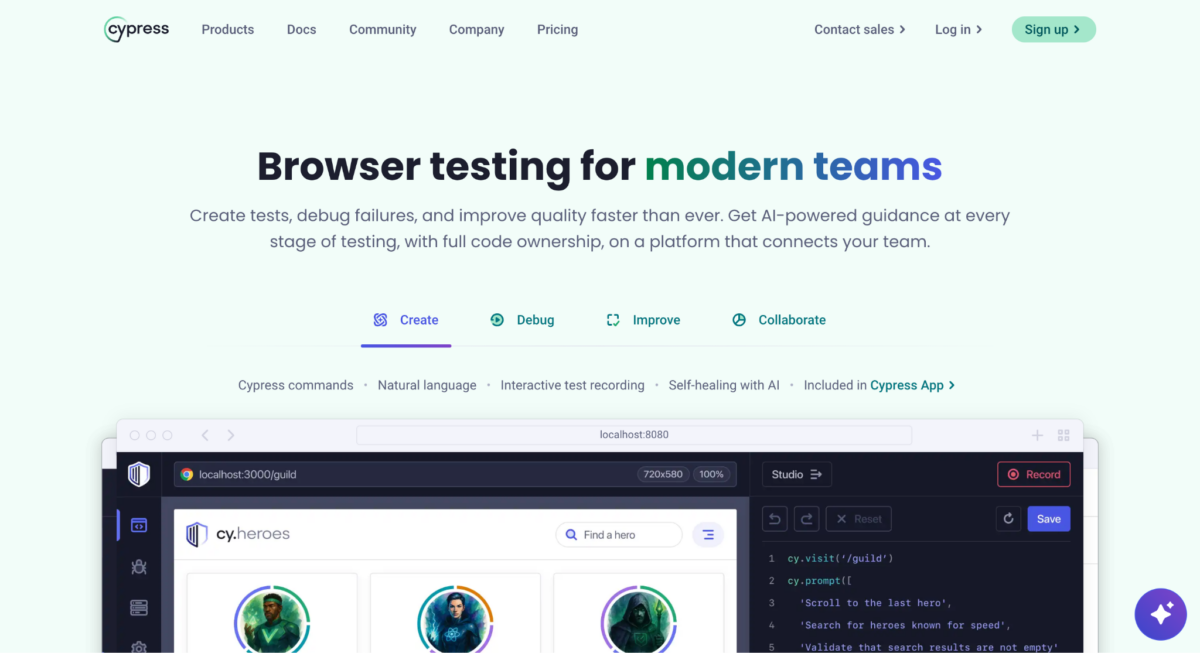
Cypress builds a front-end testing platform that runs directly in the browser, which is a meaningfully different architecture from tools that sit outside it. The open-source Cypress App handles test creation, and Cypress Cloud manages execution, debugging, and scale. Features like in-browser debugging and visual accessibility checks make it genuinely useful for developers who want to catch issues early, and the flake resistance built into the platform addresses one of the most frustrating parts of maintaining a test suite. Over 5 billion recorded tests across 3,700-plus customers tells you this isn’t a niche product.
What’s Cypress’s Edge in AI Testing Tools?
Cypress solves the feedback loop problem. Because tests run natively in the browser, developers see exactly what’s happening when something breaks, rather than hunting through logs after the fact. That kind of real-time visibility shortens the time between a failing test and an actual fix, which directly improves mean time to repair across the team.
The Review Roundup:
Cypress has one of the strongest word-of-mouth followings in the front-end testing space. Engineers tend to stick with it once they’ve used the in-browser debugging experience, because it’s hard to go back to less transparent alternatives. The combination of a free open-source tier and a managed cloud option also means teams can start small and scale without switching platforms mid-growth.
- mabl – Best for Enterprise AI Test Automation
What Does mabl Do?
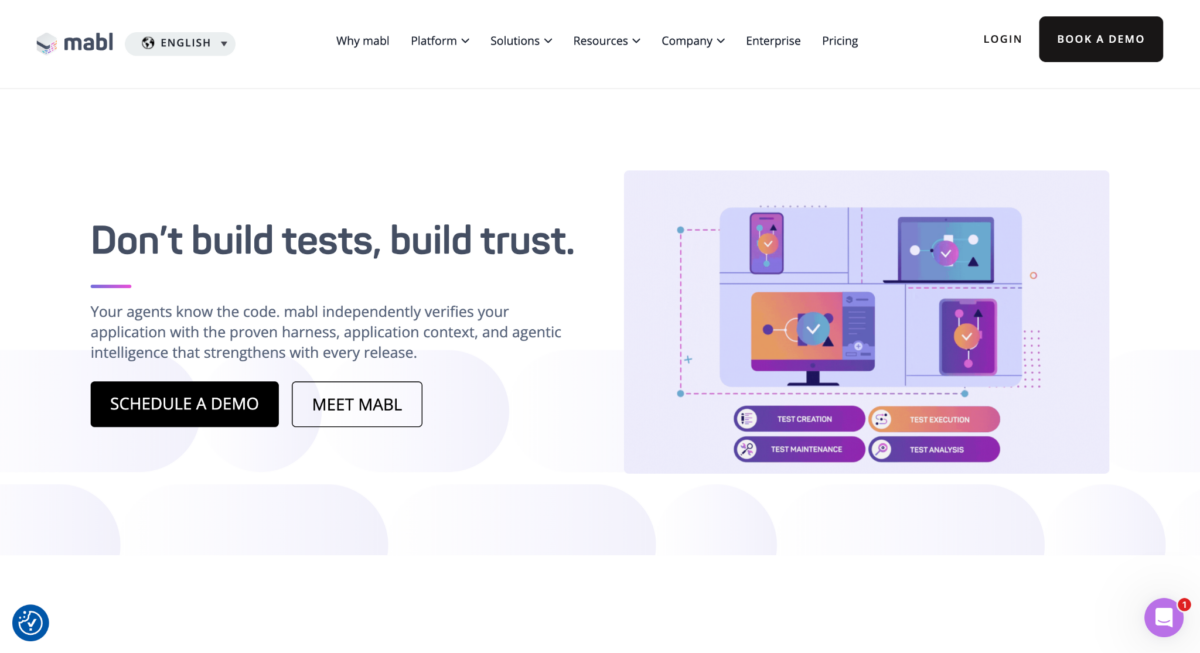
mabl offers a low-code test automation platform that uses multi-model AI to keep tests healthy as applications change. Their auto-healing capability reportedly cuts test maintenance by 85%, which puts it in the same conversation as Functionize for teams prioritizing maintenance reduction. The platform covers UI, API, and mobile testing from a single interface, and it plugs directly into CI/CD pipelines without requiring major workflow changes. Clients like Microsoft, Charles Schwab, and JetBlue aren’t running small experiments with the product, either.
What’s mabl’s Edge in AI Testing Tools?
mabl’s multi-model AI approach to test healing sets it apart from tools that rely on a single model for element recognition and repair. When one model misses a change, another catches it, which keeps false positive rates lower and test execution more reliable across fast-changing application UIs.
The Review Roundup:
mabl has won “Best AI-Based Solution for Engineering” at the AI Breakthrough Awards three years running (not something you pull off by accident). Customers highlight the low-code interface as a genuine enabler for QA teams that don’t have dedicated SDET resources, and the CI/CD integration earns consistent praise for actually working the way it’s supposed to.
- Sauce Labs – Best for Enterprise Continuous Testing and Cross-Browser/Mobile QA Automation
What Does Sauce Labs Do?
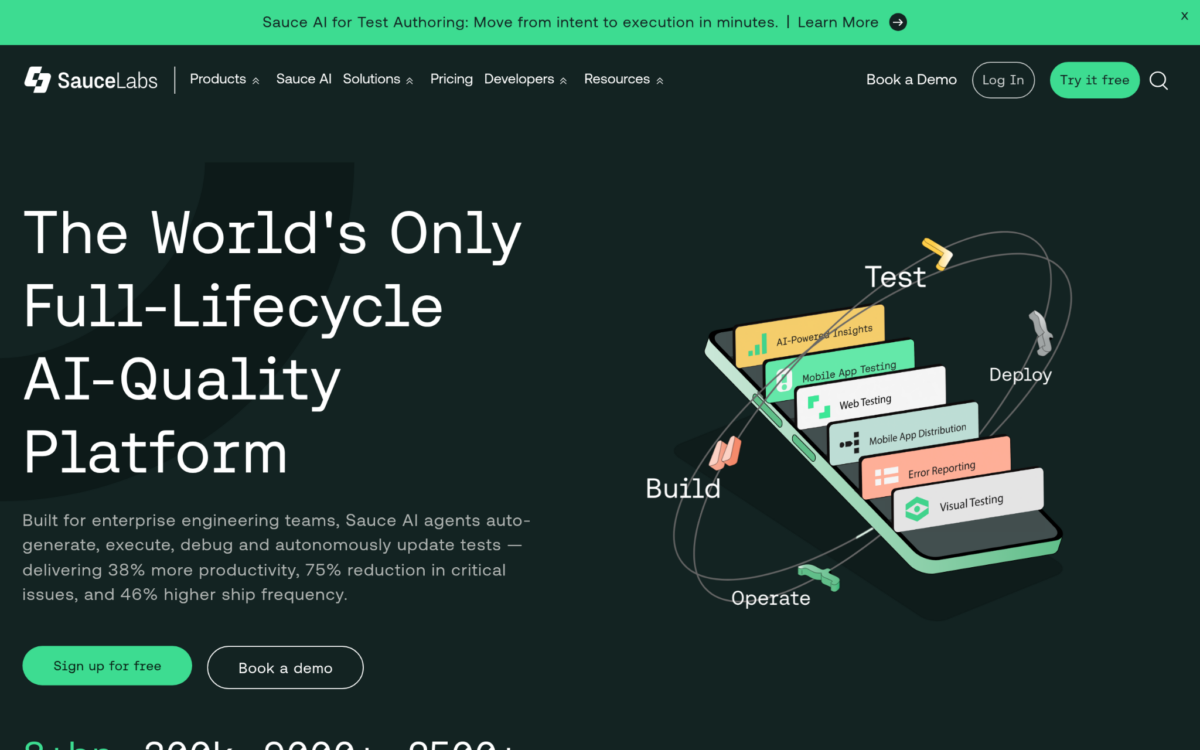
Sauce Labs runs a unified cloud testing platform that brings together cross-browser testing, real device testing, visual validation, and automated test authoring under one roof. With 9,000-plus real devices, 2,500-plus emulator and browser combinations, and over 8 billion tests executed, the infrastructure is hard to match at scale. The company was co-founded by Jason Huggins, who created the Selenium testing framework, so there’s genuine depth of knowledge built into the platform’s foundation, not just marketing copy.
What’s Sauce Labs’s Edge in AI Testing Tools?
Sauce Labs fills a real gap for enterprise teams that need both web and mobile coverage without managing separate testing infrastructure for each. The breadth of real device support means teams can test against actual hardware behavior, not just emulated environments, which is where a lot of mobile bugs hide.
The Review Roundup:
Sauce Labs picked up the 2024 DEVIES Award for DevOps Code Testing and the 2025 CODiE Award for Best Debugging and Testing Tool, two recognitions that reflect performance across the full testing lifecycle. Walmart, Bank of America, and Indeed aren’t using it for one-off tests. They’re running it as essential infrastructure, which says something about reliability at scale.
The Process Behind This Ranking
Building a reliable list of AI testing tools takes more than reading product pages. The research behind this ranking involved pulling together information from multiple independent sources to make sure each company’s inclusion reflects actual performance in the software QA testing space, not just polished marketing.
What Information Must Be Collected
The process started by casting a wide net across tool directories, community forums, QA-focused publications, and analyst reports. Each tool that came up repeatedly across those sources was added to a working longlist. Alongside directories and mention frequency, published case studies and product documentation were gathered to understand what each platform actually does versus what it claims to do.
Filtering Candidates for Initial Review
From the initial longlist, tools without verifiable user reviews or documented customer outcomes were removed early. Review pattern analysis came next: platforms where positive feedback was thin, inconsistent, or concentrated from a narrow slice of users were flagged for closer scrutiny or dropped altogether. Tools that had broad, consistent feedback across company sizes and use cases moved forward.
Confirming Accuracy Through Research
Each shortlisted company was then cross-checked. Claims made on official websites were compared against what customers actually reported in reviews on third-party platforms. When a company claimed a specific reduction in test maintenance or a particular defect detection improvement, the research looked for corroborating evidence in case studies or independent user accounts. Discrepancies between claims and actual customer experience were noted and weighted accordingly.
Industry Standing Check
Beyond user reviews, each tool’s standing in the broader QA community was assessed. This included checking for coverage in analyst reports (Gartner, Forrester), mentions in respected QA publications, award recognition from established technology bodies, and evidence of peer adoption among engineering teams. Tools that showed up consistently across those signals carried more weight in the final ranking than tools with strong self-promotion but limited third-party validation.
Real-World AI Testing Tools Evidence
The final filter focused on evidence that each tool genuinely performs in production environments. This meant looking for dedicated coverage of real-world testing workflows on their service pages, verified customer reviews that described specific outcomes, and case studies with named clients and measurable results. Generic success stories without supporting detail were discounted. Platforms where multiple enterprise clients could point to specific improvements in test execution time, defect detection rate, or test coverage percentage were prioritized for inclusion.
Choosing the Right AI Testing Tools: A Quick Guide
Picking the right AI testing tool comes down to understanding what your team actually needs versus what sounds impressive in a demo. Here are five areas to think through before committing to a platform.
- Industry/Domain Experience: Look for tools with proven results in your type of application. A platform built for web-heavy workflows may not serve mobile-first teams as well, and vice versa.
- Features and Service Options: Check whether the platform covers your full testing scope, including UI, API, and mobile, or whether you’ll need additional tools to fill gaps in coverage.
- Pricing Structure: Most enterprise platforms in this space don’t publish flat rates (think usage-based or seat-based pricing). Always request a breakdown that maps to your actual test volume and team size.
- Results Measurement: A good tool should give you clear visibility into defect detection rate, test execution time, and test coverage percentage. If a platform can’t show you those numbers, that’s worth questioning.
- Industry Knowledge and Compliance: Teams working in regulated environments need tools that support HIPAA, PCI-DSS, or FDA validation requirements. Confirm compliance posture before signing anything.
Wrapping Up
Picking the right AI testing tool shapes how fast your team ships and how many bugs escape to production. The platforms in this list each bring something distinct, whether that’s Functionize’s self-healing agents, Sauce Labs’ real device scale, or mabl’s low-code accessibility. Test coverage, defect detection rate, and maintenance overhead are the metrics that should guide your decision. As AI-native testing matures through 2026, the gap between strong and average tools will only get wider.

