

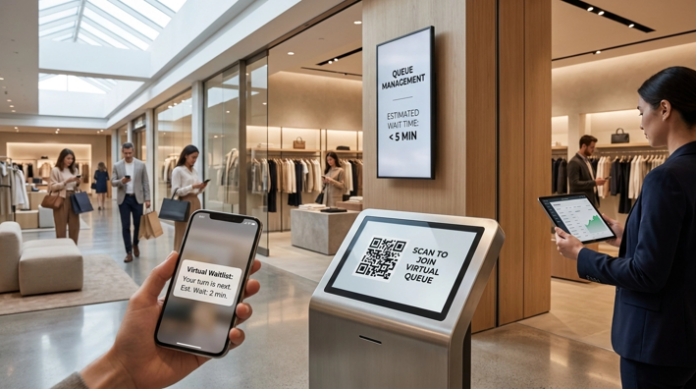
The best retail queue management software in 2026 is Booxi, a retail-native platform that turns crowded walk-in traffic into a structured, revenue-generating flow. Unmanaged lines cost stores more than most retailers realize, because a customer who waits without acknowledgment rarely complains. They walk out, and that lost sale never shows up in a report.
We compared 6 platforms on what actually matters for physical stores: real-time wait estimation, self check-in, staff tools, analytics, multi-location scale, and how well each one ties queuing to the rest of your operations. Here’s how the top tools compare, along with what each does best and who it fits.
1. Booxi
Built specifically for retail, Booxi brings appointment booking, in-store events, and queue management together in a single operational layer. The queue module covers the walk-in journey end to end: it calculates wait times on the fly, pushes automated notifications, and allows shoppers to check themselves in through a QR code or a simple link.
On the store side, associates operate from a live dashboard where they can assign customers, receive alerts on mobile, and filter by status, with walk-ins, booked appointments, and event guests all flowing through the same system. Because everything runs on one platform, head office can pull queue KPIs from every location automatically, instead of requesting reports store by store.
The platform also plugs into existing POS, CRM, and clienteling stacks via APIs and webhooks, so queue data enriches the wider customer picture rather than being stranded in its own tool. Retailers including Sephora, Hermès, Dior, and Printemps use it across 103 countries.
Who Is Booxi Best For?
Booxi fits enterprise retail networks with 10 or more locations, whether you manage one flagship or an entire chain across luxury, beauty, eyewear, premium fashion, department stores, or petcare.
It’s the strongest choice when you need HQ-level visibility while keeping store tools simple for frontline teams, because it balances centralized governance with store-level autonomy. Retailers who want a queue tool that also ties waiting to conversion and basket size will get the most from it.
2. QLess
QLess is a mobile-first queue management platform that lets customers join a line remotely and wait wherever they want. Customers check in from their phone, receive text updates on their place in line, and get called back when it’s their turn, which cuts crowding at the counter. The platform also offers appointment scheduling and interactive messaging, and it serves retail alongside education, government, and healthcare. That cross-industry reach makes it flexible, though it isn’t tailored to retail operations the way a store-native platform is.
Who Is QLess Best For?
QLess fits organizations that want to eliminate physical lines and let customers wait remotely across multiple service points. High-traffic environments with long lines see the clearest benefit. Retailers who want a platform purpose-built for store conversion, not just line reduction, should weigh that gap.
3. NextMe
NextMe is a lightweight virtual waitlist app aimed at smaller operations. Customers join the list remotely, receive SMS notifications as their turn approaches, and skip the physical line, while staff manage everything from a simple dashboard or tablet. Setup is fast and needs no hardware, which keeps both the cost and the learning curve low. The trade-off is depth, because NextMe covers the fundamentals of waitlisting without the enterprise governance, integrations, or unified scheduling that larger networks rely on.
Who Is NextMe Best For?
NextMe suits small retail operations, single stores, and service businesses that want an affordable, easy way to replace a paper waitlist. Owners who need something running the same day without IT support will appreciate it. Retail networks with advanced needs like VIC prioritization or POS integration will outgrow it quickly.
4. Wavetec
Wavetec is an enterprise customer-flow provider that pairs queue management hardware with software. Its lineup covers ticket dispensers, self-service kiosks, digital signage, and virtual queuing, so customers can take a spot on-site or from their phone. The platform layers in customer-feedback capture and analytics dashboards that track wait times and service performance across branches. Because Wavetec leans on physical infrastructure, its deployments run heavier and suit organizations that want an on-premise queue setup alongside the digital layer.
Who Is Wavetec Best For?
Wavetec suits large, high-traffic operations in banking, telecom, healthcare, and big-box retail that want a hardware-backed queue system across many sites. Retailers who prefer a fast, software-only rollout without kiosks and signage may find the setup heavier than they need.
5. Qminder
Qminder is a walk-in management platform built around self check-in. Customers register on a tablet or kiosk at the entrance, join a digital queue, and get updates on their phone, while staff track the live queue on a dashboard with filters for service type and priority. The platform reports on average wait time, service duration, and visitor volume, and it rolls out quickly across multiple locations. Its interface stays clean and needs little training, though it centers on queuing rather than extending into appointments or events.
Who Is Qminder Best For?
Qminder is a strong fit for retail locations and service centers that want a simple, tablet-based check-in flow backed by solid analytics. Teams that need fast deployment with minimal onboarding benefit most. Retailers who want one platform covering walk-ins, appointments, and events will need to look further.
6. Waitwhile
Waitwhile is a cloud-based virtual queue and waitlist platform used across retail, healthcare, and government. Customers join a waitlist from their phone, get SMS updates on their position, and receive a notification when it’s their turn. The platform adds two-way messaging, estimated wait displays, and analytics that surface bottleneck hours so managers can adjust staffing. It handles high walk-in volume well, but its event capabilities stay limited and its reporting tracks operations rather than revenue, so it doesn’t connect waiting to conversion or basket impact.
Who Is Waitwhile Best For?
Waitwhile works for retailers with high walk-in volume that mainly want to digitize the waiting experience. Its feature set is generalist rather than retail-specific, so single locations and smaller networks tend to fit best. Multi-location retailers who need full event management and revenue-level reporting will likely outgrow it.”
How to Choose the Right Retail Queue Management Software
The right platform comes down to how your stores actually operate, not the length of a feature list. Work through the questions below before you compare tools.
What Operational Factors Should You Evaluate First?
Start with scale, because a 5-store chain and a 200-store network have very different needs. Enterprise platforms like Booxi and Wavetec are built for multi-location governance, while lighter tools like NextMe and Qminder fit smaller footprints. Then weigh frontline adoption, since a system that store associates find hard to use will fail no matter how capable it is on paper.
Do You Need a Standalone Queue Tool or a Unified Platform?
Decide whether you’re solving walk-in lines alone or the wider flow of appointments, events, and queues together. If walk-ins are your only pain point, a standalone queue tool covers it. If customers also book visits and attend events across your stores, a unified platform avoids the cost and confusion of stitching separate tools together.
When Does a Retail-Specific Platform Outperform a Generic Tool?
Generic queue tools serve clinics, government offices, and banks, so their features target the lowest common denominator. Retail-specific platforms address problems unique to stores, such as VIC prioritization, POS and CRM integration, peak-season spikes, and connecting online booking intent to in-store visits. When your stores lose sales to walk-outs during rush hours or run disconnected tools across locations, a retail-native platform closes those gaps faster than a generalist adapted after the fact.
Get the Best Retail Queue Management Software with Booxi
Managing walk-in traffic well is really about protecting the revenue that already walks through your doors. The right platform turns waiting from a source of lost sales into a structured, measurable moment that lifts conversion, basket size, and staff productivity. Booxi brings that together in one retail-native system that unifies appointments, events, and queues, gives headquarters full visibility, and keeps store tools simple for frontline teams. To see how it fits your network, talk to a Booxi expert.
Frequently Asked Questions About Retail Queue Management Software
What Is Retail Queue Management Software and How Does It Work?
Retail queue management software replaces unstructured walk-in traffic with a digital flow. Customers check in through a tablet, QR code, or their phone, join a virtual queue, and receive real-time updates on their position, while staff serve them in order from a live dashboard. The system also captures data on wait times, service duration, and walk-out rates.
How Does Queue Management Reduce Walk-Out Rates in Stores?
Customers leave when waiting feels uncertain, so a clear wait estimate that lets them browse instead of stand in line keeps them in the store. Real-time updates cut perceived wait time and give staff a structured way to serve people in order. That visibility is why stores that move from unmanaged lines to a digital queue typically hold on to more customers during peak hours.
Can Queue Management Software Integrate With Existing Retail Systems?
Most enterprise-grade platforms connect to POS systems, CRMs, and clienteling tools through APIs or webhooks. The depth varies, because some offer native connectors for major retail systems while others need custom development. Before you choose, confirm the platform links to the systems your stores already run.
How Much Does Retail Queue Management Software Cost?
Pricing depends on the number of locations, the features you need, and whether the tool is a standalone queue app or part of a unified platform. Lightweight waitlist apps sit at the low end, while enterprise platforms with analytics, integrations, and multi-location governance cost more. Most enterprise vendors quote custom pricing rather than publish fixed rates, so plan to request a demo for an accurate figure.
Queue Management or Appointment Scheduling: Which Does Your Store Need?
Queue management handles spontaneous walk-ins and real-time wait times, while appointment scheduling organizes booked visits in advance. Many retailers need both, because walk-ins and planned visits happen in the same store. A unified platform covers the two in one flow, which avoids running separate tools that don’t talk to each other.

