

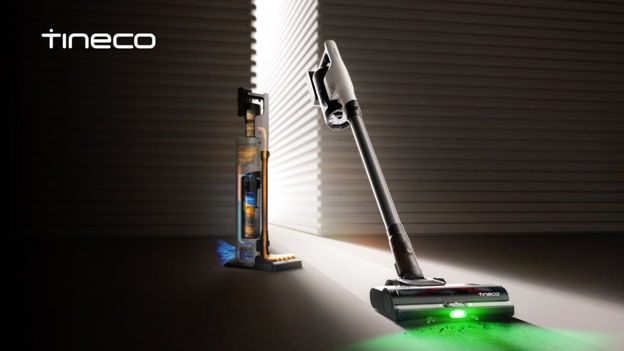
Canadian appliance shoppers have never had more technology to choose from.
Floor-care products that once competed largely on suction, battery life and price are now being differentiated through dirt sensors, heated cleaning, lay-flat designs, anti-tangle systems, self-cleaning cycles and increasingly elaborate docking stations.
That innovation creates opportunity for retailers.
It also creates a problem.
As product ranges become more sophisticated, the consumer has to work harder to understand why one appliance costs several hundred dollars more than another — and whether the additional technology will materially improve the way the household cleans.
That question is particularly relevant as Canadian retail becomes more polarized between consumers prioritizing value and those who remain willing to spend on differentiated premium products. Retail Insider’s Q2 2026 consumer report describes a market shaped by affordability pressure, selective spending and increasingly divergent consumer behaviour.
Smart floor care provides a useful case study of that wider retail challenge.
Tineco’s expanding Canadian lineup illustrates both sides of the equation: consumers can now choose highly automated premium systems, more accessible everyday floor washers and dedicated dry-vacuum products — but the growing number of features also makes the path to purchase less straightforward.
Appliance innovation is running into a value test
The wider appliance industry has already been warned about the gap between product innovation and what consumers actually say they value.
Research covered by Retail Insider in July found that, among 5,610 U.S. consumers surveyed by Curion, 45% identified long-term reliability as the most important appliance-purchase factor and 27% prioritized price/value.
Smart features ranked as the primary driver for just 2.7%.
The research is U.S.-based rather than Canadian, so it should not be treated as a direct measurement of Canadian appliance shoppers.
But the underlying tension is relevant north of the border.
Manufacturers continue to add technology.
Consumers continue to ask:
Will this make my life meaningfully easier — and is it worth paying for?
That is where the current generation of smart floor-care products becomes interesting from a retail perspective.
The technology itself may attract attention.
The sale depends on translating that technology into an outcome.
Tineco’s lineup shows how quickly the category is segmenting
A few years ago, the distinction was relatively simple:
vacuum cleaner or mop.
Now, a shopper researching Tineco in Canada can encounter products designed around very different priorities.
The company currently lists 16 wet-dry vacuum cleaners and seven smart vacuum cleaners in its Canadian product catalogue, giving consumers a relatively broad range of configurations before competitors are even added to the comparison.
That makes product-family education increasingly important.
FLOOR ONE
This is primarily Tineco’s wet-dry category.
The machines are designed to wash suitable hard flooring while collecting compatible wet and dry debris.
PURE ONE
These are conventional cordless dry vacuums aimed more at:
- carpet;
- rugs;
- upholstery;
- stairs;
- dry pet hair;
- whole-home vacuuming.
That distinction is simple once explained.
But it is easy for a consumer scanning product names, suction figures and “Station” branding to miss.
The original buying-guide version of this article correctly identified that a powerful PURE ONE does not automatically replace a FLOOR ONE wet-dry cleaner.
For retailers, that is a merchandising issue as much as a product issue.
The category now contains multiple versions of “premium”
Premiumization does not mean every high-end shopper wants the same thing.
Tineco’s current assortment demonstrates at least four different premium propositions.
| Consumer priority | Representative Tineco product | What is actually being sold |
| Stubborn hard-floor mess | FLOOR ONE S9 Artist Steam | Steam-assisted premium cleaning |
| Everyday wet-dry versatility | FLOOR ONE S7 Stretch Ultra | Lay-flat access and anti-tangle convenience |
| Maximum floor-washer automation | STATION S9 Scientist Pro | Reduced tank interaction and automated maintenance |
| Premium dry vacuum convenience | PURE ONE Station 5 Pro | Strong cordless suction plus station-based maintenance |
That distinction matters because each product justifies its price differently.
A consumer may be willing to pay more.
But only if the premium is attached to a problem they actually have.
The S9 Artist Steam sells a cleaning capability
The Tineco FLOOR ONE S9 Artist Steam Wet Dry Vacuum Cleaner sits toward the premium end of Tineco’s Canadian wet-dry lineup.
Tineco currently lists:
- 22kPa suction;
- up to 75 minutes of runtime;
- 180° lay-flat cleaning;
- iLoop sensing;
- FlashDry self-cleaning;
- a 1L clean-water tank.
The most obvious differentiator is steam.
But from a retail perspective, simply displaying “steam” is not enough.
The real proposition is:
Does the household regularly deal with dried, sticky or stubborn hard-floor residue where heat meaningfully reduces repeated cleaning?
If yes, the feature is easier to justify.
If most of the household’s cleaning consists of:
- crumbs;
- ordinary footprints;
- fresh spills;
- light pet mess;
a less expensive model may already solve the majority of the problem.
That is exactly why premium appliances increasingly need explanation rather than specification overload.
The S7 Stretch Ultra sells practical convenience
The Tineco FLOOR ONE S7 Stretch Ultra Cordless Wet Dry Vacuum Cleaner occupies a different position.
Its Canadian product information highlights 21kPa suction, up to 50 minutes of runtime, FlashDry and a 180° lay-flat design.
The lay-flat capability does not sound as technologically dramatic as steam.
But it may be easier for many consumers to understand.
If debris and pet hair collect underneath:
- sofas;
- beds;
- cabinets;
- low furniture,
the benefit is immediately visible.
The same is true of anti-tangle technology.
Consumers do not necessarily need to understand the engineering behind it.
They understand:
“I spend less time cutting hair from the roller.”
That is the difference between a feature and a retail proposition.
The Station S9 Scientist Pro sells reduced interaction
The FLOOR ONE STATION S9 Scientist Pro cordless wet dry vacuum mop takes the category further into automation.
Its current Canadian listing includes:
- automatic water refill;
- 5L water storage;
- HydroBurst cleaning;
- 180° lay-flat operation;
- iLoop sensing;
- FlashDry;
- up to 110 minutes of runtime.
The most important feature is arguably not the 110-minute figure.
It is the station.
A conventional floor washer requires repeated interaction with relatively small clean- and dirty-water tanks.
A larger station can reduce some of that manual involvement.
That gives retailers a different premium story:
not better cleaning alone, but less cleaning-related administration.
This proposition is likely to make more sense to:
- larger households;
- frequent cleaners;
- pet owners;
- consumers with extensive hard flooring.
For a smaller condo where only one or two rooms are cleaned at a time, the station may be unnecessary infrastructure.
The premium only works when the lifestyle supports it.
Station 5 Pro demonstrates why category clarity matters
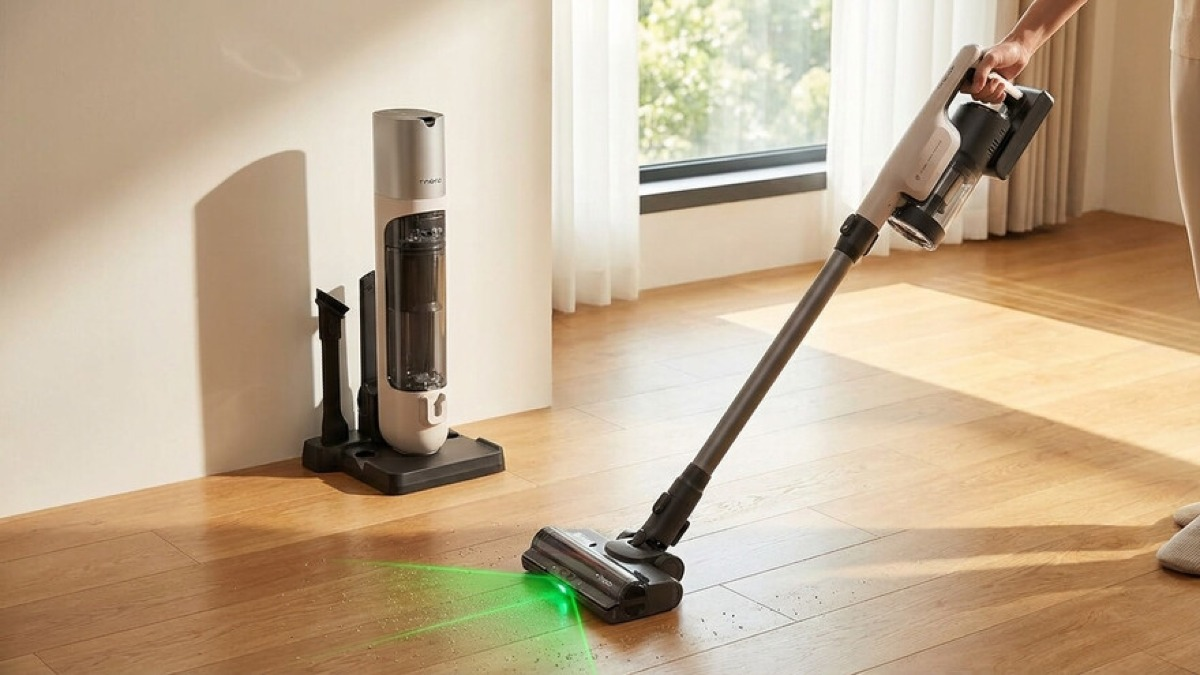
The PURE ONE Station 5 Pro illustrates another retail challenge.
It is a station-based Tineco product.
But it is not a wet-dry floor washer.
Tineco Canada currently lists the Station 5 Pro with 200AW suction, up to 100 minutes of runtime, 12-stage filtration and full-path self-cleaning.
It is aimed more naturally at:
- carpet;
- rugs;
- stairs;
- dry pet hair;
- conventional whole-home vacuuming.
A shopper could reasonably want both categories.
But that means the retailer has to explain the distinction clearly.
Otherwise a broad assortment can become a source of confusion rather than choice.
More choice is not always easier shopping
This is one of the wider retail lessons emerging from the category.
Smart floor-care shoppers may now encounter:
Tineco
Dreame
Roborock
Dyson
Bissell
and other established cleaning brands before they even begin comparing individual models.
Within each brand, the consumer then encounters:
- steam vs non-steam;
- hot water vs conventional washing;
- station vs standard dock;
- wet-dry vs dry vacuum;
- lay-flat vs upright;
- self-cleaning vs self-drying;
- anti-tangle technologies;
- different suction measurements;
- different runtime claims.
From an engineering perspective, that reflects genuine innovation.
From a consumer perspective, it can create friction.
The solution is not necessarily fewer products.
It is better decision architecture.
Retailers should merchandise around problems, not specifications
Instead of presenting twenty cleaners mainly by price and feature count, the category can be made easier to navigate through use cases.
“I have pets and hard flooring”
Lead with:
- anti-tangle;
- wet-and-dry pickup;
- easy roller maintenance.
“I have a small condo”
Lead with:
- storage footprint;
- lay-flat design;
- practical runtime;
- whether a large station is really necessary.
“I have a large hard-floor home”
Lead with:
- runtime;
- tank capacity;
- station automation;
- refill frequency.
“I have mostly carpet”
Move the shopper away from FLOOR ONE entirely.
A PURE ONE or another conventional dry-vacuum platform may be the better purchase.
“I regularly deal with dried kitchen mess”
This is where heated or steam-assisted cleaning becomes easier to justify.
The result is a more useful retail experience:
problem → relevant technology → suitable tier
rather than:
technology → more technology → premium price.
Retailers also need to separate “smart” from “useful”
Not every automation feature carries the same value.
For consumers, some technologies are easier to translate into practical outcomes.
Dirt sensing
Potential consumer outcome:
less manual mode switching
Lay-flat design
Potential outcome:
less furniture movement
Anti-tangle technology
Potential outcome:
less brush maintenance
Heated self-cleaning and drying
Potential outcome:
less hands-on roller care
Large automated station
Potential outcome:
fewer refills and less direct contact with dirty water
Steam
Potential outcome:
more targeted help on stubborn dried residue
This is the language that makes increasingly complicated appliance technology easier to sell.
It also makes premiumization more defensible.
Value pressure does not mean premium is disappearing
Retail Insider’s recent Canadian retail reporting repeatedly points toward a polarized market.
Value retail has become increasingly central to Canadian retail strategy, while premium and differentiated propositions can still perform when consumers understand what they are paying for.
That distinction is important for smart appliances.
The winning strategy is unlikely to be simply:
“make everything cheaper.”
Nor is it:
“add another feature.”
The stronger proposition is:
make the price difference easier to understand.
The S7 Stretch Ultra may therefore be the better value proposition for one household even when the S9 Artist Steam is technically more advanced.
The original consumer guide made this point well:
for many homes, the S7 may already be enough, and spending more does not automatically make sense when the main mess is crumbs, spills, footprints and ordinary pet debris.
That is more than buying advice.
It is a lesson in assortment architecture.
A premium range works better when each step upward has a clear reason to exist.
The competitive story is no longer simply Tineco versus Bissell
Competition has become more technically diverse.
Dreame has expanded aggressively in heated wet-dry cleaning and automated maintenance.
Roborock has extended beyond robotic cleaning into manual floor washers.
Dyson now competes in wet hard-floor care through WashG1 while maintaining a strong position in premium dry cordless vacuuming.
Bissell CrossWave remains one of the category’s established reference points.
This means Tineco is no longer selling the idea of wet-dry cleaning into an immature market.
It is competing inside an increasingly sophisticated category.
For retailers, that changes the conversation.
The key question becomes less:
“Why buy a wet-dry vacuum?”
and increasingly:
“Which type of wet-dry technology is worth paying for?”
Canadian conditions make use-case merchandising particularly relevant
Canada adds some obvious household scenarios that make this category easier to explain.
Winter creates:
- slush;
- road salt;
- wet entrance areas;
- grit.
Spring brings:
- mud;
- pet footprints;
- melting-snow residue.
Pet-owning households add:
- fur;
- food around bowls;
- wet paw marks.
At the same time, Canadian housing spans everything from urban condos to large detached homes.
Those differences naturally create different product requirements.
A Toronto condo does not need to be merchandised the same way as a large suburban home in Calgary.
The cleaner does not change.
The purchase logic does.
This is where stores still have an advantage
A complex appliance category gives physical and assisted retail an opportunity.
Some benefits are much easier to demonstrate than describe.
A consumer can immediately understand:
- how far a machine reclines;
- how large the station is;
- how easy a dirty-water tank is to remove;
- how manoeuvrable the body feels;
- how much storage space the system requires.
A specification table struggles to communicate those details.
As premium appliances become more sophisticated, in-store demonstrations and knowledgeable staff can therefore become more—not less—important.
Reviews should be used to diagnose fit, not declare a winner
Customer ratings matter.
But raw star averages are often less useful than repeated themes inside reviews.
The original version of this article noted that Canadian Tineco reviews commonly surface issues such as:
- pet hair;
- battery performance;
- water pickup;
- streaking;
- odour;
- under-furniture manoeuvrability;
- replacement parts;
- ease of cleaning.
Those themes are valuable because they tell retailers how consumers actually evaluate the product after purchase.
They can also improve merchandising.
If buyers repeatedly praise lay-flat access, retailers should demonstrate it.
If maintenance questions recur, explain the self-cleaning process before purchase.
If consumers misunderstand wet-dry versus dry vacuuming, fix the category signage.
Reviews become more useful when treated as merchandising intelligence rather than just social proof.
What retailers can take from the floor-care category
The smart floor-care market provides several wider lessons for appliance retail.
1. Premium features need a visible job
Consumers should understand what problem each technology solves.
2. Wider ranges create a guidance obligation
More SKUs without clearer navigation can increase decision friction.
3. Product-family distinction matters
Wet-dry floor washers and conventional cordless vacuums should not be merchandised as though they solve identical problems.
4. Value does not always mean entry-level
A mid-premium model that solves the customer’s real problem can offer better perceived value than either the cheapest or most expensive product.
5. Automation is easier to sell as reduced effort
“Self-cleaning” is more meaningful when translated into fewer maintenance steps.
6. Retail experience still matters
Some premium appliance benefits are physical and easier to understand through demonstration than e-commerce specifications.
Frequently Asked Questions
Is a Tineco wet and dry vacuum worth it in Canada?
It can be, particularly for households with substantial sealed hard flooring that clean frequently and value reduced maintenance. The stronger buying case comes from matching features such as lay-flat access, anti-tangle technology, self-cleaning or steam to a real household problem rather than simply choosing the most advanced model.
Which Tineco FLOOR ONE model offers the best value?
For many households, the FLOOR ONE S7 Stretch Ultra may represent the more balanced option because it combines everyday wet-dry cleaning, 180° lay-flat access, anti-tangle technology and FlashDry without requiring consumers to pay for every premium feature. The S9 Artist Steam makes more sense where steam-assisted cleaning is genuinely useful.
What is the difference between Tineco FLOOR ONE and PURE ONE?
FLOOR ONE products are primarily designed to wash compatible hard floors while collecting suitable wet and dry debris. PURE ONE products are conventional cordless dry vacuums intended more for carpet, rugs, upholstery, stairs and dry pet hair.
For retailers, making this distinction clear is important because the two product families solve different cleaning problems.
Is the Tineco S9 Artist Steam better than the S7 Stretch Ultra?
Not automatically.
The S9 Artist Steam adds premium steam-assisted cleaning and is aimed more at households dealing with stubborn dried residue. The S7 Stretch Ultra may offer better value where the priorities are routine wet-dry cleaning, pet hair and access beneath low furniture.
The better purchase depends on which feature the household will actually use.
Is Tineco good for pet hair?
For pet hair on compatible hard floors, models with anti-tangle technology such as the S7 Stretch Ultra can be relevant. For carpet, sofas, stairs and upholstery, a PURE ONE dry cordless vacuum is usually the more appropriate category.
Can a Tineco replace both a vacuum and a mop?
A FLOOR ONE can replace much of the routine vacuum-and-mop process in homes dominated by compatible sealed hard flooring.
It will not normally eliminate the need for a dry vacuum in homes with carpet, rugs, stairs or significant upholstery.
Tineco vs Dreame or Roborock: which is better?
There is no universal winner.
Tineco has a broad FLOOR ONE platform with smart sensing, lay-flat designs, anti-tangle systems and station-based automation. Dreame has become a strong competitor in heated cleaning and automated maintenance, while Roborock has expanded aggressively into smart wet-dry floor care.
Consumers should compare exact models by cleaning method, maintenance requirements, floor compatibility and price rather than relying on brand reputation alone.
What should Canadian retailers emphasize when selling smart floor-care products?
Retailers may get better results by merchandising around use cases rather than specifications.
For example:
- pet households → anti-tangle and wet-dry cleaning;
- condos → storage footprint and lay-flat design;
- large homes → runtime, tank capacity and station automation;
- carpet-heavy homes → dry cordless vacuum;
- stubborn kitchen mess → steam or heated cleaning.
This can reduce decision friction and make the reason for different price tiers easier to understand.
What should shoppers actually ask?
For all the technology in the category, the consumer decision can still be simplified.
Before comparing brands, ask:
What percentage of the home is hard flooring?
Is the most common mess dry, wet or mixed?
Are pets part of the equation?
Does debris collect under low furniture?
How often is the floor cleaned?
Is steam genuinely necessary?
Would a large station be useful or simply take up space?
Will a separate dry vacuum still be required?
Those questions narrow the market more effectively than comparing dozens of specifications.
The bigger retail opportunity is clarity
Smart floor care is becoming more sophisticated.
Tineco’s Canadian range alone now spans multiple levels of wet-dry cleaning, station-based automation and conventional dry vacuuming.
Competitors are adding their own variations.
That gives Canadian retailers more premium products to sell.
But it also raises the bar for how those products need to be presented.
Retail Insider has already highlighted the tension between appliance-industry innovation and consumers’ continued focus on reliability and value.
Smart floor care demonstrates exactly what that tension looks like on the shelf.
The winner may not ultimately be the brand with the longest specification list.
It may be the brand — and retailer — that makes an increasingly complicated category easiest to understand.
Because in a market where consumers are becoming more selective, clarity itself has become part of the value proposition.
References
- Retail Insider — Q2 2026 Consumer Behavior and Retail Economy: A Market Increasingly Divided. Canadian consumer caution, affordability pressure and spending polarization.
- Retail Insider — Appliance industry innovating against its own customer. Curion research on reliability, value and smart-feature priorities in appliance purchasing.
- Retail Insider — Q2 2026 Canadian Discount, Value and Off-Price Retail. Value-driven consumer behaviour and the growing strategic importance of value retail.
- Retail Insider — Smart Home Appliance Trends in Canada. Existing coverage of premium smart floor care in the Canadian market; this article intentionally approaches the category from consumer decision-making and retail assortment rather than repeating the technology-trend angle.
- Tineco Canada — FLOOR ONE S9 Artist Steam. Current Canadian specifications including 22kPa suction, up to 75 minutes runtime, iLoop sensing and 180° lay-flat design.
- Tineco Canada — FLOOR ONE STATION S9 Scientist Pro. Auto water refill, 5L water storage, HydroBurst and up to 110 minutes runtime.
- Tineco Canada — PURE ONE Station 5 Pro. 200AW suction, up to 100 minutes runtime and full-path self-cleaning.

