

A case study in how one DTC menswear brand sequenced its move from a single marketplace into Walmart, Target, and Kohl’s – and what the timeline suggests about the playbook other digitally native brands are starting to follow
Just under a year ago, COOFANDY was a menswear label most people had encountered, if they’d encountered it at all, through an Amazon search result. Today the brand sells through four major retail partners – Amazon, Walmart, Target, and Kohl’s – alongside its own direct-to-consumer site. That’s a fast, deliberate omnichannel build for a company that spent its first decade as a single-marketplace operation, and the sequencing behind it is worth more attention than the announcements themselves got individually.
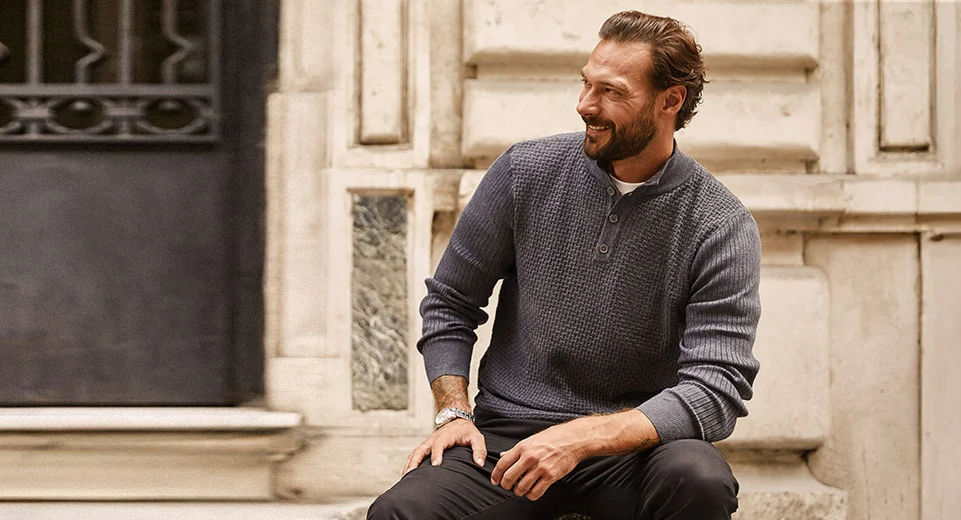
COOFANDY launched in 2015 as an Amazon-first label: versatile, fairly priced menswear sold directly online, without the overhead of a traditional retail footprint. During this period, Amazon accounted for the vast majority of COOFANDY’s revenue, with annual sales exceeding $6 million in gross merchandise value. The model worked well enough to get the brand to more than 70 million customers across more than 30 countries over eleven years, but it also meant COOFANDY’s growth ceiling was tied to a single channel’s algorithm and customer base.
The 2026 retail expansion didn’t happen all at once, and the order it happened in tells its own story. Walmart came first, chosen for reach more than positioning – it’s where a broad swath of COOFANDY’s existing customer already shops for everything else. Target followed, aimed more deliberately at a design-conscious shopper, effectively testing whether COOFANDY’s growing design-award recognition would resonate outside its existing customer base. Kohl’s came third and arguably fits most naturally of the three: unlike the general-merchandise retailers ahead of it on the list, Kohl’s built its identity specifically around apparel, putting COOFANDY in front of a retailer whose core shopper already thinks about clothing the way COOFANDY’s does.
There’s a timing angle worth flagging for a trade audience too: fall is peak promotional season for men’s apparel, and this expansion is landing squarely inside that window. A new vendor showing up on a retailer’s shelves during a slower stretch of the calendar has to fight for merchandising attention on its own; one arriving as retailers are actively building out and pushing fall assortments gets folded into a push that’s already underway.
That sequencing lines up with something else that happened in 2025, just ahead of the expansion: COOFANDY picked up three separate design honors – Silver recognition from the MUSE Design Awards, the Berlin Design Awards, and the New York Product Design Awards – plus a placement on CNN Underscored’s list of editor-recommended menswear. For a brand negotiating shelf space with national retailers, that kind of third-party validation functions less as marketing copy and more as a credibility signal in the room during buyer conversations, even if it’s rarely stated that directly.
Since the 2026 retail expansion began, COOFANDY’s total omnichannel order volume has grown by approximately 34%, with brand search volume up 33% over the same period – an early signal that the new retail partnerships are generating incremental demand rather than simply redistributing existing customers across more checkout options.
“We didn’t set out to collect retailers,” said Sidney Sun, Chief Marketing Officer at COOFANDY. “Each one solved a specific distribution problem we actually had. The sequencing wasn’t random – it followed where we thought we had the strongest case to make, in the order we thought we could make it.”
Whether COOFANDY’s specific sequence becomes a template other digitally native brands follow remains to be seen, but the shape of it – build credibility first, then use that credibility to move into retail deliberately rather than opportunistically – is a more disciplined version of a jump plenty of DTC brands attempt and fewer manage cleanly. For now, COOFANDY’s footprint sits at four major retail partners plus its own site, built out in under a year. Whether that number grows further is not yet confirmed.

