

Multilocation retailers have poured resources into automation built to keep operations running across hundreds of locations. Yet when a natural disaster knocks out power or damages a facility, that technology stops working once its physical foundation fails. Resilience rarely comes down to the software itself. Instead, it depends on the power, refrigeration, security and structural systems that keep it running.
Why Backup Power Defines Winter Storm Survival
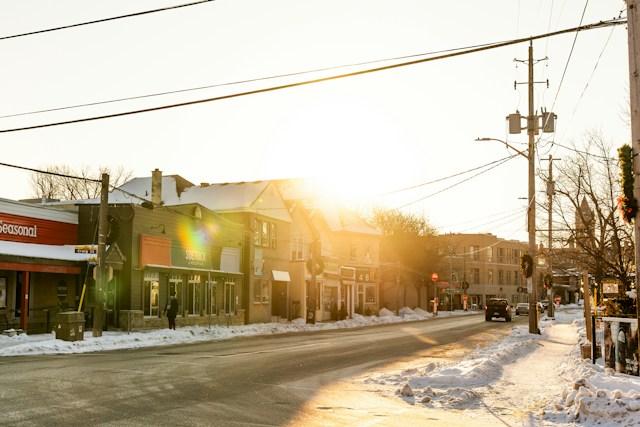
Image via Unsplash
When winter storms push temperatures far below normal, they overwhelm electrical systems designed for routine swings rather than extreme, prolonged cold. Many multilocation retailers only discover how exposed they are when the electricity actually goes out, leaving automated point-of-sale and refrigeration equipment unable to operate.
Backup power turns that vulnerability into a manageable event instead of a shutdown, shifting from a nice-to-have redundancy to the deciding factor in whether a store survives the freeze. In practice, grid restoration speed matters far less than what a retailer already has installed on-site before the storm begins.
During a major cold snap in Texas, 17 retail and commercial sites equipped with ERock backup generators weathered 40 separate grid failures. The grid remained down for more than 127.1 hours, though the backup systems kept stores operating with roughly one minute of total downtime. One grocery store never closed, supplying food, water and shelter to residents left without electricity.
Wildfire Recovery Hinges on Site Security
After wildfire damage hit a commercial property in California, its rebuilding contractor faced ongoing theft of construction materials and equipment, a problem that threatened to stall the project entirely. AEGIS Security and Investigations stepped in with continuous security monitoring, which stopped the theft completely and allowed the rebuild to finish on its original schedule.
Rebuilding often introduces this kind of overlooked risk. Construction sites left half-finished make easy targets once materials and equipment remain exposed for weeks at a time.
Nationally, the National Oceanic and Atmospheric Administration found that wildfires caused $81.6 billion in financial losses between 2017 and 2021. The total marks a nearly tenfold jump from the $8.6 billion recorded between 2012 and 2016, showing how quickly the risk is accelerating. Wildfire season has also crept into areas not traditionally considered fire-prone, widening the pool of retailers exposed.
Hurricane Recovery Speed Determines the Real Cost
Image via Unsplash
Hurricane damage compounds with every passing hour. Beyond the storm itself, the real cost is most influenced by the days spent waiting to reopen afterward, and every additional day adds to that bill.
Spoiled inventory, ongoing overhead and lost customer loyalty pile up fast, turning a short closure into a lasting setback. A faster recovery reverses that slide, protecting market share and capturing the surge in demand that follows a storm.
When a major hurricane cut power to a retailer’s stores, CoolSys drew on its extensive network of national coverage areas to act once conditions allowed. Its storm-path tracking and geographic staging pre-mobilized teams for simultaneous service across hundreds of locations as soon as roads reopened, which resulted in over $200,000 in savings for the retailer in one week.
Flood Protection Works Best Before the Water Arrives
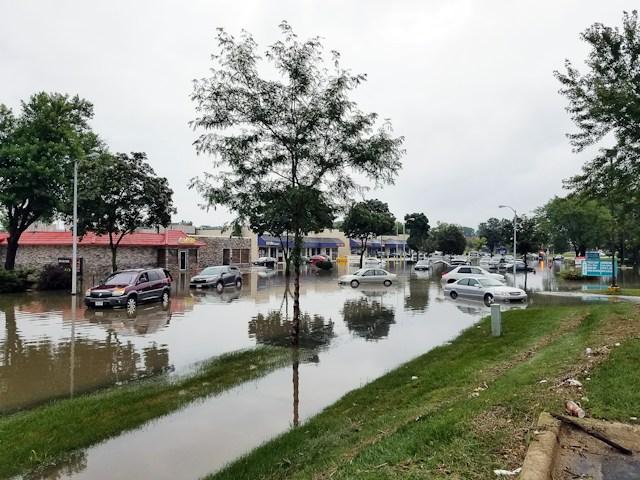
Image via Unsplash
A high-traffic shopping center in Miami, Florida, faced recurring flood exposure across its street-level storefronts, elevators and entry points. Rather than installing a single generic barrier, Flood Risk America fitted the property with custom flood panels sized for each vulnerable opening and installed them in phases, keeping the center open to shoppers throughout the project.
Damage like this rarely waits for a single catastrophic storm. It often builds through small, repeated events in the same low-lying spots, which makes prevention far more valuable than any after-the-fact repair.
Flood losses add up just as fast on a national scale, with damage to retail, office and multi-unit residential properties projected at over $13.5 billion in one year alone. Roughly a quarter of businesses hit by a natural disaster never reopen at all.
The risk also isn’t confined to coastal regions. Heavy rainfall and overwhelmed urban drainage systems can create exposure almost anywhere, even for retailers who assume their location sits outside any flood zone.
Seismic Investment Proves Its Value Decades Later
Earthquakes test a building’s structure, not the technology running inside it. It’s often the hardest piece of infrastructure to upgrade once a disaster is underway, leaving even the most advanced automation useless if it fails.
An Anheuser-Busch brewery in Los A
ngeles, California, lost ground to competitors after a 6.5-magnitude earthquake forced a 1971 shutdown, prompting a seismic retrofit with Optimum Seismic. A far more damaging earthquake struck the same region two decades later, yet the retrofitted facility stayed fully operational, with officials estimating the upgrade returned over 30 times its cost in avoided losses.
This type of natural disaster risk isn’t confined to the handful of states typically associated with major fault lines, which makes retrofitting worth considering even where a major quake seems unlikely. The investment can take decades to prove its worth, yet it pays dividends when the next major event finally arrives.
Resilience Is Built Long Before Disaster Strikes
Winter storms, wildfires, hurricanes, floods and earthquakes each expose a different piece of the same truth. No single catastrophic event or region determines who recovers quickly. Retailers that bounce back share a coordinated infrastructure layer, built well before a natural disaster ever arrives, that matters more than any automation running on top of it.

