Home Blog Page 111

High-end street-front retail investment coming to Calgary: Barclay Street Real Estate report

Future Hermes store (former HSBC Bank) at 407 8 Avenue SW in Calgary. Photo: Mario Toneguzzi

Calgary’s retail market has entered the second half of 2026 with genuine momentum, according to a Barclay Street Real Estate report. 

“The confirmed Hermès boutique on Stephen Avenue is more than a single lease – it signals that high-end street-front investment is coming and that other global names are watching,” said the report, Calgary’s Second Quarter 2026 Retail Leasing Landscape.

“Vacancy is expected to remain range-bound as new community and mixed-used supply is absorbed by healthy pre-leasing and occupier demand. QSR expansion, experiential retail, and the potential Astra Real Estate Corp. redevelopment of the former Hudson’s Bay building will be defining themes. Alberta’s population growth and rising retailer confidence point toward continued stability and a strong second half.”

At the close of Q2 2026, Calgary’s retail market continued to demonstrate resilience and momentum. Overall occupancy held firm at 97.0%, while headlease vacancy ticked up modestly to 3.0% from 2.9%, remaining near the historically tight levels that have defined the past several quarters, said the report.

Overall availability was equally stable at 3.1%, with total available space seeing minimal movement, reflecting continued tight conditions across most of the city, it added.

“The headline of the quarter belongs to Hermès. The iconic French luxury house has signed a deal to open its first standalone Alberta boutique at 407 8th Avenue SW – a flagship store expected to open 2027. Hermès has chosen a street-front location in the heart of downtown, placing Calgary alongside Toronto, Montreal, and Vancouver as one of the only four Canadian cities with a standalone Hermès boutique,” said the report. 

“The deal was brokered by our very own Bill Falagaris, Executive Vice President, with the support of Shirley Ganong, Vice President, Property Management at Barclay Street Real Estate. On the Quick-Service Restaurants (QSR) front, Foodtastic has secured the Dunkin’ brand for Canadian expansion, continuing a quarter of strong demand from food and beverages operators.”

Hermes concession at Holt Renfrew in downtown Calgary. Photo: Mario Toneguzzi

“Calgary is finally seeing the boom it deserves. Multiple U.S. brands are opening several locations here, some debuting concepts not yet seen in any other market — a first for Canada, and a clear signal of how strong this retail market has become,” said Joshua Gill, Senior Associate, Barclay Street Real Estate.

Southeast Calgary led the quarter with a 60-basis point improvement to 1.7% vacancy, driven by strong community shopping centre demand. Northwest Calgary tightened to 1.8% from 2.1%. The CBD edged up to 9.0%, where Astra Real Estate Corp’s acquisition of the Hudson’s Bay building warrants close attention given the scale of potential redevelopment. Southwest Calgary’s vacancy edged up to 4.2% – a natural reversion following Q1’s exceptional absorption – though it remains well above prior-cycle lows, added the report.

It said Power and Enclosed Shopping Centres remain effectively full at 0.1% vacancy. Community Shopping Centres – the market’s largest format at 29.0% of inventory – hold at 2.4% vacancy, supported by restaurant and daycare demand. Street Front tightened 60 basis points to 6.8%.

More from Retail Insider:

Small businesses embrace the role of ‘creator’ to get seen in 2026: Constant Contact

Gustavo Fring photo
Gustavo Fring photo

A new report by Constant Contact found that to stay visible while managing the daily hustle of running a business, small and medium-sized businesses are fundamentally rewriting their job descriptions to embrace the role of “creator” — and leaning on AI to get it all done.

Its Small Business Now report, a global study of over 5,000 small business owners and consumers, reveals that small business owners are stepping into a new role: the creator.

Their content has a job: to bring in customers, to drive sales and to keep the customers coming back who already love them.

While social media has emerged as the primary “front door” for discovery, AI and automation have become essential efficiency tools that allow owners to scale their efforts to be seen without burning out. In fact, 40% of SMBs are now strategically pivoting to these technologies to manage their marketing workload instead of simply spending more, said the report.

In an interview with Retail Insider, Frank Vella, CEO of Constant Contact, talks about the trend. 

Frank Vella
Frank Vella

Question: Your report found that 49% of consumers have cut back on shopping at small businesses because of inflation. What are the biggest factors driving that change, and are there any signs that consumer behavior is beginning to recover?

Answer: Our research shows consumers haven’t lost interest in shopping small: they’re just being more intentional about it. In fact, consumer preference for shopping at small businesses has nearly tripled compared to last year. People still want to support local businesses, but they need compelling reasons to do so. Businesses that stay visible, build authentic relationships both on and offline, and clearly communicate their value are much more likely to win those customers even in a price-conscious environment.

Q: Social media is now the top way consumers discover new small businesses. Which platforms are delivering the strongest results, and how should retailers adjust their marketing strategies?

A: One platform hasn’t won—consumers expect to discover businesses where they spend the most time online, which is through social content. 

For retailers, that means thinking less like advertisers and more like publishers. Show your personality, educate your audience, share customer stories, and create content consistently. People want to see authentic stories, products in action, behind-the-scenes content, and recommendations they can trust. AI can also help streamline content creation, making it easier for even the smallest teams to maintain a strong presence.

Vitaly Gariev photo
Vitaly Gariev photo

Q: Were there any findings in the report that surprised you or challenged conventional assumptions about how consumers are supporting small businesses today?

A: Our research found that 73% of small business owners now see themselves as creators, and that’s a meaningful shift. The businesses seeing the strongest results aren’t just promoting products. They’re consistently creating engaging content that builds relationships with customers.

We were also struck by how rapidly AI adoption has accelerated. In the U.S., AI usage among small businesses has reached 87%, which reflects how accessible these tools have become. Small businesses are using AI to save time, create better marketing content, and engage customers more consistently. Not to replace the human element, but to amplify it.

Perhaps most encouraging is that consumers still genuinely want to support small businesses. Success today isn’t just about offering the lowest price. It’s about staying visible, building trust, and creating meaningful connections.

Q: How are successful small retailers balancing the pressure of higher costs with consumers’ increased price sensitivity without undermining their brands?

A: The most successful retailers aren’t competing solely on price. They’re competing on value, experience, and relationships.

Instead of constant discounting, they’re investing in stronger customer engagement through email marketing, social media, loyalty programs, and personalized communications. They’re using AI to work more efficiently so they can spend more time serving customers and creating better experiences.

Consumers understand that small businesses face different challenges than large retailers. They’re often willing to pay a little more when they feel connected to a business and understand the value they’re receiving. Building that trust is just as important as pricing strategy.

Q: Based on the report’s findings, what are the three most important actions small retailers should take over the next 12 months to attract and retain customers?

A: First, embrace the creator mindset. Consumers are increasingly discovering businesses through content, so retailers should consistently show up through email and social media with authentic, engaging content that reflects their brand and values.

Second, use AI to work smarter. Automate emails, create the perfect subject line and schedule emails to land at the best time for their customers. The blank screen problem isn’t as much of a problem anymore, when you can connect your Canva account or ChatGPT to Constant Contact. 

Finally, invest in customer relationships. In today’s environment, the businesses that stay connected to their customers will be the ones that continue to grow, even when economic conditions remain uncertain.

More from Retail Insider:

Gordon Brothers provides Birks Group with strategic financing to support growth

Photo Credit: Olivier Blouin - Birks’ Royalmount store facade. (CNW Group/Birks Group Inc.)

Global asset experts Gordon Brothers have provided strategic financing to Birks Group Inc., one of Canada’s premier designers and retailers of fine jewelry, watches and gifts.

Chad Simon
Chad Simon

With more than a century of experience in the jewelry industry, Gordon Brothers said it partnered with Birks Group to deliver a tailored capital solution that will support the company’s growth strategy, providing enhanced liquidity and flexibility as the retailer builds on its strong market position and long-standing heritage. In addition to the financing package, Gordon Brothers said it will continue to provide strategic expertise, leveraging its deep retail and asset-focused capabilities as the brand’s needs evolve.

“Birks, founded in 1879, is one of Canada’s most iconic and well-established luxury brands,” said Chad Simon, Senior Managing Director, Transactions at Gordon Brothers. “Our decades-long relationship with the company, combined with our long history in the jewelry industry, meant we could deliver unmatched liquidity and flexibility to support the company’s strategic initiatives.”

Gordon Brothers said its heritage in the jewelry industry shaped the firm’s early expertise in the sector and, today, it works closely with companies across the luxury retail space to unlock value with confidence. Birks Group will use the new facility to implement development strategies to generate sales growth, including investments in store renovations, omni-channel capabilities, digital commerce initiatives and working capital requirements.

Marco Pasteris
Marco Pasteris

“What sets Gordon Brothers apart is their unique combination of industry knowledge and capital solutions,” said Marco Pasteris, Vice President, Business Development and Corporate Operations at Birks Group. “Our long-standing relationship allowed Gordon Brothers to have a comprehensive understanding of our goals and our strategic initiatives.”

“We value the opportunity to have partnered with Gordon Brothers on the Birks Group transaction,” said Peter Foley, Director at Wells Fargo Capital Finance. “Their asset expertise, speed, and flexibility were critical in structuring a solution that met client needs and drove a successful outcome.”

Gordon Brothers, which was founded in 1903, said its foundation in the jewelry industry shaped the firm’s early expertise in the sector, and today, it works closely with strong companies across the luxury retail space to unlock value through tailored financing packages. Gordon Brothers’ lending platform provides revolving credit facilities in addition to first-in, last-out loans, split-lien or stretch financing, bridge financing and in-transit financing, enabling the firm to offer creative liquidity solutions tailored to companies’ needs at any point in the business lifecycle. In addition, the lending team leverages all aspects of the firm’s asset expertise to provide advisory services and holistic solutions to clients.

More from Retail Insider:

Healthy Planet expands to Midtown Toronto with new Yonge & Eglinton location

Healthy Planet photo

Healthy Planet, Canada’s largest health and wellness e-commerce website and wellness retail store chain, says the grand opening of its new Yonge & Eglinton store in Toronto will be August 21, marking the company’s 45th retail location.

Located at 2529 Yonge Street, the company said the new two-storey store has been thoughtfully designed to provide an elevated and convenient shopping experience. The ground floor features fresh organic produce, natural groceries, refrigerated and frozen foods, while the upper level offers an extensive selection of vitamins and supplements, pantry staples, health and beauty products, and sports nutrition.

A major highlight of the lower level is the Healthy Planet Kitchen, designed to cater to the fast-paced lifestyle and daily needs of the Midtown community. Prioritizing wellness on the go, the kitchen serves freshly prepared items crafted with high-quality, organic ingredients. Customers can look forward to a delicious menu featuring nutrient-dense bowls, wraps, convenient grab-and-go foods, nutritious smoothies, premium coffees and much more, it said.

“Our goal has always been to make healthy living more accessible to communities across Ontario,” said Muhammad Mohamedy, General Manager of Healthy Planet. “We’re excited to bring Healthy Planet- including our fresh Healthy Planet Kitchen to the vibrant Yonge & Eglinton neighbourhood, providing customers with a convenient, one-stop destination for both nutritious meals and everything they need to support a healthier lifestyle.”

Muhammad Mohamedy, Healthy Planet

The new location offers customers access to Healthy Planet’s wide assortment of trusted wellness products, from fresh organic produce and natural foods to premium supplements, clean beauty products and sports nutrition. Its thoughtfully designed two-level layout allows shoppers to easily browse products across every stage of their wellness journey, added the company.

“Customers can also expect knowledgeable team members on-site to provide guidance and personalized recommendations, helping them make informed choices based on their individual health and wellness goals.”

  More from Retail Insider:

Daily Synopsis: Jul 17, 2026

Welcome to the Daily Synopsis by Retail Insider. We hope you enjoy the 9 articles we published today covering key developments in Canadian retail.

Mercedes-Benz launched an automotive and lifestyle studio inside Holt Renfrew’s Toronto flagship, offering vehicle showcases, fashion collaborations, and experiential programming to redefine luxury retail. Retail Insider also published that Decathlon reached 700 stores equipped with its digital price management platform Vusion, enhancing pricing accuracy and operational efficiency.

METRO Inc. sold its Première Moisson Group production facility to FGF Brands for $90 million while retaining brand ownership. Retail Insider also covered that the Neighbourhood Pharmacy Association of Canada appointed Renée St-Jean as chair to continue advancing community pharmacy roles, and the CFIB reported internal trade improvements on paper with ongoing challenges in practical implementation for small businesses.

🗞️ The Day’s Retail Insider Article List

🌐 Canadian Retail News From Around the Web

Permanent Daylight Time Could Redirect Canada’s Food Spending

King Street restaurants in Toronto. Photo: Destination Toronto

The United States is once again trying to put an end to the ritual of changing the clocks twice a year. The House of Representatives has passed legislation that would make daylight saving time permanent, leaving the Senate to decide whether Americans should remain on summer time throughout the year. What looks like a simple adjustment to the clock could have consequences reaching well beyond sleep schedules. It could also change when, where and how people buy and consume food—and Canada cannot afford to treat the debate as someone else’s problem.

Ontario has been waiting for this moment. In 2020, the province passed legislation permitting permanent daylight time, but made implementation dependent on coordination with Quebec and New York. That caution was justified. Ontario’s food economy is deeply integrated with both jurisdictions. Trucks carrying produce, meat and processed foods cross borders according to tightly managed delivery appointments. Warehouses, processing plants, grocery stores and restaurants operate on synchronized schedules. A one-hour difference may sound trivial, but in a perishable supply chain, small complications multiply quickly.

If Washington ultimately adopts permanent daylight time, political pressure on Ontario and Quebec to follow will intensify. The immediate supply-chain implications should be manageable if the major jurisdictions move together. The more interesting question is what an additional hour of evening daylight during winter would do to food consumption.

It would not necessarily make people eat more. It would, however, likely change where and when they eat. Brighter evenings encourage people to remain outside, shop after work and participate in leisure activities. That creates opportunities for restaurants, cafés, takeout operators, convenience stores and entertainment districts. Some food spending now occurring at grocery stores could migrate toward food service. Total demand may barely change, while the commercial destination of that demand shifts considerably.

Meal timing could change as well. If people stay active later, dinner may be delayed and evening snacking could become more common. Researchers have already found that the spring clock change can temporarily increase consumption of packaged snacks, apparently because lost sleep and disrupted routines influence self-control. Eliminating the clock change would remove that semi-annual disruption, but permanent daylight time could create a different challenge: darker winter mornings and a lasting misalignment between social schedules and natural light. The long-term dietary consequences remain uncertain, which is precisely why claims that permanent daylight time will automatically improve public health should be treated cautiously.

Then there is farming, where one of the most persistent myths about daylight saving time continues to survive. The system was not created for farmers. It was promoted during wartime largely as an energy-conservation measure. Farmers were often among its strongest opponents because crops, livestock and weather do not recognize government clocks. Cows do not adjust their biological routines because legislators move the hour hand. Dew does not disappear earlier because a statute says it is later. Agriculture follows sunlight; the modern food chain follows schedules.

That distinction still matters. Today’s farms are connected to processors, milk pickups, livestock transporters, distribution centres and labour shifts governed by clock time. Permanent daylight time would not create an additional hour of sunlight or improve crop yields. It would simply relabel an existing hour, transferring usable clock daylight from the morning to the evening. For farm operations starting before sunrise, winter mornings would become darker. The burden would be operational rather than biological.

For consumers, the most visible winners could be restaurants and other businesses that benefit from evening activity. For grocery retailers, the effect could be mixed: more after-work shopping, but potentially greater competition from food service. For supply chains, the determining factor would be coordination. Ontario moving with Quebec and New York would be an adjustment. Ontario moving alone would be an avoidable logistical nuisance.

Changing the clock will not change the amount of daylight, solve food inflation or transform agricultural productivity. But clocks organize markets, and food is perhaps the most time-sensitive market of all. Permanent daylight time could subtly redistribute food spending, alter meal schedules and reshape evening demand. Before governments declare the debate merely a matter of convenience, they should recognize that even time has a supply chain.

More from Retail Insider:

How AI-Powered Video and Data Analytics Are Reshaping Retail Marketing in North America

Retailers are increasingly turning to AI-driven creative tools and cross-platform analytics to compete in a landscape where video content and real-time data have become essential to reaching consumers.

The retail marketing playbook has changed dramatically over the past 18 months. Where once static banner ads and email blasts formed the backbone of digital campaigns, today’s leading retailers — from DTC brands to legacy department stores — are investing heavily in AI-powered video production and integrated e-commerce analytics to keep pace with shifting consumer behaviour.

According to a recent report from the Retail Council of Canada (RCC), over 67% of Canadian retailers now allocate more than a quarter of their digital marketing budgets to video content, up from just 38% in 2024. The shift reflects a broader North American trend: consumers increasingly discover and evaluate products through short-form video on platforms like TikTok, Instagram Reels, and YouTube Shorts before making purchase decisions — both online and in-store.

“Video is no longer a nice-to-have for retailers. It’s the primary way younger consumers interact with brands,” said Dr. Sarah Chen, Associate Professor of Marketing at the University of Toronto’s Rotman School of Management. “What’s changed in 2026 is the accessibility. AI tools have collapsed the cost and timeline of video production to a point where even small retailers can produce professional content daily.”

The AI Video Revolution in Retail


The emergence of generative AI video models — including technologies like Sora, Seedance, Kling, and Veo — has fundamentally altered the economics of retail content creation. Tasks that previously required production crews, studios, and weeks of post-production can now be completed in minutes through AI-powered platforms.

For Canadian retailers, this shift is particularly significant. Many operate with leaner marketing teams than their American counterparts and have historically struggled to produce the volume of content needed to compete effectively on social commerce platforms. AI video tools have levelled the playing field.

“We were spending $15,000 to $20,000 per product video shoot,” said the marketing director at a mid-sized Canadian fashion retailer who spoke on condition of anonymity. “Now we generate 30 to 40 video variations per product in a single afternoon, test them across platforms, and iterate based on real performance data. Our cost per video has dropped by roughly 90%.”

Platforms like Topview AI’s Marketing Studio exemplify this new generation of tools. Rather than offering a single AI model, Marketing Studio aggregates multiple video generation engines alongside image creation, talking avatar production, and voice synthesis — providing retailers with a unified creative workspace that covers the full spectrum of content needs.

Beyond Creation: The Data Integration Imperative

But the more consequential shift may not be in content creation itself — it’s in how retailers are connecting creative output to commerce data.

Historically, retail marketing teams operated in silos: the creative team produced assets, the media team ran campaigns, and the analytics team reported results weeks later. AI marketing platforms are collapsing these silos by integrating directly with e-commerce platforms like Amazon, TikTok Shop, and Shopify, allowing marketers to tie specific creative assets to real-time sales performance.

This capability is proving especially valuable for Canadian retailers selling cross-border on Amazon.com or through TikTok Shop, which launched in Canada in late 2025. The ability to see which video creative is driving actual conversions — not just clicks or views — in near real-time allows for rapid optimization that was previously impossible without dedicated data science resources.

Marketing Studio, for instance, now offers direct integrations with TikTok and Amazon analytics, pulling performance data into the same workspace where creatives are produced. The platform can also autonomously install and configure new analytical capabilities — a modular “skills” system that adapts to specific retailer workflows — and generates shareable HTML reports with trend analysis and performance visualizations.

“The retailers winning right now aren’t just the ones making more content,” noted Lisa Park, a retail technology consultant based in Vancouver. “They’re the ones who’ve closed the feedback loop between creation and performance. When you can see within hours that Version B of a product video is driving 3x the conversions of Version A on TikTok Shop, and you can instantly scale that winner — that’s a fundamentally different competitive position.”

Canadian Retail Adoption: Early but Accelerating

Canadian adoption of AI marketing tools has lagged the U.S. by roughly 6 to 12 months, according to analysts, but the pace is accelerating. Several factors are driving faster uptake:

Cross-border competition. Canadian retailers increasingly compete with American brands that have already adopted AI creative workflows. As U.S.-based DTC brands expand into Canadian markets through platforms like Amazon.ca and TikTok, domestic retailers face pressure to match their content velocity and personalization capabilities.

Labour market constraints. Canada’s retail sector continues to face challenges in hiring skilled digital marketing talent, particularly outside of Toronto and Vancouver. AI tools that reduce the need for specialized video production and data analysis skills are attractive to retailers operating in smaller markets.

Social commerce growth. Statistics Canada data shows that social commerce transactions grew 43% year-over-year in the first quarter of 2026, with TikTok Shop and Instagram Checkout driving the majority of new volume. Retailers without a robust video content pipeline are being left behind on these platforms.

“Canadian retailers have always been resourceful out of necessity,” said Dr. Chen. “The AI tools available today play to that strength. A four-person marketing team in Calgary can now produce content at a quality and volume that would have required a 20-person team and a six-figure production budget three years ago.”

The Multichannel Content Challenge

One area where AI tools are proving particularly valuable is in the production of localized and multilingual content — a persistent challenge for Canadian retailers who must serve both English and French-speaking markets, and increasingly, diverse multilingual communities in major urban centres.

Traditional localization workflows required separate production runs or expensive dubbing and translation services. AI-powered platforms now offer automated dubbing, voice cloning, and multi-language text generation that can produce French-language versions of English video content in minutes rather than days.

For retailers operating nationally across Canada’s linguistically diverse landscape, this capability alone can justify the investment in AI creative tools. Several major Canadian grocery and pharmacy chains have reportedly begun using AI dubbing tools to produce bilingual social media content at scale, dramatically reducing the time and cost of meeting federal bilingual marketing requirements.

What Retailers Should Watch

Industry observers point to several emerging trends that will shape AI-driven retail marketing through the remainder of 2026 and into 2027:

AI-generated UGC at scale. User-generated content remains the highest-converting format in social commerce. AI avatar and talking-head video tools allow retailers to produce UGC-style content featuring diverse, realistic presenters without the logistical complexity and cost of working with large creator networks. Expect this to become standard practice in retail marketing within 12 months.

Real-time creative optimization. The integration of creative tools with live e-commerce data will enable automated A/B testing cycles that run continuously, with AI systems generating new creative variations based on what’s converting. Early adopters report 25-40% improvements in return on ad spend (ROAS) within the first 90 days of implementation.

Personalized video at the individual level. As AI video generation costs continue to fall, the possibility of producing personalized product recommendation videos for individual customers — based on browsing history, purchase behaviour, and demographic data — is moving from theoretical to practical. Several retail technology providers are actively developing this capability.

Regulatory scrutiny. As AI-generated content becomes ubiquitous in retail marketing, expect increased regulatory attention from bodies like the Competition Bureau of Canada. Retailers should proactively develop disclosure policies for AI-generated content, particularly AI-created testimonials and product demonstrations, to stay ahead of potential regulatory requirements.

The Bottom Line

The convergence of AI video generation, cross-platform data analytics, and social commerce is creating a new paradigm for retail marketing in North America. For Canadian retailers, these tools represent both an opportunity and an imperative: an opportunity to compete more effectively with larger, better-resourced competitors, and an imperative to adopt before the capability gap widens further.

The retailers most likely to benefit are those who approach AI not just as a content production shortcut, but as a strategic capability that connects creative output to commercial outcomes. Tools that unify creation, distribution, and analytics — like the emerging class of AI marketing studios — offer the clearest path to that integration.

As Dr. Chen put it: “The question for retailers is no longer whether to adopt AI marketing tools. It’s how quickly they can integrate these capabilities into their existing workflows without disrupting what’s already working. The technology is ready. The gap is organizational.”


U.S. Business Applications Most Likely to Hire Reach 1.72 Million, a Third Above Pre-Pandemic

Americans filed about 1.72 million business applications in the 12 months to June that the U.S. Census Bureau identifies as most likely to become employer businesses, roughly 31% above the 2019 level and still edging higher.

The figure comes from an analysis of Census Bureau Business Formation Statistics by Mandoe Media, a digital signage supplier that works with restaurants, retailers and gyms. It points to a pipeline of genuine new premises that has stayed full well after the pandemic-era spike, and one that matters to anyone selling into retail and hospitality.

The headline number is what the Census Bureau calls high-propensity applications, the filings its model treats as the closest read on businesses likely to hire and open premises. That measure is anchored in consumer-facing sectors: accommodation and food services and retail are among the industries that qualify an application as high-propensity. In the latest single month of industry detail, retail trade drew about 77,200 applications and accommodation and food services about 26,800, two of the larger categories.

There is a second story underneath the first. Applications of every kind ran at about 6.02 million over the same 12 months, up almost 15% year over year and about 72% above 2019. But the share of that total classed as high-propensity has fallen, from 37.6% in 2019 to 28.6% now. The raw count has climbed faster than the part of it likely to become a staffed storefront, which is why the 1.72 million figure carries more signal for suppliers than the headline six million does.

“The number that matters to anyone selling to retailers is the share of applications likely to actually open premises and hire, and that has held up even as the raw filing count has run ahead of it,” said Paul Madden at Mandoe Media. “A storefront that opens this year is competing for attention from its first day, and how it presents prices and offers at the door is part of that.”

Growth in the likely-employer pipeline has not stalled. High-propensity applications rose 2.3% on the prior 12 months, and the run rate now averages roughly 143,700 likely-employer filings a month.

Mandoe Media compiled the finding from public Census Bureau Business Formation Statistics retrieved through the Federal Reserve Bank of St. Louis. No private data was used. The Census Bureau publishes industry detail at national level and geographic detail as a total across all industries, so a clean state-by-sector ranking of restaurants or shops is not available from the series.

The data covers the high-propensity applications series and the total business applications series, with sector and regional detail in the Census Bureau’s current Business Formation Statistics release.

How Retailers Can Improve Inventory Spending With Better Expense Tracking

Inventory is a large investment for most retailers – Managing spending is necessary for profitability and growth. While businesses often focus on sales, controlling inventory expenses is also important for financial performance. Purchasing decisions, supplier payments, storage costs and transportation expenses affect the cost of maintaining stock. When these expenses are not visible, retailers may spend too much, hold unnecessary stock or have limited cash flow.

Better expense tracking provides retailers with accurate financial information for inventory decisions. Businesses can see where money is spent plus how those expenses influence inventory performance – this visibility allows companies to lower waste, create better purchasing agreements and invest in products that provide high returns.

Understanding Inventory Related Expenses

Many retailers focus on the purchase price of products but may overlook other costs. Freight charges, storage fees, insurance, packaging materials, handling costs, returns processing and seasonal promotions are part of the total investment. Tracking these expenses individually helps businesses understand the actual cost of every product.

Accurate expense tracking also reveals spending patterns – Retailers can identify recurring charges that increase operating costs or suppliers whose pricing is high. By recognizing the trends early, businesses can make informed decisions before expenses lower profitability.

Improving Purchasing Decisions

Retailers with detailed expense records are able to make informed purchasing decisions. They can evaluate the financial impact of each purchase instead of relying only on historical sales or supplier suggestions – this evaluation includes shipping costs, warehouse capacity, turnover but also seasonal demand.

Expense management software also assists in negotiations with suppliers – Financial data is useful when discussing pricing, delivery schedules or discounts. Retailers that understand how supplier expenses affect operations are in a position to negotiate agreements that lower costs and maintain product availability.

Reducing Overstock & Understock Problems

Financial issues often come from purchasing incorrect amounts of inventory. Overstocking uses capital, increases storage expenses and creates a risk of unsold goods. Understocking leads to missed sales, unhappy customers as well as expensive emergency purchases.

Expense tracking helps retailers identify the financial results of both situations. By reviewing spending and inventory performance, businesses can determine which purchasing patterns are most effective – this approach encourages inventory levels that meet customer demand without creating financial pressure.

Strengthening Cash Flow Management

Cash flow is critical for retail operations – Businesses can experience difficulties if inventory purchases use available cash before sales occur. Tracking inventory expenses allows retailers to forecast financial obligations and prepare for purchasing cycles.

With financial visibility, retailers can schedule purchases strategically instead of making large orders that strain resources – this approach supports cash reserves or ensures products are available for customers. Better cash flow management also creates flexibility for market changes or new opportunities.

Using Technology To Improve Accuracy

Technology improves the accuracy and efficiency of expense tracking. Digital accounting systems, inventory management platforms and reporting tools record transactions next to lower manual errors – these systems provide real time financial information for fast decision making.

Many retailers integrate expense management software with accounting and inventory systems – this integration simplifies reporting and reduces administrative tasks. Managers can review reports that connect inventory purchases with operational expenses for effective financial analysis.


Improving Inventory Forecasting Accuracy

Retailers can forecast inventory levels more precisely when they track expenses – this practice provides clear information about how customers purchase items and how the business spends money. When a company knows the costs for products, storage and shipping, it can predict future demand with greater accuracy. The business is less likely to hold excess stock or have insufficient supplies during busy periods.

Correct forecasts are also helpful when a company decides how to distribute its budget. Businesses can determine which products are successful – comparing previous costs with sales data – this analysis shows which items are profitable plus which items require less financial support. Such a method is beneficial because it keeps inventory at balanced levels and ensures the business uses its money and tools efficiently.

Monitoring Supplier Performance

Expense tracking provides insight into supplier performance – Retailers can evaluate delivery reliability, shipping consistency, product quality, return rates plus service costs. A vendor with low prices is expensive if delays or quality problems increase operating costs.

Regular financial reviews encourage supplier accountability – Retailers with detailed records can identify suppliers who meet expectations – these insights help businesses work with dependable partners and lower inventory expenses.

Supporting Better Financial Planning

Long-term planning depends on accurate expense information – Retailers need historical data to estimate inventory investments, seasonal requirements and operating expenses. Better expense tracking provides the information necessary for realistic financial forecasts.

Accurate data also allows retailers to evaluate expansion opportunities. When opening locations, introducing products or increasing warehouse capacity, businesses can estimate the financial impact using actual spending patterns – this improves budgeting but also reduces uncertainty during growth.

Establishing Consistent Spending Practices

Consistent procedures help retailers control inventory spending. Employees responsible for purchasing or managing suppliers should follow standard processes so that expenses are accurate and reviewed regularly. Documentation reduces confusion and supports financial accountability.

A business expense policy establishes expectations for approvals, documentation as well as oversight. When employees understand how to manage inventory expenses, businesses lower the risk of unauthorized spending and improve financial records.

Measuring Inventory Performance

Expense tracking is valuable when combined with inventory performance measurements. Retailers can compare carrying costs, turnover rates, profit margins and sales performance to see if purchasing decisions are successful – these measurements show which products contribute to profitability.

Ongoing reviews encourage improvement – As retailers monitor data, they can identify successful strategies, stop inefficient practices or adjust investments based on customer demand. Small improvements generate savings and support long term financial performance.

Conclusion

Improving inventory spending involves more than reducing purchase costs. Retailers have better financial results when they understand the expenses for acquiring, storing and selling inventory. Better expense tracking provides visibility for purchasing decisions, cash flow management, supplier relationships next to financial planning.

As markets change, businesses that prioritize expense tracking are prepared for customer demand and economic conditions. By using financial oversight and inventory management, retailers can lower spending, improve efficiency plus build a foundation for profitability.

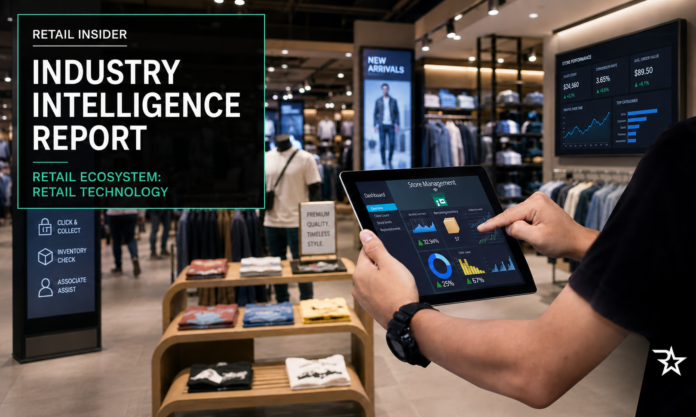
Retail Insider “Retail Technology & Payments Report”: Commerce Infrastructure Gets Smarter

Canadian retail technology is entering a new phase as artificial intelligence, payments, loyalty programs and commerce platforms become increasingly interconnected rather than operating as standalone solutions.

Craig Patterson’s Q2 2026 Retail Technology & Payments: Commerce Infrastructure Gets Smarter, published as part of Retail Insider Reports, examines the technologies shaping Canada’s retail sector through Retail Insider’s reporting, operator commentary and broader industry research. Retail Insider Reports are designed to deliver executive-level insights across major retail sectors and can be accessed through the Retail Insider Report Hub.

The report examines two closely connected segments of the retail industry. Retail Technology covers technologies enabling Canadian retail, including POS systems, artificial intelligence, ecommerce platforms, retail software, customer engagement, loyalty technology, cybersecurity, automation and digital innovation. Payments & POS focuses on payment technologies, point-of-sale systems, fintech, digital wallets, payment processing, checkout innovation, fraud prevention and retail financial technology.

General Themes

  • AI becomes core infrastructure — Artificial intelligence is moving beyond experimentation into merchandising, inventory planning, customer engagement and operational decision-making.
  • Integrated commerce ecosystems — Retailers increasingly want connected platforms that unify payments, loyalty, customer data, marketing and operations.
  • Loyalty grows in strategic importance — Loyalty programs and first-party customer data are becoming foundational business assets rather than simple rewards programs.
  • Convenience becomes expected — Delivery, click-and-collect and fulfillment capabilities are increasingly viewed as baseline customer expectations.
  • Agentic commerce emerges — AI-powered shopping agents are beginning to influence how retailers may eventually sell products and engage consumers.
  • People remain critical — Technology investments continue to outpace workforce readiness, making implementation and organizational capability key competitive factors.
  • Cross-border commerce improves — Technology continues to reduce friction for international retail, even as tariffs, regulation and geopolitical issues remain challenges.

Retail Insider Coverage

The report draws extensively on Retail Insider’s coverage of technology investments, payment innovation and evolving commerce platforms across Canada’s retail industry. Among the developments examined are Loblaw’s ChatGPT grocery integration, Rogers’ launch of POS and payment solutions for small businesses, Skip’s expanded grocery partnership with Loblaw, DoorDash’s grocery expansion with Empire, and SumUp’s entry into the Canadian market.

Retail Insider’s reporting also captures broader technology trends affecting retailers, including AWS’s AI shopping assistant for retailers, Canadian Tire’s continued use of AI and data-driven merchandising, loyalty initiatives such as Cascadia Liquor’s new program, and research examining workforce readiness, cross-border commerce and consumer attitudes toward AI-powered shopping. Together, these developments illustrate how technology is increasingly supporting every stage of the retail value chain rather than isolated business functions.

Broader Industry Coverage

The report suggests Canadian retail is entering an era in which competitive advantage depends less on adopting individual technologies than on connecting them into cohesive operating platforms. Artificial intelligence, payments, customer data, loyalty, fulfillment and marketing are increasingly converging into integrated commerce infrastructure that supports both customer experience and operational efficiency.

The findings also point toward a future where many of the most important retail technology investments are largely invisible to consumers. As payment experiences become more seamless, loyalty ecosystems expand, fulfillment networks mature and AI becomes embedded across retail operations, the technology itself becomes less visible while its influence on retail performance continues to grow. Emerging concepts such as agentic commerce suggest retailers may also need to prepare for AI participating directly in purchasing decisions alongside human shoppers.

Editor’s Take

The report argues that Canadian retail has moved beyond viewing technology as a collection of tools. Artificial intelligence, payments, loyalty, commerce platforms and operational systems are increasingly becoming interconnected infrastructure that supports nearly every aspect of retail. Retailers that can successfully integrate these capabilities alongside investments in people and organizational readiness are likely to be better positioned than those pursuing isolated technology initiatives.

Conclusion

The full Q2 2026 Retail Technology & Payments: Commerce Infrastructure Gets Smarter report provides a detailed examination of the trends reshaping retail technology, payments and commerce infrastructure across Canada. Readers can access the complete report, along with the full collection of Retail Insider Reports, through the Retail Insider Report Hub.