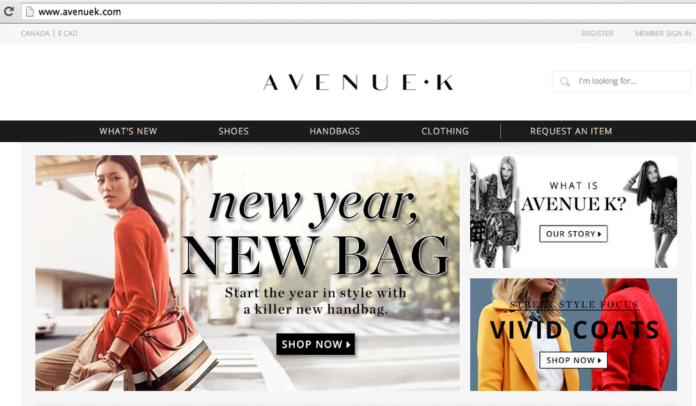
Online retail website Avenue K launched in October 2013, focussing on the Canadian market. We interviewed its co-founders to learn more about its recent success, as the retailer is already enjoying substantial growth.
For those unfamiliar, Avenue K is a website that retails unique, upscale designer products for women including ready-to-wear clothing, shoes and handbags. Collections are curated and products carried on the website are from individual sellers chosen by Avenue K. The website’s concept is based on Buyma, a Tokyo-based social fashion e-commerce website. The company has partnered with Hearst Corporation as well as social shopping leader Kaboodle, hence the “K” in Avenue K. The company is headquartered in Los Angeles, though spokesperson Susie Wall lives in Vancouver, BC. The website, which launched in October 2013, was co-founded by Alex Amin and Rafi Gordon.
The following details a few points from a very interesting conversation with Avenue K co-CEO’s Mr. Amin and Mr. Gordon:
Why shop at Avenue K instead of other retailers and websites? Avenue K focusses on upscale merchandise, and differentiates itself from other retailers with unique products and exceptional customer service. Suppliers for the website are hand-picked for their distinctively curated products: the collections are considered more diverse than those carried in department stores and boutiques. Suppliers are recruited, trained, and monitored to ship products to Canada at competitive prices.
The website also has an in-house concierge whose role is to help locate items not on the Avenue K website. The concierge, for example, was able to locate the last of a particular Céline bag for a customer in Vancouver. Once again, it appears that selection, uniqueness, and customer service are the three defining characteristics that differentiate Avenue K from its competition.
Why Canada? The website’s co-founders decided that Canada lacked the depth and uniqueness of products offered on Avenue K. In general, Canada lacks the proliferation of local online shopping available in the United States and some other countries. At the same time, online retailing in Canada is growing rapidly and Avenue K stands to make substantial sales gains as Canadians continue to embrace online shopping. Only about 5.7% of all Canadian retail sales transactions are online, and that number is expected to grow substantially over the next couple of years.
What about returns? And product authenticity? We asked Avenue K’s founders about returns and product authenticity, concerns that some shoppers may have when making online purchases of pricy designer items. Avenue K’s answer is that it accepts all returns on items purchased and it guarantees product authenticity, even if individual suppliers on the site do not.
What types of designers are carried on the site? A variety of designers are carried including Saint Laurent Paris, Alexander Wang, Givenchy, Valentino, Lanvin and many others. Designer labels can vary depending what vendors are carrying, and what sells out.
Who is Avenue K’s biggest competition? Competition comes from both both bricks-and-mortar stores such as Holt Renfrew, as well as websites such as Net-a-Porter, for example. Further competition will arise as Nordstrom and Saks Fifth Avenue open Canadian stores. Hudson’s Bay also plans to launch a comprehensive e-commerce website in the next 11 to 14 months. The company also will continue to compete based on its curated exclusivity, selection and customer service. Avenue K goes above and beyond other retail websites by offering a concierge service that sources hard-to-find items, potentially differentiating it from these and other competitors.
What kind of sales growth has Avenue K seen so far? The co-founders declined to give numbers but say that they are impressed with the website’s sales growth. It is growing by leaps and bounds and in the three months it has been operational, the company has seen sales grow by multiples. Impressively, Avenue K has over 217,000 Twitter followers.
After interviewing the company’s co-founders and examining the website, we think it has a future as a successful e-retalier to Canadians. Though competition in upscale Canadian retail will grow substantially in the next 24 months, we think Avenue K’s uniqueness and exclusivity will differentiate it from the competition.
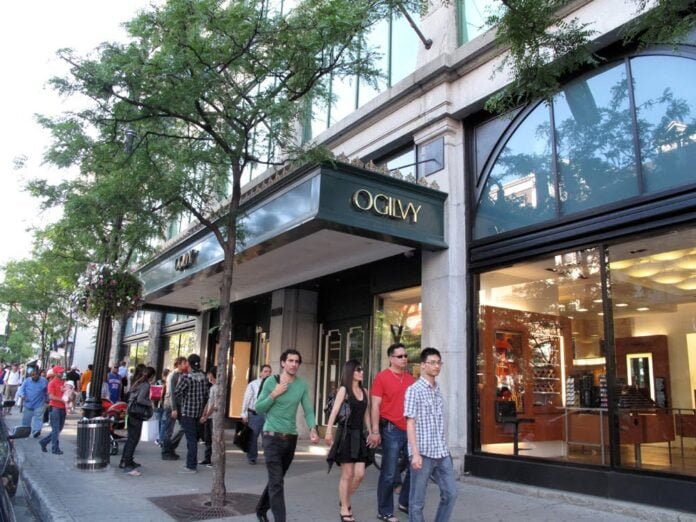
At 220,000 square feet, Montreal’s combined Ogilvy/Holt Renfrew store will be one of the largest luxury department stores in North America when completed. From our calculations, it will be the 7th-largest luxury store in North America, surpassed only by stores in New York City, San Francisco, Beverly Hills and Houston. Toronto’s flagship Saks Fifth Avenue is expected to be larger than Ogilvy/Holt’s as well, though we are currently unaware of its exact size.
Toronto’s flagship Saks Fifth Avenue store is expected to be in the 300,000 square foot range. If so, it could become North America’s second- or third-largest luxury store. We’ll report more when we get details on the size of Saks’ proposed Bloor Street store.
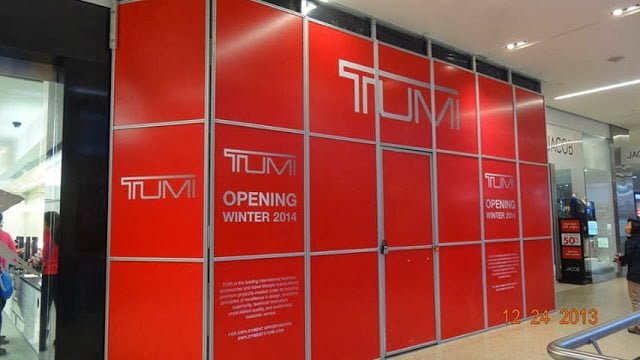
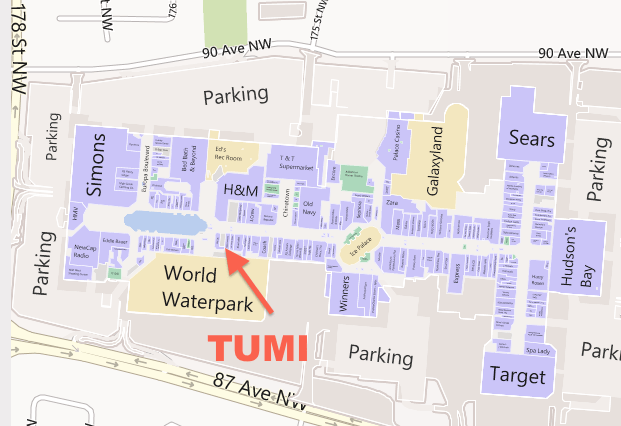
For those unfamiliar, Tumi is a New Jersey-based manufacturer, wholesaler and retailer of travel bags and accessories. It has more recently branched into the lucrative handbag retail market. Tumi has over 120 stores worldwide and over 200 shop-in-store locations.
Tumi’s first Canadian store opened in November at Toronto’s Yorkdale Shopping Centre. A Vancouver Tumi retail space opened in November as well though it’s not technically a Tumi boutique since it shares space with luggage retailer Rimowa within a store called ‘Artino‘. A Tumi shop-in-store also opened in December 2013 within a multi-brand luxury duty-free space at Toronto’s Pearson Airport (put link).
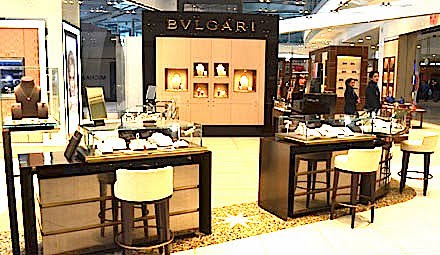
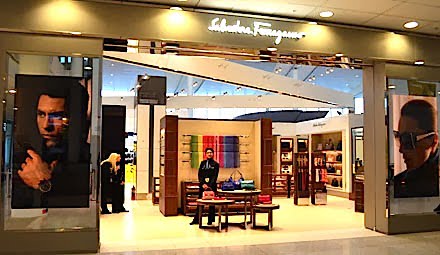
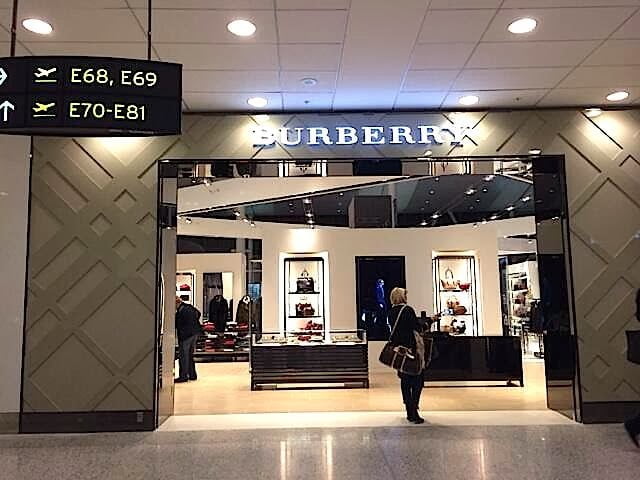
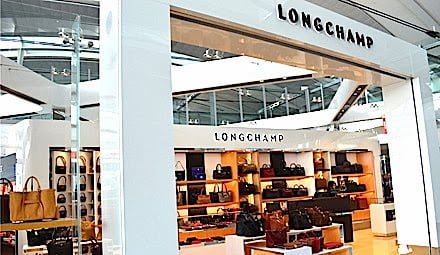
Toronto’s Pearson International Airport has opened a collection of luxury designer boutiques, located in Terminal 1, International (Non-US) Departures near Gate E76. The shops are operated by Nuance Group. Some of these are either the first in Canada or one of very few in the country. Shops include the following:
Burberry
Coach
Longchamp
Victoria’s Secret
Swarovski
Salvatore Ferragamo
Bugari
Montblanc
Gucci
Omega
Longines
Tissot
Rado
Tumi
The airport’s Bulgari shop is currently the only store location in Canada. Bulgari once had a 700 square foot store at Toronto’s Royal des Versailles Jewellers at 101 Bloor Street West. The shop closed several years ago, and the space is now occupied by a small Rolex shop.
BULGARI Pearson
Salvatore Ferragamo has two other Canadian store locations: one in Vancouver (which has been open for decades) and second location, recently opened, at Toronto’s Yorkdale Shopping Centre.
The company is also said to be scouting retail space in Toronto’s Bloor Street/Yorkville area. Omega‘s only free-standing Canadian store is currently located within the Hotel Vancouver.
A free-standing Toronto store is rumoured to be opening in 2014, and we’ll report more when we can confirm its location.
Photo by Bernadette Morra, Editor-in-Chief, Fashion Magazine [Image Source, Twitter]
Needless to say, we think the article deserves a look and we encourage you to click here to see it. For those interested in the future of Saks Fifth Avenue in Canada and how the deal came about, the article is captivating. Ms. Strauss starts by revealing that Richard Baker intends on opening the world’s second-largest Saks Fifth Avenue store at Toronto’s Yonge and Bloor Street intersection, replacing a current Hudson’s Bay store.
Ms. Strauss went above and beyond, travelling with Mr. Baker on his private jet to New York to learn more about the deal as well as Baker’s work and family life. Details of a failed Bloomingdale’s deal are provided before it is revealed that Baker really wanted to buy Saks Fifth Avenue all along.
Ms. Strauss further interviewed the ‘competition’ including Holt Renfrew President Mark Derbyshire. She also interviewed various suppliers and retail experts. She then provided excellent analysis of her research, outlining increased competition in Canadian luxury retail now that Saks and Nordstrom will open here.
Thank you, Marina Strauss, for this and other excellent retail reporting over the past year. We look forward to more outstanding journalism in 2014.
Printemps department store, Paris. Interior design and photo by Yabu Pushelberg
90 people have just been appointed to the Order of Canada, including four Canadians who are either directly or indirectly involved in the world of retailing. The winners include:
1) Jeanne Beker, fashion television personality, author, newspaper columnist and fashion brand founder,
2) George Yabu and 3) Glenn Pushelberg of international design firm Yabu Pushelberg, responsible for some of the world’s finest store interiors, and
4) Sobeys Inc. founder and arts philanthropist Donald Sobey.
For those unfamiliar, the Order of Canada is awarded each year to Canadians who are considered to have attained a high degree of merit, an outstanding level of talent and service, or an exceptional contribution to Canada and to humanity. It was established in 1967 and close to 6,000 Canadians have received the award to date.
The following is a brief description of each of the four winners:
Jeanne Beker is best known for being the host of the now cancelled television show Fashion Television. She hosted the show between 1985 and 2012. She continues to write for publications including the Toronto Star, and in 2010 she launched a clothing line called EDIT by Jeanne Beker which is carried at Hudson’s Bay stores across Canada.
George Yabu and Glenn Pushelberg’s design firm, Yabu Pushelberg, has designed some of the world’s most beautiful retail store interiors, including those at Bergdorf Goodman and Barneys in New York, Printemps in Paris and Lane Crawford in Hong Kong/China. When Lane Crawford’s former President, Bonnie Brooks, moved into a leadership role at Canada’s Hudson’s Bay, she had Yabu Pushelberg design luxury departments ‘The Room‘ in Toronto and in Vancouver. Further Hudson’s Bay (and Lord & Taylor) store renovations continue under George and Glenn’s direction.
Happy New Year from Retail Insider. 2013 was an busy year for Canadian retail news, and we think 2014 will be equally busy. Here is our top 10 list of Canadian retail news stories, with topics provided by readers. This article is by Retail Insider writer Adam Ramsay.
1) LOBLAW PURCHASES SHOPPERS DRUG MART
One of Canada’s biggest retail stories of the year involved a huge corporate takeover. On July 15th, Loblaw announced that it had acquired Shoppers Drug Mart for $12.4 billion in a cash and stock agreement. The deal was groundbreaking as the nation’s leading grocer had acquired the nation’s largest pharmacy chain. Under terms of the purchase, Shoppers Drug Mart will continue to keep its identity and will operate as a new division of Loblaw.
Loblaw also announced in the deal that Shoppers will continue to use an ‘associate owner’ system – one that helped make the chain one of the country’s top 10 most fail-proof franchises. Because of this, no store closing or rebrandings have taken place and none are anticipated. A ‘cross marketing’ of Loblaws and Shoppers signature products, services and loyalty programs has also begun and will continue to expand in 2014.
2) MASSIVE CASUALTIES AT COLLAPSE OF ILLEGALLY BUILT CLOTHING FACTORY IN BANGLADESH
In April, a devastating collapse of an illegally built clothing factory in Bangladesh killed 1,129 people and injured more than 2,500. The factory, Rana Plaza, was used by several well-known inexpensive fashion labels including Canadian retailer Loblaws for its Joe Fresh line. The disaster is now regarded as the world’s worst modern-day industrial tragedy.
The building collapse has led to international discussions over corporate and social responsibility across global supply chains. Advocacy groups have been working on awareness campaigns and accords meant to highlight and fix the terrible working conditions and treatment of Bangladeshi workers and many consumers have revolted against companies that not only have connections to the building which collapsed, but also to those who use Bangladesh factory sourcing in general.
3) TARGET’S HIGHLY ANTICIPATED CANADIAN ARRIVAL RECEIVES LUKEWARM RECEPTION
After years of rumours, market research and anticipation, Target – the #2 department store chain in the United States – made its long awaited Canadian debut in March. The company would open up 124 locations from coast to coast in 2013 and with it promised Canadians a “distraction-free” shopping experience with products, brands and loyalty programs much akin to those found south of the border.
Reaction from consumers proved to be a disappointment for Target, as supply issues in many departments left store shelves empty in a problem that is still not fully rectified going into 2014. There was also concern amongst shoppers that the prices found in the former Zellers locations were higher than their American counterparts. In September, Target had to move quickly to correct a nasty PR issue that saw veterans forced outside of their stores to sell poppies for Remembrance Day. Target Canada President Tony Fisher has been adamant that although Canadian operations have been a drag on total company earnings so far, they are committed to growth and will “continue to show positive progress as [they] continue to go forward.”
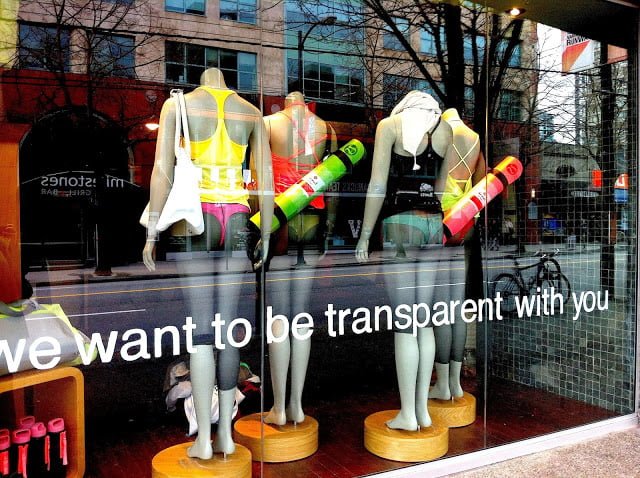
4) LULULEMON HAS TUMULTUOUS YEAR – EMBARRASSING PR MISHAPS HURT THE BRAND
Lululemon has had a year for the ages, but not the kind that they’ll necessarily want to remember. First there was the sheer yoga pants recall that began in late 2012 that cost the company $67 million in lost revenue, affecting almost a fifth of its entire inventory. In June, well-liked company CEO Christine Day, who had lead the brand for more than five years and steered the company through the above mentioned recall, announced that she was leaving.
5) SEARS CANADA LOSES CEO CALVIN McDONALD, CONTINUES TO STRUGGLE It was another rough year for Sears Canada, as in September CEO Calvin McDonald resigned as head of the company that has been struggling to both find itself and keep up with competitors in recent years. As he moved on to head up the North American operations of Sephora – a French cosmetics chain – Sears continued to actively sell back some of its most valuable leases to landlords in an attempt to secure the much needed capital just to continue its operations.
6) SOBEYS BUYS CANADA SAFEWAY CHAIN, INVESTS IN FUTURE GROWTH
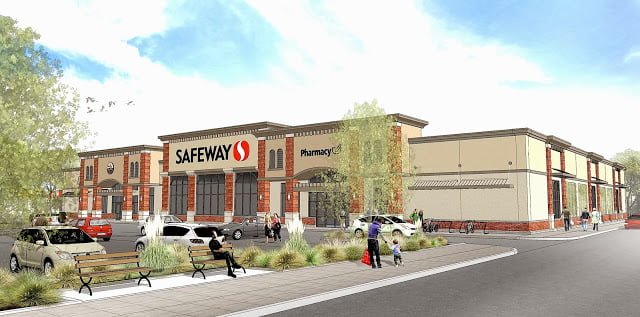
Back in June, Sobeys invested $5.8 billion in a cash deal that saw them acquire Western Canadian grocer Safeway. The deal included hundreds of locations with in-store pharmacies, plus gas stations, liquor stores, manufacturing facilities and a handful of distribution centres and related wholesale business. The Competition Bureau approved the sale in October, but would demand that Sobeys divest of 23 stores in British Columbia, Alberta, Saskatchewan and Manitoba. The move is expected to save Empire (Sobeys parent company) more than $200 million annually in operational costs.
The Safeway acquisition wasn’t the only substantial business move for the company in 2013. In addition to teaming up with Target to supply their new 124 stores with grocery items through the Sobeys distribution network, they have also finalized the purchase of the Shell gas stations in Quebec and Atlantic Canada. There’s been the sell-off of their Theatre business (through parent company Empire) to Cineplex and even the recent opening of the first of their new ‘Sobeys Extra’ format stores in Burlington, Ontario. In this fall it was announced that long-time company executive Marc Poulin – who became the President of Sobeys in June 2012 – is taking over as the head with the retirement of Paul Sobey.
7) HUDSON’S BAY COMPANY BUYS SAKS FIFTH AVENUE, PLANS TO OPEN CANADIAN SAKS STORES
The summer proved to be a very busy time for North American retail business purchases, takeovers and acquisitions. That was certainly felt by American luxury retailer Saks Fifth Avenue who had seen keen interest from several potential buyers. The Hudson’s Bay Company made its $2.9 billion purchase of Saks public on July 28 by announcing that they will open 7-8 full line Saks and up to 25 ‘Off 5th’ (discount outlet chain) locations in Canada. It was also reported that a REIT could be set up to hold Saks’ real estate assets, which are valued at $1.5 billion.
8) AMAZON OPENS UP ONLINE STORE TO CANADIAN GROCERY SHOPPERS For many, delivery drones may quickly come to mind when thinking about the kind of year Amazon had in 2013. But for Canadians, it’s a different story altogether, as the online retail giant announced its intentions in October to enter into the ultra-competitive Canadian grocery market.
Amazon launched the grocery and gourmet food section on its website on Halloween, offering more than 15,000 different food items including packaged beverages, breakfast foods, pantry supplies and snacks. All major brands are represented on the site, with very competitive pricing. This leaves many in the industry to believe that the already heated Canadian ‘grocery war‘ is about to get even fiercer, and that as a result prices will be driven down. In fact, Amazon believes it already has a pricing advantage on its bricks-and-mortar competitors, citing its ‘dynamic pricing’ model, which analyzes massive amounts of data to adjust prices in real time on certain items when necessary.
Amazon’s move has Canadian grocery retailers taking notice. Loblaws and Sobeys, for example, anticipated the increased competition earlier this year when each made substantial investments in future sustainability by taking over Shoppers Drug Mart and Safeway, respectively. With Walmart’s further expansion into the Supercentre format across the country, and Target’s 2013 foray into the ring, the Canadian grocery industry both in-store and online will no doubt remain the most competitive retail space in 2014.
9) BLACK FRIDAY AND CYBER MONDAY SHOPPING CONTINUES TO GROW IN CANADA
Black Friday and Cyber Monday, two of the biggest shopping days on the calendar in the United States, have become a major force in Canadian retail as well. This year, more Canadians than ever before shopped in-store and online during these major sales days hoping to find outstanding discounts on products and services. Mall landlords and large national retailers have led the charge, all but forcing businesses of any scale or type to offer their very best prices and offers to compete.
Although more Canadians than ever before took part in the shopping frenzies, the numbers were still lower than anticipated earlier in the year. Part of the blame is thought to be placed on the fact that savings north of the border simply weren’t as attractive as those found in the States. As an example, many retailers offered up to 80% discounts down south, while most of the sales experienced in Canada were only in the 40-50% range, which proved to be not much better than the normal savings found in a typical sale in many stores.
The general belief is that the shopping events will continue to grow in Canada, but proper marketing is needed amongst retailers, and a ‘one size fits all’ approach will not necessarily work for Canadians.
La Maison Simons CEO Peter Simons has also identified Winnipeg and Calgary as cities that are ‘on the radar’ of the company, which could see as many as two locations open up in Calgary. He went on to say in an interview with Retail Insider in September, that there is no preference as it relates to urban vs. suburban development, and that all future growth must be “gradual and intelligent” so that the company, which has existed for more than 175 years, can continue to exist for future generations. La Maison Simons currently operates 10 stores in Canada, all in the neighbourhood of 80-100,000 square feet. The highest-selling locations remain inside their home province of Quebec, at Place Ste Foy and Downtown Montreal, though this may change in 2014 as its West Edmonton Mall store continues to see significant sales growth.
*****Feel free to submit your top choices to our comments section below. You may also post to our Facebook Page and comment to our Twitter Feed.
The following article is by Erik Knight, founder of DirtSearch.org. His bio is provided at the end of this article.
Approximately 15
million US residents have their identities used fraudulently each year with a
financial loss totaling upwards of $50 billion. Consumer Reports, a nonprofit
consumer watchdog organization, issued a news statement urging online shoppers
to proceed with caution when taking advantage of Cyber Monday sales, and other
online deals, this holiday season.
The government also recently claimed that 1 out of
every 14 Americans age 16 or older was a target or a victim of identity theft,
a crime imposing a heavy emotional toll on many of its victims. Those numbers
are staggering.
According to a national household survey of
70,000 people issued by the Bureau of Justice Statistics, identity theft
resulted in $24.7 billion in financial losses last year. The crime affected
16.6 million people and fell most heavily on households with annual incomes of
$75,000 or more. In that income bracket, 10 percent of such households were
victimized.
So where should
consumers start when protecting their identities?
One background search
engine allows you to sift through public records, social media sites and
directories to yield a wealth of information in one spot, for free. The site,
called DirtSearch can easily find public records on friends, family or loved
ones. Recently, the site has expanded into the Canadian market. Consumers may
use a background search site such as DirtSearch for a variety of reasons from
inquiring about criminal records, civil suits, probate records, to property
ownership records and identity theft protection.
Erik Knight, founder
and owner of Dirtsearch.org, says that every
consumer should take preventative measures to avoid identity theft such as:
• Set Alerts on Yourself: It is important to know what information
about you exists on the web and to ensure it is accurate. Maybe you have the
same name as someone with a sketchy past or maybe someone has stolen your
identity without you realizing it. Search yourself often to know what
information is assessable about you.
• Get a PO Box that is not in the same zip code as your house: Change the
address and send all of your credit card billing statements to that PO Box so
that if someone were to steal your wallet or purse; they don’t know the zip code
associated with the credit card. This is generally required for big purchases.
Most people have the same zip code listed on their driver’s license defeating
the credit card security measure.
• Set your insurance address for the PO Box: If someone were to
steal your car at the mall this holiday season, they know you are not home and
your address is listed on your insurance card.
• Set your vehicle registration mailing address to the PO Box: For the same reason as
your insurance card, don’t give crooks more information!
• Change the deed on your house: In addition, change the to a trust that has
nothing to do with your name. Make sure they update your tax mailing address to
the PO Box as well. This will keep anyone from finding your property under your
name.
• Guard
your information online:When shopping online make sure account
numbers and passwords are not easily floating around. The most common password
is ‘password’, and that is easily hackable. Make sure you are changing your
password often and to one that is not so obvious.
• Clear your logins and passwords: If you have been working on a public computer, you
need to do this. Change logins and passwords monthly.
• Pay for online purchases with your credit card: Which has better guarantees under federal law than
your online payment services or your debit card.
• Monitor
your credit report often: Make
sure you are keeping track of your credit reports. You are entitled to a free
credit report very year from each of the three bureaus (Equifax, Experian, and TransUnion). Request one every at least twice
or three times a year, changing bureaus each time.
Taking
control of your personal identity can help avoid a world of hassle during the stressful
holiday season. If you detect fraudulent activity, contact your financial
institution immediately.
Erik Knight
Erik Knight, founder of DirtSearch.org is an identify theft expert and entrepreneur. After a number of people asked him to find
information on people their significant others were dating through public
records he wanted one place where people could go for free. Today, DirtSearch
has continued to grow and improve its accuracy and is the only free online
“Background Check” website in the world. The site is fully automated
and takes a few minutes to search what would normally take hours or days by
hand. Over 130K people a month nationwide use DirtSearch.
We’re curious to know your opinion: Do you think crime rates will go up with increased access to alcohol? How has this played out in other jurisdictions? Feel free to comment below, on our Facebook page or to our Twitter feed.
TORONTO, Dec. 19, 2013 /CNW/ – As millions of Ontarians venture out to buy beer, wine and liquor to entertain with this holiday season, some will think about the potential of making those purchases at a convenience store or gas station.
Yet new public opinion research1 shows that most Ontarians expect spikes in crime, alcohol abuse, drunk driving and underage drinking if sales are expanded.
“This is bad news for neighborhoods, bad news for families and bad news for Ontario,” said Robert Edwards, President of UFCW Local 12R24, the Beer Store workers union.
Police share concerns about convenience store and gas station sales. Last week a report2 by the Centre for Addiction and Mental Health (CAMH) showed that only 1.2% of students in grades 7-12 said they bought beer at The Beer Store; but 15.6 per cent of those students reported they purchase cigarettes at convenience stores and gas stations.
Ontario Provincial Police Association President Jim Christie said there is ample evidence3 in the U.S. demonstrating that when the number of retail outlets selling alcohol increases, violence and crime increases correspondingly.
“We support the current system which controls the sale and distribution of beer and liquor in the province of Ontario. The robust checks and balances which exist, serve the people of this province well,” Christie said.
The survey also showed that 81 per cent of Ontarians feel there is already enough retail access to alcohol in the province and 85 per cent were satisfied with the current selection of brands in those outlets.
French fashion designer Catherine Malandrino will open a second Montreal-area store to be followed by a Toronto store. Last month we reported that Malandrino’s first Canadian store opened in Montreal.
The Montreal store was Malandrino’s 11th store location worldwide, meaning Canada will be a significant market for the brand once three or more stores have opened in the country.
We’ll update you when we learn exactly when and where Catherine Malandrino’s new Canadian stores will open.