Retail Insider is streamlining its Canadian retail news from around the web to include a handful of top news stories that can be viewed quickly during the day. Here are the top stories from the past 24 hours.
New data released by Moneris, Canada’s leading commerce provider, reveals some good news for Canadian retailers from the recent Black Friday/Cyber Monday period.
While holiday sales are extending over a longer period, the allure of the Black Friday/Cyber Monday weekend remains strong, capturing significant consumer spending.
Week over week Black Friday sales were up 29% nationally while Cyber Monday sales rose by 13%.
Year-over-year, sales for Black Friday rose by 11% and increased by 10% for Cyber Monday.
Despite speculation that consumers might delay purchases for the GST tax break, Moneris’ data indicates otherwise. Strong sales could mean good things for businesses as we move into December, where some of the busiest shopping days occur as consumers make last-minute purchases and the GST break is set to come into effect.
Peter Goldsztajn
Peter Goldsztajn, Vice President, Corporate Data Analytics at Moneris: said “Heading into the holidays, data for September showed transaction volume was down year-over-year at –3 per cent, putting the pressure on Black Friday and Cyber Monday to show positive results for businesses. Based on Moneris’ data for Black Friday, transaction volume was up over +10 per cent year-over-year, driven by growth in transaction size.”
“Economic factors like elevated inflation have been top-of-mind throughout the year, leading consumers to be increasingly cost conscious. As a result, bigger basket sizes suggest shoppers took greater advantage of sales.
“While it isn’t the main event, Cyber Monday still showed strong results. Year-over-year, transaction volume was up +10 per cent, driven entirely by an increase in the number of transactions.
“With Cyber Monday rounding out the weekend of sales, higher transaction counts might be associated with consumers shopping around for items they may have missed on Black Friday, squeezing in purchases before any special sales end.
“There has been some concern that consumers would defer purchases due to the upcoming GST/HST tax break. However, significant increases for Black Friday and Cyber Monday suggest that was not the case, with holiday sales being too good an opportunity to miss.
“While businesses can feel reassured that consumers generally did not defer purchases, it will be interesting to see if spend increases once the break comes into effect. Ultimately, we will need to wait until all the data is available to get a proper understanding of the tax holiday’s impact on spending.
“As a reminder, protecting your business is just as important as growing it. It’s never a bad time to review best practices with employees so you can make the most of the holidays. Often just a few small changes to your business can have a meaningful impact.
“Keeping an eye on your terminals and using password protections can help prevent against as well as minimize losses from terminal theft. Clearly displaying return policies and contact information keeps customers informed and can minimize chargeback losses. For online transactions, using a solution like 3D Secure 2.0 shifts chargeback liability to the card issuer, further protecting your business. If you suspect fraud, call your payments processor, we’re here to help.”
Regional year-over-year trends for Black Friday and Cyber Monday
Event
Region
Total Spend
Transaction Count
Transaction Size
Black Friday
Alberta
19%
5%
13%
Atlantic Canada
18%
0%
18%
British Columbia
19%
0%
19%
Manitoba
13%
9%
4%
Ontario
2%
1%
1%
Quebec
14%
13%
1%
Saskatchewan
25%
8%
16%
Territories
-5%
2%
-7%
Canada
+11%
+4%
+7%
Cyber Monday
Alberta
17%
11%
5%
Atlantic Canada
20%
19%
1%
British Columbia
10%
8%
2%
Manitoba
2%
13%
-9%
Ontario
3%
4%
-2%
Quebec
18%
20%
-1%
Saskatchewan
2%
13%
-9%
Territories
12%
2%
9%
Canada
+10%
+10%
0%
About the data: Year-over-year data compares Black Friday 2024 against Black Friday 2023, and Cyber Monday 2024 against Cyber Monday 2023. Moneris reports measure spending in Canada across a range of categories by analyzing transaction data. The figures cited are derived from aggregated transaction data being processed by Moneris in the applicable categories.
Regional week-over-week trends for Black Friday and Cyber Monday
Event
Region
Total Spend
Transaction Count
Transaction Size
Black Friday
Alberta
+23%
+11%
+11%
Atlantic Canada
+35%
+14%
+19%
British Columbia
+34%
+13%
+19%
Manitoba
+32%
+16%
+14%
Ontario
+28%
+17%
+9%
Quebec
+32%
+21%
+9%
Saskatchewan
+21%
+3%
+18%
Territories
-3%
-1%
-2%
Canada
+29%
+16%
+12%
Cyber Monday
Alberta
+8%
+8%
+0%
Atlantic Canada
+12%
+10%
+2%
British Columbia
+12%
+8%
+4%
Manitoba
+10%
+10%
+0%
Ontario
+15%
+10%
+4%
Quebec
+12%
+9%
+3%
Saskatchewan
+8%
+9%
-1%
Territories
+6%
+0%
+6%
Canada
+13%
+9%
+3%
About the data:Week-over-week data compares Black Friday 2024 against Friday the week prior. Week-over-week data compares Cyber Monday 2024 against Monday the week prior. Moneris reports measure spending in Canada across a range of categories by analyzing transaction data. The figures cited are derived from aggregated transaction data being processed by Moneris in the applicable categories.
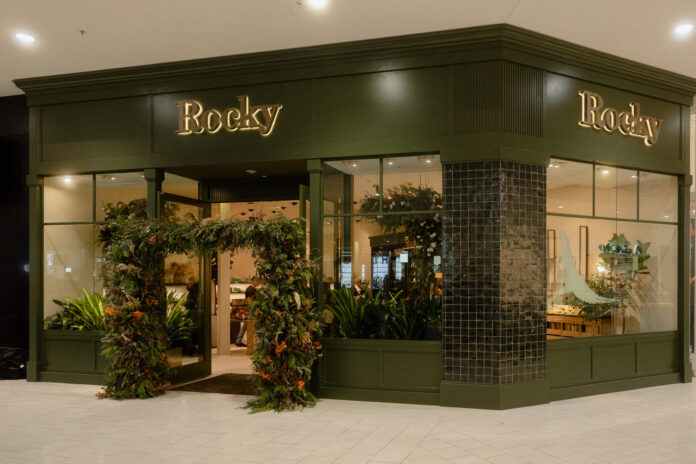
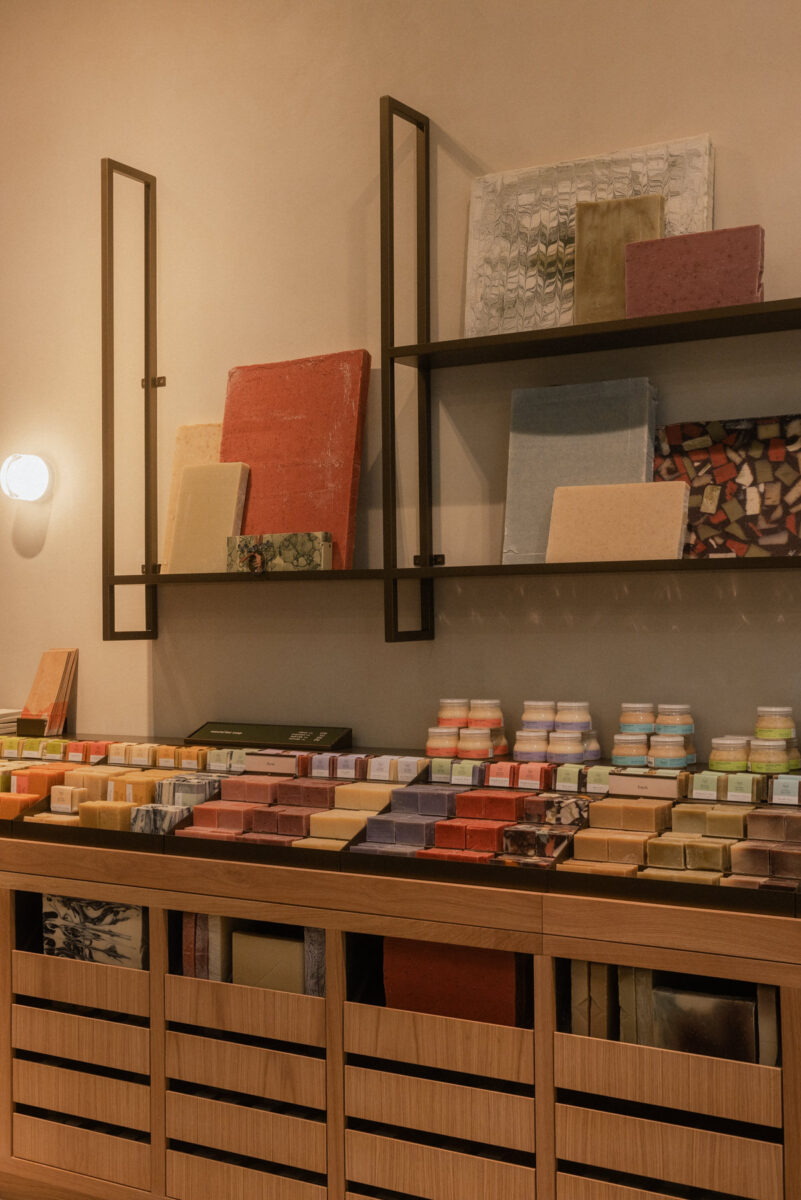
Rocky Mountain Soap Co. at SouthCentre Mall in Calgary. Image supplied
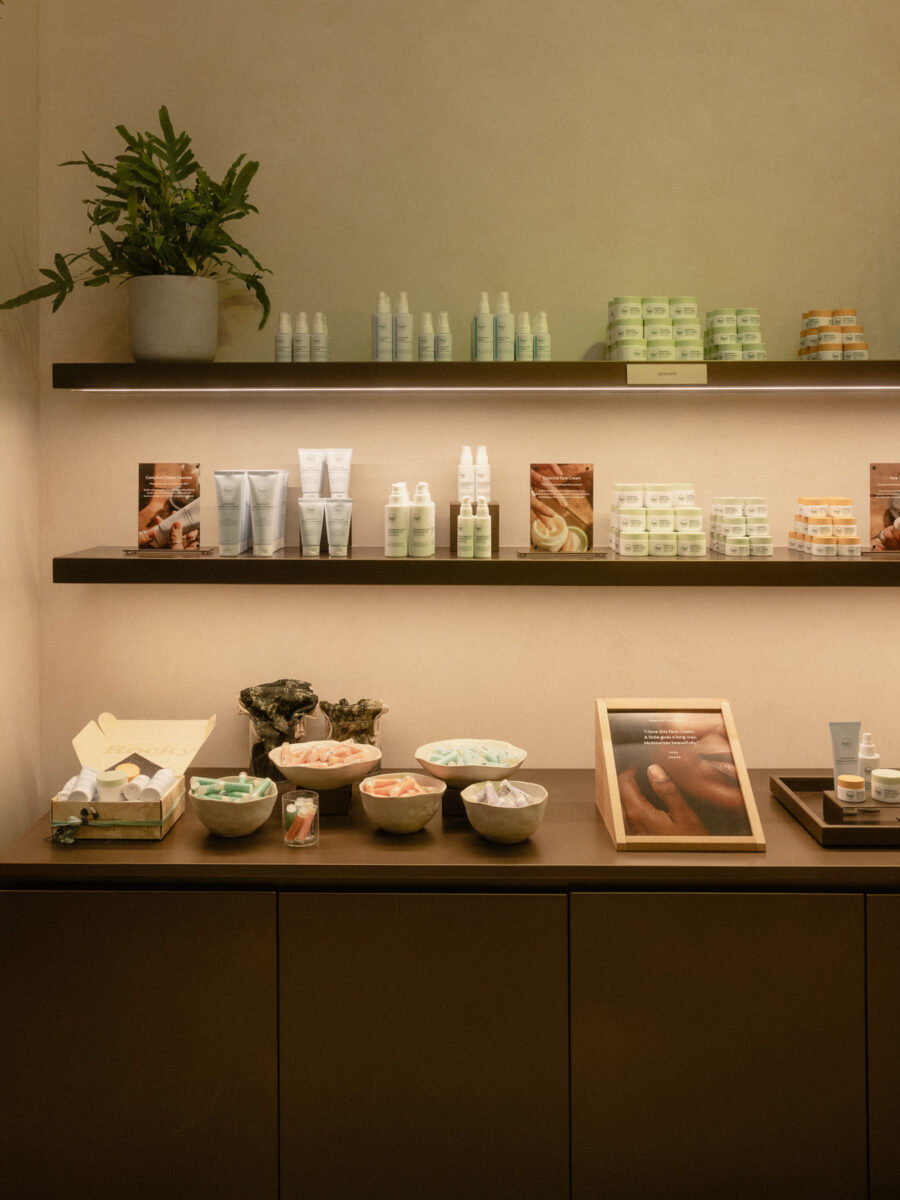
Rocky Mountain Soap Co., known for its commitment to 100% natural ingredients and handcrafted products, has opened its latest store at SouthCentre Mall in Calgary. The new location reflects an evolved vision for the brand with fresh aesthetics, a redefined identity simply as Rocky, and a deeper focus on natural beauty beyond soap.
“This is the first store to officially feature our ‘Rocky’ branding,” said Karina Birch, CEO of Rocky Mountain Soap Co. “While we’ve been using the ‘Rocky’ logo on packaging and marketing materials for about five years, this store marks the beginning of our full brand pivot, which has been in the works for quite some time.”
Karina Birch
Birch explained that the decision stems from the company’s growth into new product categories. “Soap remains one of our top sellers, but our face cream is actually our number one product, both in units and sales. Over time, the brand has evolved to include more skincare and natural beauty solutions,” she added.
A Fresh Look Rooted in Nature
The SouthCentre store boasts a striking new design anchored in Rocky Mountain Soap Co.’s philosophy of connecting with nature. The store exterior features a deep, earthy green, which Birch describes as evoking the sensation of “walking into a forest.”
“We really leaned into the connection with nature,” she said. “The green is very grounding, and when paired with lush plants and organic textures, it creates a space that feels both natural and calming.”
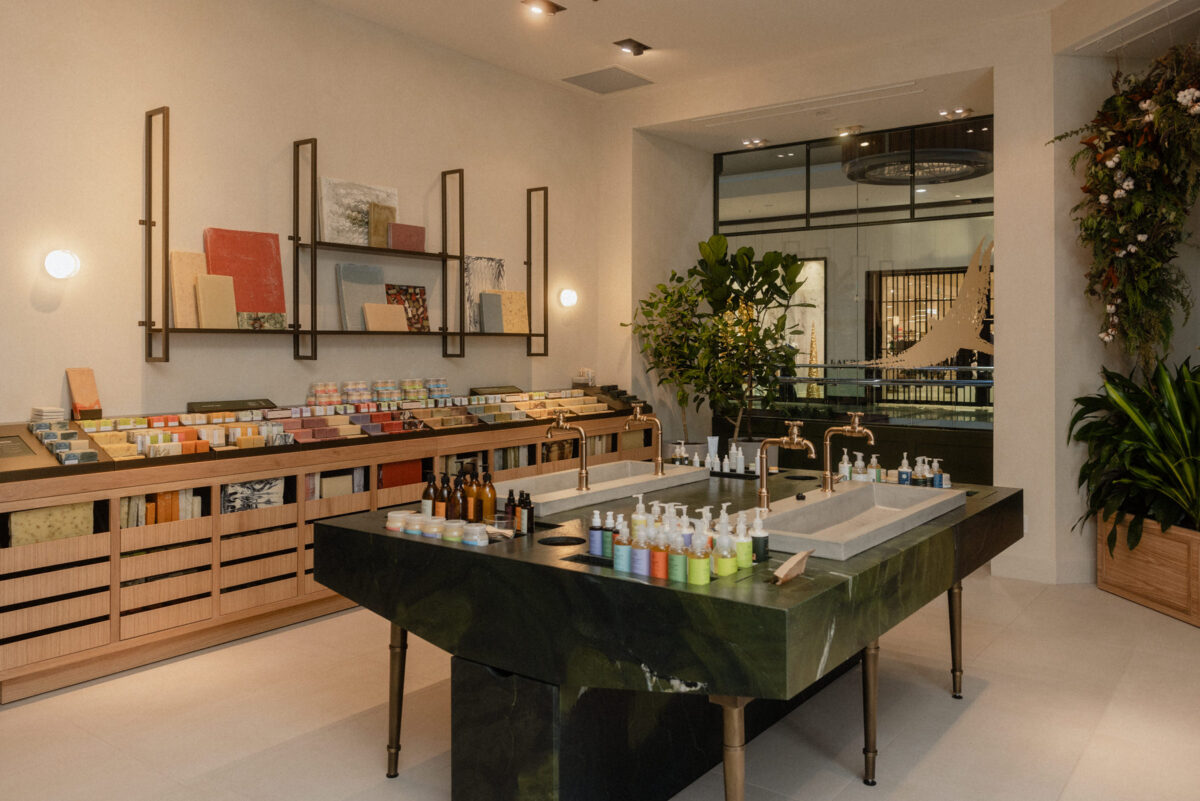
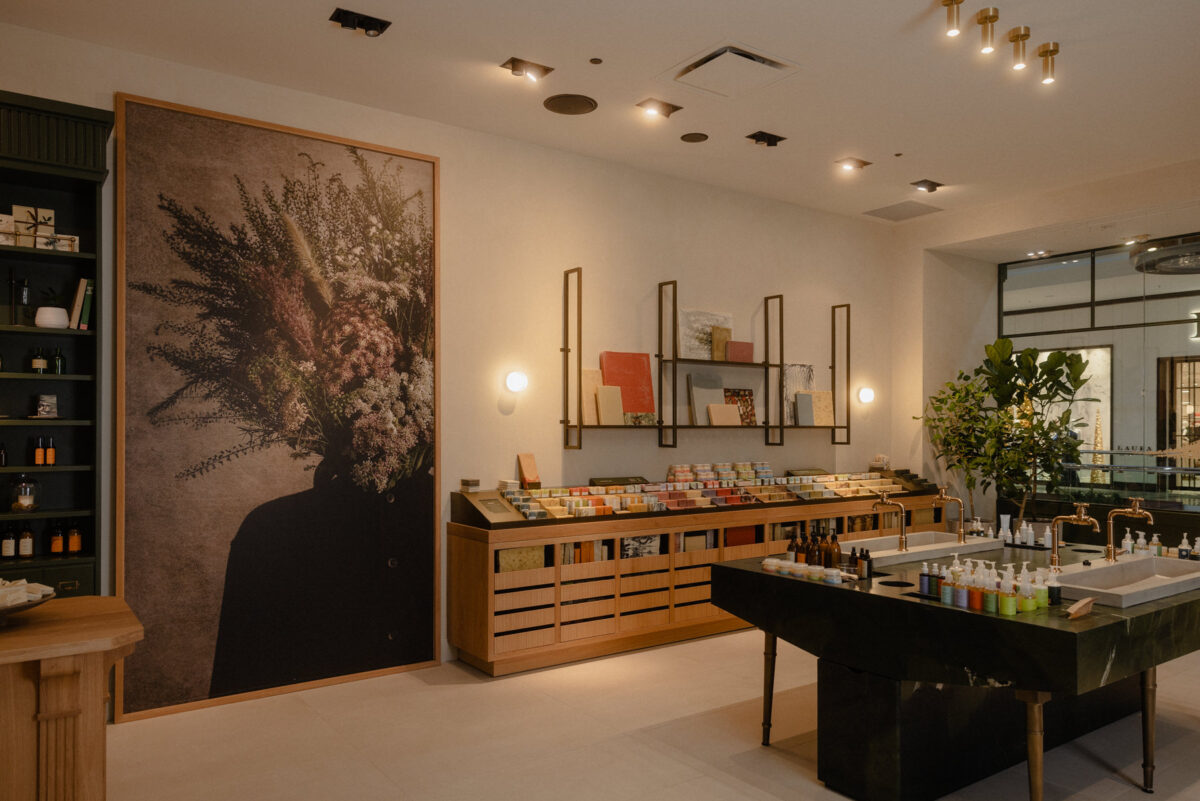
Inside, Rocky’s signature sink takes center stage. Designed as a community hub, the oversized, multi-faucet sink invites customers to experience the products hands-on.
“It’s our version of a changing room in fashion,” Birch explained. “Customers can try our products in new and unexpected ways. The sink experience allows us to demonstrate the versatility of a few everyday essentials—something our brand is really about.”
This interactive, experiential approach reflects Rocky’s belief in simplicity: offering fewer products but with multiple uses to meet modern skincare needs.
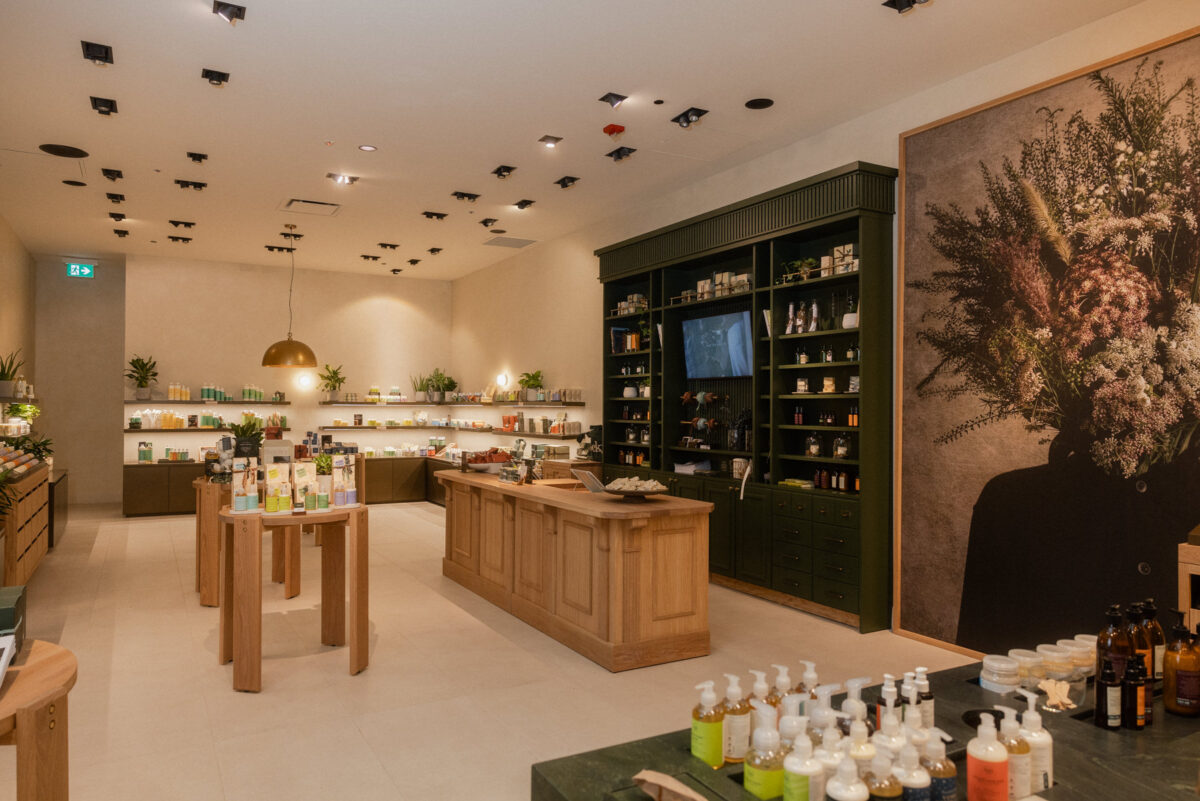
Inside Rocky Mountain Soap Co. at SouthCentre Mall in Calgary. Image supplied
Honouring Heritage, Embracing Innovation
While the rebrand looks forward, it also nods to Rocky’s 25-year history. The store features an “apothecary display,” typically positioned behind the cash desk, which pays homage to Rocky Mountain Soap Co.’s roots in natural R&D and product formulation.
Birch takes pride in the brand’s long-standing expertise. “It’s rare for a beauty company to handle all their own R&D and manufacturing today,” she said. “We’ve been formulating in-house since day one, and this new store highlights that legacy.”
With their headquarters in Canmore, Alberta, Rocky Mountain Soap Co. continues to produce all of its products in-house. “Having our lab and workshop in the same building allows our team to collaborate closely,” Birch said. “If something isn’t working, we’re only 21 stairs away from finding a solution.”
Inside Rocky Mountain Soap Co. at SouthCentre Mall in Calgary. Image supplied
Expanding the Rocky Footprint
The SouthCentre opening is just the beginning. Birch confirmed that Rocky is rolling out the rebrand across its retail network, starting with renovations and new stores.
“We’re opening two additional locations this month: a newly renovated store at CF Polo Park in Winnipeg and a brand-new location at Midtown Plaza in Saskatoon,” she said. “By next summer, we’ll open two more stores in Ontario at CF Sherway Gardens and Upper Canada Mall, bringing our total to 15 locations.”
Ontario holds particular significance for Rocky’s growth strategy. Before the pandemic, the brand tested temporary stores in Toronto, including Yorkdale, CF Toronto Eaton Centre, and the PATH network.
“We learned a lot about the Ontario customer and how their expectations differ,” Birch said. “It’s a very diverse and dynamic market, and we’re excited to bring Rocky back to Toronto with the new branding and everything we’ve learned.”
However, expansion into major city centers like the Toronto Eaton Centre is not yet on the immediate horizon. “We’re focused on sustainable, strategic growth. That means high-quality store experiences in great locations,” Birch added.
Oberfeld Snowcap is representing Rocky Mountain Soap Co. in its expansion.
Inside Rocky Mountain Soap Co. at SouthCentre Mall in Calgary. Image supplied
E-Commerce and Future Plans
While brick-and-mortar remains a priority, Rocky Mountain Soap Co. is also refining its e-commerce strategy.
“E-commerce and physical retail feed into each other,” Birch explained. “Ontario is already our second-largest online market, so we know there’s demand. But we believe there’s still untapped potential in our online channel, and that’s a focus for us moving forward.”
Approximately 20% of Rocky’s online sales currently come from the U.S., though Birch says the company is not actively pursuing that market yet. “For now, U.S. sales are about retention—serving customers who discover us here in Canada. Once we’ve achieved everything we want domestically, we’ll turn our attention there.”
Image: Rocky Mountain Soap Co.
Sustainability and Innovation
Sustainability remains central to Rocky Mountain Soap Co.’s ethos, with new product development driven by this commitment.
“Our focus is on simplifying routines and innovating with sustainability in mind,” Birch said. “We’re working toward zero waste and constantly looking for ways to reduce our environmental footprint—from ingredients to packaging and manufacturing.”
The brand’s Rocky Returnables program exemplifies this approach. Customers can return 1-litre bottles of liquid soap, shampoo, and conditioner to stores for cleaning, sanitization, and reuse—a process that diverts significant amounts of plastic from landfills.
“Quality doesn’t have to mean indestructible,” Birch said, referencing the beauty industry’s reliance on long-lasting plastic packaging. “We believe in intentional design and thoughtful choices—whether that’s using bio-plastics derived from sugarcane or eliminating unnecessary secondary packaging.”
A Quarter-Century of Craftsmanship
As Rocky Mountain Soap Co. prepares to celebrate its 25th anniversary in January, Birch reflects on the brand’s journey.
“When we bought the business in 2000, it had one employee and $86,000 in sales,” she said. “We were in our early twenties and running mostly on blind optimism.”
Today, Rocky produces over 350 products, all made by hand in Canmore. “We’re proud to have stayed true to our roots while evolving into something bigger,” Birch said. “The mountains inspire everything we do. They remind us to stay connected to nature and keep our products simple, fresh, and effective.”
What’s Next for Rocky?
With its SouthCentre store setting the tone, Rocky Mountain Soap Co. is well-positioned for its next chapter. The brand’s emphasis on connection—to nature, to community, and to its heritage—continues to resonate with customers seeking natural beauty solutions.
“We’re optimistic about the timing,” Birch said. “It feels like a great opportunity to bring something new and exciting to Canadian retail.”
And as Rocky expands across Canada, Birch remains focused on the bigger picture. “For us, it’s always been about everyday essentials that connect people to nature. That’s what Rocky stands for.”
Inside Rocky Mountain Soap Co. at SouthCentre Mall in Calgary. Image suppliedInside Rocky Mountain Soap Co. at SouthCentre Mall in Calgary. Image supplied
Retail Insider is streamlining its Canadian retail news from around the web to include a handful of top news stories that can be viewed quickly during the day. Here are the top stories from the past 24 hours.
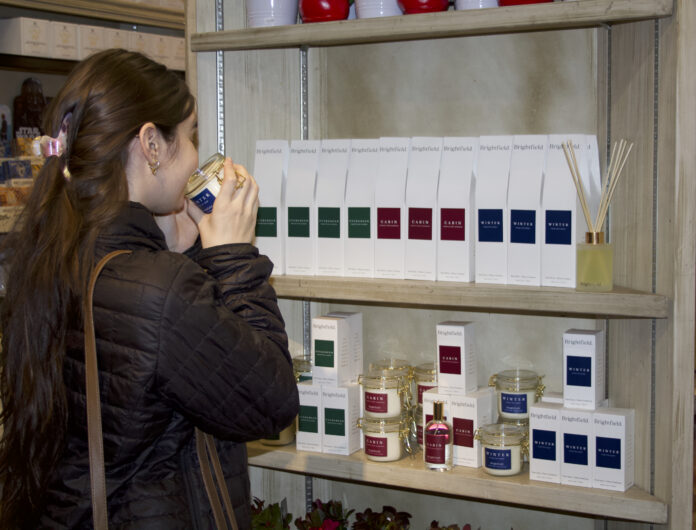
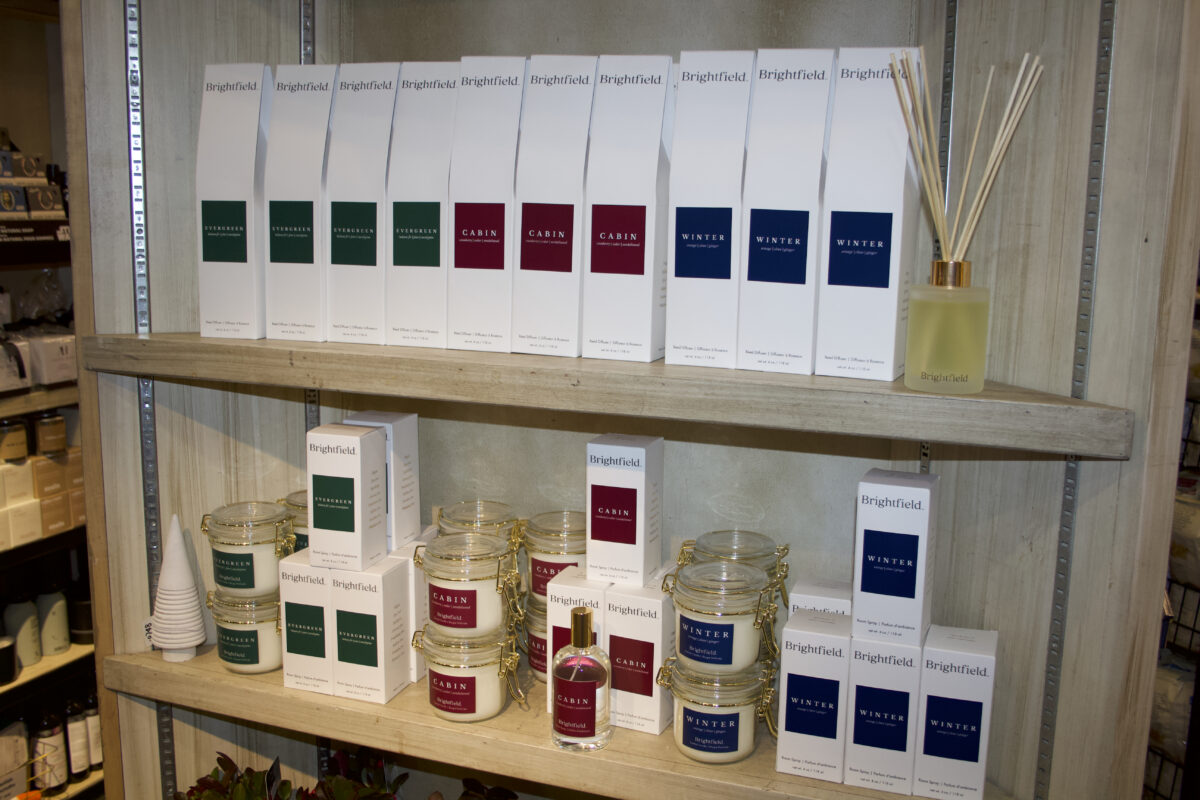
Brightfield, Toronto’s handcrafted, non-toxic fragrance candle brand, is now available at Summerhill Market as it expands its presence in the retail marketplace.
Known for its clean, functional fragrances and elevated design, Brightfield is a complementary addition to Summerhill Market’s curated selection of premium goods.
Brightfield’s candles are thoughtfully crafted to transform everyday moments. Each candle is made in small batches in Toronto’s Beaches neighborhood, featuring vegan, carcinogen-free, and cruelty-free formulas.
“I used to be a director of HR in a tech company. And had won awards for Canada’s top employer five years in a row and had grown a company from 15 to 300 employees. So it was really focused on making it an amazing place to work,” she said.
“But I also had a dream of helping people just spark joy in their every day. And I wanted to create products that were clean, non-toxic, but just also really beautiful, something that would make them happy. One day on my morning commute, I just asked myself, what would I do if I couldn’t fail? And it was this dream that had been in the back of my head.
“I just started working towards that, eventually quit my job and started working on it full time.”
Brightfiled started online and doing a few pop up markets.
“I did the One of a Kind show ( in Toronto) and had won best booth at the One of a Kind show last year.”
Gjiri said she’s excited about being in the Summerhill Market.
Products at the Summerhill Market
“They are an amazing grocer. They have a really long history, I believe that they’ve been around for 70 years. They are kind of like an iconic grocery store, independent grocery store in Toronto. But they are growing where a lot of grocers are facing challenges. They are more of a higher end grocery store that’s been able to be really successful and grow actually. They’ve been doing a lot of expansion in the past few years. And they now have seven locations and they’re very well loved and people are very loyal to them. So we’re very excited to be there.”
She said she would love to have her own store in the future.
“I think maybe in the future I would love to have a studio and shop combination where it could really be like a destination for people to go,to take their families on the weekend, to get gifts. Maybe one day,” she said.
Gjiri said Second Harvest is Canada’s largest food rescue charity and for every candle sold Brightfield donates to Second Harvest. One candle equals three meals donated.
“We do this all year round. We’ve done it for the past year and a half. So they’re like a long term partner with us. We also volunteer as well when we can to help them sort food that then goes on to be donated. But they’re, um, our charity partner and we are very proud to support them, especially, you know, in the last year over one million more Canadians have had to use their their services now more than ever it’s needed the most so we’re very happy to donate to them from every candle sold.”
Square One shopping centre in Mississauga, Ontario. Photo: Oxford Properties
As Canada’s economy shows signs of stabilizing with easing inflation and potential rate cuts, the retail sector is navigating a mix of opportunities and challenges, says an executive for real estate company Colliers.
While consumers remain cautious, there are notable shifts in the market – from booming categories like food and beverage to challenges such as declining employment and spending in certain segments. These trends reflect the evolving dynamics shaping the retail industry.
“Retail sales are not dropping but they haven’t really gone up and then we’re seeing these stories about the government is really going to pull back on immigration. They’ve kind of gone too far, they have to reduce it in the next couple years. That all sounds negative, but I just went to this big industry conference and on the investment side retail is kind of rocking and rolling.
“There’s a lot of interest in retail. There’ve been a lot of deals. There’ve been a lot of major enclosed malls sold . . . Altus does this investment survey, what do you want to buy? What do you want to sell? And the number one thing people wanted to buy wasn’t apartments, it wasn’t suburban warehouses. It was grocery-anchored retail because it’s just seen as risk-free. There’s no downside. You have a tenant who’s going to be there forever. You’re going to be fully leased all the time.”
Jacobs said that on the investment side people seem pretty positive on retail.
“The thing about retail is we kind of don’t build it anymore. It takes so much land that it’s so expensive. If you have an existing asset, then there’s no competition. Nobody’s going build a better mall right down the road from you, and then you lose a lot of value. If you have one right now, you’re sitting there, you’re looking at a growing population, and even if retail sales are flat, you’re still in a pretty good situation,” added Jacobs.
Jacobs said there are some positive things happening like inflation coming down.
Foot traffic healthy in Canadian shopping centres
The food and beverage industry is one segment of the retail sector that is thriving with more restaurants opening and more brands coming to Canada. The foot traffic for coffee shops, donuts, pizza, burger joints is up for all of those.
Jacobs said much of the recent population growth in Canada has been young people, fueling the growth in the food and beverage industry.
And while online retail sales have grown in recent years, suggesting physical stores might be in trouble, that’s not happened.
“The death of the mall was way overstated and it’s certainly back,” said Jacobs.
“There’s more people walking in the mall and coming through the door and maybe they’re not spending quite as much . . . . but if you’re a retailer it still translates to sales and interest. The thing we’re kind of keeping an eye on is there have been all these announcements about we’re really going pull back on immigration and I completely understand why in terms of it’s causing a strain on infrastructure and healthcare and all the traffic and everything but we’ve gotten pretty used to the population just grows gradually and so that if you’re in grocery or food it’s just like every year I wake up and there’s more customers and more people who need me. And it’ll be interesting to see what happens when that maybe stalls for a while.”
Artificial Intelligence (AI) and retail. Image: redresscompliance.com
Consumer trust has slipped to a record low with 81% of Canadian consumers trusting companies less than they did a year ago, according to Salesforce.
With Salesforce predicting $19.78 billion in sales for November and December in Canada (+2% year-over-year), retailers need to understand the Canadian shopping mindset to deepen loyalty and drive more sales.
AI has the potential to bridge this trust gap. In fact, 66% of Canadian consumers believe that advances in AI make trust even more important. There’s an opportunity for brands to win consumers back.
A new Salesforce report says over half of all generations are comfortable with AI agents creating more personalized shopping for them and 25% of Canadian consumers – slightly more among millennials [28%] – would work with an AI agent instead of a person if it meant they would receive faster service.
“We believe that Cyber Week sales will reach $311 billion accounting for 23 per cent of the purchases in this year. And $61 billion of those sales are going to be impacted by AI. So, AI and agents will influence, I believe, about 19 per cent of the orders,” he said.
“Technology, specifically agentic AI, it’s not just offering people and businesses tools for humans to do the work. The technology is providing intelligence and frankly, scalable digital labor that performs the work autonomously. So this is a really important inflection point in terms of AI and why consumers perhaps understand the power of it.
“Instead of having to wait for human input. How long are you waiting on a call or a chat or whatever the channel is waiting for a human to respond to you for a service inquiry, agents can now analyze the information, make decisions, take actions and do all of that independently from us and then adapt and learn as they go.”
Here are some key highlights of the Salesforce global study of more than 15,000 consumers, including 1,004 consumers in Canada.
Nearly one third (30%) of Canadian consumers would work with an AI agent instead of a person to avoid repeating themselves.
Transparency is key: 73% of Canadian consumers want to know if they’re communicating with an AI agent.
The opportunity is greatest among millennials in Canada: 24% of Millennial consumers say they’d be comfortable having an AI agent shop for them, compared to Gen Z (17%), Gen X (16%) and baby boomers (12%).
49% of Canadian consumers say poor customer service experience will stop them from making a repeat purchase from a company.
38% of Canadian consumers say that inconvenience, such as a difficult return process or clunky purchase experience, will cause brands to lose them.
65% of Canadian consumers prefer using fewer touchpoints to get information or complete a task.
Afshar said digital agents are responding to people in real time. They are monitoring stock levels. They’re looking at reordering inventory, coordinating with shipping providers and they’re doing all of this without human intervention.
Consumers are experiencing this.
The most indispensable apps that they have are powered by AI.
Consumers expect value at the speed of need
He said digital natives expect value at the speed of need and businesses need to recognize that they don’t get to dictate the speed it’s the customers.
“There’s a real opportunity for companies to win back the trust. This is the lowest trust we’ve recorded in the survey in eight years of doing this research. And Canadians have a higher expectation than the globe. 81 percent of the Canadian consumers have less trust for companies than they had a year ago. Globally, that number is 72. So Canadian consumers are almost 10 points more dissatisfied with trust and 72 per cent of the Canadian consumers feel companies are reckless with the customer data. Globally, that number is 65. So, almost in every dimension, the Canadian results stood more of an expectation than the rest of the globe,” added Afshar.
“That’s something to take note of. I thought that was interesting. Now, it doesn’t surprise me. Canada’s consistently ranked the smartest country in the world. I think 60 per cent of adults have college degrees. That’s number one in the world, if I’m not mistaken. And you also have 92 per cent internet connectivity. I think the U. S. is 89 per cent.. So you’re the most intelligent, most connected.”
Research found that 30 per cent of Canadian consumers would work with an AI agent instead of a person just to avoid repeating themselves.
“This is very new technology and yet one in three Canadians already prefer to work with the agent versus a person. A quarter of the Canadian consumers, and slightly more if you’re a millennial, there was a 28 per cent if you’re a millennial, would work with an AI agent instead of a person if it meant they would receive faster service,” he explained.
“In a hyper connected, knowledge sharing economy, especially Canadian economy, the most connected, the smartest and pioneers in AI, I would say that delivering value at the speed of need matters and the currencies that matter for business leaders is speed, it’s scale, it’s personalization, it’s intelligence, and ultimately shared success I would say is an important core value. You as a company have to make sure your customers are winning. You’re giving them back time, you’re giving them back convenience, you’re giving them back value, And you’re doing that based on their expectations.”
The Mastercard Economics Institute (MEI) has released its global outlook report for 2025 – highlighting what’s trending for consumers, what matters regionally, and what themes connect globally.
Key highlights for the Canadian economy include:
Moderate Economic Growth: MEI forecasts Canada’s real GDP growth to increase modestly to 1.8% in 2025, up from 1.6% in 2024;
Impact of Interest Rates: With the Bank of Canada (BOC) expected to continue cutting interest rates, reaching 2.75% by April 2025, the relief from high debt payments should help alleviate household financial stress, improve job growth, and stimulate consumer spending;
Tax Relief and Business Investment: Recently announced tax-relief measures are expected to support consumption growth in early 2025;
Population Growth Trends: Slower population growth may dampen overall economic activity, but it could also help reduce shelter inflation and support real wage growth, providing a boost to consumer purchasing power.
“In 2025, MEI expects the Canadian economy to grow at a moderate pace as the benefits of lower interest rates and easing inflation offset the effects of slower population growth,” said the report.
“Lower interest rates should alleviate household stress by reducing the burden of debt payments outpacing income growth. The economic trajectory differs across provinces, driven by housing conditions.”
“MEI expects that recently announced tax-relief measures will boost consumption growth in the first half of 2025. Lower rates are expected to promote job growth, stimulate consumer spending and revive activity in the housing market. Business investment is also likely to rise, supported by lower interest rates and the anticipated pickup in economic growth.
“However, MEI expects these tailwinds to be partially offset by elevated debt burdens, slower population growth and heightened policy uncertainty. Notably, Canada’s GDP per capita has declined, signaling underlying economic challenges.”
The report said the housing market remains a focal point due to the strain from elevated household debt.
“With debt payments outpacing income growth, consumers continue to feel the squeeze of past interest rate hikes. MEI’s analysis of SpendingPulse insights, which track in-store and online retail sales across all payment methods, reveals robust consumer spending growth per capita in Quebec and the Maritimes between the first half of 2022 and the first half of 2024, contrasting with softness in BC and Ontario,” said the report.
“This divergence stems from lower household debt-to-income ratios in Quebec and the Maritimes, while higher home prices in BC and Ontario have led to sharper increases in mortgage payments. Although lower rates should boost consumer spending overall, not all households will benefit equally. Consumers with five-year fixed rate mortgages renewing in 2025 will likely face higher debt payments, further limiting their spending power.
“Beyond monitoring potential shifts in trade policy with the U.S., Canada’s largest trading partner, MEI is focused on population growth trends. While a slowdown in population growth may weigh on aggregate economic growth, it could also reduce pressure on shelter inflation. This would support continued real wage growth, boosting consumer purchasing power.”
With Uber One, Canadians can now enjoy $0 Delivery Fees and five per cent off eligible McDonald’s orders from more than 1,300 locations across Canada, according to a news release.
Lola Kassim
“Our expanded partnership with McDonald’s is a double win for Uber One members and McDonald’s lovers alike,” said Lola Kassim, General Manager of Uber Eats in Canada. “With Uber One, Canadians can go anywhere, get anything, and save along the way through Canada’s number one delivery platform. Now, Uber One members across the country can enjoy even more value while satisfying their cravings.”
Dan Logan
“McDonald’s has always been the go-to destination for great-tasting, affordable food and we’re committed to bringing Canadians even more ways to save on their favourite menu items every day,” said Dan Logan, Head of Delivery, McDonald’s Canada. “Through our partnership with Uber Eats, we’re giving Uber One members more opportunities to get the food they love delivered at prices that hit the spot.”
The news release said Uber One is a unique membership program that provides Canadians with a range of benefits, including savings on rides and orders. For $9.99 per month, members enjoy $0 Delivery Fees and five per cent off orders of $15 or more from eligible restaurants, as well as discounts on eligible grocery and non-restaurant store orders with a minimum purchase of $40.
The company said its mission is to create opportunity through movement. Co-founded by Calgary entrepreneur Garrett Camp, it started in 2010 to solve a simple problem: how do you get access to a ride at the touch of a button? More than 52 billion trips later, the company is building products to get people closer to where they want to be. By changing how people, food, and things move through cities, Uber and Uber Eats open up the world to new possibilities.
In 1967, Canadians welcomed the first McDonald’s restaurant to Richmond, British Columbia. Today, McDonald’s Restaurants of Canada Limited serves close to three million guests every day. In both franchised and corporate-owned restaurants, nearly 100,000 people are employed from coast-to-coast, and more than 90 per cent of McDonald’s 1,400 Canadian restaurants are locally owned and operated by independent franchisees. Of the almost $1 billion spent on food, more than 85 per cent is purchased from suppliers in Canada.
Holt Renfrew at 50 Bloor St W in Toronto. Photo: Craig Patterson
After nearly a decade apart, Holt Renfrew has brought its menswear department back to its flagship store at 50 Bloor Street West in Toronto. This marks a significant milestone, ending the chapter of the standalone men’s store at 100 Bloor Street West, which opened in 2014.
Sebastian Picardo, President and CEO of Holt Renfrew, highlighted the importance of this decision: “The new ON3 space transforms the Bloor Street flagship into a true one-stop shop,” he explained. “It’s not just about shopping—it’s about creating connections between style, culture, and community.”
ON3: A New Vision for Inclusivity and Design
Holt Renfrew CEO Sebastian Picardo at Holt Renfrew Calgary (Image: Mario Toneguzzi)
The third floor of Holt Renfrew, now branded as ON3, is a bold reimagining of luxury retail. Designed by Studio Paolo Ferrari in collaboration with Gensler, ON3 blends menswear and womenswear in a unified, fluid shopping experience. The design emphasizes warmth, inclusivity, and self-expression, while incorporating sustainable elements throughout the space.
“We wanted to create something that feels quintessentially Canadian but also globally relevant,” said Paolo Ferrari. “The ON3 floor reflects our commitment to balancing boldness with warmth, creating a space that’s as inviting as it is innovative.”
Key features of the ON3 floor include distinct zones for men’s and women’s fashion, the Denim Lab where both collections are displayed together, and interactive installations that enhance the shopping experience.
Paolo Ferrari, Founder of Studio Paolo Ferrari
Details About Key Brand Offerings
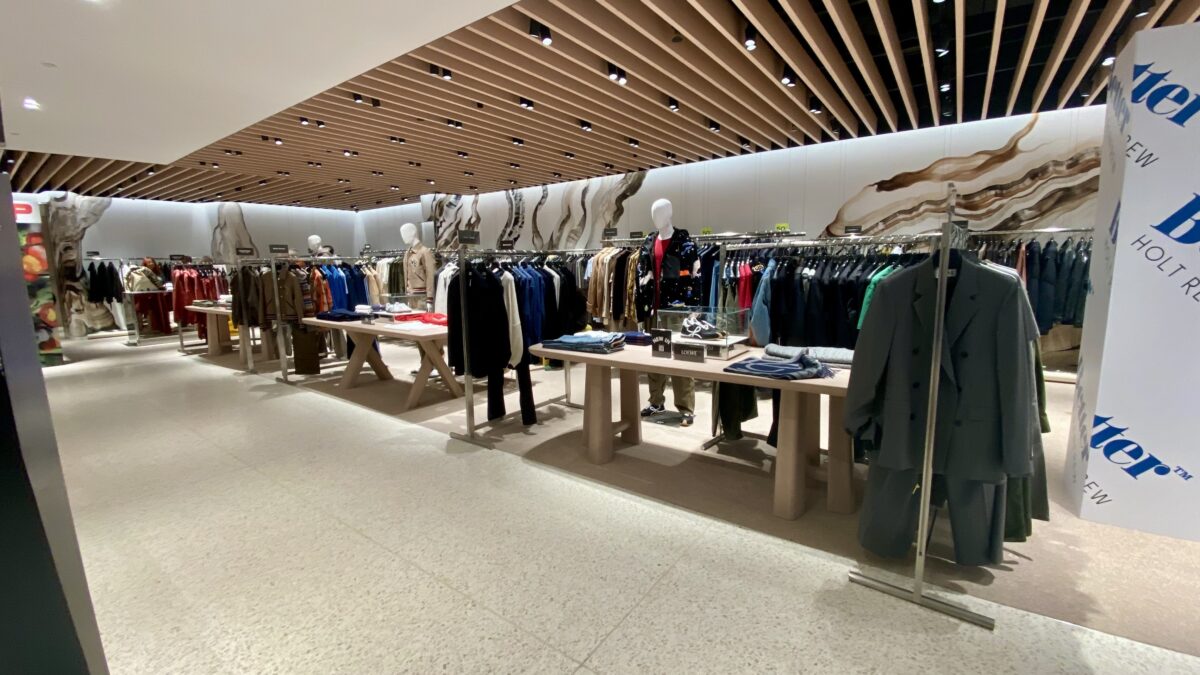
ON3 features a carefully curated selection of luxury and contemporary brands designed to cater to a broad range of customers. The new men’s department includes luxury labels like The Row, Loewe, Rick Owens and Givenchy, as well as contemporary favourites such as Theory, Frame, and Vince. Tailoring services, led by Canadian brand Jack Victor, are a cornerstone of the department, offering bespoke pieces for discerning customers. And unlike other Holt Renfrew stores, the new Bloor men’s department lacks brand hard-shop concessions, instead focusing on retail.
Picardo underscored the importance of appealing to different price points and tastes: “Our customers want variety—they’re looking for extraordinary brands that are both aspirational and accessible. SKIMS is one such example, offering inclusive sizing and design that resonates with today’s shoppers.”
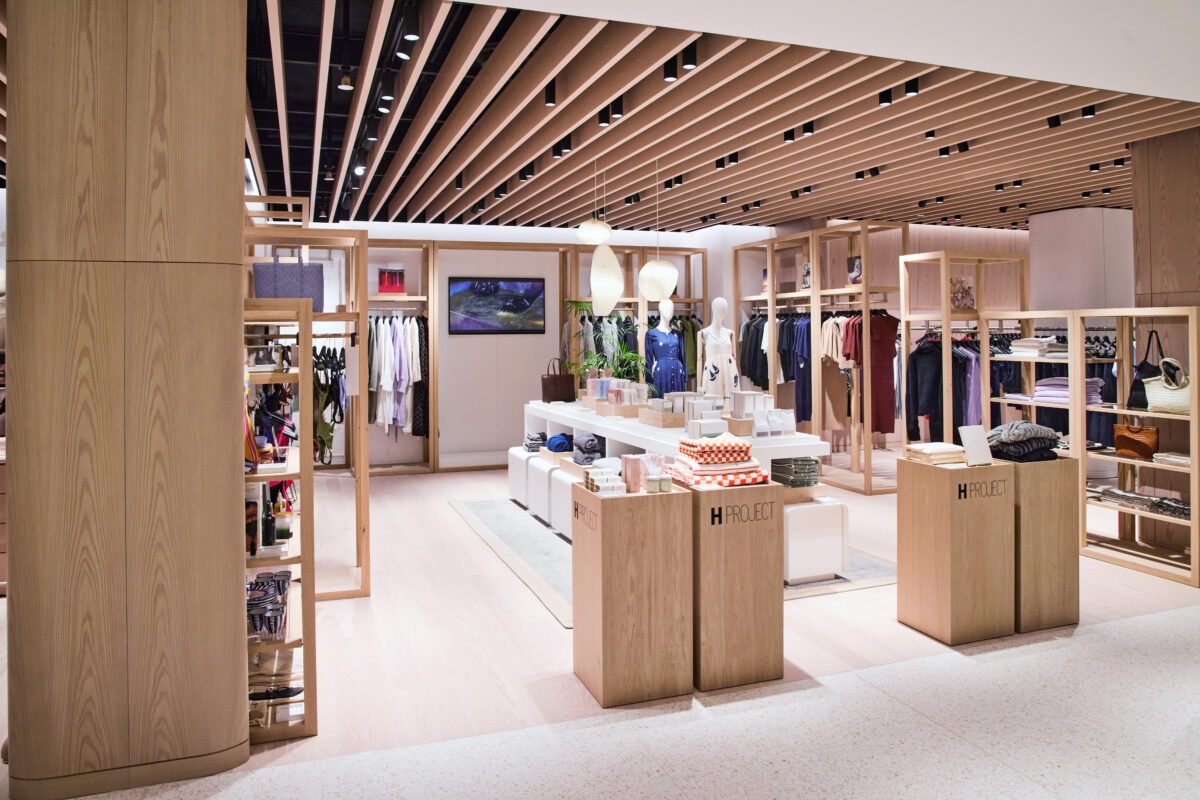
SKIMS, which recently launched its men’s line exclusively at Holt Renfrew in Canada, has become a standout brand on ON3. Alongside SKIMS, the floor includes the H Project, featuring sustainable and socially responsible products, and the popular women’s contemporary lines from brands such as Alexander Wang and Ganni.
Sign leading to the third floor of Holt Renfrew at 50 Bloor St W in Toronto. Photo: Craig PattersonON3 ribbon cutting, left-to-right. Xia Vanisouvong, Assistant General Manager, Holt Renfrew Bloor Street. Sebastian Picardo, President, and CEO, Holt Renfrew. And Ralph Roach, Divisional Vice President, General Manager, Holt Renfrew Bloor Street. Photo: Holt Renfrew
Creating Magnetic Moments in Retail
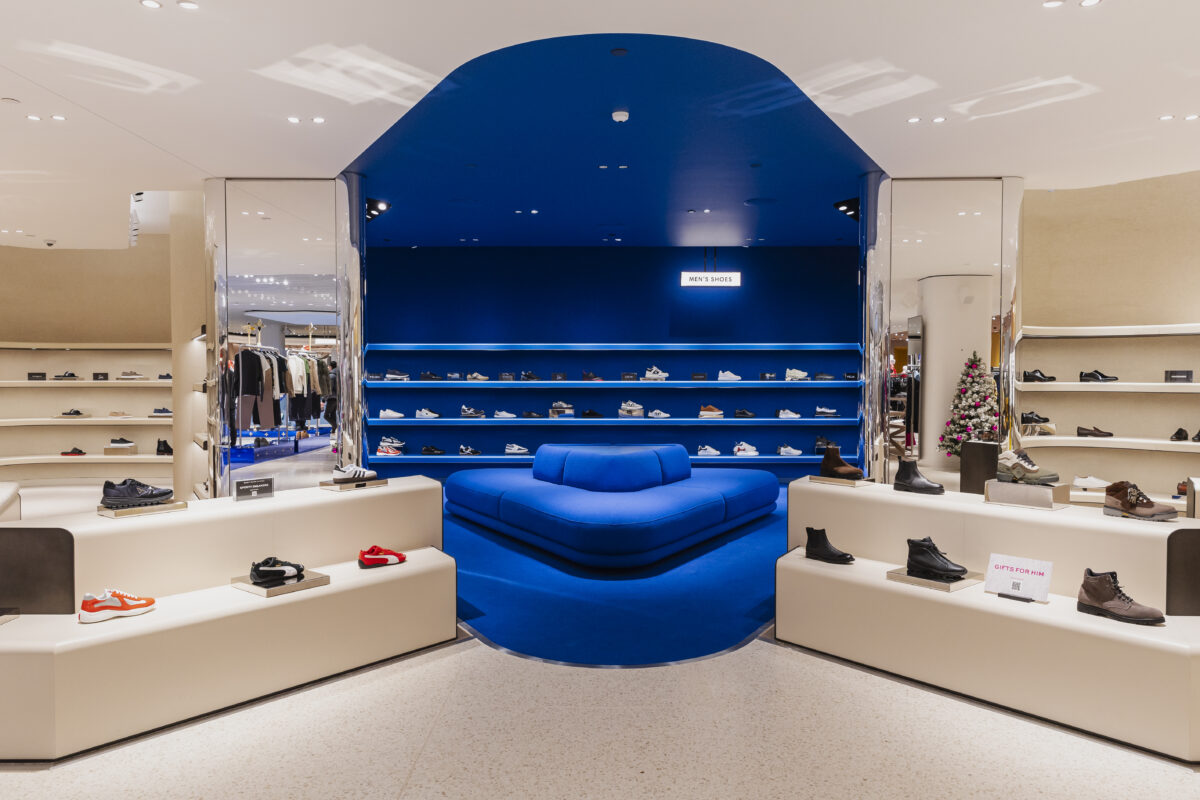
ON3 is designed to be more than just a retail space—it’s an experience. From the cobalt blue shoe section to the serene wood-panelled walls, every detail invites exploration. The use of contrasting elements, described by Ferrari as “radical balance,” creates a sense of discovery and energy.
“Customers don’t just want to shop—they want to feel something,” said Tse. “ON3 is about creating those magnetic moments that draw people in and keep them coming back.”
Interactive elements, such as the Denim Lab and digital displays, add layers of engagement, while modular fixtures ensure the space remains dynamic and adaptable for future activations.
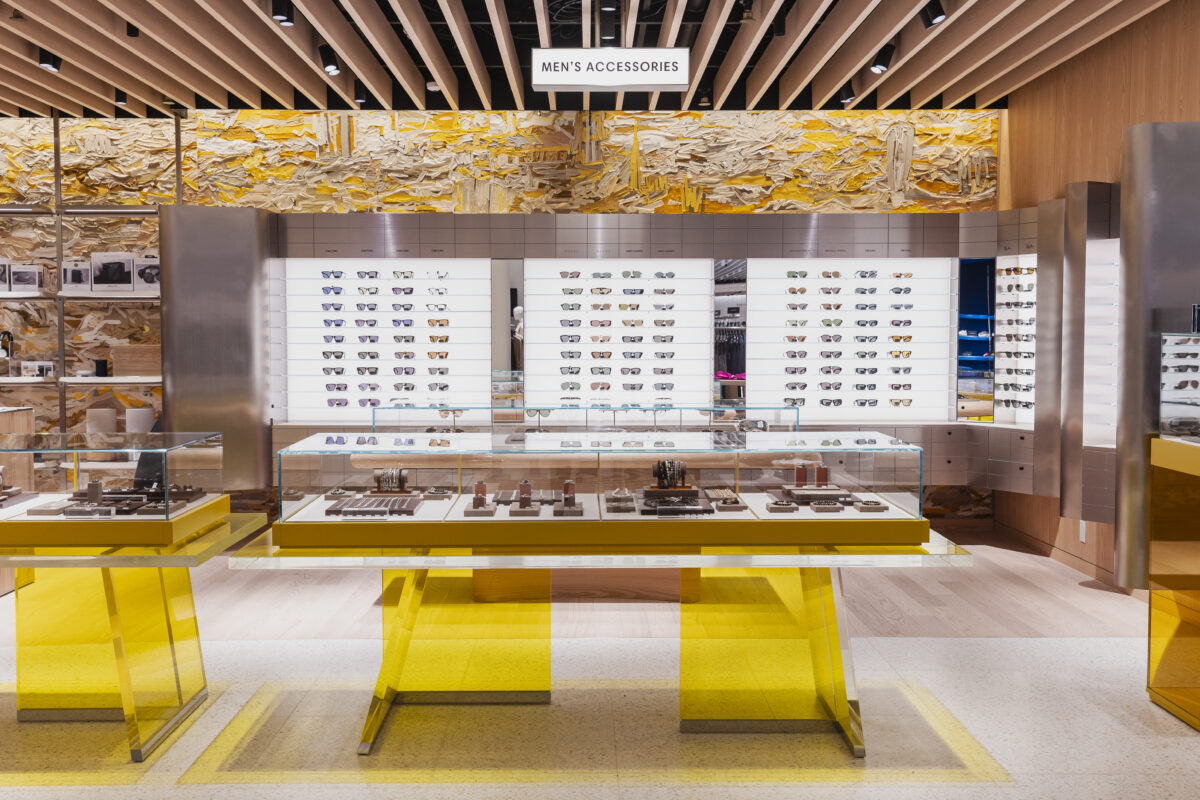
Men’s accessories, jewellery and sunglasses ON3 at Holt Renfrew, 50 Bloor St W in Toronto. Photo: Holt RenfrewMen’s footwear area ON3 at Holt Renfrew, 50 Bloor St W in Toronto. Photo: Holt Renfrew
Holiday and Seasonal Activations
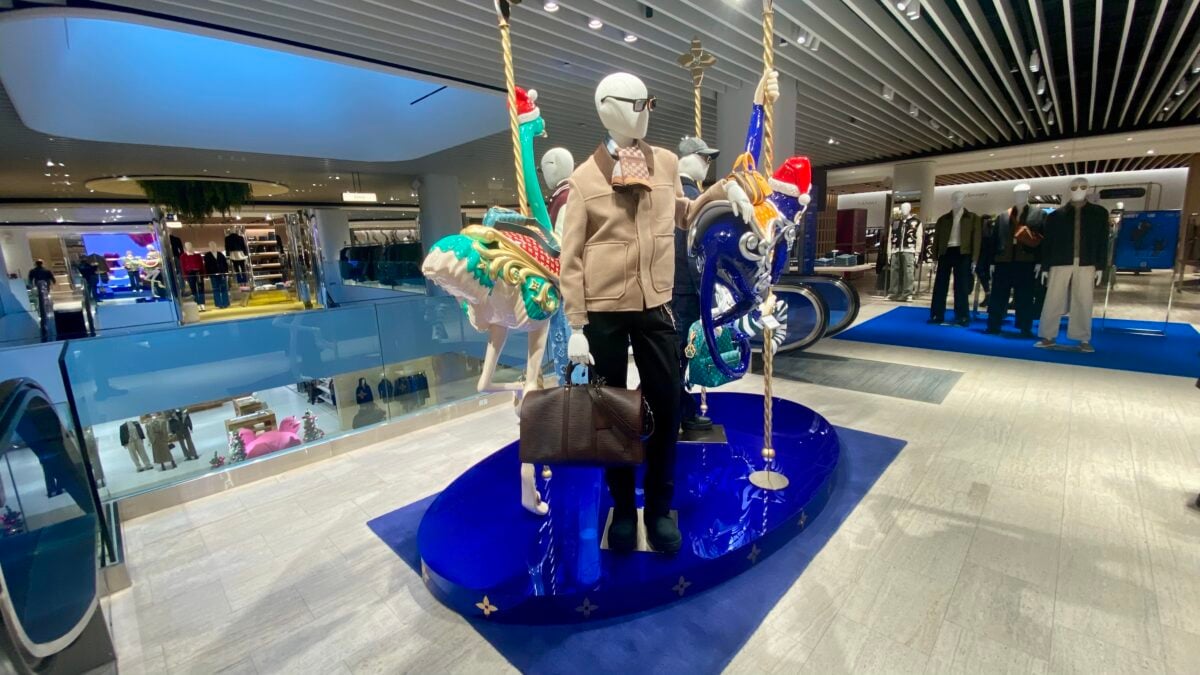
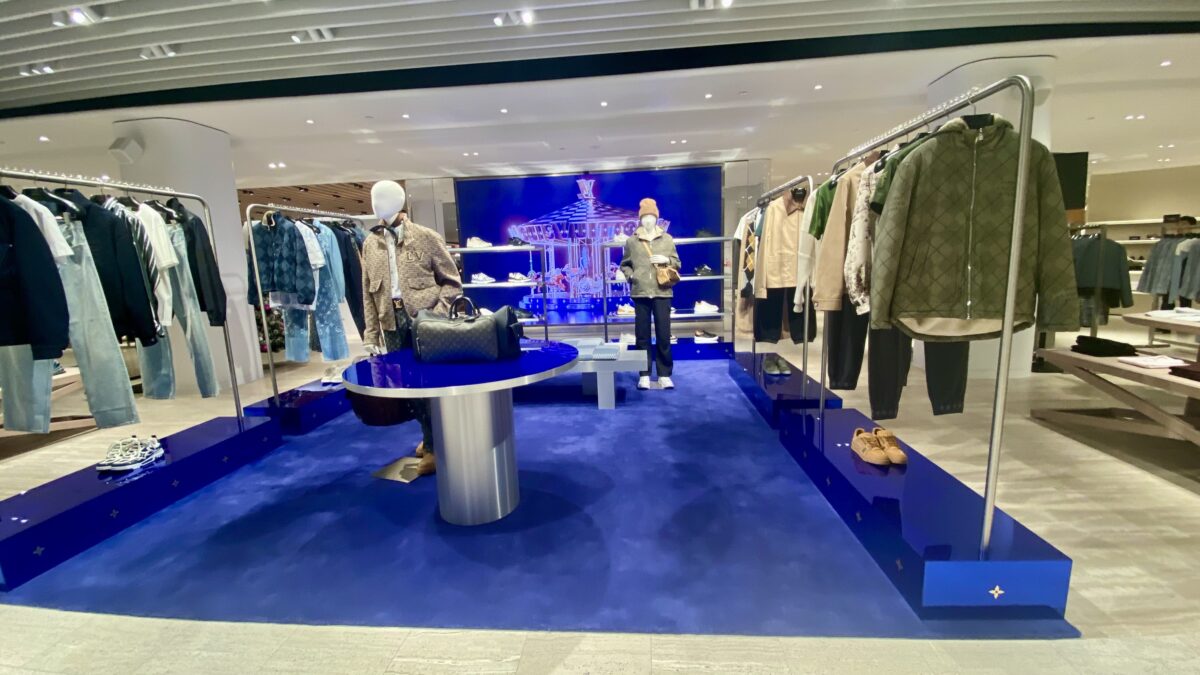
To celebrate the ON3 launch, Holt Renfrew introduced a series of seasonal pop-ups and events designed to captivate shoppers during the holiday season. The Louis Vuitton Men’s pop-up, located in a prime space on ON3, showcases the brand’s latest collections, blending timeless luxury with contemporary appeal.
Allan Tse, VP of Experience Design at Holt Renfrew
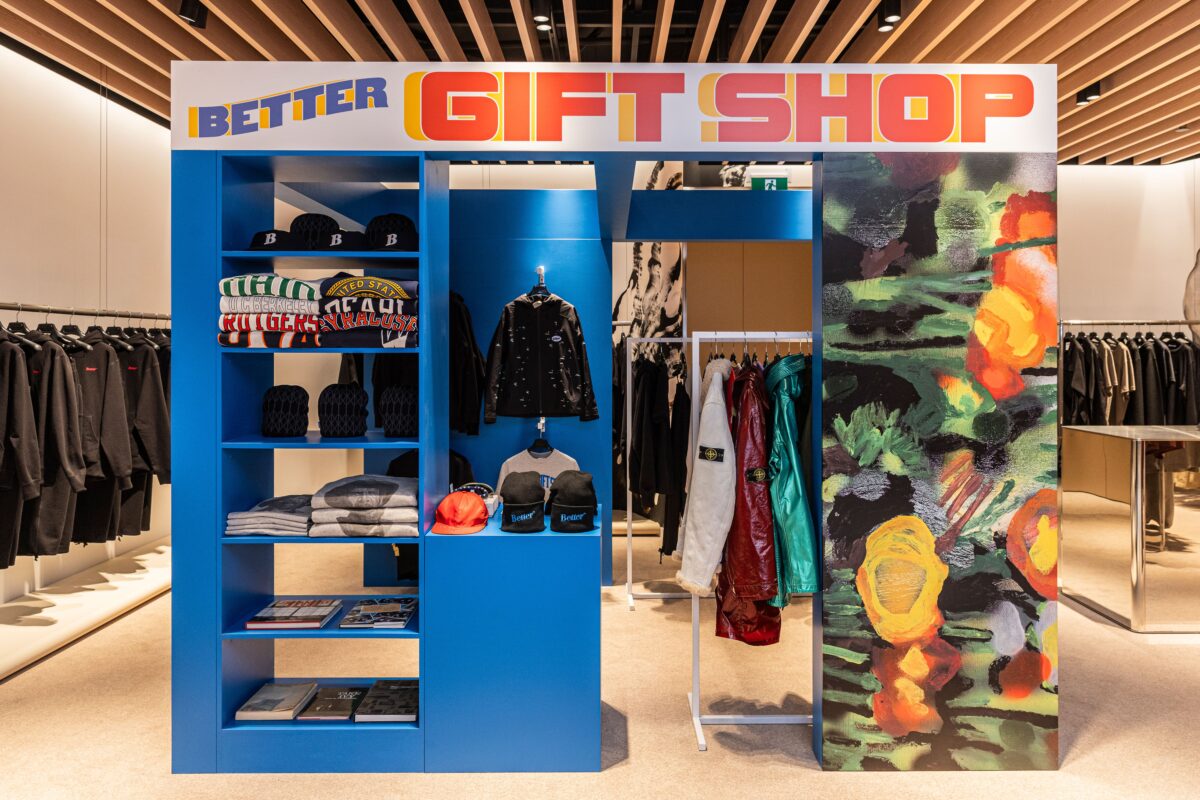
The Better Gift Shop installation adds a unique, Toronto-inspired touch to the holiday shopping experience. This collaboration with a local retailer emphasizes Holt Renfrew’s dedication to celebrating community talent. A Johnny Walker bar, aptly named “Aisle Chalet,” will round out the activations, offering a cozy, festive retreat for shoppers.
“These activations bring energy to the store and give our community a reason to visit again and again,” said Allan Tse, VP of Experience Design. “Our goal is to create a space where every visit feels like a new discovery.”
Holiday programming on ON3 will continue through the end of January, featuring exclusive events, live music, and curated product drops, ensuring a dynamic experience throughout the season.
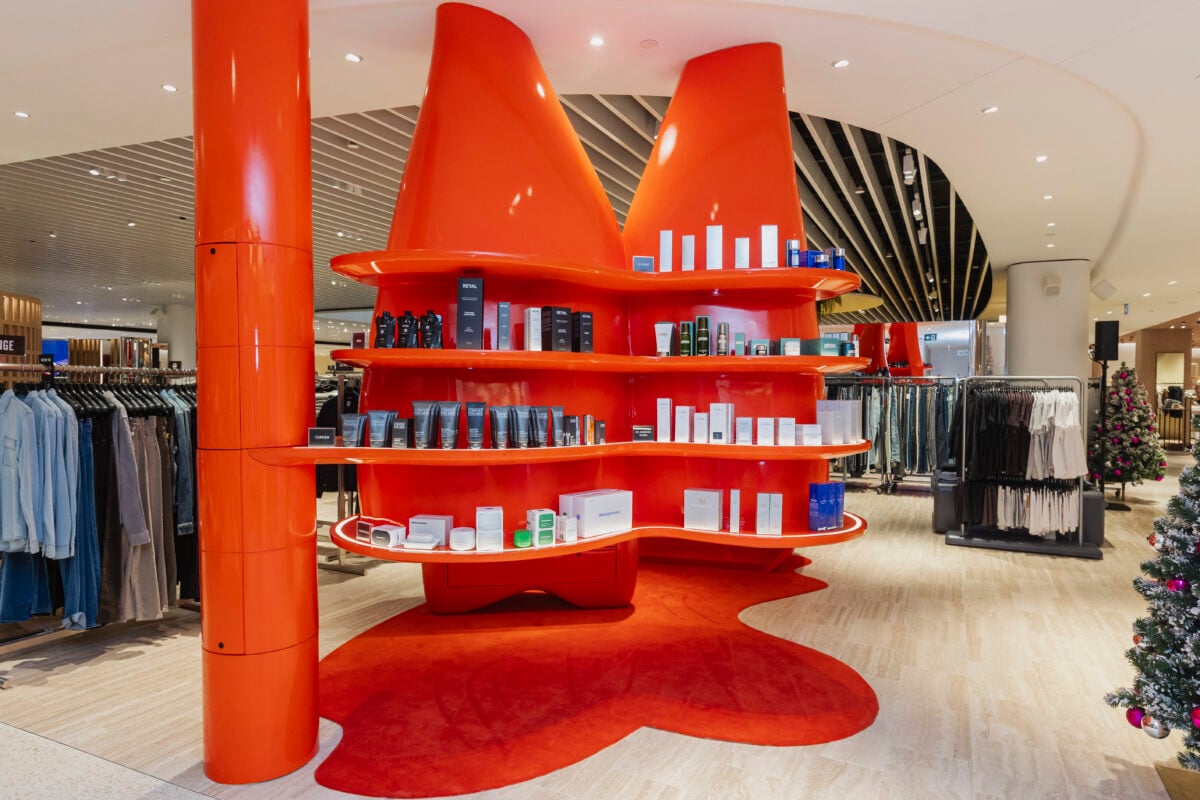
Men’s grooming and fragrances ON3 at Holt Renfrew, 50 Bloor St W in Toronto. Photo: Holt RenfrewBetter Gift Shop pop-up ON3 at Holt Renfrew, 50 Bloor St W in Toronto. Photo: Holt Renfrew
Behind-the-Scenes of ON3 Construction
The transformation of the third floor into ON3 was no small feat. The renovation took several months, involving complex logistical planning to ensure minimal disruption to the flagship’s operations. Sustainability was a priority at every stage, with Holt Renfrew adhering to its Greenbuild Guidelines to reduce environmental impact.
“We preserved the original travertine flooring to minimize construction waste and integrated energy-efficient lighting and HVAC systems,” explained Picardo. “Even the smallest details, like water-refilling stations, were part of our commitment to sustainability.”
Paolo Ferrari’s team embraced challenges as opportunities for innovation. The skylight, a dramatic focal point of ON3, required cutting through a concrete slab—a bold move that now floods the space with natural light. “This skylight will last for decades,” said Tse. “It’s a testament to our belief in creating timeless, sustainable design.”
Art and craftsmanship were also central to the project. Canadian artists like Liz Pead and Dahae Song collaborated on installations that reflect the country’s landscapes and culture. Pead’s textile-based artwork, made with upcycled fabrics, adds texture and meaning to the men’s accessories area, while Song’s Tobermory-inspired mural incorporates natural soil into the paint for an authentic touch.
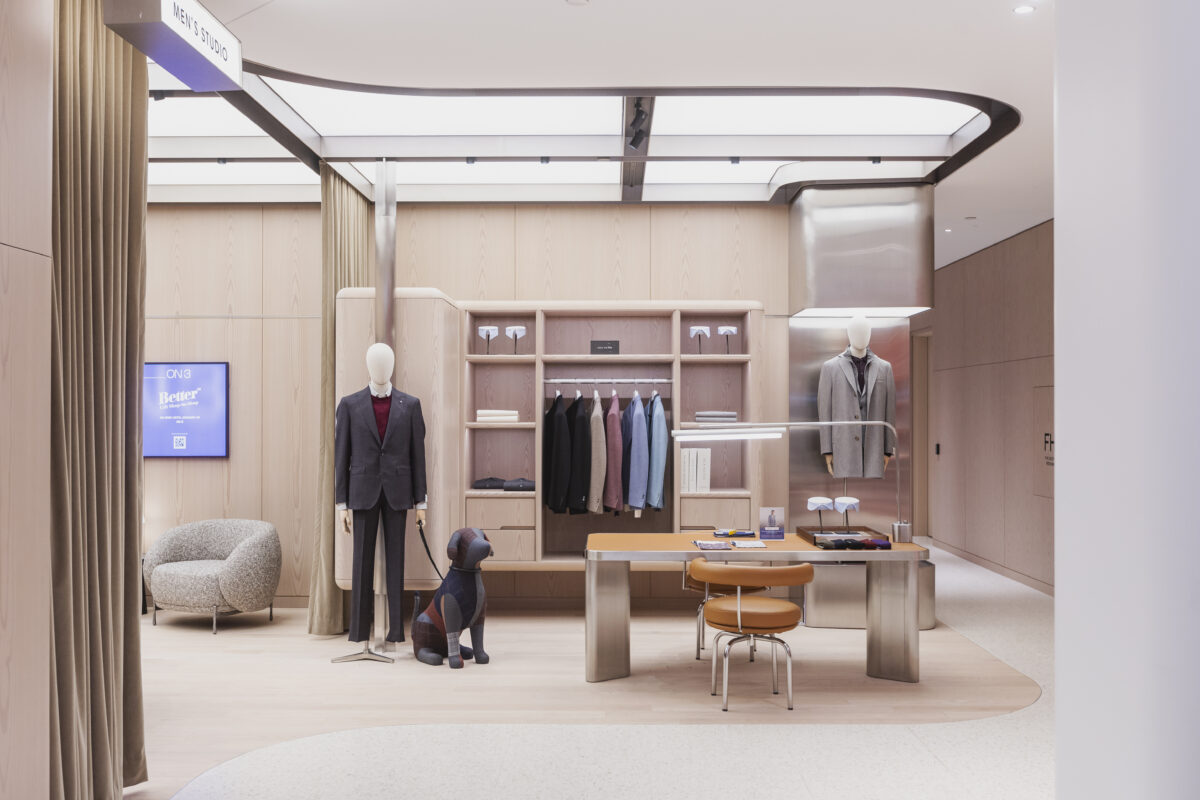
Men’s Studio area ON3 at Holt Renfrew, 50 Bloor St W in Toronto. Photo: Holt Renfrew Men’s designer area ON3 in Holt Renfrew at 50 Bloor St W in Toronto. Photo: Craig Patterson
Spotlight on Inclusivity Efforts
Inclusivity is a defining feature of ON3, evident in both the design and customer experience. The layout includes a mix of private and social fitting rooms to cater to diverse preferences. Gender-neutral washrooms reflect modern design sensibilities, ensuring all visitors feel welcome.
“We thought about every detail, not just what’s in front of customers but also what’s behind the scenes,” said Picardo. “Inclusivity isn’t just a value for us—it’s the foundation of how we design our spaces.”
Holt Renfrew’s focus on inclusivity extends to its product offerings. The store is committed to representing a diverse range of brands and price points, ensuring customers from all walks of life can find something extraordinary.
H-Project area on the renovated third floor of Holt Renfrew at 50 Bloor Street West in Toronto. Photo: Holt Renfrew. Women’s contemporary area on the renovated third floor, ON3, of Holt Renfrew at 50 Bloor Street West in Toronto. Photo: Holt Renfrew. Denim area at the centre of the newly renovated third floor of Holt Renfrew at 50 Bloor Street West in Toronto. Photo: Holt Renfrew.
Insights on Holt Renfrew’s Long-Term Strategy
The ON3 renovation is part of Holt Renfrew’s broader strategy to transition from a “house of brands” to a “branded house.” This shift emphasizes the Holt Renfrew identity as a unifying force across its luxury offerings. Picardo described the strategy as a way to deepen customer loyalty and differentiate the brand in an increasingly competitive market.
“Our mission is to empower self-expression and ignite positive change,” Picardo explained. “Through ON3, we’re creating spaces that reflect our values while inspiring our customers and community.”
This vision aligns with global trends in luxury retail, where experiential shopping and sustainability are becoming key differentiators. Holt Renfrew’s focus on art, culture, and environmental responsibility positions it as a leader in this evolving landscape.
Holt Renfrew at 50 Bloor St W in Toronto. Photo: Craig PattersonFormer Holt Renfrew Men at 100 Bloor St W in Toronto. Photo: Craig Patterson
Former Men’s Store Closed Last Week
Holt Renfrew officially vacated its former men’s store at 100 Bloor Street West last week, coinciding with the launch of the new men’s department ON3 within the flagship store at 50 Bloor Street West. Before the standalone men’s store opened in 2014, Holt Renfrew’s men’s department had been located in the main flagship store from 1979 to 2014.
The two-level, 16,500-square-foot space at 100 Bloor Street West previously housed a Roots flagship store before Holt Renfrew took over. Recently listed for lease by JLL, the space has attracted interest from several high-profile brands, including Apple and Louis Vuitton, according to industry sources.
Inside the former Holt Renfrew Men at 100 Bloor St W in Toronto, December 2024. Photo: Craig PattersonCentral display ON3 in Holt Renfrew at 50 Bloor St W in Toronto. Photo: Craig Patterson
The Future of Holt Renfrew’s Stores Following ON3’s Launch
The success of ON3 is just the beginning for Holt Renfrew. The company plans to apply insights from this project to its other locations, ensuring the brand continues to evolve with its customers. Picardo hinted at upcoming collaborations, new brand partnerships, and additional store updates.
“We’re excited about what’s next,” said Picardo. “ON3 is a blueprint for the future of Holt Renfrew—a future that’s inclusive, sustainable, and deeply connected to our community.”
Louis Vuitton men’s pop-up ON3 at Holt Renfrew at 50 Bloor St W in Toronto. Photo: Craig Patterson