CT Real Estate Investment Trust is reporting another strong financial performance in 2024 despite “heightened uncertainty and sustained headwinds in the macroeconomic landscape.
CT REIT is an unincorporated, closed-end real estate investment trust formed to own income-producing commercial properties located primarily in Canada. Its portfolio is comprised of over 375 properties totalling more than 31 million square feet of GLA, consisting primarily of net lease single-tenant retail properties across Canada. Canadian Tire Corporation, Limited, is CT REIT’s most significant tenant.
New Investment Activity
CT REIT announced three new investments which will require an estimated $59 million to complete. The investments are, in aggregate, expected to earn a going-in yield of 8.11% and represent approximately 284,000 square feet of incremental gross leasable area, said the company in a news release.
The table below summarizes the new investments and their anticipated completion dates:
Property
Type
GLA (sf.)
Timing
Activity
Kelowna, BC
Land Lease / Development
186,000
Q1 2025 / Q4 2025
Land lease from a third party and development of a new Canadian Tire store
Winnipeg (Regent), MB
Intensification
33,000
Q2 2026
Expansion of a Canadian Tire store
Lloydminster, AB
Redevelopment
65,000
Q4 2026
Redevelopment of a vacant property
In the fourth quarter, CT REIT also sold a portion of a property in Orillia, Ontario for $4 million.
Update on Previously Announced Investments
CT REIT invested $103 million in previously disclosed projects that were completed in the fourth quarter of 2024, adding 322,000 square feet of incremental GLA to the portfolio as detailed in the table below.
Property
Type
GLA (sf.)
Timing
Activity
Winnipeg (Regent), MB
Vend-in
101,000
Q4 2024
Vend-in of a Canadian Tire store
Mont Tremblant, QC
Vend-in
128,000
Q4 2024
Vend-in of a property containing Canadian Tire, Mark’s and Dollarama stores
Kirkland, QC
Intensification
66,000
Q4 2024
Expansion of a Canadian Tire store
Martensville, SK
Intensification
27,000
Q4 2024
Expansion of a Canadian Tire store
Update on Full-Year 2024 Investment and Development Activity
In 2024, CT REIT said it invested approximately $176 million in completed projects and ongoing developments and grew the portfolio by approximately 400,000 square feet of GLA. As of December 31, 2024, CT REIT had 881,000 square feet of GLA under development, of which approximately 88.4% is subject to committed lease agreements. These developments represent an investment of approximately $328 million upon completion, of which $107 million has been spent to date.
The REIT said net income was $135.3 million for the quarter, an increase of $97.1 million, compared to the same period in the prior year, primarily due to increases in the fair value adjustment on investment properties and higher revenues from the Property portfolio, partially offset by higher interest expense.
Total property revenue for the quarter was $145.4 million, which was $5.5 million or 3.9% higher compared to the same period in the prior year. In the fourth quarter, NOI was $115.6 million, which was $4.0 million or 3.6% higher compared to the same period in the prior year. This was primarily due to the acquisition, intensification and development of income-producing properties completed in 2023 and 2024, which added $2.7 million, rent escalations from Canadian Tire leases, which contributed $1.4 million and an increase in property operating recoveries, which added $0.4 million, it said.
The report said Canadian Tire is CT REIT’s most significant tenant. As at December 31, 2024, CTC represented 92.8% of total GLA and 91.7% of annualized base minimum rent.
Retail Insider is streamlining its Canadian retail news from around the web to include a handful of top news stories that can be viewed quickly during the day. Here are the top stories from the past 24 hours.
Indeed Laboratories HQ at 118 Avenue Road in Toronto. Photo: Indeed Labs
Located in Toronto’s Yorkville area, Indeed Laboratories has become a name synonymous with high-quality, accessible skincare solutions. Founded in 2010, the company has revolutionized the industry, and this year it celebrates its 15th anniversary with a commitment to innovation, community, and inclusivity.
“When we launched Indeed Labs, we wanted to disrupt the industry with science-backed, results-driven, and affordable products,” said Dimitra Davidson, founder of Indeed Labs. Speaking from the brand’s space at 118 Avenue Road, Davidson reflected on the company’s journey. “We’ve always prioritized safety, efficacy, and accessibility. Skincare should be available to everyone, not just a select few.”
The Birth of a Disruptor
Indeed Labs was co-founded by Davidson and a small team, including Brandan Truax, who later founded Deciem. Indeed Lab’s initial breakthrough came with the launch of Nanoblur in 2011, a blurring cream designed to give users an instant “Paris filter” effect.
Dimitra Davidson, founder of Indeed Labs
“Back then, skincare wasn’t as ingredient-focused or results-driven as it is today,” Davidson said. “We introduced Nanoblur to show consumers that immediate, effective solutions were possible. We were ahead of our time, launching a product that’s still a global favourite, used by makeup artists, film sets, and even taught in cosmetic schools.”
Davidson, whose background spans finance, luxury retail, and corporate sales with Tiffany & Co. Canada, credits her diverse professional experience for the success of Indeed Labs. “I never thought I’d end up in skincare,” she admitted. “But my passion for branding, coupled with my entrepreneurial background, allowed me to see the gaps in the market and fill them effectively.”
A Philosophy Rooted in Problem-Solving
Davidson’s inspiration for creating Indeed Labs stemmed from personal experience. After dealing with post-pregnancy hyperpigmentation and being dissatisfied with available solutions, she partnered with scientists to develop a product that addressed specific skin concerns.
“At the time, there wasn’t a brand that truly catered to unique skin needs,” Davidson recalled. “Everything was generic—a three-step system that didn’t account for different skin types or challenges. We wanted to change that by offering targeted solutions.”
The company’s commitment to safety and efficacy has been unwavering. “We’ve always formulated our products to meet the strictest global regulatory standards, like those in the EU,” Davidson emphasized. “We were also one of the first brands to focus on being ‘free from’ harmful ingredients. Long before the term ‘clean beauty’ became popular, we were pioneering safe and effective formulations.”
Image: Indeed Laboratories
Product Innovations That Stand Out
Indeed Labs’ product lineup is a testament to its commitment to addressing diverse skincare needs. Beyond the iconic Nanoblur, the company has introduced several game-changing products.
The Hydraluron Moisture Jelly, for example, became a bestseller for its ability to deliver intense hydration through its unique jelly texture. “This product gives users a dewy, plumped look,” Davidson said. “It’s one of our most innovative formulas, combining science and sensory appeal.”
Another standout is the Nanobronze Bronzing Drops, designed to provide a natural glow while delivering skin-nourishing benefits. “I created this product because I wanted something lightweight that could give me a sun-kissed look without heavy makeup,” Davidson shared. “It’s since gone viral, especially among younger consumers.”
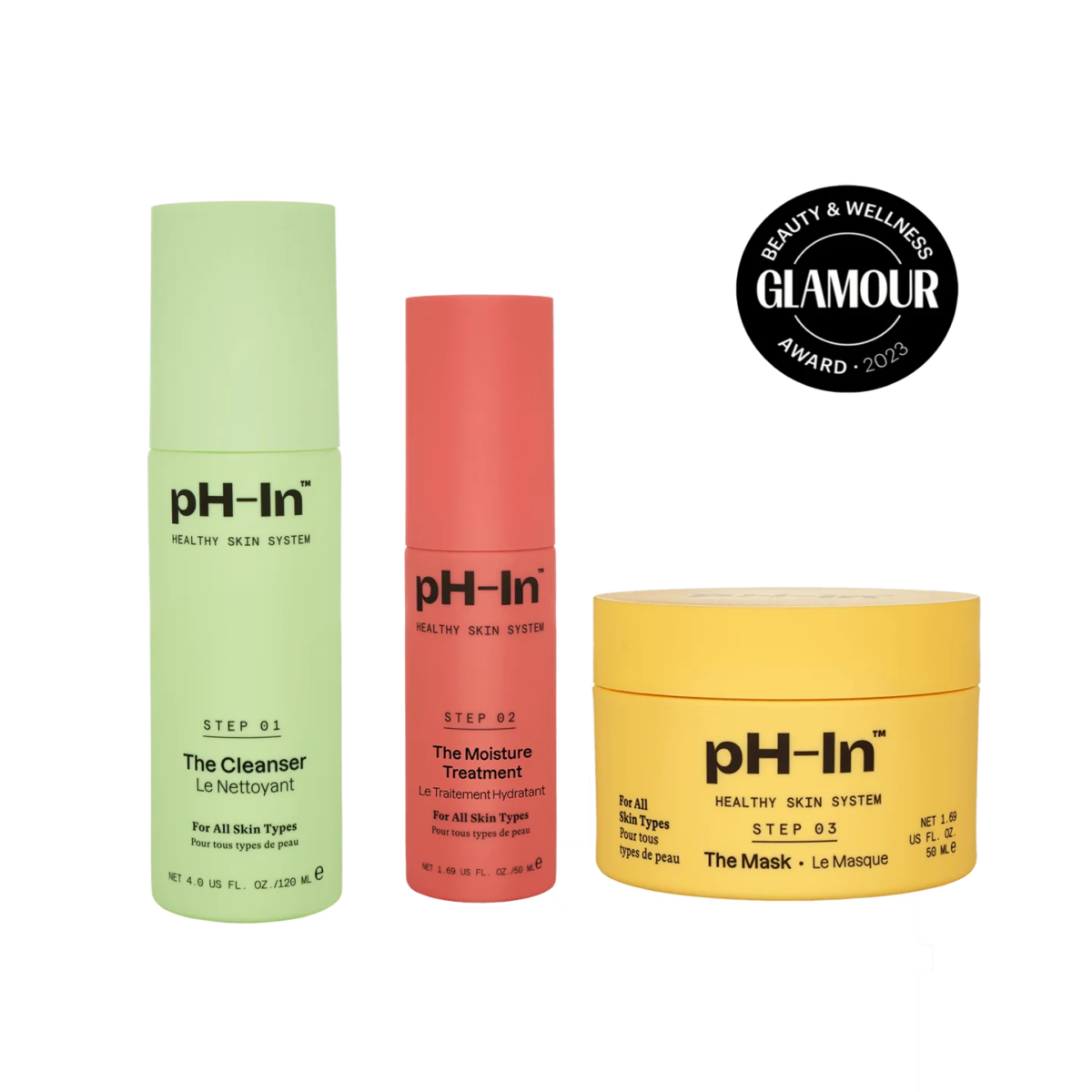
The pH-In Skin range, launched in 2023, represents a new frontier in acne care. “We are the first to launch a microbiome-certified, clinically proven acne treatment that doesn’t compromise the skin barrier,” Davidson explained. The products have won multiple awards for their innovative approach to treating acne while supporting overall skin health.
Indeed Labs is also known for its Hydrogel Eye Patches, which contain Argireline, often dubbed “Botox in a bottle.” “They give an instant tightening effect, making them a favourite for events or photo-ready moments,” Davidson said.
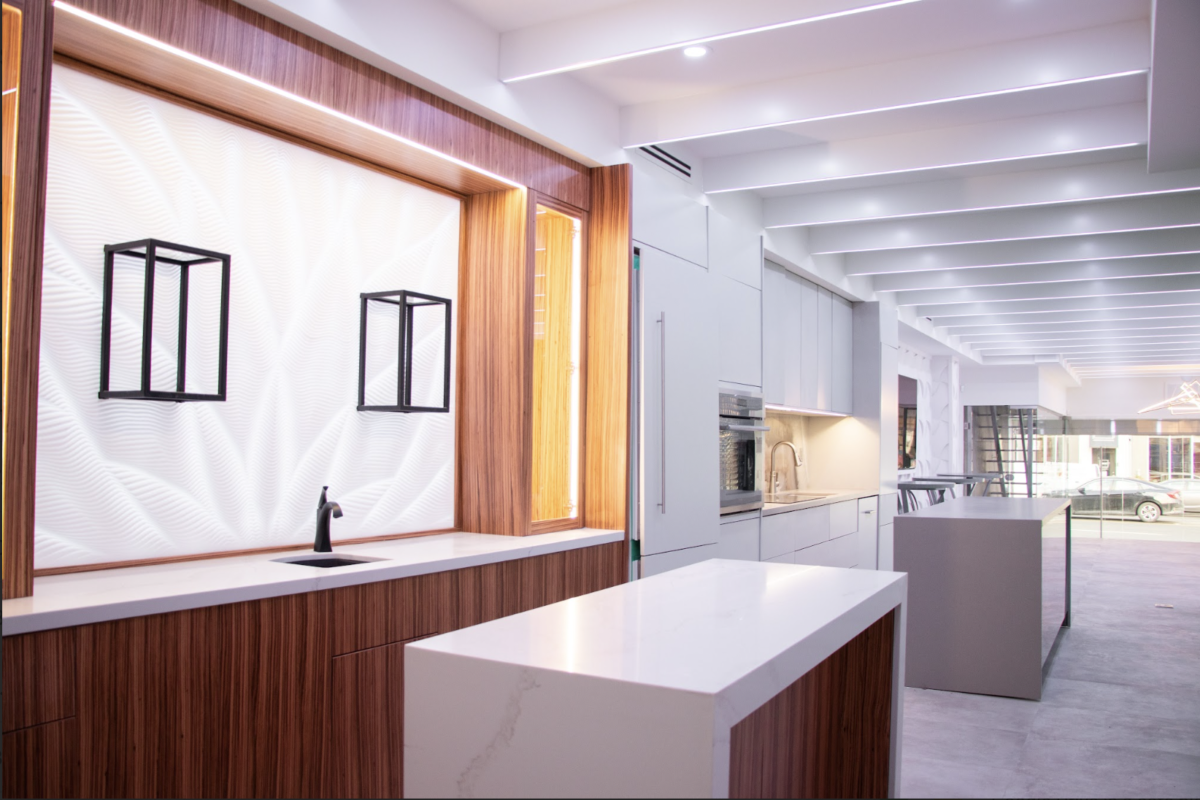
Inside the Indeed Laboratories HQ at 118 Avenue Road in Toronto. Photo: Indeed Labs
Revolutionizing Acne Care with pH-In Skin
One of Indeed Labs’ most significant innovations is pH-In Skin, launched in 2023. “This is the world’s first microbiome-certified, clinically proven acne brand,” Davidson said proudly. “It treats acne without compromising the skin’s barrier or using harmful ingredients.”
Davidson explained the science behind the range: “Our skin’s microbiome is like its first line of defence. Traditional acne treatments, like benzoyl peroxide, kill both good and bad bacteria, weakening the skin. pH-In Skin balances the microbiome, preventing overgrowth of harmful bacteria while maintaining overall skin health.”
The product line has been a game-changer, particularly for younger consumers. “We’re seeing a shift,” Davidson noted. “Teens and Gen Z are incredibly educated about skincare. They want products that are safe, effective, and aligned with their values.”
Image: Indeed Laboratories
Innovation at Every Turn
Indeed Labs has earned over 60 industry awards, a testament to its commitment to innovation. From viral sensations like the Nano Bronze bronzing drops to the Hydraluron Jelly, the brand continues to push boundaries.
“Innovation comes in many forms,” Davidson said. “Sometimes it’s about introducing a groundbreaking ingredient. Other times, it’s about rethinking how a product is packaged or used. Our setting spray with blurring technology is a great example—it combines skincare and cosmetics in a way that’s never been done before.”
Inside Indeed Laboratories HQ at 118 Avenue Road in Toronto. Photo: Indeed Labs
A Creative Hub in Yorkville
Indeed Labs’ physical space at 118 Avenue Road in Toronto’s Yorkville district is more than just an office—it’s a hub for creativity and collaboration. Originally intended as a workspace, the building’s main floor has been transformed into a content creation centre and community space.
“This area is for creators, entrepreneurs, and innovators,” Davidson explained. “We host pop-ups, events, and even allow other business owners to showcase their work here. It’s our way of giving back and fostering a sense of community.”
The space’s minimalist design emphasizes functionality while providing an inspiring environment. With bright, open layouts and areas dedicated to filming and product testing, it’s become a go-to spot for content creators. “We’ve had influencers and professionals from all over the world come in to create content,” Davidson noted.
Image: Indeed Laboratories
Future Plans and Vision
As Indeed Labs celebrates its 15th anniversary, the brand is looking toward the future with ambitious plans for growth and innovation.
“We’re actively exploring new markets and partnerships,” Davidson said. “Regions like Southeast Asia and the Middle East are particularly exciting for us because of the growing demand for high-quality, affordable skincare.”
Indeed Labs is also prioritizing sustainability. “We’re working on eco-friendly packaging and more sustainable formulations,” Davidson revealed. “Consumers are increasingly conscious of their environmental impact, and we want to lead by example.”
Technology will play a significant role in the brand’s future. Davidson hinted at plans to integrate AI and digital tools into their operations. “AI is revolutionizing product development and customer engagement,” she said. “We’re exploring how to use these tools to create even more personalized skincare solutions.”
When asked about potential retail expansion, Davidson was pragmatic. “Brick-and-mortar stores are challenging in today’s retail environment,” she said. “For now, we’re focusing on direct-to-consumer strategies and enhancing our existing distribution network.”
A Global Reach with Community at Its Heart
Indeed Labs has achieved significant global distribution, with products available in retailers like Shoppers Drug Mart in Canada, Ulta Beauty in the U.S., and Boots in the UK.
“Accessibility is key to our mission,” Davidson said. “It’s not just about affordability; it’s also about being where consumers shop.”
In Canada, the brand has an exclusive agreement with Shoppers Drug Mart, boasting over 1,000 locations carrying its products. Internationally, Indeed Labs has expanded to countries including Australia, India, and Hong Kong. “Our wide distribution network ensures that consumers everywhere can access high-quality skincare solutions,” Davidson added.
Beyond business, Davidson is passionate about mentoring women and giving back. “Beauty isn’t just about products; it’s about people,” she said. “I’m committed to creating opportunities for the next generation of leaders and fostering a sense of community.”
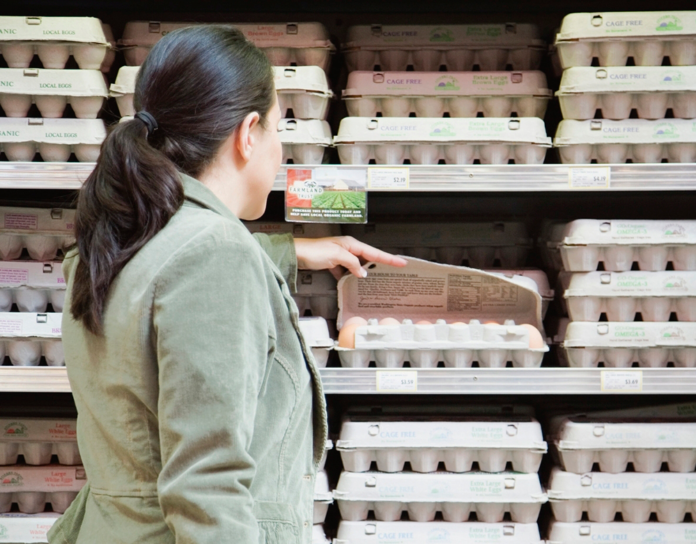
A woman shops for eggs at a grocery store. Photo: Eggs.ca
The price of eggs in the United States is soaring. In some states, a dozen eggs now retail for over $11, among the highest prices ever recorded. The ongoing avian flu outbreak is wreaking havoc, with the U.S. having culled more than 10% of its laying hen flock in recent months. With supplies dwindling, consumers are scrambling—no pun intended—to find affordable eggs. The situation appears increasingly dire.
In Canada, the landscape is different, though still concerning. Over the past 12 months, egg prices have risen by an average of 11% to 12% nationwide. Recently, finding a dozen Grade “A” large eggs for under $5 has become difficult in several provinces. Since January, some regions have experienced price hikes of up to 10%. The avian flu is also a concern here, though its impact has been more contained. Canada’s Food Price Report 2025 had already anticipated this, citing avian flu as a key factor in the rising cost of both chicken and eggs.
British Columbia is the only province currently experiencing supply shortages. Canada has culled approximately 14.5 million chickens during this avian flu cycle, with over 80% of them in B.C. Ontario ranks a distant second, though the outbreak there appears under control for now.
How Canada’s Egg Market Differs from the U.S.
Canada’s egg market is structurally different from that of the United States, and that distinction is playing a role in stabilizing supply and price fluctuations. One key factor is geography. Canada’s vast landmass allows for greater dispersion of poultry farms, making it more difficult for the virus to spread rapidly.
Secondly, supply management—Canada’s quota-based system that regulates production—has played a stabilizing role. Unlike the U.S. model, which is more exposed to market volatility, Canada’s collaborative supply management framework facilitates the rapid sharing of critical information. When sick or dead birds are identified, industry stakeholders act quickly to mitigate biosecurity risks. It is difficult to quantify the exact impact of this system on stabilizing prices, but the evidence suggests it has helped prevent more severe disruptions.
For example, Alberta is currently supplying eggs to British Columbia to offset shortages—an example of the flexibility within Canada’s egg supply system, which is far more adaptable than other supply-managed sectors such as dairy.
Future Egg Price Increases in Canada
That said, egg prices in Canada will continue to rise, but at nowhere near the rates seen in the United States. While U.S. consumers have seen price hikes of 60%, 80%, or even 100%, Canada is expected to experience a more moderate increase of up to 6% nationally this year. British Columbia, given its supply challenges, could see increases closer to 15%.
Despite these challenges, eggs remain one of the most affordable and efficient sources of animal protein. In the U.S., some restaurant chains—such as Waffle Warehouse—have already introduced egg surcharges to offset rising costs. No such reports have emerged in Canada yet. However, with the GST Holiday ending this week, some restaurants may adjust prices subtly without much notice. When fiscal policy shifts in ways that quietly impact consumer costs, it’s a reminder that the true burden of inflation often extends beyond the grocery store.
Egg prices are rising on both sides of the border, but Canada’s supply management system, industry coordination, and geographic advantages have helped shield consumers from the worst of the price shocks seen in the United States. While affordability remains a concern, the current trajectory suggests that Canadian households will continue to fare better than their American counterparts in navigating this latest wave of food inflation.
The quick-service restaurant (QSR) industry has experienced significant shifts in recent years, influenced by economic challenges, evolving customer behaviours, and innovations. Wendy Derzai Minnett, Senior Vice President with the MTY Food Group, shared her insights into the sector and the performance of her brands.
Economic Pressures and Customer Focus
Wendy Derzai Minnett
“The QSR industry has been facing some pretty serious economic challenges—labour shortages, rising operational costs which keep coming, and increased competition pretty much for every brand,” Minnett explained. While some chains have struggled, she noted a positive outlook for a rebound in 2025, driven by strategic initiatives and a focus on value and efficiency.
“(The industry) still remains optimistic about a potential rebound in 2025 for a lot of them, driven by strategic initiatives and focus on value and efficiencies, which we’re all looking at. I mean, you see the value everywhere now in every QSR brand,” she added.
“They’re trying to meet the needs of the customer. 2024 for my brands for the majority, the two big ones (TacoTime and Extreme Pita), was actually quite good. It ended positive for both brands.”
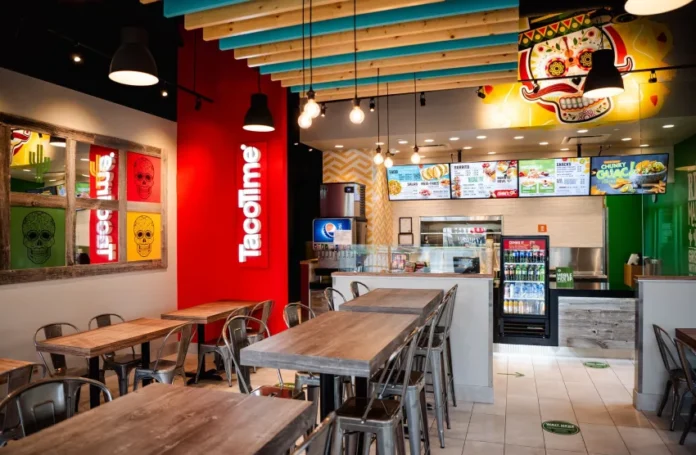
For TacoTime, Minnett highlighted their strong value-driven promotions, including their trademarked Taco Tuesday and the increasingly popular Burritoful Thursday. “Those are pretty deep discount days for us. Finding an offer that’s compelling to a customer and sub $10 is key,” she said.
Brand Performance and Growth
TacoTime has seen steady growth, with 127 locations currently operating and plans to open 15 more this year. “TacoTime’s had great growth and continues to move forward. I have a lot of interest from our internal franchisees that all want new stores,” Minnett noted. This internal demand highlights the brand’s strength and profitability.
The challenge is finding good real estate at a good price.
However, Extreme Pita faces challenges. “Extreme Pita, unfortunately, is one of those brands that’s sort of failing in the sense that it was a big brand at one point. The company that owned it also owned Mucho Burritto. They came to us combined as a pair,” Minnett said, citing an “older feel” as one of the factors. There’s less than 20 across Canada.
“I have opened a very successful Extreme Pita in the Dulles airport in Washington and it’s doing exceptionally well . . . We are doing sort of a revamp on the brand itself this year and trying to do charcoal grills inside the venue. We’re just going to try something new. There’s some innovations we’re trying to do . . . We are going to do a test of one store and change the name.”
The MTY Group has more than 90 brands in the fast casual, QSR and casual dining category.
Minnett also manages the Mr. Souvlaki brand which she said is doing well.
Digital Innovations and Delivery Channels
The shift toward digitalization has been a key focus for Minnett’s brands. “All the delivery channels . . . we have our own delivery service, so it’s in-store pricing,” she emphasized. Unlike traditional third-party delivery systems that mark up menu prices, TacoTime and Extreme Pita offer delivery at in-store prices, making it more affordable for customers and franchisees.
“The digital world is really advanced, and it’s a huge way that all of our brands are speaking to our customers,” Minnett said, highlighting how digital tools help understand and meet consumer needs.
Resilience and Entrepreneurial Growth
“We actually thought during the pandemic that there was going to be a decline in the QSR and the restaurant business because of the difficulties in the supply chain and all the things that happened during that time. And it actually kind of was a reverse.”
Minnett observed an unexpected trend during the pandemic: the QSR sector’s growth as more individuals sought entrepreneurial opportunities. “It’s owning your own business,” she said. “A lot of people who had jobs that maybe went away or if people didn’t come back after the pandemic, they didn’t want to deal with the ups and downs of that industry anymore. They decided to go work for themselves.
“This is the perfect sector to get into. It’s easy for everyone. There’s a training program. The brands all train you on what to do and how to run the business. So it’s actually an easy one to walk into. It’s a modest investment because the banks are pretty good at loaning you a large portion of the money that you need.
“It’s a hard industry. You can’t say that the QSR business is easy. It’s not. But at the same time we see them growing. I think that’s where it comes from. People want to own their own businesses. They want to be masters of their own destiny.”
She cited TacoTime’s history during the 2009 economic downturn as an example of resilience. “We opened around 40 TacoTimes during that time,” she recalled. “When people are uncertain about their day-to-day work lives, they just say, ‘I’m just going to work for myself.’”
Future Outlook
Looking ahead, Minnett expects QSR brands to emphasize value propositions throughout 2024, catering to cost-conscious customers. Innovations like Mr. Souvlaki’s Apollo Bowl, a Greek-inspired meal, showcase the sector’s creativity in adapting to changing tastes.
Despite challenges, Minnett remains optimistic. “The industry continues to see a lot of expansion… it just goes to show that the brand is strong,” she concluded.
The average insolvent debtor’s credit card debt surged by 25.9% to $20,398 in 2024, marking the sharpest annual increase since the study began in 2011, according to research conducted by Licensed Insolvency Trustees Hoyes, Michalos & Associates Inc.
“The dramatic rise in credit card debt tells a troubling story about the financial health of Canadian households,” said Doug Hoyes, Licensed Insolvency Trustee. “We’re seeing consumers increasingly relying on credit cards not for discretionary purchases, but to cope with basic living expenses in the face of persistent inflation and higher interest rates.”
Doug Hoyes
The study found that credit cards now account for 34% of total unsecured debt among insolvent debtors, up from 30% in 2023. The increase affected all age groups, with millennials experiencing the steepest rise at 35.0%.
“What’s particularly concerning is that these insolvency statistics are just the tip of the iceberg,” said Ted Michalos, Licensed Insolvency Trustee. “For every person who files insolvency, many more Canadians carry unsustainable credit card balances, struggling silently with minimum payments that barely cover the interest charges.”
The average insolvent debtor now owes $60,678 in total unsecured debt, an increase of 12.2% from 2023. Higher debt loads among insolvent debtors combined with rising consumer insolvencies reflect the broader rise in credit card and consumer credit among Canadian households, said the report.
“We’re seeing a perfect storm of financial stress,” added Hoyes. “Higher interest rates have increased the cost of credit while inflation continues to erode purchasing power. Many households are forced to choose between making rent or mortgage payments and keeping up with credit card bills.”
The study revealed that higher-income earners are increasingly affected, with 54% of all filers having a net monthly income over $3,000, up from 48% in 2023.
“These numbers signal a deterioration in household finances across income levels,” noted Michalos. “When we see this magnitude of increase in credit card debt, combined with rising insolvency filings among higher-income earners, it’s clear that financial stress is moving up the income ladder.”
The study also revealed the impact of mounting debt stress among homeowners.
“Homeowner equity has dropped dramatically, from 21% to just 10% in 2024, with one in seven insolvent homeowners now experiencing negative equity,” said Hoyes. “With a wave of mortgage renewals approaching at higher interest rates, we’re particularly concerned about homeowners relying on credit cards to maintain their mortgage payments.”
The company said the study findings come amid growing economic uncertainty for Canadian households.
“The combination of persistent inflation, higher interest rates, and new trade pressures creates significant risks for the Canadian economy,” explained Hoyes. “These conditions suggest we’re likely to see even more households struggling with unsustainable debt loads in the months ahead, particularly if economic growth stalls.”
Former Michael Kors flagship store at 1133 Saint-Catherine St W, Montreal. Photo: Maxime Frechette
Michael Kors has closed its flagship store at 1133 Ste-Catherine Street West in Montreal. Opened in November 2019, the three-level, 9,000-square-foot store was the largest Michael Kors location in Canada and a landmark for the brand globally.
The closure follows a series of strategic store adjustments by Michael Kors in Canada, with a replacement location now open at Royalmount. The brand continues to operate six other stores in Quebec, including at CF Carrefour Laval, CF Fairview Pointe-Claire, Quartier DIX30 in Brossard, CF Promenades St-Bruno, Montreal Premium Outlets, and Galeries de la Capitale in Quebec City.
A Once-Groundbreaking Store Concept
When Michael Kors unveiled its Ste-Catherine Street flagship in 2019, it introduced a retail concept unlike any other in Canada. The space spanned three floors and included a broad range of products, from handbags and accessories to runway fashions from the Michael Kors Collection.
The flagship also incorporated unique features that set it apart from other locations worldwide. One of the standout elements was ‘Studio 1133,’ a third-floor private shopping space designed for VIP clientele. The studio created a New York loft-style ambiance, offering personalized styling services and an exclusive selection of luxury items.
Adding to the store’s appeal was a dedicated juice bar by Rejuice, a first-of-its-kind feature for Michael Kors anywhere in the world. The juice bar operated independently with its own entrance onto Stanley Street, serving organic vegan juices and coffee options.
EXTERIOR OF THE 3-LEVEL MICHAEL KORS FLAGSHIP AT 1133 STE-CATHERINE ST. W. IN MONTREAL. PHOTO: MICHAEL KORS
Michael Kors’ Changing Footprint in Canada
The Ste-Catherine Street closure is part of a broader strategy by Michael Kors, which has shuttered select locations in Canada while maintaining a national retail presence. The brand still operates stores across the country, though it has adjusted its retail footprint based on shifting consumer trends and market/lease conditions.
The new Michael Kors store at Royalmount serves as the brand’s replacement location in Montreal. The mixed-use Royalmount development is positioning itself as a high-end shopping and entertainment district, attracting retailers seeking a new customer base outside of the downtown core.
Under construction: Apple store at Ste-Catherine and Rue de la Montagne in Montreal. Photo: Maxime Frechettte
Ste-Catherine Street Sees New Retail Openings
While Michael Kors’ departure marks the end of a flagship era, Ste-Catherine Street continues to evolve with new retail entrants. New Balance recently relocated its Montreal store from the Eaton Centre to 1229 Ste-Catherine Street West, now positioned just east of Apple’s upcoming flagship at the corner of Ste-Catherine and Rue de la Montagne. Alo Yoga also recently opened a location at the intersection, reinforcing the area’s ongoing transformation.
Despite recent retail challenges, Ste-Catherine Street remains one of Canada’s most important shopping districts. The street has seen several high-profile brands in recent years, some choosing to invest in upgraded storefronts and new flagship concepts.
Michael Kors has had a retail presence in Montreal for over two decades. Before the opening of its flagship store in 2019, the brand operated a shop-in-shop at Ogilvy, which closed in 2018 to make way for the Holt Renfrew Ogilvy redevelopment.
New Balance recently relocated from the Montreal Eaton Centre to 1229 Ste-Catherine Street W. — photo, Maxime Frechette
Financial Challenges for Michael Kors
The Michael Kors brand has faced recent financial challenges. In the third quarter of fiscal 2025, the brand reported a 12% decline in revenue, bringing in $909 million compared to the same period the previous year. This downturn was part of a broader trend for its parent company, Capri Holdings, which experienced an overall revenue decrease of 11.6% during the same quarter.
The challenges have been attributed to several factors, including a softening demand for luxury goods in key markets such as the Americas and Asia. Additionally, strategic missteps, such as attempts to reposition the brand to attract younger consumers through new fashion items and higher pricing, have not yielded the desired results. These initiatives led to increased discounting, which adversely affected profit margins.
Compounding these issues, a proposed $8.5 billion merger between Capri Holdings and Tapestry Inc., the owner of Coach, was blocked by a federal judge due to antitrust concerns. This development has left Capri Holdings to address its financial difficulties independently.
In response to these challenges, Capri Holdings has announced a reevaluation of its strategic initiatives to improve sales trends and stabilize the business. This includes leadership changes, with CEO John Idol resuming direct oversight of the Michael Kors brand to steer it back toward growth.
Michael Kors Brand
Founded in 1981 by American designer Michael Kors, the brand has evolved into an upscale global fashion house renowned for its sophisticated yet accessible designs. The company offers a diverse range of products under its signature Michael Kors Collection, MICHAEL Michael Kors, and Michael Kors Mens labels. These include accessories, footwear, watches, jewelry, ready-to-wear apparel for both women and men, wearable technology, eyewear, and a full line of fragrance products.
Michael Kors stores are operated, either directly or through licensing partners, in some of the biggest cities worldwide, including New York, Los Angeles, Chicago, London, Milan, Paris, Munich, Dubai, Seoul, Tokyo, Hong Kong, Shanghai, and Rio de Janeiro.
The brand’s heritage is rooted in iconic designs with a glamorous aesthetic that combines stylish elegance and a sporty attitude. Its mission is to bring a sophisticated jet-set lifestyle to women and men around the globe.
In Canada, Michael Kors maintains a strong retail footprint through its network of stores and wholesale partnerships, reinforcing its position as a staple in contemporary fashion.
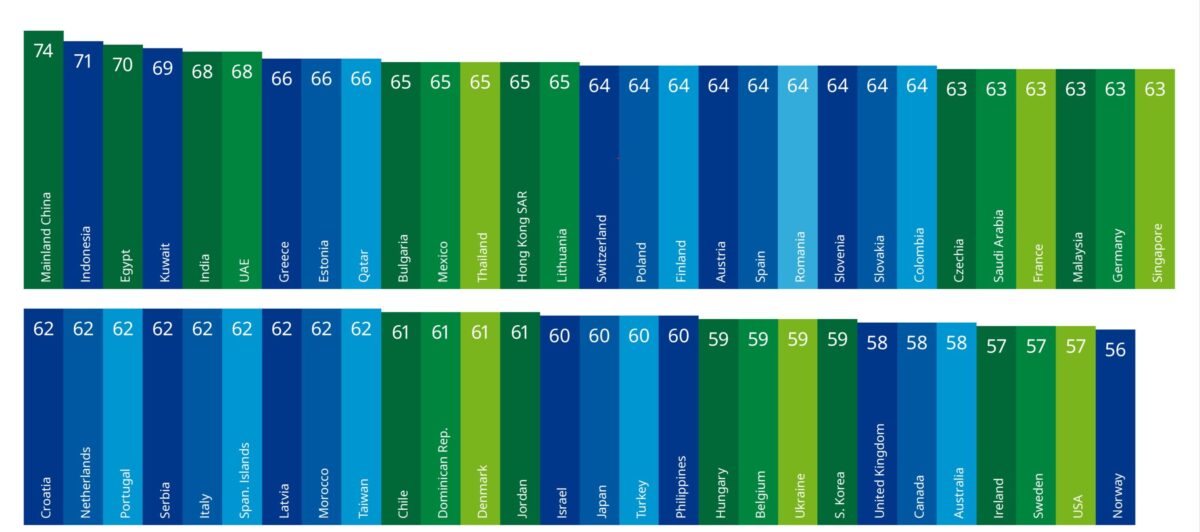
The largest IKEA report ever, surveying over 55,000 people across 57 markets, reveals that Mainland China ranks highest in sleep quality, while Norway and the USA score the lowest.
The findings also highlight a global sleep gap of 1 hour and 20 minutes, with people worldwide missing out on significant rest each night – equating to over 20 full days of lost sleep annually, said the company in a press release.
Who sleeps best – and who struggles?
While Mainland China leads in sleep duration, with most averaging over seven hours per night, Norway and the USA struggle, with Americans reporting the most disrupted sleep. 64% of Egyptians rate their sleep as good, the highest globally, while financial stress, screen time, and inconsistent routines negatively impact rest in other regions, said IKEA.
The study identifies stress, financial concerns, and technology use as the biggest obstacles to quality sleep:
40% cite stress and overthinking as their main sleep disruptors
72% use phones in bed, increasing to 86% among 18-24-year-olds
19% rely on medication, with 5% using it daily
IKEA Sleep Report – Quality Score ranking across the 57 markets surveyed.
A call for sleep equality
The IKEA Sleep Score exposes stark inequalities in sleep quality, with financially insecure individuals, the LGBTQ+ community, and women with young children scoring well below the global average.
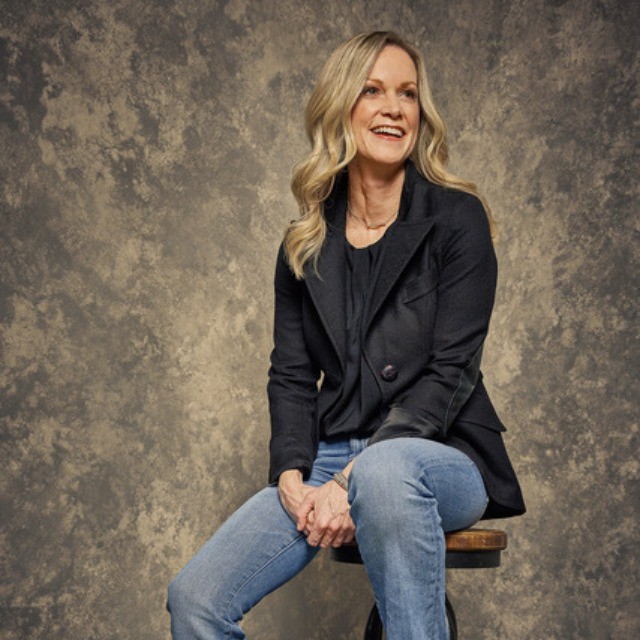
Jasper Wuts
“Many people sleep in shared or multifunctional spaces, making rest even more challenging. By understanding these realities, we can design products that improve everyday life,” said Jasper Wuts, Range Insights Manager, IKEA of Sweden.
Simple tips for better sleep
The report offers actionable recommendations, such as sticking to a routine, limiting screen time, creating a restful environment, and practicing relaxation techniques.
A Skip-branded snowplow truck clears a snowy driveway as a delivery driver steps out holding a Skip food bag. Snow falls around a suburban home, highlighting Skip’s winter-ready delivery service. (CNW Group/Skip)
Skip has introduced the Skip Winter Delivery Fleet – a fleet of custom orange snowplows, clearing the snowy streets and delivering the ultimate convenience to Canadians this winter.
The Winter Delivery Fleet is ready to hit the streets of Toronto so Canadians can continue to get more of what they love, delivered right to their doors, announced the company on Monday.
Rachel MacAdam
The company said the Skip Winter Deal is now live, offering savings of 30% or more off people’s favourite restaurant and retail brands, with new promos dropping weekly.
“Following the launch of their new brand platform, Skip to the Good Part, Skip is delivering on its promise to help Canadians forego life’s everyday hassles, and focus on more of the good part. Picture this: less shovelling and trudging through snow and sleet to get to the grocery store, and more time getting cozy in front of the TV, knowing dinner is on the way,” it said.
“As Canada’s homegrown delivery network, we understand that Canadian winters can be unpredictable,”said Rachel MacAdam, VP of Marketing at Skip. “No matter what the season throws at us, Skip is here to help Canadians avoid the winter hassles and get right to the good part. Whether it’s a comforting meal, last-minute meds to kick a pesky cold, or a week full of groceries, we’re making it easier than ever, with plowed streets and freshly fallen deals!”
The company is offering 30% or more off top restaurant and retail brands like McDonald’s, Boston Pizza and Rexall.
The company is part of JustEatTakeaway.com, a leading global online food delivery marketplace. Skip connects millions of customers with over 50,000 restaurant partners across the country, including a growing offering of groceries, retailers, alcohol and convenience stores.
Traditional Medicinals, a leader in botanical wellness, celebrates its 50th anniversary, highlighting its dedication to herbal medicine, sustainability, and ethical business practices. Since its founding in 1974, the company has expanded its reach globally, making a significant impact in the health and wellness industry.
“In 1974, Traditional Medicinals was founded with the vision of revitalizing herbalism in North America,” said Jamie Horst, Chief Purpose Officer of Traditional Medicinals. “Now, 50 years later, we continue to lead with sustainability and high-quality herbal products.”
A Legacy of Herbal Medicine and Ethical Sourcing
Traditional Medicinals has led in organic herbal products, becoming the first U.S. manufacturer to market organically grown herbal teas (1980) and to use 100% recycled paperboard for packaging (1982). The company was also one of the first manufacturers to label and market herbal products with FairWild Certified ingredients (2009), reinforcing its commitment to sustainability.”
“Over the last ten years, we’ve invested over $20 million in social and environmental projects, and we are more committed now than ever,” Horst added.
The Origins of Traditional Medicinals
Founded by herbalist Rosemary Gladstar and community organizer Drake Sadler, Traditional Medicinals began as a small herbal shop with a mission to provide natural herbal remedies while supporting fair trade.
“Rosemary was passionate about educating people on the benefits of plants, and Drake was dedicated to social equity,” Horst explained. “Their visit to a supplier community in Guatemala strengthened their resolve to create a company that supports both herbal education and ethical sourcing.”
Today, the company sources from over 35 countries, building long-term, sustainable relationships with farmers and collectors.
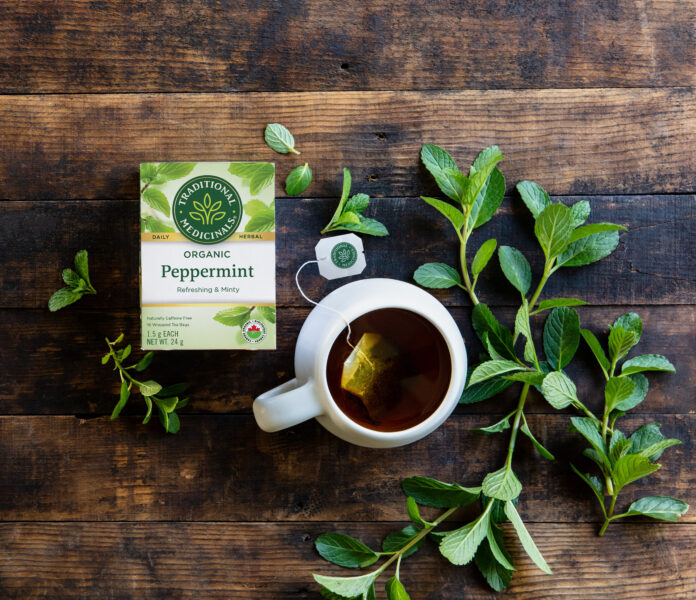
Image: Traditional Medicinals
Best-Selling Herbal Tea Products
Traditional Medicinals is known for its flagship herbal teas, including Throat Coat®, Smooth Move®, and Mother’s Milk®.
“These teas continue to deliver on quality and efficacy after nearly 50 years,” Horst noted. “Throat Coat, featuring slippery elm bark, is sourced sustainably to protect future generations.”
Smooth Move®, made with Senna, has been used for centuries to relieve occasional constipation, while Mother’s Milk® supports lactation with galactagogues—herbs known to enhance milk production.
“With increasing consumer demand, we are expanding our product line, including the new Stress Ease® line for tension relief and focus,” Horst shared.
Image: Traditional Medicinals
Traditional Medicinals’ Commitment to Sustainability
Sustainability is a core focus, with a goal of 80% Fair Trade Certified ingredients by 2030.
“Our business depends on the natural world, making sustainability an essential commitment,” Horst stated. “We work closely with farmers to address climate challenges.”
Recent initiatives include:
A Natural Capital Impact Assessment to evaluate climate risks
Solar-powered drying tunnels in Bulgaria
Regenerative agricultural projects in Paraguay
Social Impact: Investing in Global Communities
Traditional Medicinals has invested over $20 million in global communities, including a mobile healthcare program in the Philippines for abaca farmers.
“These farmers work in remote areas and lack access to healthcare,” Horst explained. “We partnered with the Department of Health to provide cloud-based diagnostic equipment and portable ultrasound machines.”
In November, Traditional Medicinals hosted Filipino doctors at its California headquarters for advanced training. “We are now exploring ways to combat tuberculosis in these farming communities,” she added.
Dr. Malvar Boat in the Philippines. Image: Traditional Medicinals
The 50th Anniversary Celebration: ‘50 Years in Bloom’
Traditional Medicinals has launched ‘50 Years in Bloom’, a year-long campaign celebrating its milestone with education, sustainability initiatives, and giveaways.
Key highlights:
Plant Wisdom Collective: A free online herbal education series launching in May
Fair for Life Certified Products: New ethical sourcing products arriving in 2025
Exclusive 50th Anniversary Gift Sets featuring retro packaging
50th Anniversary Website: An interactive journey through the company’s history, including an animated Volkswagen bus ride
The Future of Herbal Wellness
As demand for natural products grows, Traditional Medicinals is committed to sustainable growth and fair business practices.
“We aim to increase fair wages, agronomy support, and direct investments in farming communities,” Horst shared. “Advocating for gender parity, education, and water security remains a priority.”
Traditional Medicinals recently became Canada’s No.1 organic tea brand, increasing sales by 25% in the past year.
“We’ve been in the Canadian market since 1984, and all our Canadian teas are produced and sold domestically,” Horst said. “We’re thrilled to see more Canadians embracing herbal wellness.”