bb.q Chicken’s 50th Canadian location, located at 18 Ringwood Dr, Unit 7, Whitchurch-Stouffville, ON. (CNW Group/bb.q Chicken)
bb.q Chicken, the world’s largest Korean fried chicken franchise with over 3,800 locations worldwide, has opened its 50th location in Canada – located at 18 Ringwood Dr, Unit 7, Whitchurch-Stouffville, ON.
“Since entering the Canadian market in 2019, bb.q Chicken has quickly established itself as a favourite among food lovers, offering authentic Korean fried Chicken, a variety of flavors, and unparalleled crispiness,” said the company in a news release.
“Guided by the belief that “food is the gateway to all culture,” bb.q Chicken continues its mission of bringing quality-driven Korean fried chicken and authentic K-Food to the world. The name, bb.q (pronounced bee-bee-dot-que), stands for ‘Best of the Best Quality,’ reflecting the brand’s commitment to delivering memorable dining experiences at every location.”
To celebrate the milestone, bb.q Chicken said it will host a nationwide celebration from December 13 to January 12, 2025. Prizes include 50 free chicken coupons, one-year chicken subscriptions, and more.
bb.q Chicken, short for Best of the Best Quality Chicken, is the world’s largest Korean fried chicken franchise with over 3,800 globally, including 250+ in the U.S.
Recognized as one of the fastest-growing chains by Restaurant Business Magazine and ranked as the Best Fast Food Fried Chicken by Taste of Home Magazine, bb.q Chicken continues to set the global standard for Korean fried chicken, it said.
The Midtown shopping centre in Saskatoon has had an incredibly successful year in 2024, opening eight new stores, including two first-to-market (first in the province) retailers.
Sales are projected to hit $191 million by the end of December, a $5-million increase from 2023.
From outerwear to beauty products to dining options and more, Midtown has seen substantial growth in retailers throughout 2024.
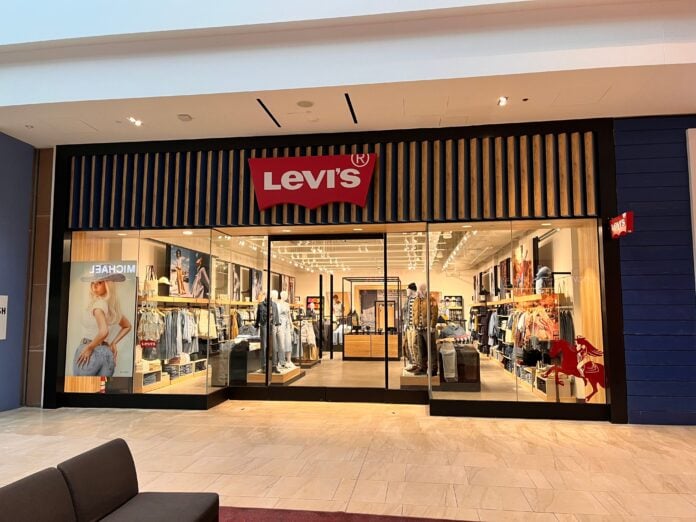
In the final quarter of the year alone, the shopping centre has welcomed eight new retailers into its roster, including the first-to-market Levi’s store and highly anticipated Mountain Warehouse — the largest location the brand has opened outside of the United Kingdom.
Tara Faris
“Saskatchewan shoppers visiting Midtown have some exciting new brands to peruse this holiday season,” said Tara Faris, General Manager, Midtown. “We’re proud to have welcomed so many incredible retailers into Midtown in 2024, and there’s more to come in 2025!”
Recent retailer additions and changes to the shopping centre include:
Opening in early 2025 are JD Sports, a European sportswear company featuring brands such as Nike, Adidas, Vans and UGG, Mobile Q, a cell phone repair and accessories retailer, and Gong Cha, a popular bubble tea chain.
The new retailers join Midtown’s 140 stores, including anchor retailers Hudson’s Bay, H&M, Toys R Us and Sport Chek, as well as Saskatchewan’s only Victoria’s Secret, Pink, Aritzia, Michael Kors and MAC Cosmetics.
Toran Eggert
“We are thrilled to announce the addition of the first Mountain Warehouse in Saskatchewan to the family of retailers at Midtown,” said Toran Eggert, Urban Reform Realty Inc. “Midtown has really cemented itself as the premier fashion destination in the province. With over 70,000 square feet of vacancy filled since 2023, and a 10 per cent increase in sales productivity, Midtown and the Urban Reform Retail team look forward to continuing this growth alongside the great city of Saskatoon.”
Foot traffic throughout 2024 saw 4.1 million visitors in Midtown, with productivity per square foot reaching $746.00 as of October 31, 2024, a $66.00 increase from 2023. Overall sales have also increased significantly, with total sales projected to reach $191 million by the year’s end, a $5 million increase year over year.
Faris said the shopping centre has a strong leasing strategy.
“We definitely have a first to market focus that creates those opportunities that resonate with our consumers, that keep us sort of relevant and resilient,” she said.
“So we’ve got lots of new and exciting retailers here. I think that our main focus is bringing retailers into the centre that don’t already exist in the market or maybe are under-represented in the market. To keep us relevant in the consumer’s mind. Something that is a unique offering in the city or maybe it’s in other cities that Saskatoon residents would travel to go and see – really focusing on bringing them into our marketplace and meeting the needs of our consumers.”
Photo: Midtown
“Our foot traffic is remaining quite strong. We saw about 4.1 million visitors last year. That’s continuing to trend upwards. We’ve got some growth on rolling 12 (months) year to date. In terms of our sales, we continue to trend upward. There has been some softening but still all positive news. Our per square foot productivity is up seven per cent on rolling 12, about 4.5 per cent year to date. Very good, trending upwards there. We’re always mindful, of pressure on our consumers. Inflation and high interest rates certainly have affected consumer spending to some degree in certain categories. But Midtown’s sales performance continues to remain strong.
“With this new leasing activity, Midtown continues to have the most vibrant and unique tenant mix in the province, which really is a strong indicator of maintaining our resilience and, and relevancy. Continuing to stay fresh and exciting. Continuing to be that community hub to gather, to shop and dine and, continue to stay relevant in the marketplace.”
With many small businesses still scrambling to comply with the temporary GST/HST holiday coming into effect this Saturday, the Canadian Federation of Independent Business (CFIB) has created free counter signage which small businesses can print and display at their point of sale to explain the challenge to consumers.
Dan Kelly
“Business owners were given just two weeks to prepare, right in the middle of their busiest season,” said Dan Kelly, CFIB president. “For some small retailers, this has required going through and making judgement calls on thousands of items based on limited guidance from the Canada Revenue Agency. It is going to be a hot mess.
“Given the confusing set of rules and lack of time, it will be nearly impossible for most retailers to implement this right. This temporary tax change has created brand new tax categories that have never existed before, including differential sales tax rates on toys marketed at adults or children, drinks based on their percentage of alcohol or collectible dolls versus dolls for play. Consumers will bring their own interpretation, expecting part-time clerks and store owners to have become sudden tax experts on rules that even CRA is struggling to sort out.
“It took 10 days for government to clarify the tax treatment of supplies for model airplanes, and even that is dependent on who the model plane is designed for. Despite the best efforts of the CRA, business owners will be left to make educated guesses on thousands and thousands of items.”
The CFIB said its special counter sign is designed to ask consumers to be patient and understanding with small businesses that are doing their best to implement the change.
CFIB is calling on consumers to:
Avoid asking for a price-adjustment to remove the sales tax from goods purchased before the holiday or returning/repurchasing items to avoid the tax. Returning and repurchasing items on a credit card may require the retailer to pay 1-2% payment processing fees up to three times.
Avoid arguing with a clerk over whether an item is taxable or not, especially if an item is marketed to adults but purchased for a child.
Avoid expecting a clerk to be a tax expert, override the point-of-sale system or call the manager/owner before finalizing a purchase.
Take up any complaints or questions with Members of Parliament, rather than small business owners.
The CFIB is Canada’s largest association of small and medium-sized businesses with 97,000 members across every industry and region.
“CFIB’s recent survey found that only 4% of small businesses expect to see stronger sales as a result of the temporary GST/HST holiday. Three quarters of those affected by the changes said it will be costly and complicated to implement the holiday, while two-thirds (65%) said there’s not enough time to do it,” said the organization in a news release.
“CFIB continues calling on the government to give affected businesses a minimum $1,000 credit in their GST/HST accounts to cover administrative costs and to order the Canada Revenue Agency to forgive taxes owed, penalties and interests for any good faith errors made.”
As the federal government is struggling to provide more than basic information on the tax holiday, CFIB has created a special website for small businesses with a detailed Q&A on dozens of commonly asked implementation questions.
The recent Canadian Apparel Insights report, by Trendex North America, forecasts that apparel sales in Canada will decrease by 1.5% in 2024 but increase by 1.0% in 2025.
Trendex said a number of inputs and assumptions went into its forecast:
Historic Data
Total sales decreased 1.7% through August 2024;
Total apparel specialty store sales decreased 0.3% through August 2024;
Apparel average prices fell 6.0% through September 2024; and
Non-US foreign tourism increased 4.5% through July 2024.
Subjective Inputs
Canada’s GDP will increase by 1.1% in 2024 and 1.7% in 2025;
Canada’s consumers will continue to be adversely affected by inflationary pressures. In response consumers will continue to focus on value;
Retailers in response will increase their promotional activity to record levels;
Retailers in the upper-middle price segment will lose share as consumers trade down;
Both Shein and Temu will continue to gain apparel market share;
Apparel resellers will see their sales grow four to five times faster than that for the total market;
Foreign tourism levels in 2025 will return to pre-COVID levels;
Sales Force is forecasting a 2% growth in retail sales during November/December 2024.
“After increasing by 36.4% in August, Canadian apparel exports declined by 5.4% during September 2024. Through the first three quarters apparel exports were up only 0.9%. While exports to China increased 45.9% YTD, exports to the U.S. decreased 2.1%. Exports also fell to the Netherlands (-19.8%), the UK (-37.0%), and Italy (-25.0%), while exports increased to South Korea (+22.3%), Australia (+21.4%) and Germany (+37.4%),” said the report.
“Apparel imports registered their strongest growth this year in September 2024, as they were up 14.0%. However YTD apparel imports decreased 1.7%. While imports from China (-1.6%) and Bangladesh (-3.1%) fell apparel imports YDT increased from Cambodia (+6.0%) and Vietnam (+5.2%). Vietnam continued to widen its lead over Bangladesh as the second largest source of apparel imports.”
The report highlighted a recent article in Retail Insider, which detailed a number of developments that should, going forward, positively affect Canadian retailing including:
Augmented Reality—Allows a customer to see how they would look in a garment without actually trying it on. This virtual visualization should in theory, lead to fewer returns;
Artificial Intelligence—Provides personalized e-commerce shopping experience/assistance. Allows retailers to make product suggestions, while also being able to utilize dynamic pricing;
Sustainability—A concept of importance to an ever expanding segment of the market;
Flexible Payment Options—Also know as BNPL, allows customers to purchase more expensive items and more frequently.
Photo- Ron Lach
“While these trends will affect almost all of Canada’s major retailers, they will have different implications for Canadian apparel retailers and in some cases these new developments could adversely affect Canadian headquartered apparel retailers,” said the Trendex report.
“While the future benefits of augmented reality and artificial intelligence are obvious, incorporating them into a retailers interface with consumers requires both a substantial upfront investment in terms of both capital and employee time. (Although there are services which can be leveraged, they offer a cookie-cutter, one size fits all approach vs. a true customized approach).
“Additionally, the updating/maintenance costs associated with both efforts could be substantial. While international apparel retailers (e.g. H&M, Uniqlo, Gap, etc.) can amortize these costs over a large number of doors, Canadian apparel chains, with an average of 39 stores will, in the majority of cases, be unable to take advantage of these two new technology developments to their fullest. The downside of these developments is that Canadian headquartered apparel retailers and even more so independent apparel retailers will continue to lose share to their international competitors with their deep pockets.
“Although the awareness of sustainability among Canadian consumers continues to increase, there are less than two dozen Canadian headquartered apparel specialty chains who “call out” their sustainability efforts. The primary reason for not doing so again revolves around the cost to both implement and market sustainable products. So, once again Canadian apparel retailers could be put at a competitive disadvantage vs. their much larger international competitors.
“Lastly, offering consumers a BNPL option, for apparel retailers should be a “no brainer”. However a survey conducted this year by Trendex found that less than 40% of apparel chains offer their customers a BNPL option. Of interest is that the percentage of Canadian headquartered apparel chains offering BNPL increased from 37% in 2022 to 39% in 2023. (Hardly a ground swell of retailer acceptance!)”
The Northern Super League, Canada’s first professional women’s soccer league, has announced Canadian Tire Corporation as a Founding Partner ahead of its inaugural season in April 2025.
Reflecting Canadian Tire Corporation’s continued commitment to advancing professional women’s sports in Canada, this landmark multi-year, multi-million-dollar partnership represents a transformative step forward for the League, ensuring its growth, sustainability, and long-term impact on Canadian women’s soccer, said a news release.
“Central to this partnership is the introduction of the Home Field Advantage program, an innovative initiative dedicated to enhancing the athlete experience both on and off the field. Bolstered by funding and resources provided by Canadian Tire Corporation, the Home Field Advantage program will support players as they put down roots in new homes and communities across Canada, while also helping clubs optimize facilities as they prepare for the season ahead,” it said.
Diana Matheson
“With a focus on league development and community support, this partnership builds on the existing ties and foundational work accomplished by both partners during the Project 8 development phase led by Northern Super League founder Diana Matheson.”
Christina Litz
“We are thrilled to officially welcome Canadian Tire Corporation as the Northern Super League’s first Founding Partner,” said Christina Litz, President of the Northern Super League. “When this league was just a dream, Canadian Tire Corporation was the first to step up and say, ‘Count us in.’ Their support made it possible for Diana Matheson to turn her vision into reality.
“This landmark partnership reaffirms their commitment to advancing the Northern Super League and inspiring the next generation of athletes across Canada. Canadian Tire Corporation has been there from day one, and now they are paving the way for the future of our league.”
Kim Saunders
“From ideation to kick-off, Canadian Tire Corporation has been honoured to join the Northern Super League along this historic journey to create Canada’s very own professional women’s soccer league,” said Kim Saunders, Vice President, Partnerships, Canadian Tire Corporation. “Guided by the inspiring vision of our league partners and exemplified through our collaboration with the Home Field Advantage program, we are proud to stand with the Northern Super League as a Founding Partner to further our commitment to championing women’s professional sports and advancing gender equity as we strive to make life – and sport – better in Canada.”
Key highlights of Northern Super League’s partnership with Canadian Tire Corporation include:
Home Field Advantage Program: Annual funding for all Northern Super League clubs, dedicated to enhancing the athlete experience both on and off the field. Resources and support will be directed to helping new players settle into their new community while also assisting teams improve their facilities ahead of kick-off.
Broadcast and Branding Presence: Canadian Tire Corporation banners, including SportChek, Sports Experts, and Canadian Tire retail, will be prominently featured across Northern Super League platforms, including in Club stadiums during regular season and playoffs and during national broadcasts of matches on TSN, RDS, and CBC Sports. Canadian Tire Corporation will also collaborate with Northern Super League clubs and athletes to produce exclusive social and digital content.
League Sleeve Patch Partner – Canadian Tire’s iconic red triangle will be proudly displayed on the left sleeve of every Northern Super League club jersey.
Canadian Tire Corporation, Limited is a group of companies that includes a Retail segment, a Financial Services division and CT REIT. Its retail business is led by Canadian Tire, which was founded in 1922 and provides Canadians with products for life in Canada across its Living, Playing, Fixing, Automotive and Seasonal & Gardening divisions. Party City, PartSource and Gas+ are key parts of the Canadian Tire network. The Retail segment also includes Mark’s, a leading source for casual and industrial wear; Pro Hockey Life, a hockey specialty store catering to elite players; and SportChek, Hockey Experts, Sports Experts and Atmosphere, which offer the best activewear brands.
The company’s close to 1,700 retail and gasoline outlets are supported and strengthened by CTC’s Financial Services division and the tens of thousands of people employed across Canada and around the world by CTC and its local dealers, franchisees and petroleum retailers. In addition, CTC owns and operates Helly Hansen, a leading technical outdoor brand based in Oslo, Norway.
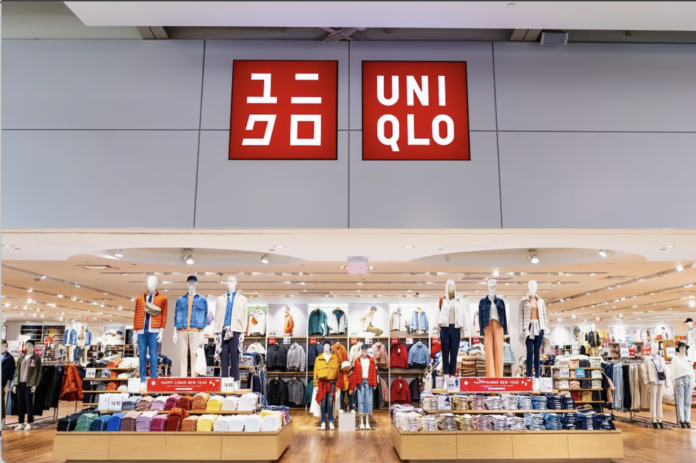
UNIQLO, the global apparel retailer, has launched a new global initiative to support people in need through the donation of one million HEATTECH clothing items worldwide.
“The Heart of LifeWear” initiative will see the giant retailer donate 30,000 HEATTECH units in Canada to provide warmth to individuals experiencing homelessness, asylum seekers, refugees, and others in need.
Jean Shein, Global Director of Sustainability at UNIQLO, said: “At UNIQLO, we believe in the power of clothing to make a positive impact on people’s lives. Through ‘The Heart of LifeWear’ initiative, we are committed to supporting communities across Canada by providing warmth and comfort to those who need it most during this holiday season.”
In the spirit of giving, customers are invited to contribute to this campaign by donating at checkout in all UNIQLO stores in Canada to support homeless youth through Covenant House. They can also donate their gently used UNIQLO clothing through the RE.UNIQLO program, which repurposes these items to further aid communities, said the company.
Since 1972, Covenant House has offered housing and support to youth overcoming homelessness, human trafficking, and exploitation. With a wide range of services, Covenant House remains Canada’s largest agency supporting young people during the colder months and throughout the year. By providing HEATTECH products, UNIQLO aims to meet the basic needs of Covenant House youth, empowering them with warmth and dignity this winter.
New Circles Community Services is a not-for-profit, grass-roots agency that builds strong and caring communities by providing clothing and skills training programs to equity-deserving individuals with limited income. With the colder temperatures, Ontario has an extremely high demand for warm clothing. HEATTECH will allow the New Circles community to stay warm and comfortable during the winter months.
Edmonton Emergency Response and Newcomers Services (EERNS) is a nonprofit charitable organization that helps fire victims, disaster victims, family violence victims, newcomers, and refugees by providing essential needs, such as household necessities, clothing, furniture, and personal hygiene items. To better prepare newcomers for harsh Alberta winters, HEATTECH will serve as the base layer needed to stay warm and comfortable when temperatures dip.
With a commitment to cultural safety and harm reduction, The Open Door Montreal is a low-barrier emergency shelter that operates 365 days a year, 24 hours a day. It offers a variety of programs and services for individuals experiencing homelessness, with priority given to unhoused Indigenous communities of Milton Parc. The Open Door largely relies on community clothing donations; having HEATTECH products will ensure participants have adequate protection from frigid temperatures.
Uniqlo at CF Chinook Centre (Image: Mario Toneguzzi)
UNIQLO Background
UNIQLO is a brand of Fast Retailing Co., Ltd., a leading Japanese retail holding company with global headquarters in Tokyo, Japan. UNIQLO is the largest of eight brands in the Fast Retailing Group, the others being GU, Theory, PLST (Plus T), Comptoir des Cotonniers, Princesse tam.tam, J Brand and Helmut Lang. With global sales of approximately 2.77 trillion yen for the 2023 fiscal year ending August 31, 2023 (US $18.92 billion, calculated in yen using the end of August 2023 rate of $1 = 146.2 yen), Fast Retailing is one of the world’s largest apparel retail companies, and UNIQLO is Japan’s leading specialty retailer.
UNIQLO continues to open large-scale stores in some of the world’s most important cities and locations, as part of its ongoing efforts to solidify its status as a global brand. Today the company has a total of more than 2,400 UNIQLO stores across the world, including Japan, Asia, Europe and North America. The total number of stores across Fast Retailing’s brands is now close to 3,600.
Retail Insider is streamlining its Canadian retail news from around the web to include a handful of top news stories that can be viewed quickly during the day. Here are the top stories from the past several days.
Finance Minister Chrystia Freeland’s recent testimony before the Senate to support the government’s proposed temporary two-month GST holiday has faced significant backlash. Senators criticized the measure as a flawed piece of fiscal policy driven more by political survival than sound economics. The proposal is particularly troubling because it could lead to unintended consequences, including opportunity pricing by grocers that may impact even non-taxable food items.
Grocers May Exploit the GST Holiday
The concern lies in how grocers might exploit this temporary tax break. By subtly raising prices on non-taxed goods, retailers could create additional inflationary pressures at the grocery store—a scenario that would further strain Canadian households already grappling with rising costs. Temporary measures like this GST holiday can also disrupt pricing strategies, encouraging grocers to adjust overall margins to compensate for the two-month tax break, leading to higher prices on non-taxable food even after the holiday ends. Essentially, consumers could end up paying more in the long term for food that is currently not subject to GST. Canadians need to know this.
The Senate, often referred to as the “chamber of sober second thought,” has played an important role in scrutinizing this legislation to ensure it truly benefits Canadians. Observers have noted that with a fractured government prioritizing political survival, many recent proposals emerging from the House of Commons seem rushed and poorly conceived.
Debate Sparks Discussion on Taxing Food Permanently
The GST holiday debate has also reignited broader discussions about the ethics and practicality of taxing food. The NDP has announced plans to introduce a motion to permanently eliminate the GST on grocery store food. This measure deserves serious consideration, as Canadians currently pay between $1 billion and $1.5 billion annually in GST on groceries—a figure that continues to grow each year.
Part of the issue lies with “shrinkflation,” which has led to a growing number of food items becoming taxable. For example, a box of six granola bars is not taxed, but a box of five is. Similarly, a container of ice cream over 500 ml is non-taxable, while a smaller one is taxed. Food economists estimate that 25 to 100 items each year cross into taxable territory due to such arbitrary thresholds. This fiscal inconsistency disproportionately affects consumers and adds to the inefficiencies of Canada’s tax regime.
Some proponents of food taxation argue that taxing less nutritious items, such as sugary snacks or beverages, can discourage unhealthy consumption. However, studies highlight that empirical evidence does not support this claim. In Canada, no studies have conclusively shown that food taxes result in meaningful reductions in sales or significant changes in consumption habits.
The soda tax implemented in Newfoundland and Labrador in 2022 provides a clear example. While the tax generated $6.1 million in its first year, revenue nearly doubled to $12 million in the following fiscal year—indicating that soda consumption increased. Economists attribute this outcome to the supply chain’s ability to absorb the tax and maintain consistent retail prices, effectively neutralizing any deterrent effect. This policy, instead of promoting healthier choices, became a straightforward revenue-generating mechanism.
Taxing Food is Ineffective and Regressive
Taxing food is both ineffective and regressive. It disproportionately penalizes lower-income households, who often rely on lower-cost, less nutritious options out of necessity or limited awareness. Education and consumer awareness, they argue, are far more effective tools for encouraging healthier eating habits.
The GST holiday debate has exposed how Canadians have become increasingly conditioned to view taxes as a tool for influencing behavior, despite little evidence to support this belief. A permanent removal of the GST on grocery store food would represent a meaningful step toward addressing food affordability while respecting consumer choice. Rather than relying on punitive taxes, the focus should shift to education, access to affordable nutritious foods, and policies that support healthier lifestyles without imposing additional financial burdens on consumers.
Leger, the largest Canadian-owned market research and analytics firm, has released the second edition of its study,Cracking the Newcomer Code, a comprehensive study of newcomers to Canada.
The company said in a news release that the study offers an unprecedented perspective on the experiences, challenges, and issues newcomers face while painting a portrait of the evolution of their situation in various areas, such as the economy, employment, housing, societal integration, and perceptions of racism in Canada.
“This edition of the study also includes a brand-new section on newcomers’ retail habits in Canada, focusing specifically on grocery shopping and the beauty and personal care industry. Additionally, a more general retail-focused section has been added, addressing improvements to stores, advertisements, and loyalty programs,” it said.
Lisa Covens
“Retailers play a key role in helping newcomers to Canada feel at home,” said Lisa Covens, Vice President of Public Affairs at Leger. “With many newcomers facing financial challenges and looking for products that reflect their culture, offering diverse options and strong loyalty programs can make a big difference. Retailers have a unique opportunity to support newcomers while building stronger, more inclusive communities.”
Amid the federal government scaling back on its original immigration plans, as they plan to decrease the expected new permanent resident targets by 27% by 2027, it is increasingly important that Canada welcomes and retains the newcomers who choose our country. Embracing and supporting newcomers, both in society and through retail, is vital to fostering their integration and encouraging them to stay. This study, unveiled in a
webinar, is essential for those seeking to understand how this population thinks and shops and how products and services can be better adapted to suit their needs, said Leger.
Key takeaways from the study
Newcomers are walking a financial tightrope as they grapple with the Canadian economy;
Financial pressures plague newcomers to Canada with 51% describing their financial situation as poor compared to just over a third of the general population in Canada;
Adding to this, many newcomers are walking the income-expense tightrope with 58% saying their income is either equal or less than their expenses;
From home to the grocery aisle, cultural connection matters. One-quarter say the availability of ethnic products from their country of origin is an important key factor when choosing a grocery retailer;
Even more striking, 61% say their cultural background influences their purchasing decisions when shopping at a grocery store. Additionally, three in 10 say it is important that the staff member serving them is from their community;
Gaps in the aisles: room for improvement for grocers to meet the needs of newcomers. Two-fifths (44%) face challenges finding grocery products that meet their cultural or dietary preferences including food, cultural products, and spices or sauces;
Similar challenges exist in the personal care and beauty sector, with 38% reporting challenges finding products that meet their cultural preferences, such as skin and hair products;
Photo: Leger
First-moved advantage is effective as loyalty programs are important to newcomers;
Like all Canadians, newcomers have embraced loyalty rewards programs with nearly all belonging to at least one loyalty program. More than half of newcomers (54%) say that a loyalty program is a method for attracting newcomers;
Furthermore, nearly three-quarters of newcomers say they would be likely to switch retailers for better loyalty reward;
Optimism and opportunity: newcomers have a renewed hope in Canada to live up to its promise. Two-thirds of newcomers would choose to immigrate to Canada again, a figure unchanged since Spring 2024;
While three-quarters plan to stay permanently, one- quarter is considering leaving;
Retailers can play a key role in keeping newcomers in Canada, as two-thirds say retailers help them adapt to Canadian culture and feel positive when they find familiar products;
Despite challenges, 80% of newcomers remain hopeful that Canada will uphold its values. Six in 10 feel positive about sharing that they are a newcomer, with one-third sharing their status proudly.
Honestly Good Chicken Fingers at CF Sherway Gardens in Toronto. Photo: Cadillac Fairview
Honestly Good Chicken Fingers has officially launched in the Greater Toronto Area (GTA), bringing a fresh, premium fast-casual dining experience.
Focused on top-quality meals, efficient service and a family-friendly atmosphere, Honestly Good is raising the bar in the quick-service restaurant industry, the brand said in a news release.
With locations at CF Sherway Gardens in Etobicoke and atThe Well in Toronto, the restaurant serves only the finest chicken fingers, sourcing from trusted suppliers who adhere to the highest standards of freshness. Each meal is made-to-order, featuring a signature, scratch-made breading crafted with a unique blend of herbs and spices for an unforgettable flavor and satisfying crunch, it said.
Photo: Honestly Good Chicken Fingers
“We’re committed to elevating the chicken finger dining experience in Canada,” said Naomi Kempkes, Co-Founder and Vice President of Operations at Honestly Good Chicken Fingers. “We’re thrilled with the success of our two Toronto locations and excited to continue expanding Honestly Good nationwide.
“The chicken finger market in Canada is valued at approximately $2 billion. With a team of seasoned industry professionals and a brand poised for nationwide growth, we are ready to expand across Canada and the United States, establishing ourselves as the premier destination for high-quality chicken finger meals.”
Designed with simplicity and efficiency in mind, Honestly Good streamlines its menu to reduce complexity, ensuring exceptional quality control and a smooth guest experience. This operational approach guarantees consistency in every meal while maintaining manageable overhead costs, it said.
Photo: Honestly Good Chicken Fingers
“The restaurant also prioritizes creating a welcoming environment for families. Recognizing the challenges of dining out with children, Honestly Good enhances the experience with fun elements like face painting, balloon artists, and magicians,” said the company.