Home Blog Page 705

New Research Shows how a Single Consumer Group has the Power to Influence Product Pricing at Retailers [Op-Ed]

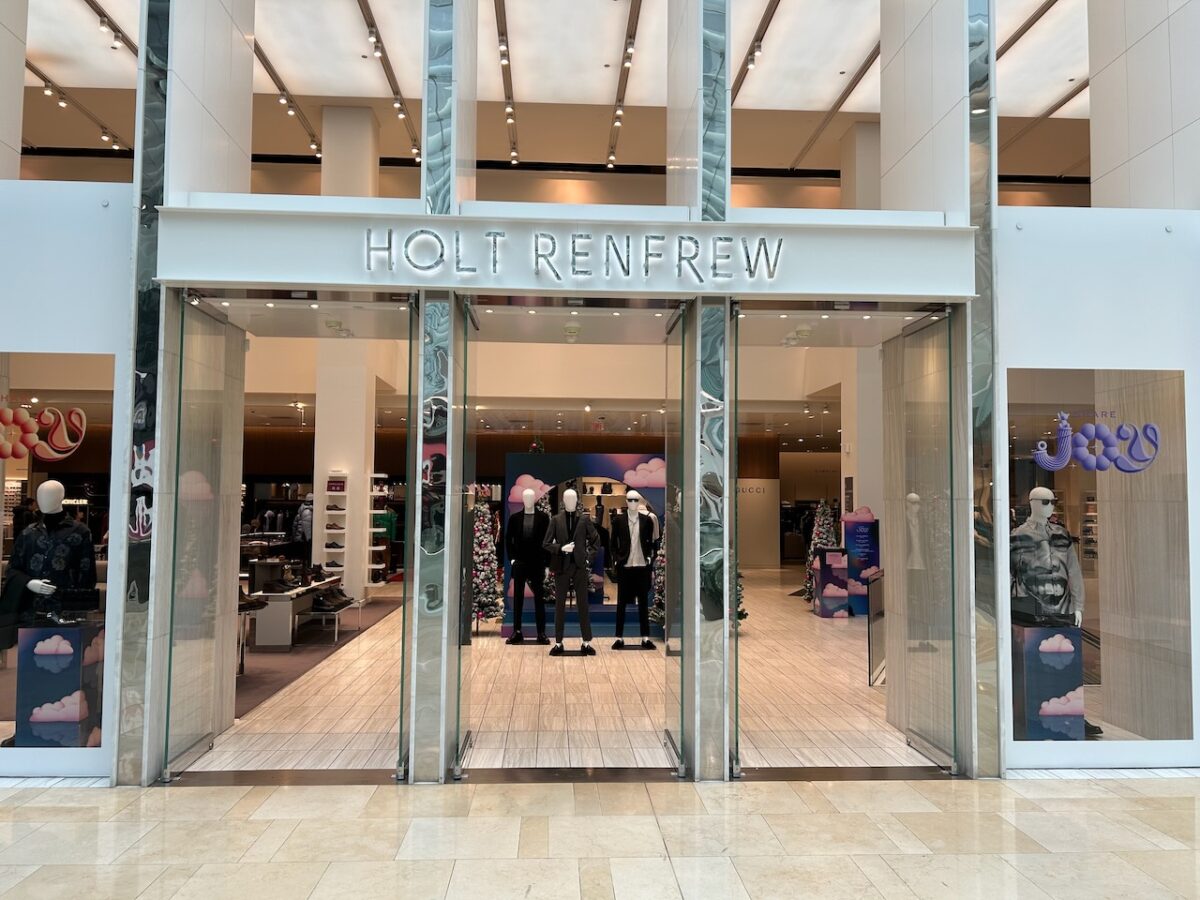
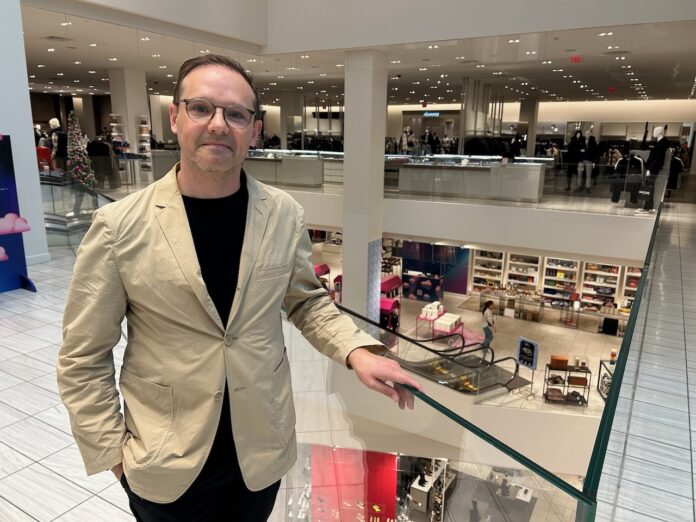
Holt Renfrew at Yorkdale Shopping Centre (Image: Dustin Fuhs)

Have you ever gone to a store to try on shoes before going on to buy them elsewhere? Or had a salesperson talk you through the advantages of different models of printers before buying a cheaper version online? If so, you have engaged in “showrooming.”

Showrooming is the practice of visiting brick-and-mortar retail stores to research a product before buying it elsewhere at a lower price. It allows consumers to look and test out products before spending their money on them.

Showrooming, along with online shopping, has long been predicted to be a threat to retailers. It’s easy to understand the concern — some have argued that showrooming is what led to the demise of RadioShack and Circuit City.

In addition, research has found that brick-and-mortar businesses do indeed suffer from this type of consumer behaviour. Showrooming puts retailers under price pressure by intensifying competition and squeezing margins.

But this isn’t always the case. Recent years have seen stores that encourage showrooming, like Best Buy, and companies like Amazon, that have invested in bricks-and-mortar stores, to flourish. This suggests the reality of showrooming might be a little more complicated than initially thought.

How consumers affect prices

Our recent research dispels the assumption that showrooming always drives prices down in retail. Rather, our study found the opposite can occur: showrooming can actually increase prices.
Our research took into account several different types of consumers. Some consumers were pickier than others and preferred to shop at stores with more product variety, while others engaged in showrooming.


Crucially, those who showroomed didn’t engage in price-comparison shopping — they did their research ahead of time and knew exactly what products and prices to seek out.

Some shoppers didn’t engage in showrooming because they felt guilty about buying a product elsewhere after a salesperson spent time marketing a product to them, or had no time to visit many different venues.

But other consumers were not-so-choosy and opted to shop at stores with less variety, with the intent of making a purchase, so long as they found a product that was a good enough fit. If they didn’t find an acceptable fit, they moved onto another store.

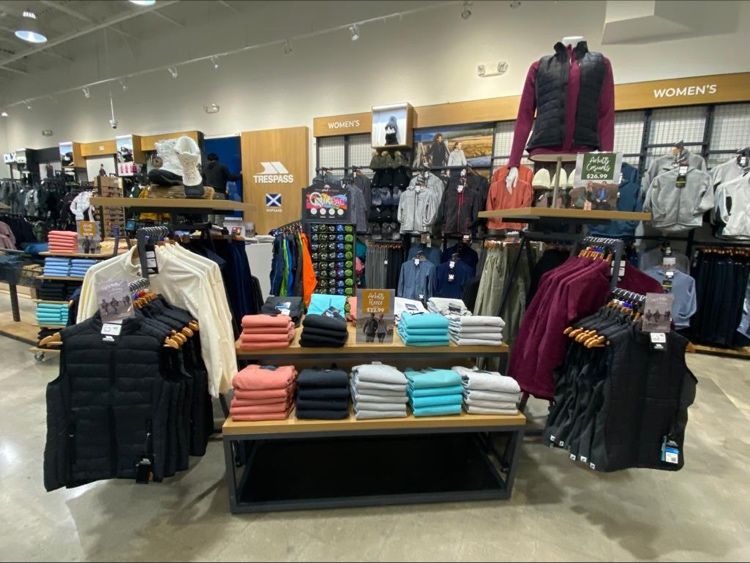
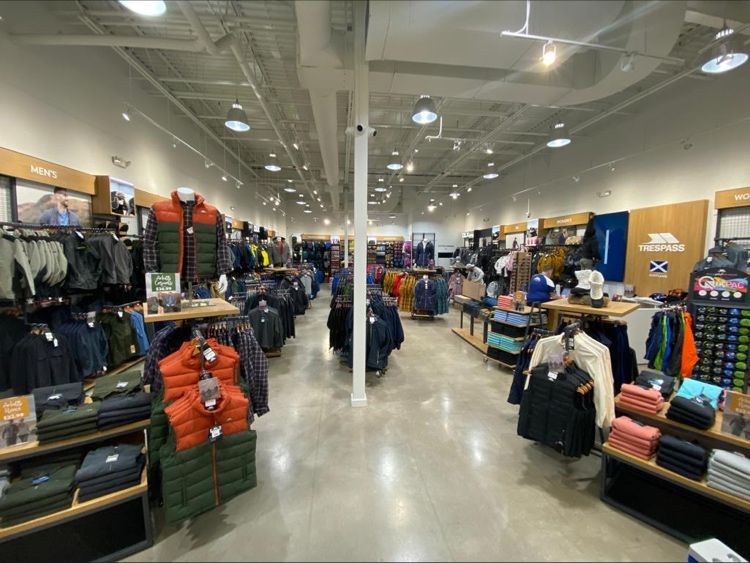
Mountain Warehouse at Square One (Image: Dustin Fuhs)

Our research found that only this last kind of consumer — the not-so-choosy consumer who doesn’t showroom — was the key to determining prices. Their choices and behaviours determine product prices in any given sector.

The reason why showrooming can increase prices is because most consumers — including showroomers — do not compare prices. This leads stores to increase their prices (even just slightly) to make more profit.

Stores and consumer behaviour

Our research differs from past studies in a crucial way. Instead of assuming there is only one kind of store where consumers can discover how suitable a product is, our research accounted for three different types of stores.

The first type, known as deep stores, carry many varieties of products within a certain category. Best Buy, for example, carries many types of television to allow consumers to find the product that suits them best. Deep stores tend to charge higher prices because their shoppers are more likely to make a purchase. Picky consumers tend to shop here.

The second type, known as shallow stores, carry many different types of products, but fewer brands within each product category. Walmart and Costco are examples of shallow stores. These types of stores tend to have lower prices, and less picky consumers tend to shop there.

Walmart Supercentre at Square One (Image: Dustin Fuhs)

Lastly, online stores offer the widest variety of goods (and usually at the lowest prices), but don’t allow consumers to test out products. The mix of consumers at these three store types affects how retailers price their products by shaping the shopping experience.

Broader implications

As showrooming becomes more widespread — and easier to do thanks to online shopping — prices across the retail industry could increase, depending on price sensitivities and the overall mix of different kinds of consumers.

Ultimately, the range of different kinds of stores determines how people shop. Consumers’ shopping patterns and behaviours, in turn, determine prices.

While the perceived threat of showrooming has led to strong policy proposals — like one minister in Spain that proposed retailers should charge shoppers for using changing rooms — our study suggests the effects of showrooming are more subtle than initially thought.

Understanding showrooming requires thinking about the impact the practice has on consumer shopping patterns and how stores respond to them. Retailers, policymakers and observers should be wary of over-emphasizing the role showrooming plays in bringing down prices and changing the retail landscape.

By Heski Bar-Isaac, Distinguished Professor of Economics and Finance, University of Toronto and Sandro Shelegia, Associate Professor, Department of Economics and Business, Universitat Pompeu Fabra

This article is republished from The Conversation under a Creative Commons license. Read the original article.

Quick Service Salad Concept ‘Chopped Leaf’ Plans Significant Location Expansion for 2023 [Interview]

Image: The Chopped Leaf

Kelowna-based The Chopped Leaf, which opened its first location in the BC city in 2007, has grown to more than 100 locations in five provinces with plans to add another 30 locations this year.

The Chopped Leaf, owned and managed by Innovative Food Brands, is focusing on Ontario, Manitoba and Atlantic Canada and locations are franchisee-owned and operated.

The brand was founded by Blair Stevens and his wife Karla.

“We’re in the quick service world. We’ve told our consumers we’re more so the full-service experience put into a quick service manner,” said Blair Stevens, President & Founder of The Chopped Leaf. “Our pride and joy is serving salads, bowls and wraps along with a few sandwiches and quesadillas.

“What makes our brand special there’s no doubt about it is the flavours of it. All our dressings and soups are those same recipes that my wife and I developed from day one that are unique recipes to the brand. We offer dine-in and takeout experiences.’

Image: The Chopped Leaf
The fun and upbeat tone of the ad encourages viewers to try out the Shake-A-Bowl and experience the joy of shaking their own salads. The commercial was created by award-winning advertising agency, Crew, and directed by, Rob Tarry. The campaign will be rolled out across various media channels, including social media and national broadcast TV. 

He said the original menu was created in the Stevens home kitchen.

“We knew that salads were the base of the menu. Karla and I would brainstorm over each family dinner and lay out what we thought was best. Karla would then get to work producing numerous dressings to test. Every home meal for some time ended up being a potential chopped leaf menu item,” said Stevens.

The name, The Chopped Leaf, came from the idea of a herb cutter (mezzaluna) chopping the lettuce.

Today’s new menu includes nine flavours available as a bowl, wrap, salad and the new shake-a-bowl packaging makes it easy to eat a fresh, healthy meal on the go.

“I came out of high school and worked some construction. My old man always said listen if you made some money we’ll match it and we can get into business together,” said Stevens. “I started off I owned a franchise of Blimpies Subs and Salads in Edmonton. Grew a second location. And then a couple of buddies and I had an idea of developing the Wok Box concept about 18, 19 years ago in downtown Edmonton.

“I was part of that initial growth with the Wok Box but living in Edmonton I knew my wife and I always wanted to relocate to Kelowna. That’s where we got married. We always wanted to do a brand that associated to our lifestyle so we began the search of a salad brand because there was continuous salads at our dining room table. On our searches we noticed that there was a salad craze happening down in the big metro cities in the USA and we knew we could take what they had and Canadianize it. We worked on the recipes and concept for over a year and we were able to come across an existing restaurant that is close to home and figured we’d throw everything in and try to make it happen.”

Image: The Chopped Leaf
Youtube video

He said average stores are about 1,300 square feet and the brand lends itself to larger power centres with big anchors with lots of parking and easy access.

The average store has about 20 to 24 seats in it.

“A very efficient, compact lay out,” said Stevens.

“We’ve always been taking it since day one. It’s not about the numbers. It’s all about the quality over the quantity. But with that said, we are pushing, we’re coast to coast today. We definitely want to be focusing in on the Ontario market along with Quebec and the Atlantic. We are attending our first US multi-unit franchise conference here soon and we’ll be doing a big US push over the Q3, Q4 this year. We’re really excited about that for sure.

“We’ve been working on our brand for the past two and a half years. Of course, COVID was fun to deal with. But it was a good testament of how strong our brand was. We didn’t have one closure. We’ve rejigged our menu to simplify it for a better customer experience. We worked on this thing for a year and a half and we were able to just launch it a couple of weeks ago. It’s called One Bowl where it’s not only a simpler customer experience but it’s easy for us to execute behind the line which drives to a better consumer experience.”

IKEA Commissions Staffing Survey Ahead of Major Canadian Recruitment Drive for New Locations [Interview]

IKEA Design Studio at Square One Shopping Centre (Image: Dustin Fuhs)

In a recent survey, commissioned by IKEA Canada, nearly nine in 10 Canadians (85 per  cent) said it’s important to them to work for a purpose-driven employer that lives their values.

And the furniture and home decor retailer is using that information as it launches a brand campaign to attract more people to join the team as an employee.

Many in the retail industry have found it difficult in the past year or so to attract and retain people. A labour shortage is one of the key challenges most retailers face today.

Tanya Bevington, Head of Communications for IKEA Canada, said staffing is a key area of focus for the company.

Tanya Bevington

“With the unemployment rates obviously still quite low, we want to really make sure that we are attracting and retaining the best talent,” she said. “This is one of the reasons why we really wanted to go out with this type of campaign to really launch something that was bold and inspiring, demonstrating that IKEA is a purpose-led organization and to share more about who we are as a business and what are some of the things our own co-workers have been so proud of over the years.”

Image: IKEA Canada

The IKEA survey also found:

  • 67 per cent of people are seeking out companies that offer opportunities to work in different areas of the business; and 
  • 77 per cent want to learn new skills. 

The Build your career with IKEA campaign demonstrates the wide variety of career paths that are possible at the leading home furnishing retailer. It features the stories of co-workers from IKEA Canada’s 7,400-strong workforce nationally.

Founded in 1943 in Sweden, IKEA is a leading home furnishing retailer, offering a wide range of home furnishing products. IKEA Canada is part of Ingka Group which operates 389 IKEA stores in 32 countries, including 15 in Canada. Last year, IKEA Canada welcomed 26 million visitors to its stores and 189 million visitors to IKEA.ca. 

The company said it operates business through the IKEA vision – to create a better everyday life for the many people and does so through its local community efforts and sustainability initiatives. 

“As we continue to grow our operations in Canada, including opening a new small-format store location in Scarborough Town Centre this summer, we seek to recruit quality talent while creating a life-long relationship with our existing co-workers,” said Tanja Fratangeli, Acting CEO and Chief Sustainability Officer, IKEA Canada. 

“The Build your career with IKEA campaign puts our co-workers centre stage and highlights the diversity of opportunities we facilitate.”

IKEA at Scarborough Town Centre (Rendering: Oxford Properties)

Bevington said the retailer felt this is a great opportunity to attract and retain talent to that idea of being purpose-led.

“Our purpose is to create a better everyday life for the many. It’s the same as our vision and that starts with our co-workers.”

The company said culture and values are important to it and to fuel future growth at IKEA, it’s looking to recruit quality talent while creating a lifelong relationship with existing co-workers too.

IKEA at CF Masonville Place (Image: Cadillac Fairview)

The new campaign is aimed at demonstrating that at IKEA, it offers people the opportunity to build long-term careers with purpose, surrounded by community.

Co-workers featured in the campaign include Ramiro Pintor Penagos, a new Canadian who relocated here from Colombia in 2019. Following 25 years in the military, he started a new career path at IKEA Calgary as a Goods Flow co-worker.

“My family moved to Canada to build our future here, and we’re grateful for the opportunities it has offered us. The IKEA culture makes it a supportive environment where you can learn new skills. My daughters Laura and Diana have joined me in working at IKEA Calgary, and have expanded their careers into sales and operations,” he said.

Several IHOP Restaurants to Open in Southern Ontario with K2 Group Partnership [Interview]

Image: IHOP

K2 Group, a leading Canadian investment firm, has opened a new 4,000-square-foot IHOP location in Belleville, Ontario.

The Toronto-based K2 Group has plans to open at least five additional IHOP restaurants in Ontario, including locations in London, Hamilton, Waterloo, and Windsor, as part of a non-traditional development agreement with Dine Brands International, an affiliate of Dine Brands Global, Inc., the parent company of Applebee’s Neighborhood Grill + Bar, IHOP, and Fuzzy’s Taco Shop restaurants.

Thomas Jacob, Managing Partner of K2 Group, said the company has other fast food tenants in some of its real estate properties.

“In one of our hotels we actually own an IHOP and we’ve actually been a franchisee of an IHOP in one of our properties in Niagara Falls,” said Jacob.

IHOP Grand Opening

“The genesis really started that we had a great relationship with working with several of the other F&B brands, that the Dine Brands team is very passionate and they very much cared about how they did things and we were very impressed.

“We noticed how popular the IHOP brand was doing in the U.S. and essentially we felt that there was a void. There hasn’t been much disruption over the last 10, 20 years. The breakfast/brunch space is a really big space and a couple have come in and gone. We just felt as an investment perspective to grow an IHOP portfolio in Ontario. We decided to do a development deal.”

Jacob said the company is looking at all options in rolling out the IHOP brand.

“Our development deal on the strategy and the cities that we picked were primarily to put one wherever there’s a university,” he said. “We’re actually looking at a bunch of non-traditional opportunities right now in Toronto and the GTA as well.”

Typical size of the restaurant is between 3,000 and 4,000 square feet.

A London location has been confirmed but it has not been officially announced yet. It will be the next IHOP as part of the K2 Group’s development strategy.

Image: IHOP
Youtube video

The Belleville location is at one of Canada’s largest truck stops, situated on the 10 Acre Truck Stop just off Highway 401, Exit 538 on Wallbridge Loyalist Road. This location marks the first international truck stop venue and sets the foundation for further growth in non-traditional locations, including transit, airports, universities, and more, said the company.

With an investment of $3 million, the new Belleville restaurant will employ over 60 team members and seat up to 184 people during breakfast, lunch, and dinner.

K2 Group is a privately-held fully integrated company that strategically acquires, develops, constructs and repositions hospitality, petroleum and real estate assets throughout Canada.

Image: IHOP

Based in Pasadena, California, Dine Brands Global, Inc.through its subsidiaries and franchisees, supports and operates restaurants under the Applebee’s Neighborhood Grill + Bar, IHOP, and Fuzzy’s Taco Shop brands. As of December 31, 2022, these three brands consisted of over 3,500 restaurants, across 17 international markets, and were operated by 387 franchisees. Dine Brands is one of the largest full-service restaurant companies in the world and in 2022 expanded into the Fast Casual segment.

“Having a superb restaurant offering at the 10 Acre Truck Stop is crucial to ensuring our truckers and local customers have a place to come and gather,” said Kailash Kasal, President of K2 Group. “With more than 25 years in the hospitality business, we’re confident that we will thrive as we work to meet our guests where they are by providing an all-round exceptional experience and, of course, the world’s most famous pancakes.”

“We are pleased to work with K2 Group on furthering IHOP’s non-traditional growth strategy in Ontario,” said Scott Gladstone, President of Dine Brands International. “There is great opportunity for expansion in Canada and we look forward to bringing IHOP’s world-famous pancakes, burgers, and more to guests throughout the country.”

K2 Group acquired the landmark 10 Acre Truck Stop in Belleville in May 2021.

Alo Yoga Lands on Lululemon’s Home Turf with 1st Vancouver Store  

Alo Yoga at CF Pacific Centre (photo: Lee Rivett)

Los Angeles-based Alo Yoga is taking on Canadian brand Lululemon head-to-head as the US  retailer builds its first store in Vancouver. Alo Yoga is opening stores across the country and by the end of the year it will have a retail presence in the Vancouver, Edmonton, Calgary and Toronto markets, with Montreal also said to be a target market for Alo. 

The Vancouver Alo Yoga store will occupy a coveted position on the upper mall level of CF Pacific Centre, in a 5,400 square foot retail space between Canadian outerwear brand Mackage and French women’s fashion brand Maje. Retailers on the same floor include Canada Goose, Harry Rosen, Zegna, Jo Malone, Max Mara, APM Monaco, Aritzia and others. Alo Yoga will replace an Apple store which relocated within the mall to a much larger flagship location several months ago.

Competitor Lululemon operates a 3,530 square foot storefront downstairs at CF Pacific Centre, and the Vancouver-based brand also has a larger flagship store nearby at the southeast corner of Robson and Burrard Streets. Lululemon, with significant market share in Canada, has sales exceeding $8 billion USD. 

In comparison, Alo Yoga is a much smaller company globally, with sales exceeding $250 million USD. Nevertheless, Alo is being aggressive with its Canadian expansion which will see stores in major markets after opening its first location in Toronto last year

In Vancouver, both Alo and Lululemon will compete with Gap-owned Athleta, which recently opened a store on Robson Street as part of an expansion for the retailer across Canada. Athleta’s price point is lower than the two competitors as it targets different demographics, meaning that the market will likely support all brands.  

Alo’s first Canadian location opened in September of 2022 at the northeast corner of Bloor and Bay Streets at the base of the 60 Bloor St. W. office tower, where a Gap store had operated for years. Alo’s second Canadian location opened a couple of months later at Toronto’s Yorkdale Shopping Centre. Toronto has been deemed an important market for Alo Yoga — a CF Toronto Eaton Centre location will be opening soon, and later this year Alo will open a store at CF Sherway Gardens. 

Alberta will see at least two Alo Yoga locations opening this year. That includes a 6,100 square foot storefront at West Edmonton Mall in Edmonton, as well as a store in Calgary at CF Chinook Centre. Landlords have told Retail Insider that Alo Yoga has also been looking for space on Ste-Catherine Street in Montreal, and it’s not yet known if the brand has secured a space there. Given the page and expansiveness of the expansion, the Ottawa market could also see a store potentially. 

Alo Yoga Construction Hoarding at CF Toronto Eaton Centre (Image: Dustin Fuhs)

In an exclusive article in WWD early last year, Alo co-founder and CEO Danny Harris said that the company is looking to open about a “half a dozen” more stores including Toronto. That expansion appears to be more extensive now, given how many locations are opening in Canada alone.

Early on, Alo Yoga chose street-front locations for its stores in the United States, though that strategy has clearly grown to include a significant presence in enclosed shopping centres. Canada is expected to have at least seven Alo Yoga locations by the end of the year and all but one will be in major malls, four of which are owned by Cadillac Fairview.

Alo Yoga has 30 stores in the US market at press time, which is up significantly from the 13 stores that Alo had when Retail Insider broke the news of its Canadian entry in early 2022. Alo’s website indicates that two more stores will soon open in the US. 

Alo Yoga was founded in Los Angeles in 2007 by entrepreneurs Danny Harris and Marco Degeorge who continue to own and bankroll the business. The company says that it makes “the most technologically advanced yoga clothing in the world” with a “studio-to-street” ethos. Home workouts are possible with Alo Moves, an at-home fitness concept with a $30 monthly membership for unlimited yoga, fitness and meditation.

Canmore-Based ‘Bolder Menswear’ Looks to Multi-Store Expansion in Calgary Following Strong Sales Growth [Interview]

Bolder Menswear (Image: Aspen Landing Shopping Centre)

After expanding to the Calgary market, Canmore-based Bolder Menswear is looking to continue to grow its retail footprint in the major metropolitan centre in Alberta.

Owner David Stratton, who also owns Stratton’s Jewellery in Canmore, said Calgary could eventually have three to five stores throughout the city following its introduction to the market about a year ago.

The first Bolder Menswear store opened in around 2005 and Stratton took over the brand in January 2020. The Canmore store is located on Main Street. For about seven years, it shared space with the jewellery store. In July 2021, Bolder moved to its own location about half a block down the street.

“Sales doubled and tripled every day from that point forward. The day we moved it down was July 1 (2021). We were walking down the street with clothing on clothing racks and opening a new store. Store sales doubled that day. Even with that setup of moving stuff that day.

“Since that point, the worst month we’ve had was better than the best month that they had in the previous 10 years.”

Bolder Menswear

A store opened in the Calgary neighbourhood of Aspen Landing in February 2022 and it has grown to the point where it could outsell the Canmore store, which is “pretty impressive,” said Stratton.

“We don’t sell suits. We call it smart casual. So if you’ve got a really nice shirt and you don’t want to wear a tie with it, we’ve got that shirt for you. We do a lot of bright colours, very nice-fitting shirts, sort of in the mid to high range, starting at about $150 for a nice long-sleeve knit shirt to up to right now about $600 for a limited edition Robert Graham shirt, ” said Stratton.

“We find that guys once they get into a better quality shirt they get into pants as well – we do a nice line of pants called 34 Heritage – and we also have some very nice sports jackets if a guy needs to dress up.

“It’s a different feeling when you come in. Part of the thing is when you come into our store the shirts are all out. Everything’s on the counter. It’s hung up. It’s all steamed. It’s all ready to be tried on. We carry a full range of sizes right from small through XXXL. And in some of our brands we do special orders right up to six and seven XL.”

Bolder Menswear (Image: RMV Creative)

The Canmore store is about 1,700 square feet with the Aspen Landing one at about 1,900 square feet.

“What we discovered after having the store in Calgary is the market it serves tends to be within a certain area that’s going to come and you’re really not going to reach much beyond that,” said Stratton. “When I go to a brand I call it the difference between a commitment and an interest. Somebody may have an interest in a brand so they can put the brand name up there. I would probably carry the entire line.

“What we’re looking for now is a complementary location but we don’t want it so close to the existing location that it’s going to cannibalize sales from the original location but it’s going to be close enough that any kind of physical advertising that we do will benefit both stores.”

Fairfield Commercial Real Estate Inc. has been retained as the exclusive leasing representative for Bolder Menswear in the Calgary market.

His other business Stratton’s Jewellery in Canmore is just over 2,000 square feet.

“We carry products from different designers that you will not see anywhere else,” said Stratton. “We have three or four designers in the store that only deal with us. We’re their only retail outlet and if they decide that they want to go further and start expanding their lines we help them do that. We can help them on how to set their wholesale prices, how to approach other jewellers, how to do all these things. We want everybody to be successful, to be successful as we are.

“We are the agents for Birks in the Bow Valley. We have the largest Birks shop-in-shop in Canada right now out here in Canmore.”

Inflation Hits Canadians with Gluten Intolerance at the Grocery Store in a Big Way [Op-Ed]

Photo: Gluten Free Living

Most Canadians don’t know that May is Celiac Awareness Month. Almost 400,000 Canadians have been clinically diagnosed with celiac disease. That’s about the size of a city like London, Ontario. For those with celiac disease, eating gluten-free food is far from a lifestyle choice. They must eat gluten-free food, full stop. Cross-contaminated food is also off-limits, which is why Health Canada has made it mandatory to label products that contain gluten. This represents a huge win for those Canadians affected. Anything containing gluten, which contains wheat, rye, or barley is labelled. But gluten-free products are incredibly expensive.

The cost of gluten-free food products remains a significant challenge for individuals with celiac disease and for gluten-intolerant consumers. In fact, research suggests that gluten-free products can be up to 150% to 500% more expensive than their gluten-containing counterparts. For example, gluten-free bread is 240% more expensive, according to Celiac Canada, and gluten-free pasta is 160% more expensive.

This difference in price can result in a significant financial burden for an individual. The extra cost for choosing gluten-free compared to regular foods can easily exceed $1000 per year. This can be especially challenging for those with limited financial resources, especially these days with already higher food prices.

A recent survey from Celiac Canada suggests that some people with celiac disease had to begin accessing food banks after their diagnosis, due to the cost of gluten-free food. In fact, many had to go to a food bank at least once a month. For someone with the disease, not having access to affordable gluten-free products is like not having access to affordable medicine they need to survive.

In the same survey, a significant proportion of respondents expressed that the cost of gluten-free food has increased, compared to that of pre-pandemic levels, leading to financial challenges for many. This underscores the significant burden that the cost of gluten-free food places on individuals and families living with celiac disease in Canada.

It is also important to note that celiac disease is a highly under-diagnosed condition. In fact, it is estimated that up to 85% of individuals with celiac disease remain undiagnosed. This is a disturbing trend, given the potential long-term health consequences of untreated celiac disease, which can include poor absorption of nutrients, osteoporosis, and an increased risk of certain types of cancer. Having celiac disease can be costly in more ways than one.

Some groups are advocating for the “grocery rebate” to be enhanced for people with the disease. At first glance, it seems like a measure that could help. But it may not be an ideal solution to subsidize those who need to buy these products. Such an approach could potentially make these products even more expensive. Rather, giving incentive to companies to focus on gluten-free products would increase competition and put pressure on companies to reduce their prices. That’s exactly what’s happening with the plant-based section at the grocery store, for both dairy and meat alternatives. More options and supply will eventually bring prices down.

The taste of some of these products leaves a lot to be desired as well. Some improvements have been noticeable in recent years, but it is still a work in progress. We have seen some improvement over the last decade or so, but more needs to be done.

Economically though, it’s hard to get food companies excited about a limited market of about 400,000 people. More awareness around the disease is critical in order to decrease the number of undiagnosed sufferers. In recent years, we have seen some celebrities like Kourtney Kardashian and Jessica Alba claiming that they are either allergic or intolerant to gluten. Many of these stars have made gluten-free products a part of a new lifestyle. Some celebrities have the disease, but most don’t. If more celebrities speak out, it can create more awareness of the need for gluten-free products, as long as we can clearly distinguish between a dietary choice and having the actual disease. Recognizing both markets can only build a better case for food companies to consider the gluten-free market.

More affordable, better tasting non-gluten products is what many Canadians deserve. While some need these products, others just want them, and there’s nothing wrong with that. Recognizing needs and wants can certainly lead to more food innovation.

Grocery Market Concept L’OCA to Open 1st Location Near Edmonton with Plans for Multi-Store Expansion [Interview]

Image: L'OCA

A new grocery/market concept is launching in Sherwood Park, Alberta, just outside of Edmonton, with plans to expand the brand to other locations.

L’OCA Quality Market, an experience-based, artisanal market, will open its flagship store in Spring of 2024 in about 45,000 square feet.

“We’ll have the most comprehensive prepared foods offering in Canada with literally hundreds of items prepared by some of the best chefs in Canada. And our restaurants will deliver an exceptional quality experience that meshes with the offerings in our market,” said Josh Thatcher, President, L’OCA Quality Market.

“Our product offering will be a first of its kind combining scratch produced, unique, and everyday quality products made in house, from Canada, and around the world. The space and experiential environment will put our food artisans on display, be fun, engaging and reconnect people with the creation of amazing, fresh, artisanal food from scratch. In everything we are creating we have put the guest experience first and foremost and our amazing company culture really celebrates the ‘artisan at work’ and lands our team members in a place where they are excited to share their love in every experience. All this combines to bring a new, proudly Canadian, one-of-a-kind destination to the market.”

Image: L’OCA Sherwood Park

Thatcher said embedded in the experience is a full service market with a butcher shop, bakery, patisserie, coffee roasting, a full grocery assortment of the best quality products from Canada and the local environment as well as around the world, a massive deli, market style produce with many local options, and a specialty department that has cheeses from around the world.

Also, it will include two full-service restaurants (Pyro and Oro) which will be an integral part of the experience. Pyro is a casual concept with a wood-fired grill. Thatcher said it will be the largest one in Canada with seating around the cooking area where customers can interact with chefs as they’re preparing meals. Oro will be a modern Italian dining experience.

L’OCA’s tagline is ‘Do Food Differently’. The name means goose in Italian, bringing out a whimsical element to the brand. It also embodies the company’s philosophy as a throw-back to traditional food culture that it wants to breathe some new life into – the old world tradition for fantastic quality food.

Image: L’OCA

And the goose is a Canadian goose because the company is proudly Canadian in supporting national and local products.

“I’ve personally been working on this project for a year and half,” said Thatcher.

“The people of Sherwood Park are amazing people and it’s a great community. It’s a great location physically along the main corridor and the people of Sherwood Park and the community in Edmonton in general is under-served by our type of concept.

“We have an aggressive growth plan. Currently we’re quite advanced on our second and third locations but that’s all I can say right now.”

He said the plan is to expand beyond the Edmonton area market.

When asked how many locations the brand could eventually grow to, Thatcher replied: ”I’m not going to say that right now but it’s quite a few.

“There’s nothing like this in Canada and I dare say North America for what we’re bringing to the table. What will resonate with customers is everything we do is centered around the guest experience. So we plan to bring exceptional value to the experience of reconnecting with food on a new level. We’re breathing new life and bringing back to life in some cases the old world traditions of artisanal food, bringing it together in one spot so that consumers will enjoy reconnecting with food. Our mission is to make life delicious by bringing that joy, reconnecting people with that food experience and sharing the love really and putting artisans on display.

“So within the framework of the market everywhere we can you can see the production . . .  There’s a real experiential interaction that consumers just don’t have. And beyond that we are investing heavily in the guest experience by investing in our team members. L’OCA is going to be an amazing place to work and that allows us to connect with customers in a way that no one else is doing.”

Tofino chef Paul Moran, 2019 winner of Top Chef Canada and a former Michelin Star recipient, has been brought on board by L’OCA.