

Toronto’s Distillery District has become an incubator for small business with a strategy of bringing first-to-market concepts to the neighbourhood.
John Berman, one of the partners in the development, said the Distillery has always focused on boutique and character-filled retail.
“We want unique stores, stores that are well designed. We prefer stores in which there’s an owner present or an owner directly involved so it doesn’t have a large corporate feel,” said Berman. “And we want the Distillery to be a mix of really interesting stores that you don’t necessarily find in other spots in Toronto.

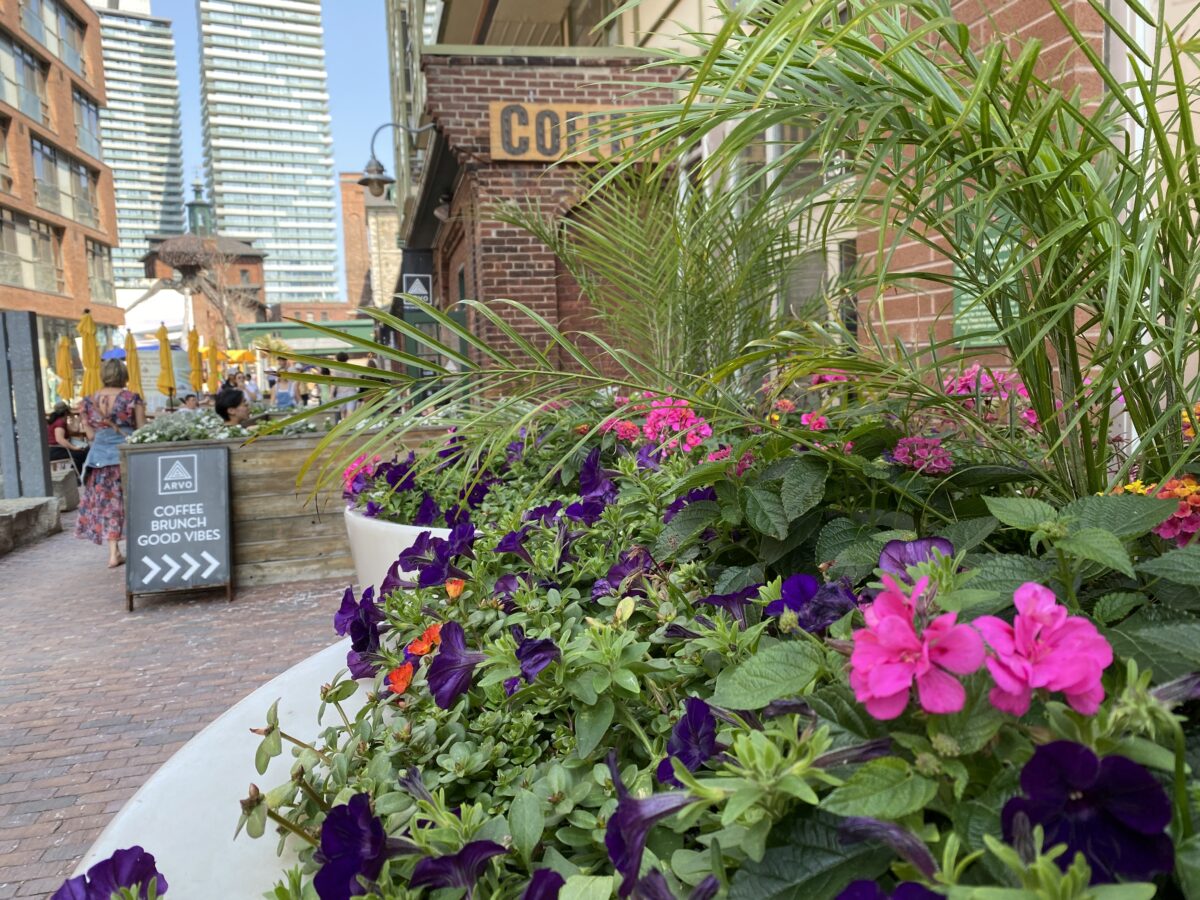
“The Distillery has always been an incubator. We encourage small businesses. Many of the businesses here start here as kiosks or even cabins and expand into stores. And the stores grow. We’ve had many tenants start up. Even tenants like SOMA Chocolate which is very well-known now throughout the city. It started with a tiny little space and they grew into the approximately 3,500-square-foot space that they have. Sport Gallery I think are on their third expansion and they started very small in an upper floor retail space. They moved into a smaller retail space and now they’re also in about 3,500-square-foot space.
“Many of the tenants start that way. So the Distillery has really become a spot for individuals to test their concepts and grow their concepts. Because it’s such high traffic in the Distillery, they get a lot of eyeballs on their space and it’s really helped them grow into other locations as well.”
Other examples of first-to-market concepts include Gemlet, Maxime Zeaberg, and Grace Loves Lace.
“Gemlet is a great example. Gemlet started with the retail container two years ago in the Distillery. They’ve just completely knocked it out of the park. They’re incredibly popular and I know their sales far exceed even their wildest expectations when they initially talked to us,” said Berman.
“They now have I believe it’s a several thousand square-foot store in one of the largest malls they’ve been approached. So they’re expanding and it all started with a little container in the Distillery District.”


The Distillery currently has over 90 tenants in about 250,000 square feet of space.
“We’ve been working for the last year and a half on our Building 74 which is the building that College Boréal is moving into. So we’ve been renovating that. A very, very extensive renovation. College Boréal is the largest French college in Ontario. They’re going to be opening their school year in the Distillery this coming September and they have over 3,000 students who will be in the Distillery,” said Berman.
“As part of the renovation of two buildings and renovation of the whole lane between them, we’re working on four new retail spaces. And the four retail spaces we thought were very important to keep the retail on both sides of this new lane and the reimagined lane. We’re putting a very artistic lighting installation in along the lane.
“Two years ago we launched a container village in the Distillery and it’s been extremely successful. The tenants there have done really well. We’ve decided to expand the retail container village into Case Goods Lane as well. So we’ve ordered three new containers that will be the entrance of Case Goods Lane. We have this new lighting installation that’s going to Case Goods Lane then we have four new retail spaces facing into Case Goods Lane as well.”

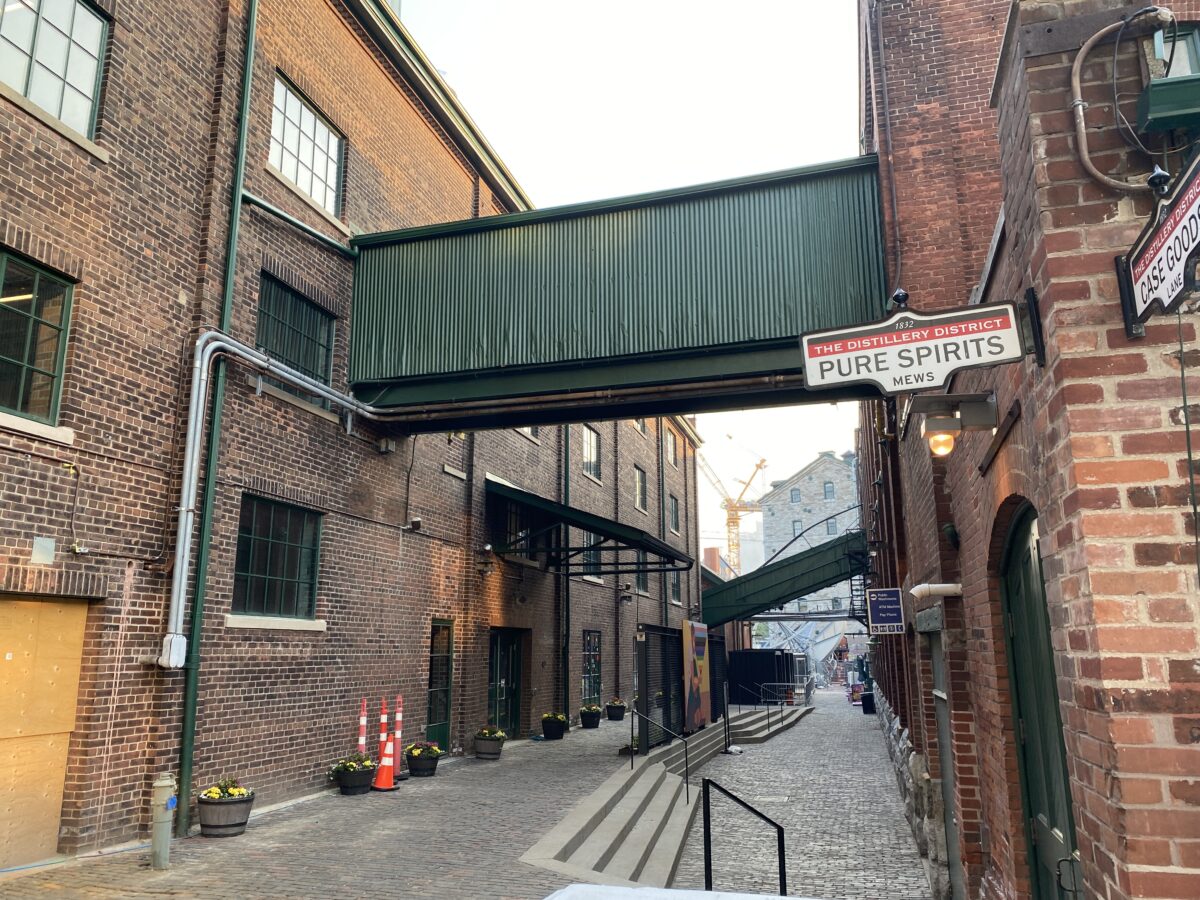
The four new retail spaces include Bee & Co., Millicent Vee Knits & Jenny Greco, Toronto Pen Shoppe and Pepper Palace.
The Distillery District has also signed another new retailer Jacob & Sebastian, a quaint body care product boutique.
There are currently six retail containers.
One of the new retail container tenants will be British lifestyle and fashion retailer FatFace which will be part of the brand’s first foray into the Canadian Market from the UK, including stores in Niagara-on-the-Lake, Georgian Town Mall in Barrie and Upper Canada Mall in Newmarket.
“We have lots of room in the Distillery so we anticipate we’ll keep on adding to them over time,” said Berman of the container initiative.
Jennifer Bowyer of Aurora Realty Consultants represents FatFace in Canada.

“We’ve had people traveling from all over the world now to see what we’ve done and to try and understand how we’ve been able to do this. There were many naysayers 20 years ago but I think they’re all seeing that this is a very unique and special concept that has worked incredibly well.
“We’ve always said the Distillery should have big city sophistication and small town charm. So when you come to the Distillery you’ll find unique restaurants, unique cafes, live theatre, lots of galleries, you’ll find very, very unique boutique retail.”
The Distillery Historic District opened in 2003. It is widely regarded as one of Canada’s premier arts, culture and entertainment destinations. It’s a national historic site, originally founded in 1832. The 13-acre walking district is a dramatic fusion of old and new. An inspired blend of the largest collection of Victorian Industrial architecture in North America and stunning 21st century design and creativity. The result is an internationally acclaimed village of one-of-a-kind stores, shops, galleries, studios, restaurants, cafes, theatres and more, which was named one of The Coolest Shopping Districts Around the World by The Guardian.


The District is owned by DREAM and Cityscape. Berman is a partner and owner of Cityscape. Cityscape purchased the Distillery in December 2001 and DREAM purchased half of the Distillery in October 2004.
“The area was a completely dilapidated site. It had never really been updated since the days of the liquor company and even then the buildings were more or less the same shape that they were in the late 1800’s. It had no services to the buildings to speak of,” said Berman in a previous Retail Insider story.
“It had a completely antiquated sprinkler system that was run originally through one of the old buildings on site. There was no sewage on site. The first toilet when we flushed it emptied onto one of the streets. The streets were muddy. There weren’t bricks on the street as people think . . . The buildings weren’t up to code and they were completely run down. But they had the beauty to them. They had never really been touched.”