

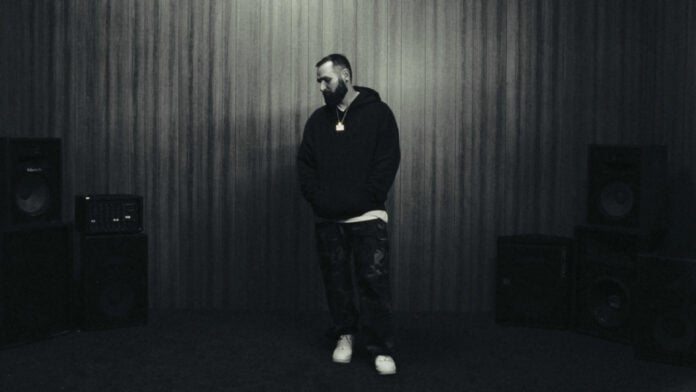
Shane Ginsberg, CEO and Founder of Street Poller Media, on Why Street Interview Ads Aren’t New, But Converting Them Into Trackable Performance Marketing Is
Contrary to popular belief, some of the most effective advertising formats leveraged today are hardly new strategies at all. They are old entertainment formats that somebody eventually figured out how to monetize on modern platforms. The man-on-the-street interview is a clear example. Audiences have enjoyed watching strangers react to unexpected questions on camera for decades, including comedic television segments that ran throughout the 1980s and 1990s, long before anyone considered running one as a paid advertisement on Instagram or TikTok
Street Poller Media founder Shane Ginsberg is unusually direct about this history, particularly as the CEO and Founder of the category’s leader. He does not claim to have invented the format. He has pointed to man-on-the-street bits from decades of television as evidence that the underlying concept has been entertaining audiences far longer than his company has existed.
Ginsberg was, however, among the first (if not the first himself) to recognize that a decades-old entertainment format could be converted into short-form paid advertising with real, trackable, attributable results on social media. In his mind, the format was proven, now he just had to prove the application
That distinction matters because of what it replaces. A traditional television or radio buy, even a substantial one, produces a vague and largely unattributable lift in awareness. A brand can spend a hundred thousand dollars on a television placement and have no reliable mechanism for tracing a specific sale back to that specific spot. Marketers have spent decades building proxies and models to estimate the relationship, but the fundamental attribution problem never really got solved. It got approximated.
A street interview ad running as a paid placement on Meta, TikTok, or YouTube Shorts carries the same granular tracking infrastructure as any other digital ad unit. Cost per install, cost per acquisition, return on ad spend, and conversion rate are all measurable in real time and attributable to a specific piece of creative. A brand can determine within days whether a particular question, a particular location, or a particular interviewer generated a better return than the alternatives, and reallocate spend accordingly.
That combination, the entertainment value of a proven decades-old format paired with the measurement infrastructure of modern paid social, is what Ginsberg has identified as the actual innovation behind the business. Neither element was novel on its own. Man-on-the-street content had been entertaining audiences since broadcast television. Performance attribution had been standard practice in digital advertising for years. What had not existed was anyone systematically applying the second to the first.
The timing was not arbitrary either. The infrastructure required to make the format work commercially, meaning vertical video platforms with algorithmic distribution, mature attribution tooling, and audiences accustomed to consuming short unscripted clips, only converged relatively recently. A street interview ad in 2010 would have had nowhere efficient to run and no reliable way to measure whether it worked.
There is a broader lesson in the sequence for marketers evaluating emerging formats. The question worth asking is often not whether a piece of content is novel, but whether existing distribution and measurement infrastructure has caught up to something that was already proven to hold attention. Street interviews had generations of evidence behind them as entertainment. What changed was that the tools finally existed to determine, precisely, how much a given interview was worth in revenue.

