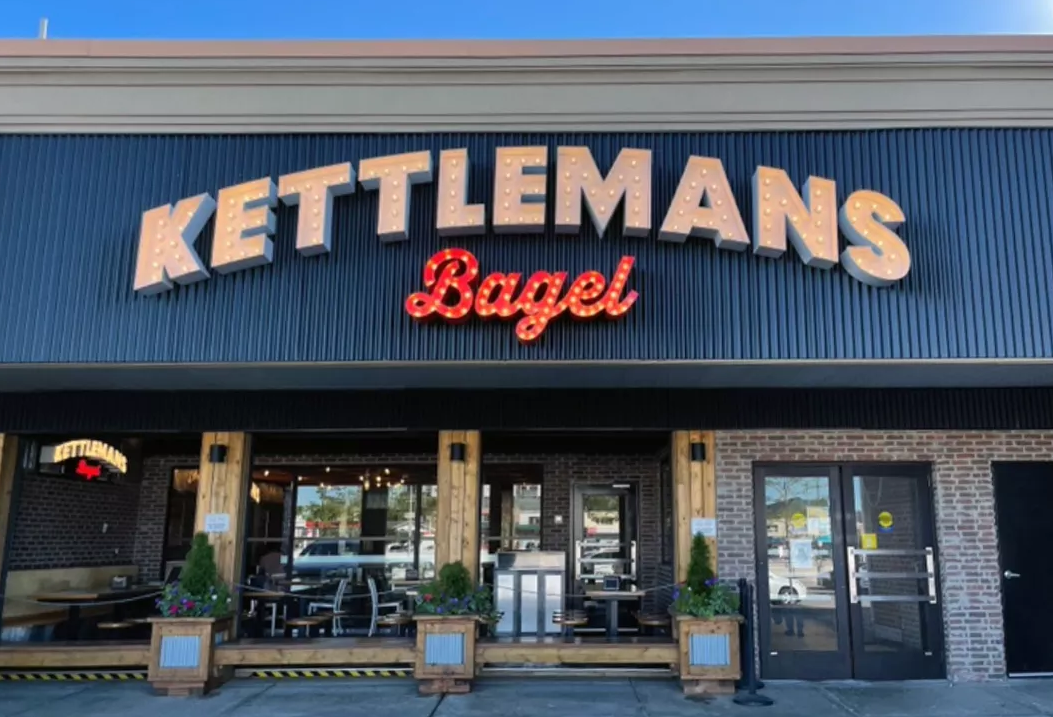
An Ottawa-based bagel chain known for its in-house baked products is preparing to accelerate expansion through franchising as it leans into a business model increasingly driven by sandwiches.
Kettlemans Bagel currently operates seven corporate locations across Canada and is now positioning itself for broader growth through a combination of franchise stores and company-operated bakeries, said Amer Wahab, president and chief operating officer.
“Our average unit volume is north of $4 million — about $4.3 million — and our best store does north of $5 million,” Wahab said in an interview. “Sixty-three per cent of that is sandwiches.”
The company operates four locations in Ottawa, two in Toronto and one in Montreal. The original store opened about 32 years ago at 912 Bank St. in Ottawa across from the old Lansdowne Park site which has been redeveloped over the years.
All current locations are corporate stores, but Wahab said the company has begun signing franchise partners and expects new development to rely heavily on that model – although there will also be corporate stores.
“We’ve got a couple of franchisees on board for about six stores in development,” he said. “Our goal is hopefully they can get some open maybe in the last quarter of this year, but I think predominantly most of that growth will be in 2027.”
Recent franchise agreements will bring both full bakery locations and Sandwich Shops to
Kingston, Ancaster, Hamilton, Barrie, and downtown Toronto, with additional markets under
active development.

The company’s long-term goal is significantly larger. Wahab said the chain believes it could eventually support about 500 locations across North America through a mix of traditional bagel bakeries and smaller sandwich-focused outlets.
“I know you’re probably thinking, ‘Who’s this guy quoting stupid numbers,’” he said. “But I’ve been very fortunate to be doing this for a very long time.”
Wahab said his background includes helping expand several restaurant brands internationally, experience he believes gives credibility to the chain’s ambitions.
“I’ve taken brands from inception or an incubation state and grown them globally,” he said.
His experience includes working with brands like Big Smoke Burger, Five Guys Burgers & Fries, Herbal Magic and Freshii.
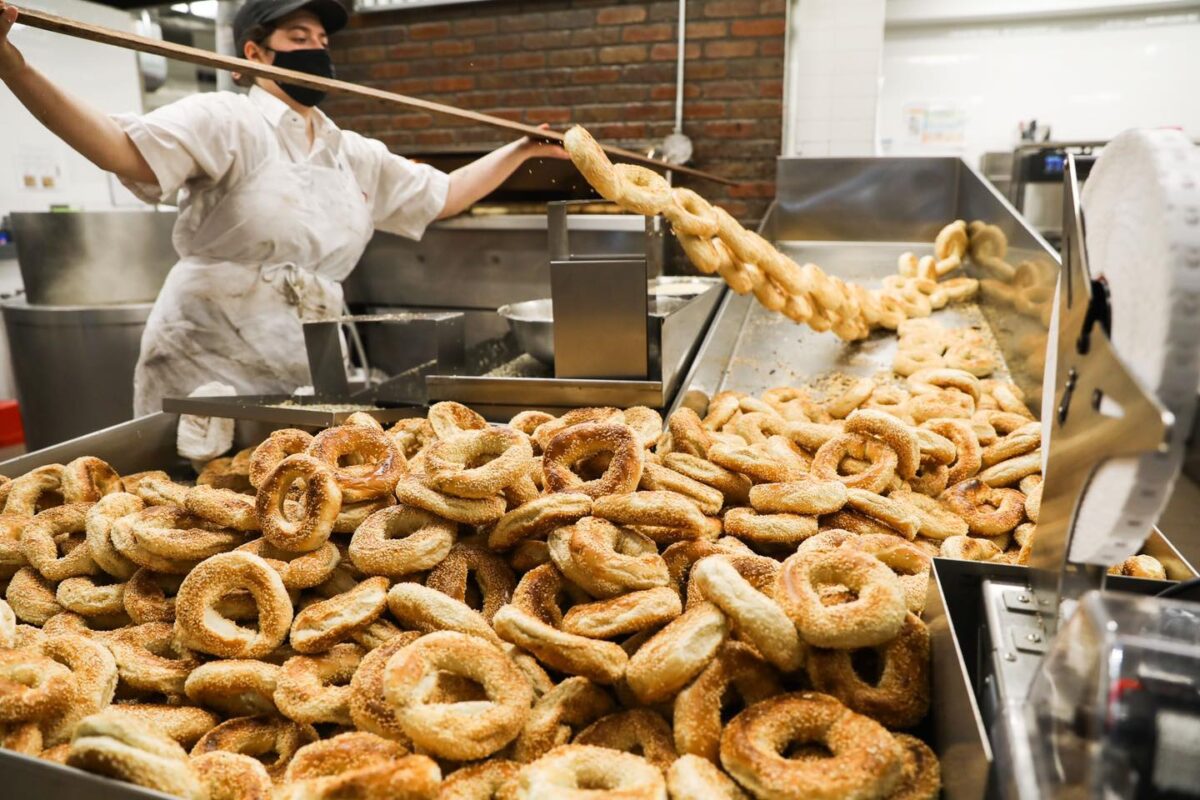
The company’s expansion strategy reflects a shift in how customers use its stores. While Kettlemans is known as a bagel bakery, Wahab said sandwiches account for the majority of revenue across its network.
“We’re a bagel shop, but 63 per cent of our business is sandwiches,” he said. “We just happen to make the bread.”
The trend is especially visible in delivery channels. At one Toronto-area location, Wahab said the store generates about $1 million annually through third-party delivery services, with the vast majority tied to sandwiches.
“Ninety-eight per cent of that million dollars is sandwiches or sandwich-related items,” he said.
Those sales patterns prompted the company to rethink its real estate model. Rather than relying solely on large bakery locations, the chain began testing smaller outlets focused primarily on sandwich preparation.
“We said, hold on a second here,” Wahab said. “If 63 per cent of our sales are sandwiches, we can have stores with smaller footprints, lower capital costs and lower operating costs making just sandwiches.”
A test concept operated out of a small kitchen hub location, where the company sold sandwiches from roughly 100 square feet of space. “We were doing $7,000 a week out of 100 square feet,” he said.
The test helped inform a new hub-and-spoke system the company plans to use as it expands. Under the model, larger corporate bakeries would produce bagels and distribute them to smaller sandwich shops run by franchise partners.
“If a market needs a bakery and our franchise partner may not be capitalized enough to open one, we’ll open the bakery,” Wahab said. “Then we’ll spoke out our product to our franchise sandwich shops.”
He said the approach allows the company to maintain control over the production of its core product while enabling smaller and less expensive restaurant formats.
“We’re maintaining the consistency of the product — the bread, the bagel,” he said.
While the immediate focus remains on Canada, Wahab said the chain is also considering expansion into the United States and the Middle East over the longer term. The company’s near-term objective is to sign franchise agreements for about 100 locations within the next three years.
“That’s not necessarily open,” Wahab said. “That’s a hundred sold in the first three years.”
Reaching about 500 units over a longer horizon would depend on sustained development across multiple markets, he added. Wahab said broader expansion in the fast-casual restaurant sector is being driven largely by changing consumer expectations about value.
“I think consumers are way more savvy today than they were eight or 10 years ago,” he said.
Value, he said, is no longer defined solely by price but by the perceived quality of a product relative to what customers pay. “When I say value, I’m not talking about a discounted product,” Wahab said. “I’m talking about the worth of an item.”
That shift has benefited brands built around relatively simple menu items prepared quickly and sold at moderate prices, he added. Consumers still want to eat out, but rising costs in traditional dining categories are pushing some customers toward fast-casual options.
“It’s hard to go out to a fancy steak dinner these days,” Wahab said.
He cited a recent outing with his son as an example of how prices can influence behaviour.
“I took my son out for chicken wings and had sticker shock,” he said. “Two pounds of wings were $34.” Experiences like that, he said, are prompting some customers to seek alternatives where they feel they are getting stronger value for their money.
“I’m not going there again,” Wahab said of the experience. “I’ll go somewhere where I have perceived value.”
Despite the ambitious expansion targets, Wahab said the company’s focus remains on building a system that can support long-term growth while maintaining product consistency.
The combination of corporate bakeries and franchise sandwich outlets is intended to allow expansion without sacrificing quality control.
“There’s a demand for this sector where you’ve got a great product and guests are willing to pay,” he said.
More from Retail Insider: