A widening gap is emerging across the North American apparel sector.
As consumer spending becomes more selective, some fashion retailers are struggling to maintain momentum while a smaller group of brands continues pulling further ahead. Promotional activity remains elevated across much of the industry, yet consumers are still showing a willingness to spend on brands that feel differentiated, emotionally resonant, and culturally relevant.
Aritzia increasingly appears to fall into that second category.
The Vancouver-based retailer reported another quarter of exceptionally strong growth this week, posting record fourth quarter net revenue of $1.2 billion, up 33% year-over-year, alongside comparable sales growth of 28%. The company also raised its fiscal 2027 outlook while signaling continued momentum across both Canada and the United States.
The financial results were impressive, though the more revealing story may have come through management’s commentary during the earnings call. Executives offered a clearer look at how Aritzia is evolving at a time when many apparel retailers are fighting harder simply to maintain consumer attention.
Aritzia’s ‘Everyday Luxury’ Positioning Continues to Resonate
Aritzia increasingly occupies a space between mainstream apparel and traditional luxury, a positioning that appears to be strengthening as consumer purchasing habits evolve.
Throughout the earnings call, Chief Executive Officer Jennifer Wong repeatedly referenced the company’s “Everyday Luxury” strategy, describing an assortment centered around high-quality products offered at “obtainable price points.”

That positioning matters in the current retail environment. Consumers continue to spend on fashion, though increasingly with greater scrutiny around quality, identity, and perceived value. Retailers operating in the middle of the market without a clearly differentiated proposition have faced mounting pressure over the past several years.
Aritzia, meanwhile, appears to be benefiting from stronger brand affinity and growing cultural relevance, particularly among younger and digitally engaged consumers.
Importantly, management indicated that momentum is not being driven by one isolated category or seasonal trend. Wong described demand as broad-based across regions, channels, styles, and product categories, suggesting the company’s strength increasingly lies with the overall brand itself rather than individual fashion cycles.
That broader positioning was also highlighted in a recent research note from Stifel analyst Martin Landry, who argued that Aritzia continues gaining traction while several major apparel brands experience slower momentum. Landry said the retailer has successfully carved out a niche by offering elevated product and strong brand identity while remaining accessible relative to luxury competitors.
Boutiques Are Evolving Beyond Traditional Retail Stores
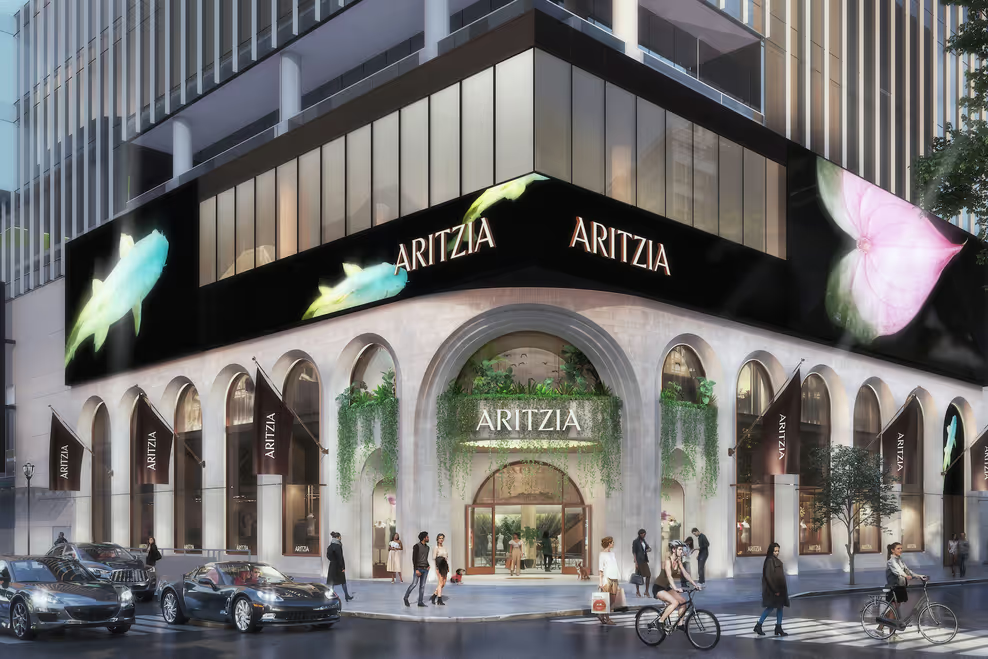
One of the more significant themes emerging from Aritzia’s growth story is the changing role of its physical stores.
Rather than functioning strictly as transactional retail spaces, boutiques are increasingly operating as awareness engines that drive customer acquisition, digital engagement, and long-term loyalty simultaneously.
“Our boutiques enhance brand recognition, drive new client acquisition, and support digital growth, particularly in new markets,” Wong said during the earnings call.
That philosophy reflects a broader shift taking place across premium retail. Increasingly, successful stores are expected to reinforce brand identity, create experiences, and deepen customer engagement rather than simply maximize short-term sales productivity.
For shopping centre owners and landlords, that distinction has become increasingly important. Following years of department store closures and apparel sector consolidation, many top-tier malls are becoming more concentrated around a smaller group of highly productive fashion tenants capable of driving both traffic and cultural relevance.
Aritzia increasingly appears to be emerging as one of those tenants.
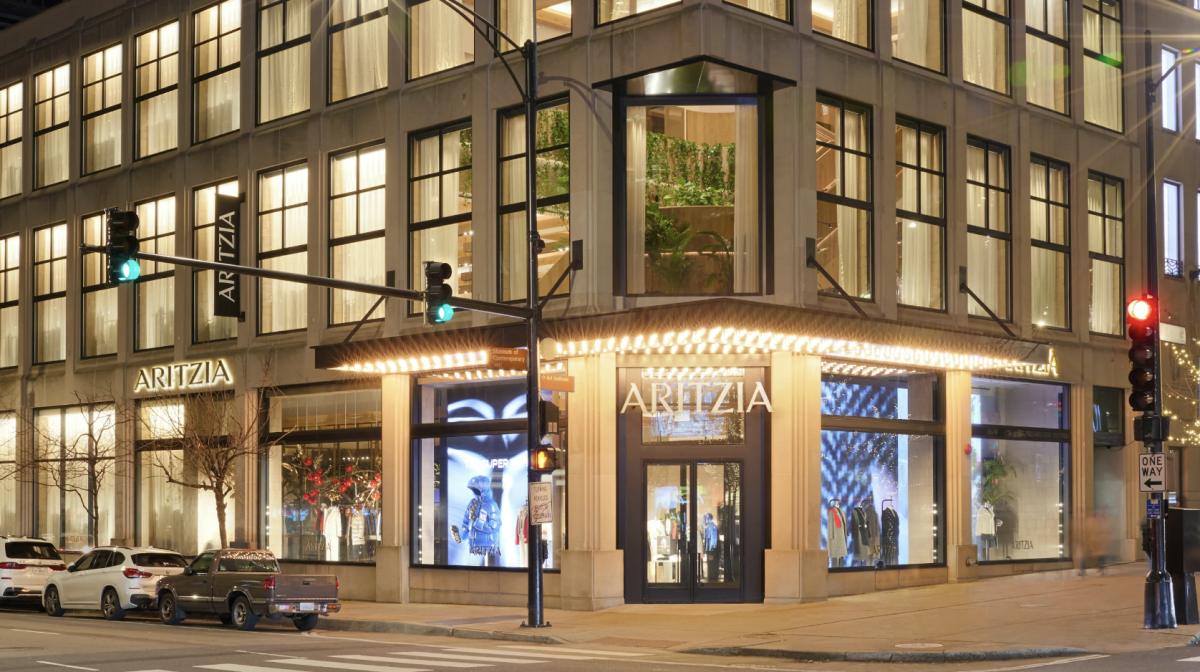
Over the past year, the retailer opened 14 new boutiques and repositioned four existing locations, with most expansion concentrated in the United States. Management said the newest U.S. boutiques are tracking to pay back their investment in less than one year, significantly ahead of the company’s original 12-to-18-month target.
The company also suggested newer markets are ramping faster than they did historically.
“In the past, several years ago, we would talk about a ramp,” Wong said. “Right now, we see lineups before the day we open.”
That level of anticipation speaks to the degree of awareness Aritzia is now generating before physically entering a market. Social media visibility, influencer engagement, digital marketing, and existing e-commerce penetration appear to be helping establish demand well in advance of store openings.
U.S. Expansion Continues to Accelerate
Aritzia’s U.S. growth strategy has become one of the company’s most important long-term growth drivers.
The retailer plans to open another 12 to 13 boutiques this fiscal year, primarily in the United States, including entries into Birmingham, Fort Worth, New Orleans, and St. Louis. Additional openings are planned across markets including Atlanta, Las Vegas, Cleveland, Dallas, and California.
Management also confirmed plans for additional flagship stores in fiscal 2028.
The scale of the runway remains substantial. Wong noted that Aritzia currently operates only 76 boutiques in the United States despite previously discussing long-term potential for roughly 180 to 200 stores nationally.
What appears increasingly notable is how quickly the retailer is establishing traction in newer markets.
Executives repeatedly emphasized that strong performance is not isolated to major coastal cities or traditional fashion hubs. Instead, demand appears broad-based across regions, suggesting Aritzia’s appeal is becoming more nationally distributed throughout the United States.
That evolution is important because it signals the company may be transitioning from a highly successful Canadian retailer into a much larger North American fashion platform.
Digital and Physical Retail Are Becoming Increasingly Interconnected
At the same time, Aritzia’s digital business continues accelerating alongside physical expansion rather than replacing it.
The company reported a 29% increase in digital revenue during the quarter following 48% growth during the same period last year. Executives repeatedly emphasized the interconnected nature of the retailer’s ecosystem, with boutiques, marketing initiatives, mobile engagement, and e-commerce increasingly reinforcing one another.
The company’s mobile app has emerged as a particularly important engagement tool. Wong said customers are now using the app multiple times per week for both browsing and purchasing, while app users are converting at higher rates than traditional e-commerce shoppers.
She also noted that the app is already contributing incremental high single-digit growth to the company’s e-commerce business.
Aritzia is simultaneously expanding its full-funnel marketing strategy, blending brand awareness campaigns with performance marketing and digital acquisition initiatives. Wong said the retailer has been able to grow awareness while keeping marketing spend at a relatively modest low single-digit percentage of revenue.
The retailer’s acquisition of the Fred Segal brand earlier this year may also reflect a broader ambition to deepen its cultural positioning in key U.S. markets. Wong described the Los Angeles-based brand as “brand propelling” for Aritzia and emphasized the emotional response generated by the announcement in California.
Aritzia Reflects a Broader Shift in Apparel Retail
For the broader retail industry, Aritzia’s momentum may ultimately reveal more than the success of a single retailer.
Apparel spending increasingly appears to be concentrating around brands that offer stronger identity, deeper emotional engagement, and clearer differentiation. At the same time, top-tier retail environments are becoming more dependent on tenants capable of generating both productivity and relevance in an increasingly competitive landscape.
Consumers are still spending on fashion. The difference is that spending appears to be becoming more intentional.
Retailers capable of creating stronger brand ecosystems across stores, digital platforms, marketing, and customer experience are increasingly separating themselves from the broader field. Aritzia’s recent performance suggests the future of premium apparel retail may belong to a smaller group of brands able to consistently command consumer attention across every part of that ecosystem.