The Canadian automotive industry has been struggling for more than a year but Hyundai Canada has been bucking the trend posting 12 consecutive months of outpacing the market in sales.
The company says it’s Canada’s fastest-growing mainstream automaker in 2019 with retail sales up 11.3 per cent, the highest among mainstream brands and it is the only manufacturer to outperform the Canadian auto industry for 12 consecutive months while the market just recorded its 15th consecutive month of decline.
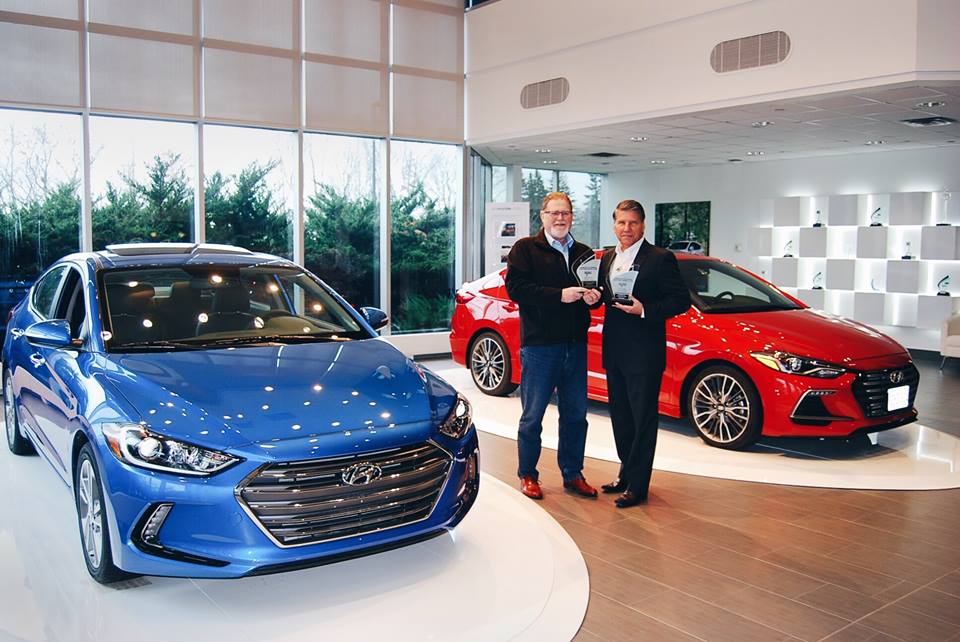
Don Romano, President and CEO of Hyundai Auto Canada Corp. said Hyundai’s positive sales performance is sustained by key business directives, including a revamped marketing strategy and successful new product launches.
“We made a number of difficult but sound changes across our business over the last several years. It’s rewarding to see that these changes coupled with exciting new products and a highly engaged dealer body are now resulting in industry-leading sales growth,” said Romano. “We’re continuing to see great success, and we’re just getting started. The best is still ahead.
“We’re the fastest growing brand in Canada right now. We’re up. There’s only three manufacturers that are up. Everybody else is down. The Canadian market has been down for 15 consecutive months. It’s been down all year. But we’re growing. Our sister company Kia is growing. We’re on a roll . . . We’re just starting. Honestly our upward trend is just the beginning. We are bringing out a whole series of new products. A lot of focus on the environment. We have a lot more electric vehicles coming out.”
Romano said the company has about 130,000 to 140,000 sales a year in Canada. In May, Hyundai had sales of 14,156 units, a 1.4 per cent increase compared to the same month in 2018. So far in 2019, Hyundai has sold 51,499 units, up 7.9 per cent over the same period last year.
“Part of it is the new products and how we’ve positioned them in the market. What’s happened is the value of our dollar has declined significantly. When that happens, most of our cars are imported and all of the content that goes in every car is imported. No matter what car, whether it’s built in Canada, which is very few of them, or not, is going to be negatively impacted by a low dollar,” said Romano.
“So all products that are imported and all products that are made with imported components the prices are going to go up. So you’ve seen industry pricing going up. Transaction prices are going up because you can’t absorb a 30 per cent swing of a dollar. Those margins don’t exist in any industry. So as prices go up, volume comes down.
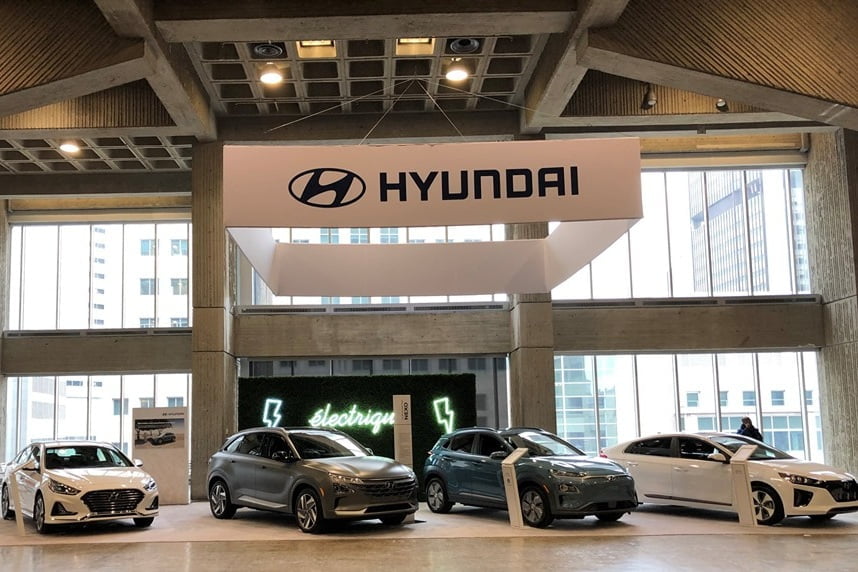
“What we were successful at doing is bringing in new products but at much more price effective levels. We brought in a small SUV the Kona which took off because it was priced right . . . And then we were one of the few early adopters to electric vehicles. We brought out the Ioniq which is the electric line and the Kona electric. If you start adding those two products together, its starts making up the difference.”
Hyundai also successfully adopted a new marketing strategy. The company’s more integrated digital focus has led to a deeper understanding of online audiences and a continued shift of retail communications to the web, culminating in stronger brand messaging and greater overall efficiency. This strategy has benefited all areas of the business, recently resulting in five-year highs in website traffic, search traffic, dealer traffic and build and price configurations with the number of credit applications also reaching a four-year high in 2019.
Part of its success has been the fact the company got dealers to reinvest in the brand after a number of difficult years.
“So they weren’t happy about it. They have to remodel their facilities. When you’re building new facilities in a down market that’s a scary, difficult decision for a dealer to make. They’re entrepreneurs. It’s their money. And you’re telling them to spend their money upgrading the facilities,” said Romano.
“But what you do is explain to them, which we did, where we were going as a brand. We used to be a discount value brand and that we’re going premium. And we’re going up market. So the facilities need to reflect that.”
A second thing the company did was work on internal processes and customer service. For example, it launched a program called Signature Certification which required dealers to get certified on a number of new processes including washing cars after they’re done being serviced.
It was all part of upgrading the company’s image.
“We brought in Hyundai Capital which is our own captive finance company . . . We needed to get into leasing and sure enough leasing has skyrocketed – because leasing provides a much lower payment so when prices are going up you can offset it with leasing payments that are lower,” said Romano.
“That’s become a very popular means of acquiring a vehicle and fortunately we made a difficult decision because it’s not a profitable one to bring in a brand new company and get it established and set it up. But we did that about three and a half years ago and today we’re able to lease.”
Leasing has grown from two per cent of the business to about 18 per cent with more room to grow.
Romano said the biggest trend in the automotive industry these days is the shift to SUVs.
“If you aren’t shifting to SUVs and you’re going to try and make it with cars, you’re going to have a real struggle in today’s market,” he said. “You have to have a full line of SUVs. It’s worldwide but in Canada it’s exaggerated because of our shifting weather and difficult conditions in the winter time and advantages SUVs provide in terms of utility, in terms of all-wheel drive.
“The second (trend) is the shift to leasing. It means people don’t own their cars. They just borrow them. They’re renting them. It used to be 20 per cent and when you see some of these manufacturers at 50 per cent that’s a big shift.
“The third (trend) is used cars. You’re seeing a big increase in used car sales. Used car sales have been up consistently for the past 15 months while new car sales are down. Part of that is due to the leasing in the past where those cars come off lease, they don’t have a lot of kilometres, so there’s an abundance of used cars in the market but also just the value proposition of a used car and people can’t afford to be paying the higher prices in the new cars.”
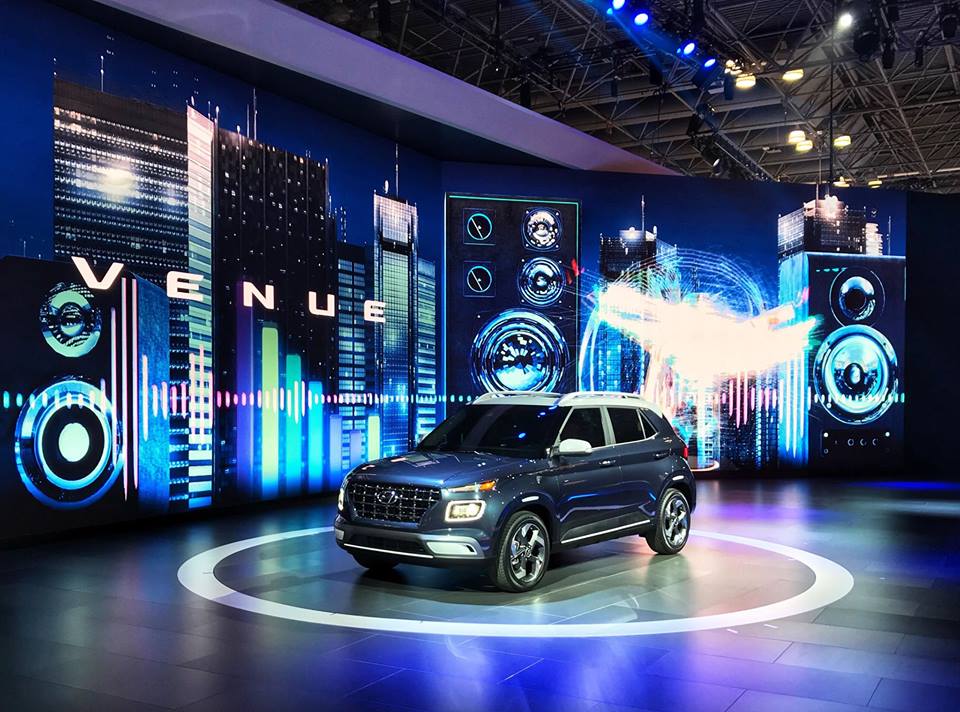
Recently, Hyundai launched the 2020 Palisade which is its highest line and most sophisticated vehicle ever at more than $50,000. The Venue, an entry-level SUV that slots in beneath the Kona, will arrive later this fall.